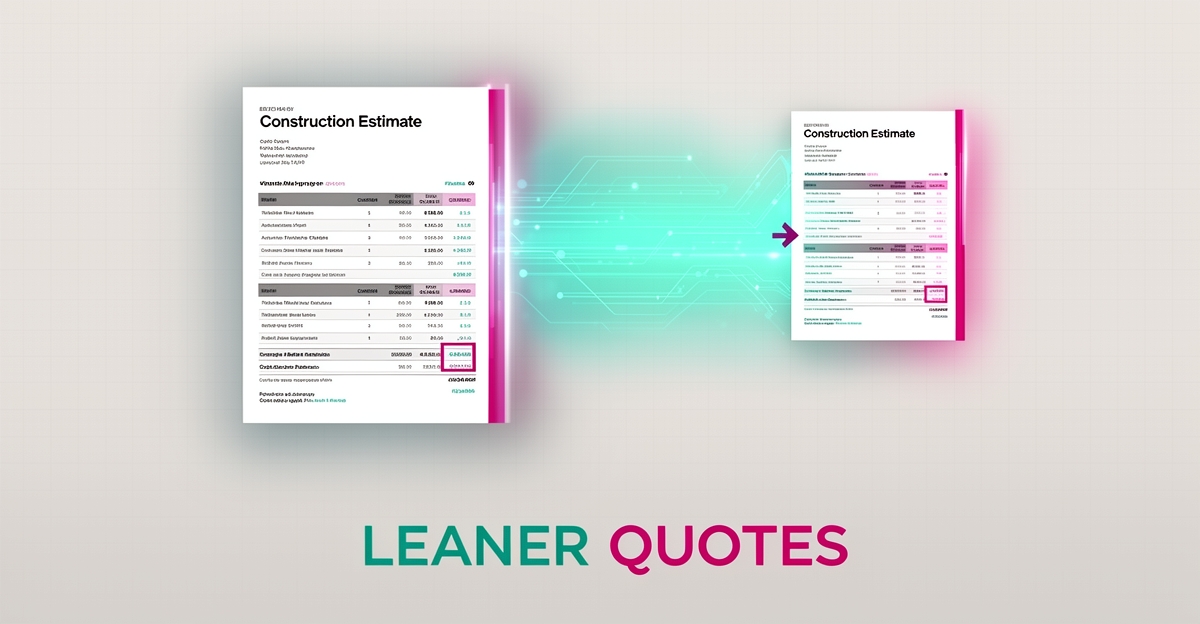
How an AI Estimator Can Cut Client Quotes by 15% While Maintaining Accuracy
Key Facts
- AI-powered estimating typically cuts bid time by 60-80% compared to manual methods, per industry analyses
- AI estimating commonly identifies 15-25% more line items than manual takeoffs in comparative studies
- Fast proposal turnarounds are strongly associated with higher close rates, per industry research
- Hybrid AI-human workflows typically improve both speed and estimate accuracy in quoting processes
- AI estimators learn from historical project data to catch scope gaps and flag anomalies before quoting
- AI handling repetitive calculations frees estimators to focus on complex scope discussions and client value positioning
Hire a team member that works 24/7 — for less than a part-time wage.
AI receptionists, SDRs, dispatchers and 99+ roles. Trained on your business, fully managed.
Not sure where to start? Ask our AI planner
The Quote Cost Trap: Speed vs Accuracy in Manual Estimating
Manual estimating creates a costly trade-off between speed and accuracy that many SMBs struggle to resolve. Estimators often rush through bids to meet deadlines, leading to missed line items and costly oversights, while overly cautious approaches inflate pricing and erode competitiveness. This tension results in delayed responses, inconsistent quotes, and lost opportunities—especially when clients expect fast, precise turnarounds.
Industry analyses suggest AI-powered estimating can cut bid time by 60-80% compared to manual methods, freeing up valuable hours for strategic work. At the same time, these tools commonly catch 15-25% more line items than traditional takeoffs, reducing the risk of underquoting or costly change orders later. For SMB estimators juggling multiple projects, this dual improvement in efficiency and completeness addresses a core pain point in the quoting process.
- Manual estimating increases the likelihood of omitting critical materials or labor costs
- Speed-focused bids often sacrifice accuracy, leading to margin erosion
- Overly detailed manual reviews delay responses and reduce win rates
- Inconsistent quoting practices undermine client trust over time
- Repetitive data entry diverts attention from high-value judgment tasks
The pressure to deliver faster, more accurate quotes is intensifying as clients compare bids in real time and expect same-day responses. Estimators relying solely on manual processes face a competitive disadvantage—not because they lack skill, but because their workflow is constrained by human limits on speed and attention. AI doesn't replace that expertise; it amplifies it by handling repetitive calculations, flagging anomalies, and surfacing insights from historical data that might otherwise be missed. For SMBs looking to tighten their quotes without sacrificing precision, this shift represents a practical path to greater efficiency and stronger market positioning. AIQ Labs supports this transition by building custom AI estimators that learn from your project history and adapt to your market's pricing dynamics — often as part of a broader AI Workflow Build targeting the quoting process specifically.
How AI Estimators Learn Your History to Shrink Quotes Safely
Most estimators spend hours chasing line items that never materialize on the job site. AI-powered estimating models flip that dynamic by learning from your actual project history — every change order, material substitution, and labor variance — to build quotes that reflect how your business really operates.
These systems ingest historical project data, regional material costs, and complexity patterns across hundreds of completed jobs. The result is pattern recognition at scale that commonly catches 15-25% more line items than manual methods while cutting bid time by 60-80%. Industry research also points to a strong link between speed and winning: proposals turned around in under 48 hours are far more likely to close, making fast turnarounds a competitive advantage rather than a compromise.
- Blind spot detection — AI flags scope gaps by comparing current quotes against similar past projects
- Anomaly flagging — Outlier labor rates or material quantities trigger review before the quote leaves your desk
- Section-level margin adjustments — Apply consistent profitability rules across entire quote sections at once
- Regional cost calibration — Local material and labor databases keep estimates grounded in current market reality
The hybrid approach proves most effective: AI handles the data-heavy pattern matching while human estimators apply judgment on complex or custom work. The right question isn't AI vs. human — it's human alone vs. human + AI. At AIQ Labs, we build custom AI estimators that learn your project history and adapt to your margin strategies, delivering leaner quotes without sacrificing precision. The system improves with every project, turning your estimating workflow into a compounding asset rather than a recurring cost.
From Data to Deployed Estimator: Implementation Without Disruption
Adopting an AI estimator requires a thoughtful rollout that respects your existing workflows while unlocking efficiency gains. Start by choosing a tool that aligns with your project types, data sources, and integration needs—prioritizing platforms that can learn from your historical quotes and adapt to regional pricing fluctuations. Industry reports suggest AI-powered estimating can reduce quoting time by 40-60% while catching 15-25% more line items than manual methods, directly contributing to more competitive and accurate bids.
Seamless integration with your CRM, accounting, or project management systems is critical to avoid data silos and manual re-entry. AIQ Labs specializes in building custom AI estimators that connect via APIs to platforms like QuickBooks, Salesforce, or Procore, ensuring real-time synchronization of job costs, client details, and material pricing. This approach supports the three payment models—Start Monthly, Build in Milestones, or Own It Outright—allowing teams to phase adoption without disrupting ongoing projects.
- Map data flow between estimating, CRM, and invoicing systems to identify integration points
- Run parallel tests comparing AI-generated quotes against historical manual estimates for accuracy validation
- Train estimators to interpret AI outputs, focusing on anomaly detection and margin adjustment features
- Establish a feedback loop where human reviewers correct AI outputs, enabling continuous model improvement
- Schedule monthly reviews to refine training data and adjust for seasonal material cost shifts
Validation is not a one-time step but an ongoing practice. Teams should review AI outputs for contextual accuracy—such as labor rates for specialty trades or permit fees—while leveraging the tool's strength in processing repetitive calculations and identifying missed line items. Over time, this hybrid approach builds trust in the system and frees estimators to focus on complex scope discussions and client-specific value positioning. By anchoring the estimator in your owned data and workflows, you create a self-improving asset that scales with your business.
Ready to explore how a custom AI estimator can fit your quoting process? Start the Fit Check — a two-minute assessment — then schedule a free 30-minute strategy call to map your specific opportunities and see where AI can reduce quote preparation time without sacrificing precision.
Proven Results and When Human Judgment Still Matters
The real power of AI estimating emerges not just in speed, but in measurable business outcomes. Companies using AI-powered estimating tools typically report a 40-60% reduction in quoting time, allowing teams to respond to more opportunities without increasing headcount. This acceleration directly impacts win rates, since fast turnarounds are strongly associated with closing more proposals. These gains come from AI's ability to rapidly analyze historical project data, regional material costs, and complexity factors to generate competitive quotes at scale.
However, AI's strength lies in pattern recognition, not judgment. It excels at processing repetitive tasks—like applying standard labor rates or flagging common cost anomalies—but struggles with highly customized or one-off projects where nuanced decision-making is critical. For example, AI may overlook site-specific challenges, unique client preferences, or emerging market shifts that a seasoned estimator would immediately recognize. This is why the most effective approach combines AI's efficiency with human oversight: AI handles the data-heavy lifting, while estimators focus on validation, strategic adjustments, and client-specific refinements.
- AI typically cuts bid time by 60-80% compared to manual methods
- AI commonly identifies 15-25% more line items than manual takeoffs
- Hybrid AI-human workflows improve both speed and estimate accuracy
AIQ Labs builds custom AI estimators that learn from your actual project history and adapt to your market's pricing dynamics—ensuring the tool reflects your expertise, not replaces it. By grounding AI in your data and workflows, you gain a system that accelerates quoting while preserving the judgment that wins complex work. The result isn't just faster quotes—it's more competitive, accurate bids that close more often.
Still paying for 10+ subscriptions that don’t talk to each other?
We build custom AI systems you own outright. No vendor lock-in. Full control.
Not sure where to start? Ask our AI planner
Frequently Asked Questions
How much time can an AI estimator actually save compared to manual estimating?
Will using an AI estimator make our quotes less accurate or cause us to miss important details?
Do I still need to review AI-generated estimates, or can I fully trust the system?
How quickly do companies see results from using AI estimating tools in terms of winning more bids?
Is AI estimating only useful for large companies, or can small and mid-sized businesses benefit too?
What's the best way to start using an AI estimator without disrupting our current workflow?
Smarter Quotes, Stronger Margins
The quote cost trap is real: manual estimating forces a choice between speed and accuracy that erodes margins and win rates. AI changes that equation by learning from your actual project history to cut bid time by 60-80% while catching 15-25% more line items, flagging anomalies, and applying consistent margin rules across sections. The most effective results come from a hybrid model where AI handles repetitive pattern matching and data-heavy calculations, and your estimators apply judgment on complex scope and client-specific value. That combination delivers leaner, more competitive quotes without sacrificing precision—and fast turnarounds are strongly linked to higher close rates. If you want to see where this fits your workflow, start the two-minute Fit Check and book a free 30-minute strategy call to map your specific opportunities. AIQ Labs builds custom AI estimators that learn your history and adapt to your market pricing, so the system improves with every project you complete.
Make AI your competitive advantage — not just another tool.
Strategy, implementation and ongoing optimization. One partner, end to end.
Not sure where to start? Ask our AI planner