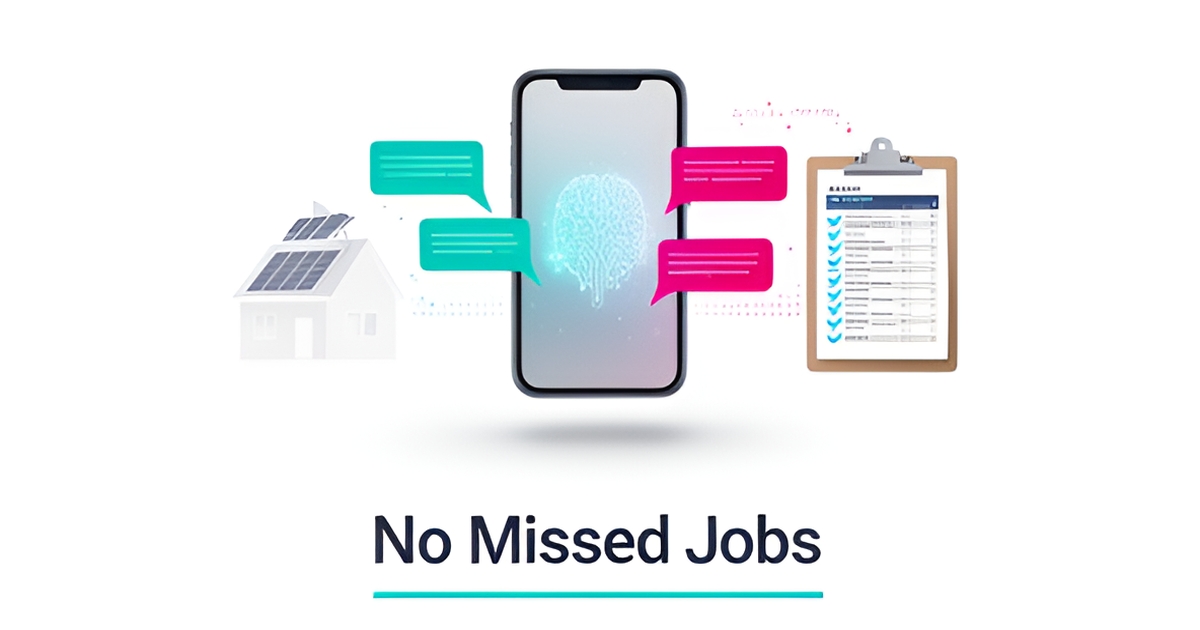
How an AI Field Supervisor Can Improve Communication Between Installers and Clients
Key Facts
- A majority of frontline employees report burnout tied to inefficient workflows, Microsoft's Work Trend Index research shows
- Most AI projects that underperform do so because of poor workflow alignment, not weak technology, industry research suggests
- Well-optimized LLM systems can achieve very low error rates, making AI voice assistants viable for client communication, technical analysis confirms
- AI voice supervisors provide 24/7 client communication coverage without overtime costs or missed calls
- AIQ Labs' AI Employees typically cost around 80% less than a comparable human hire while working around the clock
- AI field supervisors integrate with scheduling tools to confirm appointments and relay real-time updates automatically
- Successful AI implementation typically starts with a 4-6 week pilot focused on a single high-impact communication gap
Hire a team member that works 24/7 — for less than a part-time wage.
AI receptionists, SDRs, dispatchers and 99+ roles. Trained on your business, fully managed.
Not sure where to start? Ask our AI planner
The Communication Breakdown in Field Service Operations
The communication breakdown between installers and clients remains a persistent challenge in field service operations, leading to missed appointments, misunderstandings, and technician burnout. When installers lack real-time visibility into schedule changes or client preferences, jobs get delayed or repeated, eroding trust and increasing operational costs. Clients grow frustrated when technicians arrive unprepared or fail to confirm details, while installers bear the brunt of last-minute changes without adequate support. This disconnect not only impacts service quality but also contributes to workforce strain—Microsoft's Work Trend Index research has found that a majority of frontline employees report burnout tied to inefficient workflows. Microsoft's research highlights how outdated communication systems force technicians to juggle administrative tasks instead of focusing on skilled work, accelerating fatigue and turnover.
Common pain points include inconsistent appointment confirmations, delayed responses to client inquiries, and poor coordination during unexpected delays or scope changes. Without a centralized system to track and relay updates, installers often rely on fragmented channels—text messages, voicemails, or paper notes—that are easily overlooked or misinterpreted. These gaps create a ripple effect: missed follow-ups lead to rescheduling, which strains technician schedules and reduces daily job capacity. Over time, the cumulative effect diminishes morale, as frontline staff feel unsupported in managing client expectations while being held accountable for outcomes beyond their control. Addressing this requires more than better training—it demands a shift toward proactive, automated communication that keeps all parties aligned throughout the service lifecycle.
AIQ Labs addresses this challenge by deploying AI Employees as field supervisors that manage client communication 24/7, ensuring appointments are confirmed, changes are communicated instantly, and no detail falls through the cracks. These AI-powered voice agents handle routine interactions—such as confirming arrival times, sending delay notifications, or answering common questions—freeing installers to focus on technical execution. By integrating with scheduling tools and CRM systems, the AI Employee maintains a single source of truth for job status, reducing miscommunication and administrative burden. This approach not only improves client satisfaction through timely, consistent updates but also helps mitigate burnout by removing repetitive communication tasks from human technicians' workloads. As noted in industry analysis, AI-driven project management tools can automate routine work and allow teams to focus on higher-value activities—a principle directly applicable to field service communication. With well-optimized LLM systems showing very low error rates in production, reliable AI voice assistants offer a scalable solution to close the communication gap without adding overhead.
How AI Field Supervisors Solve Real-Time Communication Failures
The phone rings at 7 p.m. on a Friday. A homeowner needs to reschedule tomorrow's installation, but the dispatcher left hours ago. By Monday, the crew shows up to an empty driveway — a wasted trip, a frustrated client, and a schedule in shambles. This scenario plays out daily across field service operations where communication gaps turn routine jobs into costly failures.
According to Microsoft's frontline research, a majority of frontline employees report being burned out at work, with administrative overload and communication chaos among the leading causes. AI-powered voice assistants step into this breach as 24/7 field supervisors that never clock out. They answer every call, confirm appointments in real time, and push automated updates to both clients and crews — ensuring that no job is missed or misunderstood.
- Inbound client calls answered and logged instantly, day or night
- Appointment confirmations and reminders sent automatically via SMS or voice
- Real-time schedule changes relayed to field crews without radio tag
- Detailed call summaries and action items delivered to management each morning
The impact extends beyond convenience. Research on AI-driven project management tools shows these systems automate routine administrative work while providing predictive insights that help teams allocate resources more intelligently. For installation businesses, this means dispatchers spend less time chasing confirmations and more time optimizing routes and capacity.
AIQ Labs deploys AI employees that serve as on-call supervisors, handling communication 24/7 without overtime costs. These managed AI staff integrate directly with scheduling platforms, CRMs, and phone systems — becoming functional team members that execute workflows end-to-end rather than simply routing messages. With 200+ multi-agent systems deployed and four live SaaS products the company runs daily, the approach is proven in production, not just in demos. The result is a communication layer that never sleeps, never forgets, and never lets a detail fall through the cracks.
Implementing AI Field Supervision: From Pilot to Full Deployment
Starting small with a focused pilot allows teams to validate AI capabilities without disrupting core operations. Industry experience shows most AI projects that underperform do so because they overlook workflow alignment and team readiness, not because the technology fails. Industry research emphasizes choosing AI features that fit existing processes rather than forcing teams to adapt to new technology. Begin by identifying one high-impact communication gap, such as missed appointment confirmations or delayed client updates, where an AI Field Supervisor can deliver immediate value.
Integrate the AI system with current scheduling tools like Google Calendar or Calendly during the pilot phase to ensure seamless data flow. This allows the AI to access real-time job schedules, technician availability, and client contact information without manual entry. Customize workflows for trade-specific needs—such as HVAC service windows or electrical inspection protocols—by training the AI on your standard operating procedures and communication templates. The pilot should run for 4-6 weeks with clear success metrics, including reduced missed calls, faster response times, and technician feedback on workload relief.
Scale deployment gradually by adding more communication functions once the pilot proves effective. Expand the AI's role to include automated job status updates, post-service follow-ups, and emergency dispatch coordination. Maintain human-in-the-loop controls for complex client issues while letting the AI handle routine confirmations and scheduling adjustments. Ongoing optimization is critical—monitor performance data weekly to refine conversation flows, update knowledge bases, and adjust escalation protocols. Since frontline burnout stems largely from inefficient workflows, prioritize AI features that reduce administrative burden and let technicians focus on skilled work. Field service research confirms that AI works best when it removes repetitive tasks rather than replacing human judgment. If a single broken workflow is costing you the most, a fixed-price AI Workflow Build may be the faster path. Schedule a free strategy call to map your implementation roadmap.
Still paying for 10+ subscriptions that don’t talk to each other?
We build custom AI systems you own outright. No vendor lock-in. Full control.
Not sure where to start? Ask our AI planner
Frequently Asked Questions
What exactly is an AI field supervisor, and how does it work?
Can an AI voice agent really handle after-hours calls from clients?
Will AI communication actually reduce stress for my installers?
How reliable is AI for client-facing phone communication?
How do we roll this out without disrupting our current operations?
What does an AI field supervisor cost compared to hiring another dispatcher?
Turn Communication Gaps into Service Excellence
Communication breakdowns between installers and clients lead to missed appointments, frustrated customers, and technician burnout—with a majority of frontline employees reporting burnout tied to inefficient workflows, according to Microsoft's frontline research. AI field supervisors solve these challenges by handling routine communications 24/7, confirming appointments, sending real-time updates, and integrating with scheduling tools to keep everyone aligned. This reduces administrative burden on human teams, improves client satisfaction, and lets installers focus on skilled work instead of chasing confirmations. For field service businesses ready to close the communication gap without adding overhead, the next step is to explore how an AI Employee can serve as your always-on field supervisor. Start with the 2-minute Fit Check or a free strategy call to see where AI can deliver immediate value in your operations.
Make AI your competitive advantage — not just another tool.
Strategy, implementation and ongoing optimization. One partner, end to end.
Not sure where to start? Ask our AI planner