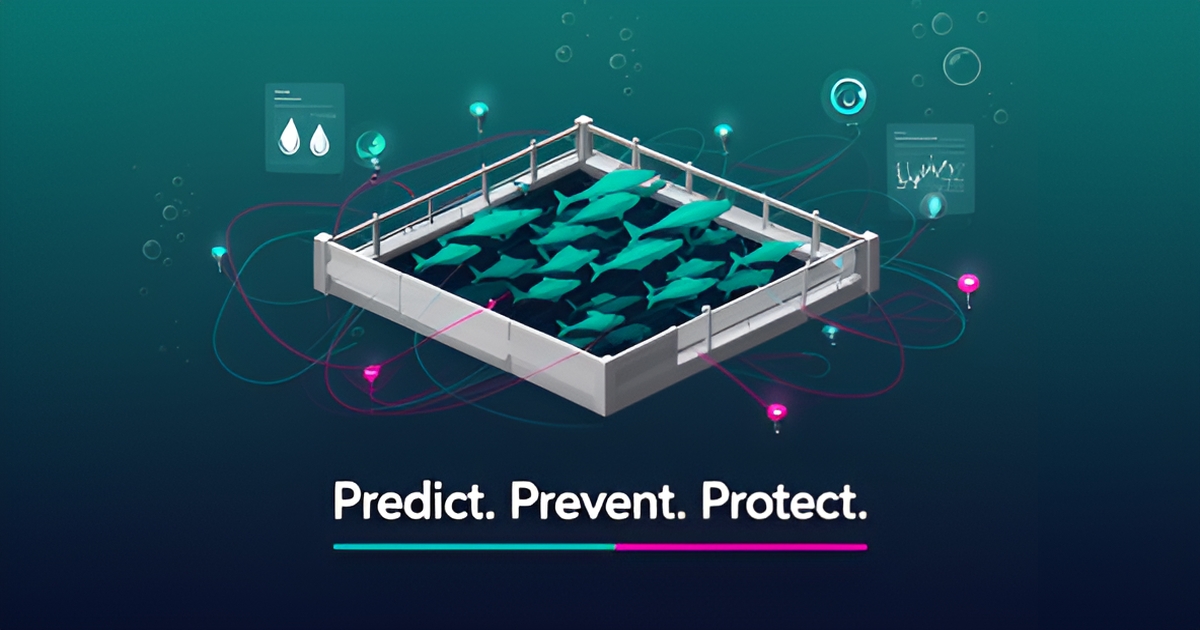
How an AI Fish Health Analyst Can Reduce Mortality in Aquaculture
Key Facts
- Aquaculture farms hundreds of billions of animals each year, making even small survival improvements significant at scale according to industry analysis.
- Traditional reactive health management triggers interventions only after visible disease signs appear, when stock stress is elevated and immune response is compromised per predictive monitoring research.
- Disease events generate significant production losses, emergency veterinary costs, and regulatory reporting obligations notes industry analysis.
- AI models generate continuous pathogen risk scores per production unit, flagging elevated risk before clinical signs emerge according to predictive monitoring research.
- Computer vision and sensor fusion algorithms analyze swimming patterns, feeding response, and schooling behavior to identify anomalies preceding observable disease symptoms per AI monitoring research.
- Smart monitoring integration with sensors and cameras enables timely alerts for farmers to adjust water parameters, feeding schedules, or administer treatments according to aquaculture AI reviews.
- AI technologies offer substantial potential to reduce mortality, enhance biosecurity, and support welfare-centered management practices per recent aquaculture research.
Hire a team member that works 24/7 — for less than a part-time wage.
AI receptionists, SDRs, dispatchers and 99+ roles. Trained on your business, fully managed.
Not sure where to start? Ask our AI planner
The Hidden Cost of Reactive Fish Health Management
Reactive fish health management is still the norm in aquaculture, and it is expensive. By the time a problem is visible, the damage is already underway.
Traditional aquaculture health management is largely reactive, leading to elevated stock stress levels, declined feed intake, and compromised immune response capacity by the time interventions are triggered. Predictive fish health monitoring research shows this delay allows disease events to escalate before action is taken. The health and welfare of cultured fish are critical determinants of aquaculture productivity and sustainability. Aquaculture health research emphasizes that welfare-centered management is essential for long-term viability.
The cost of waiting shows up in mortality and lost growth. Reactive interventions arrive after clinical signs emerge, when mortality risk is already rising and treatment options are limited. Industry analysis of predictive monitoring notes disease events in aquaculture generate significant production losses, emergency veterinary costs, and regulatory reporting obligations. AI technologies offer substantial potential to reduce mortality, enhance biosecurity, and support welfare-centered management practices. Recent AI for aquaculture reviews highlight this potential.
Farmers also face compounding operational penalties. Without continuous surveillance, water quality shifts and behavioral changes go unnoticed until fish are visibly stressed. Reviews on AI in fish monitoring explain that smart monitoring integration with sensors and cameras enables timely alerts for farmers to adjust water parameters, feeding schedules, or administer treatments. Delayed response means higher feed waste, slower growth, and increased chemical use.
The scale magnifies the impact. The industry farms hundreds of billions of animals each year. Analysis of AI in farmed aquatic animals points to the massive scale of production affected by health management choices. Reactive practices across that scale create systemic risk.
Common failure points of reactive management include:
- Interventions triggered only after visible disease signs appear
- Elevated stock stress and declined feed intake before action
- Compromised immune response capacity at time of treatment
- Emergency veterinary costs and regulatory reporting obligations after outbreaks
This is why AI for aquaculture and fisheries is shifting from optional to urgent. AIQ Labs deploys AI employees like Fish Health Analysts to monitor behavior, water parameters, and feeding data continuously. Predictive models integrate environmental stress indicators, health risk scores, and historical mortality patterns to generate mortality probability forecasts. Predictive monitoring research confirms models can flag elevated risk before clinical signs emerge, enabling structured interventions.
The move from reactive to predictive changes the economics of survival.
How AI Fish Health Analysts Enable Proactive Intervention
Most fish health crises in aquaculture are lost before they are even detected. By the time fish show visible signs of illness, research on predictive fish health monitoring shows that stock stress has already escalated, feed intake has dropped, and immune response is compromised — making intervention far less effective and far more costly.
An AI Fish Health Analyst addresses this problem by continuously analyzing three critical data streams: behavioral, environmental, and biological. Instead of relying on periodic human observation, it establishes a continuous health surveillance system that detects subtle changes long before clinical symptoms appear.
Behavioral analysis is one of the most powerful early indicators. Using computer vision and pattern recognition, AI systems monitor swimming patterns, schooling behavior, surface aggregation, and feeding responses. Small deviations — such as reduced movement or irregular feeding — often signal stress or disease onset days before visible symptoms emerge.
Environmental data adds another layer of intelligence. Sensors track water parameters like temperature and oxygen levels in real time, and AI models correlate these conditions with fish health outcomes. According to research on AI in aquaculture monitoring, this enables farmers to receive timely alerts and adjust water conditions, feeding schedules, or treatments before health risks escalate.
Biological data completes the picture. AI systems use image analysis to identify early signs of parasites, abnormalities, or disease in fish appearance. This allows for targeted interventions, reducing the need for broad-spectrum treatments and minimizing antibiotic use.
When these data streams are combined, AI can generate predictive insights such as mortality risk scores. As noted in industry analysis of predictive aquaculture systems, machine learning models integrate environmental stress indicators, historical mortality patterns, and real-time health signals to forecast risk at the production-unit level.
- Continuous monitoring of fish behavior using computer vision
- Real-time analysis of water quality parameters
- Early detection of disease and abnormalities
- Predictive mortality risk scoring
- Automated alerts for timely intervention
This shift from reactive to proactive management is where the real value lies. Instead of responding to outbreaks, operators can prevent them — improving survival rates and stabilizing production. AIQ Labs applies this same principle through AI employees like Fish Health Analysts, which monitor operations continuously and alert staff the moment risk begins to rise.
In an industry that farms hundreds of billions of aquatic animals annually, even small improvements in early detection can translate into significant gains in both welfare and profitability.
Implementation: Deploying AI Employees for Continuous Fish Health Surveillance
Continuous surveillance changes the economics of fish health. Traditional management remains largely reactive, leading to elevated stock stress levels, declined feed intake, and compromised immune response capacity by the time interventions are triggered.
AI-driven surveillance creates a data-driven health infrastructure that operates without interruption. Predictive fish health monitoring applies machine learning models to continuous environmental, behavioural, and biological data streams, enabling enterprises to detect health risk signals earlier and respond with structured interventions.
Integration starts with tool connections to existing farm systems. Sensors, cameras, and farm management platforms feed water parameters, feeding data, and behavior metrics into a unified stream. Smart monitoring integration leverages a combination of sensors, cameras, and data analytics to monitor real-time water quality and fish behavior, enabling timely alerts for farmers to adjust water parameters, feeding schedules, or administer treatments.
The AI Fish Health Analyst functions as a managed employee, not a dashboard. It is trained on the operation’s species, history, and protocols, then works 24/7/365 alongside human teams. Early detection of anomalies is enabled by computer vision and sensor fusion algorithms that analyze swimming patterns, feeding response, surface aggregation, and schooling behavior to identify anomalies that precede observable disease symptoms.
When risk scores rise, the analyst alerts staff with context and recommended actions. AI models generate continuous pathogen risk scores per production unit, flagging elevated risk before clinical signs emerge. Predictive models integrate environmental stress indicators, health risk scores, and historical mortality patterns to generate mortality probability forecasts.
Deployment is structured for operational reality. AIQ Labs delivers the analyst as a managed AI employee that connects to CRMs, sensors, and communication tools via API, learns from performance data, and improves over time. AI technologies offer substantial potential to reduce mortality, enhance biosecurity, and support welfare-centered management practices in aquaculture.
Implementation options match maturity and budget. Start Monthly provides one analyst with setup plus a flat monthly plan that includes build, training, tool integrations, monitoring, and improvements, with the ability to pause or adjust anytime. Build in Milestones splits a workflow or department system into phases, with approval and payment per phase and the ability to stop anytime while keeping everything built so far.
The operational impact is measurable across the production cycle:
- 24/7 behavioral and water quality monitoring with automated anomaly alerts
- Continuous pathogen risk scoring per production unit before clinical signs appear
- Structured intervention workflows that reduce the financial and operational impact of disease events
- Integration with existing farm tools for seamless data flow and staff notification
Aquaculture farms hundreds of billions of animals each year for food, making even small improvements in survival rate significant at scale. Industry analysis notes the technology affects an industry that farms hundreds of billions of animals each year. By leveraging AI algorithms, fish farmers can gain valuable insights into fish growth patterns, feeding behavior, and environmental factors affecting fish health, enabling proactive interventions to mitigate health issues and reduce losses.
Still paying for 10+ subscriptions that don’t talk to each other?
We build custom AI systems you own outright. No vendor lock-in. Full control.
Not sure where to start? Ask our AI planner
Frequently Asked Questions
How does an AI Fish Health Analyst actually reduce mortality in aquaculture?
What specific data does the AI monitor to detect problems early?
How much earlier can AI detect health issues compared to traditional methods?
Will this integrate with my existing farm sensors and management systems?
Do I need to hire technical staff to manage the AI system?
What does it cost to deploy an AI Fish Health Analyst?
From Reactive to Predictive: The Future of Fish Health Is Continuous
The shift from reactive to predictive fish health management isn't just a technological upgrade—it's an economic imperative. By the time disease symptoms become visible, mortality risk is already climbing and treatment options are narrowing. AI Fish Health Analysts change this equation by continuously monitoring behavioral patterns, water quality, and biological indicators to flag elevated risk before clinical signs emerge. This early warning capability translates directly into reduced mortality, lower treatment costs, and more stable production cycles. For an industry that farms hundreds of billions of aquatic animals annually, even marginal improvements in survival rates compound into significant gains. AIQ Labs deploys these analysts as managed AI employees that integrate with existing farm systems, learn your operation's specific patterns, and alert staff the moment intervention can still change outcomes. The technology is proven, the economics are clear, and the implementation path is straightforward. If you're ready to move from crisis response to continuous prevention, start with a two-minute fit check to identify where predictive monitoring can deliver the highest ROI in your operation.
Make AI your competitive advantage — not just another tool.
Strategy, implementation and ongoing optimization. One partner, end to end.
Not sure where to start? Ask our AI planner