Back to Blog

How an AI Project Manager Can Handle Multiple Design Firm Clients Efficiently

AI Business Process Automation > AI Workflow & Task Automation18 min read

How an AI Project Manager Can Handle Multiple Design Firm Clients Efficiently

Key Facts

  • AI processes 2.4 million images in 4 weeks, a task requiring 6 months manually.
  • Automated systems cut survey costs by 60-80% compared to traditional manual methods.
  • AI-driven monitoring cuts field-team response times by 40% through real-time detection.
  • AI Employees cost 75-85% less than human employees in equivalent operational roles.
  • AI Employees work 24/7/365 with zero missed calls or delayed responses.
  • AIQ Labs runs 70+ specialized agents simultaneously without human intervention.
  • AI Workflow Fix services start at $2,000 to target specific broken workflows.
  • Department Automation services range from $5,000 to $15,000 for comprehensive scaling.
AI Employees

What if you could hire a team member that works 24/7 for $599/month?

AI Receptionists, SDRs, Dispatchers, and 99+ roles. Fully trained. Fully managed. Zero sick days.

The Multi-Client Bottleneck: Why Manual Management Fails

Design firms frequently collapse under the weight of their own success. Managing multiple client projects simultaneously creates a chaotic environment where critical details slip through the cracks.

Manual data entry and disjointed communication channels are the primary culprits behind missed deadlines and frustrated stakeholders. When project managers spend more time updating spreadsheets than strategizing, operational efficiency plummets.

The risk of operational chaos grows exponentially with each new client added to the roster.

Manual project management is not just slow; it is fundamentally error-prone. Human teams struggle to maintain real-time visibility across dozens of concurrent deliverables.

This lack of centralized oversight leads to duplicated efforts, version control nightmares, and inconsistent client communication. The result is a reactive workflow that chases deadlines rather than controlling them.

Consider the efficiency gains possible when AI handles complex data processing. A national inventory project using AI was completed in 4 weeks, compared to 6 months using traditional methods according to DeepAI.

This drastic reduction in processing time highlights the potential for AI to compress project timelines significantly.

The core failure of manual systems is the lag between task completion and status updates. By the time a human notices a delay, it is often too late to mitigate the impact.

AI-driven systems enable faster response times through continuous, real-time monitoring. In wildlife conservation, multi-source detection systems cut field-team response time by 40% as reported by DeepAI.

This capability is directly transferable to design project management. Real-time tracking of design milestones allows for immediate intervention on delayed tasks.

Key inefficiencies include: * Manual status updates that are always outdated * Email chains that bury critical client feedback * Spreadsheet errors that skew resource allocation * Inconsistent communication across client accounts

Most design firms hit a "scalability wall" where adding more clients requires disproportionately more administrative staff. This linear cost increase destroys profit margins.

AI project managers break this cycle by automating routine tracking and reporting tasks. They integrate seamlessly into existing workflows via APIs rather than replacing core tools entirely according to industry research.

This allows design firms to scale their client base without inflating their overhead. The system learns workflow patterns and adapts to real-time changes in design schedules.

Benefits of AI-driven tracking: * Automated timeline adherence checks * Instant deliverable status verification * Proactive deadline risk alerts * Seamless integration with existing PM tools

The manual bottleneck is not just an inconvenience; it is a strategic liability that prevents growth. Design firms must shift from reactive administration to proactive management.

AI project managers offer a path to eliminate operational chaos while maintaining high-touch client relationships. The next section explores how AIQ Labs builds custom systems to make this transition seamless.

The Solution: Multi-Agent Orchestration for Client Management

Most design firms drown in manual coordination, wasting hours tracking timelines and updating clients across multiple projects. Standard automation tools fail because they handle single tasks in isolation, creating data silos that slow down complex design workflows.

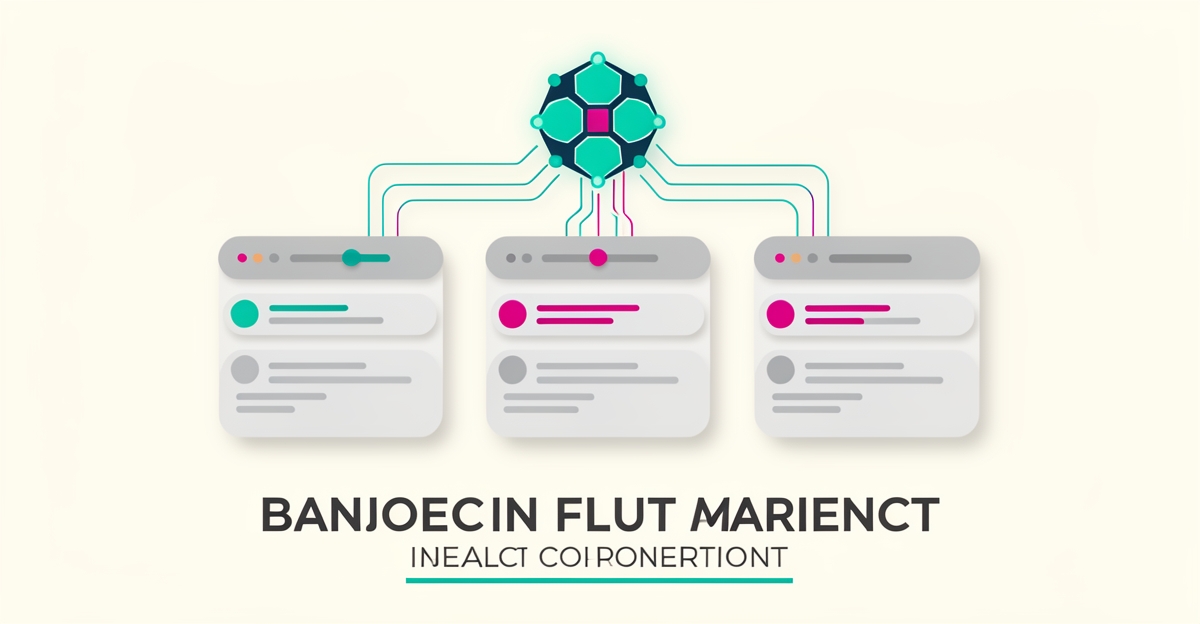
AIQ Labs solves this with multi-agent orchestration, where specialized AI agents collaborate simultaneously to manage the entire project lifecycle. Instead of a single bot, you get a coordinated team: one agent tracks deadlines, another monitors design deliverables, and a third drafts client progress updates.

This approach moves beyond simple task automation to intelligent workflow coordination. It mirrors how a human project manager would delegate duties, but operates 24/7 without fatigue or oversight gaps. The result is a seamless, transparent system that keeps multiple client projects on track without increasing headcount.

Case Study: AIQ Labs’ Large-Scale AI Marketing Suite demonstrates this power in production, running 70+ specialized agents simultaneously to handle research, content generation, and platform distribution without human intervention.

By leveraging LangGraph Workflows, these agents maintain stateful collaboration, ensuring that a delay in one design phase automatically triggers adjustments in scheduling and client communication. This proactive coordination prevents bottlenecks before they impact deadlines or client satisfaction.

An AI Project Manager for design firms isn’t a monolithic software; it’s a dynamic network of focused agents working in concert. Each agent is trained on specific aspects of the design workflow, allowing for precise execution and real-time adaptation to schedule changes.

  • Timeline Tracking Agent: Continuously monitors project milestones against original schedules, flagging potential delays days in advance.
  • Deliverable Monitoring Agent: Integrates with design tools to verify asset completion and version control status automatically.
  • Communication Agent: Drafts personalized progress updates for each client based on real-time project data, ensuring consistent transparency.
  • Resource Allocation Agent: Balances workload across design team members to prevent burnout and optimize turnaround times.

This division of labor ensures that no critical detail falls through the cracks. While a human designer focuses on creative execution, the AI infrastructure handles the administrative complexity of client management and progress reporting.

The efficacy of multi-agent systems is proven by their ability to process massive volumes of data with unprecedented speed. Research from DeepAI highlights that automated AI systems processed 2.4 million satellite images in just 4 weeks—a task requiring 6 months manually.

This dramatic compression of time demonstrates the potential for design project management. If AI can reduce large-scale data processing time by 83%, it can similarly streamline the monitoring of dozens of design deliverables across multiple clients.

Furthermore, these systems drastically reduce operational costs. The same research indicates that such automation reduced survey costs by 60-80%. For design firms, this translates to significantly lower overhead for project coordination while maintaining high-quality client oversight.

AI-driven monitoring also accelerates response times. In complex data environments, AI systems cut field-team response times by 40%. Applied to client management, this means issues regarding design revisions or timeline shifts are identified and communicated faster, enhancing client trust.

Unlike subscription-based SaaS tools that lock you into generic features, AIQ Labs builds custom-owned systems that adapt to your specific design firm’s needs. This ensures that your AI Project Manager evolves with your business rather than restricting your workflow.

Clients receive full ownership of custom-built systems, eliminating vendor lock-in and platform dependencies. You control the customization, data security, and future development of your project management infrastructure.

This model allows design firms to start small with an AI Workflow Fix starting at $2,000, targeting specific bottlenecks like automated status updates. From there, firms can scale to Department Automation ($5,000–$15,000) for comprehensive multi-client management.

By combining true ownership with enterprise-grade multi-agent architecture, AIQ Labs enables design firms to manage more clients with greater efficiency and transparency. The next step is integrating these agents into your existing project management tools for immediate impact.

Implementation: Deep Integration and Real-Time Visibility

Building a custom AI project manager requires more than just installing software; it demands deep two-way API integrations that connect your existing tools into a unified operational hub. Unlike off-the-shelf solutions that create data silos, AIQ Labs architects systems that communicate seamlessly with your current CRM, project management, and accounting platforms. This ensures that the AI doesn’t just observe your workflow but actively participates in it, pulling real-time data to track timelines and assign tasks without manual input.

The foundation of this integration is the True Ownership Model, which ensures that your custom-built system belongs entirely to your firm. You avoid vendor lock-in and retain full control over the code, intellectual property, and future development. This approach transforms AI from a subscription dependency into a scalable, owned digital asset that adapts to your firm’s unique processes rather than forcing you to adapt to rigid software constraints.

To handle multiple design clients efficiently, the AI system must ingest data from various sources instantly. This is achieved through deep two-way API integrations with critical tools like HubSpot, Salesforce, Asana, or Monday.com. By connecting directly to these platforms, the AI can monitor deliverable status, update timelines, and trigger notifications automatically. This eliminates the friction of switching between tabs and ensures that all project data remains synchronized across departments.

The system utilizes multi-agent orchestration to manage complex workflows. Specialized agents handle different aspects of project management: one agent tracks timeline adherence, another monitors design deliverable completion, and a third generates progress updates for clients. This division of labor allows the system to process thousands of data points daily, ensuring that no detail slips through the cracks regardless of how many clients you manage simultaneously.

  • Real-Time Data Sync: Automated synchronization between CRM, project management, and accounting systems.
  • Multi-Agent Collaboration: Specialized AI agents handle tracking, monitoring, and communication tasks.
  • Custom UI Development: A central dashboard serves as the single source of truth for all project metrics.

The efficiency of such integrated systems is backed by significant performance metrics. Research indicates that automated systems can process massive volumes of data significantly faster than manual methods. For instance, DeepAI research found that automated systems processed 2.4 million images in just 4 weeks—a task that would have taken 6 months manually. This demonstrates the potential for AI to compress project timelines and reduce operational costs by 60-80% in complex data environments.

Furthermore, real-time monitoring capabilities allow for immediate intervention when delays occur. The same research shows that AI-driven monitoring cut field-team response time by 40% in wildlife conservation projects. In a design firm context, this means catching a delayed milestone or a missed deliverable instantly, allowing project managers to reallocate resources before the client is ever impacted.

  • Time Compression: Automated processing can reduce large-scale data tasks by up to 80%.
  • Faster Response: Real-time monitoring cuts response times by 40%, enabling proactive issue resolution.
  • Scalability: Systems can handle thousands of data points daily without additional headcount.

AIQ Labs delivered a comprehensive platform proposal and implementation roadmap for a mid-sized architecture firm with over 70 employees. The engagement focused on deep integration research into the firm’s existing project management and accounting systems. By structuring the solution as a phased engagement, the firm was able to automate practice-wide operations, replacing disconnected tools with a unified AI-driven ecosystem. This example highlights how custom integration can transform manual, fragmented workflows into a cohesive, automated operation.

By prioritizing production-ready, scalable applications, AIQ Labs ensures that these systems are built for long-term growth rather than short-term fixes. The result is a transparent, accountable project management environment where timelines are accurate, deliverables are tracked automatically, and clients receive timely updates—all without increasing the human workload.

This technical foundation sets the stage for understanding how these systems can be deployed across multiple clients to maximize efficiency and minimize operational overhead.

Best Practices: Maintaining Transparency and Control

Best Practices: Maintaining Transparency and Control

Deploying an AI Project Manager across multiple design clients requires a strategic shift from manual oversight to automated governance. This approach ensures that AI enhances human judgment rather than replacing the creative intuition essential to design work.

Establishing Clear Communication Channels

Effective AI integration begins with defining how information flows between your team and clients. Instead of relying on sporadic emails, AI systems can automate progress updates through the channels clients prefer.

  • Automated email summaries for weekly status reports
  • Real-time chat notifications for critical milestone changes
  • Scheduled voice calls for high-level strategic reviews
  • Centralized dashboards for visual timeline tracking

This multi-channel approach ensures no missed calls or delayed responses while maintaining a personal touch. By automating routine communication, project managers can focus on complex client relationships and creative direction.

Leveraging Real-Time Monitoring for Accountability

Transparency is built on accurate, real-time data rather than retrospective reports. AI-driven systems can monitor project health continuously, allowing for immediate intervention when timelines slip.

Consider the efficiency of automated data processing: a national inventory project using AI was completed in 4 weeks, compared to 6 months using traditional methods. This dramatic reduction in processing time demonstrates how AI can compress timelines for large-scale design deliverables.

  • Real-Time Tracking: Monitor task completion via API integrations with design tools like Asana or Monday.com.
  • Automated Alerts: Receive instant notifications when deliverables are delayed or quality checks fail.
  • Historical Data: Use past performance to predict future bottlenecks accurately.

As noted by DeepAI, responsible AI can shorten the observation-to-action loop, freeing experts to focus on decisions rather than data processing. This capability allows design firms to maintain high accountability standards without overwhelming their staff.

Implementing Governance and Human-in-the-Loop Controls

To maintain control, design firms must embed governance frameworks directly into their AI systems. This ensures that AI acts as a supportive tool, not an autonomous decision-maker.

AIQ Labs emphasizes a "True Ownership Model," stating that clients receive full ownership of custom-built systems with no vendor lock-in. This approach allows firms to maintain strict control over customization and future development.

  • Audit Trails: Complete logging of all AI actions for compliance and review.
  • Human Escalation: Configurable triggers that route complex issues to human project managers.
  • Data Security: Robust protection for sensitive client intellectual property.

Research from DeepAI highlights that automated systems can reduce survey costs by 60-80% while maintaining accuracy. By applying similar logic to project management, firms can achieve significant cost savings while retaining human oversight for creative decisions.

Transitioning from Pilots to Full Transformation

Moving from a pilot stage to full transformation requires a structured approach that prioritizes scalability and integration. Most organizations get stuck at the pilot stage, but a phased implementation ensures sustainable success.

AIQ Labs helps businesses move up the maturity curve with structure, governance, and a clear strategy for scaling. Their "AI Workflow Fix" service starts at $2,000, allowing firms to target a single, critical broken workflow before expanding.

  • Phase 1: Discovery and architecture design (1–2 weeks)
  • Phase 2: Custom development and API integration (4–12 weeks)
  • Phase 3: Deployment, training, and user adoption (1–2 weeks)
  • Phase 4: Continuous optimization and scaling (Ongoing)

By starting with a targeted fix, design firms can experience immediate efficiency gains, such as a 95% reduction in operational errors from automated data synchronization. This proven track record builds confidence for broader AI adoption.

Ultimately, maintaining transparency and control ensures that AI serves as a powerful ally in managing multiple design clients efficiently.

Conclusion: Next Steps for AI Transformation

Transforming your design firm’s operations requires more than just adopting new tools; it demands a strategic partnership that delivers ownership, not dependency. AIQ Labs empowers you to build custom systems that learn from your unique workflow patterns, ensuring long-term scalability without the risk of vendor lock-in. By integrating these intelligent systems, you gain the ability to track timelines and monitor deliverables across multiple clients with unprecedented precision and transparency.

SMBs that embrace enterprise-grade AI often face steep learning curves, but our approach eliminates complexity through end-to-end partnership. We provide production-ready systems rather than theoretical prototypes, allowing your team to focus on creative excellence while we handle the operational heavy lifting. This shift from manual chaos to automated clarity is the key to sustainable competitive advantage in a crowded market.

To illustrate the potential impact of this transformation, consider the efficiency gains seen in large-scale data processing. Research indicates that automated systems can process 2.4 million satellite images in just 4 weeks, a task that traditionally required 6 months of manual labor. This dramatic reduction in processing time suggests that similar AI-driven project management tools could significantly compress timelines for large-scale design deliverables, allowing your firm to take on more clients without increasing headcount.

Furthermore, real-time monitoring capabilities enable faster response times to emerging issues. In complex environments, AI-driven detection systems have cut field-team response times by 40%, proving that immediate visibility into project status is critical for success. Similarly, our internal data shows that AI Employees cost 75–85% less than human employees in equivalent roles, offering a compelling economic incentive to automate routine project coordination tasks.

Implementing an AI Project Manager involves integrating these insights into your existing workflow through strategic milestones. The process begins with identifying high-value opportunities, such as automating progress updates or deadline reminders. By leveraging multi-agent orchestration, we can deploy specialized agents to handle specific tasks like timeline tracking, deliverable monitoring, and client communication simultaneously. This mirrors the architecture behind our Large-Scale AI Marketing Suite, which manages 70+ production agents daily to ensure seamless operation.

Here is how you can begin your AI transformation journey with tangible, low-risk steps:

  • Start with a Targeted Fix: Utilize our AI Workflow Fix service starting at $2,000 to rebuild a single critical broken workflow, such as automated client updates or task assignment.
  • Deploy an AI Employee: Hire a managed AI Project Manager to handle routine communication and tracking, working 24/7/365 with zero missed calls or delays.
  • Conduct a Free Audit: Schedule a strategy session to assess your current systems and identify high-ROI automation opportunities without any obligation.

Our True Ownership Model ensures that the custom-built systems we create belong entirely to you. You receive full control over customization and future development, with no vendor lock-in or platform dependencies. This approach is supported by our engineering excellence, featuring deep two-way API integrations with your existing CRM, accounting, and project management tools. You maintain complete intellectual property rights, allowing you to scale your AI capabilities as your business grows.

The path to efficiency is clear: replace manual bottlenecks with intelligent automation. By choosing AIQ Labs as your AI Transformation Partner, you gain a lifecycle partner invested in your long-term success, not just a vendor delivering point solutions. Our proven track record across industries proves that we can take core workflows from manual to fully AI-automated, regardless of your firm’s size.

Are you ready to eliminate operational inefficiencies and create a sustainable competitive advantage? Contact AIQ Labs today to discover how we can architect your unique AI workforce and transform your design firm’s potential into reality.

AI Development

Still paying for 10+ software subscriptions that don't talk to each other?

We build custom AI systems you own. No vendor lock-in. Full control. Starting at $2,000.

Frequently Asked Questions

How does an AI project manager actually handle multiple design clients without getting overwhelmed?
It uses multi-agent orchestration where specialized agents collaborate simultaneously—one tracks deadlines, another monitors deliverables, and a third drafts updates. AIQ Labs proves this scale is possible with their Large-Scale AI Marketing Suite, which runs 70+ specialized agents daily without human intervention.
Will this AI system replace my existing project management tools like Asana or Monday.com?
No, it integrates deeply with your current tools via two-way API connections to pull real-time data without creating silos. This allows the AI to monitor timelines and trigger notifications automatically while keeping your team in the software they already use.
Is it expensive to implement an AI project manager for a small design firm?
Entry-level options are accessible, starting with an AI Workflow Fix at $2,000 to automate a single critical bottleneck. For broader needs, managed AI Employees cost $599–$1,500 per month, which is 75–85% less than hiring a human equivalent.
Does the design firm own the AI system, or is it a locked-in subscription?
You receive full ownership of the custom-built system with no vendor lock-in or platform dependencies. This ensures you control the code, intellectual property, and future development of your project management infrastructure.
How fast can the AI detect delays compared to human project managers?
AI enables real-time monitoring that significantly accelerates response times, cutting detection-to-action loops by up to 40% in similar data environments. This allows for immediate intervention on delayed tasks before they impact the client.

From Reactive Chaos to Proactive Control: The AI Advantage

Manual project management is fundamentally incompatible with scaling a design firm. As demonstrated, reliance on spreadsheets and disjointed communication creates a reactive workflow where critical details slip through the cracks, leading to missed deadlines and operational chaos. By contrast, AI-driven systems transform this dynamic by enabling real-time monitoring and immediate intervention, significantly compressing project timelines and eliminating the lag inherent in human-led updates. AIQ Labs bridges this efficiency gap by building custom AI project management systems that learn from your unique workflow patterns and adapt to real-time schedule changes. Unlike generic software, our solutions provide true ownership without vendor lock-in, ensuring you maintain full control over your operational intelligence. Whether you are looking to streamline a single critical workflow or overhaul your entire department, our tailored approach eliminates the subscription chaos and manual bottlenecks that hinder growth. Stop chasing deadlines and start controlling them. Contact AIQ Labs today to discover how our custom AI solutions can architect your competitive advantage and transform your design firm’s operational efficiency.

AI Transformation Partner

Ready to make AI your competitive advantage—not just another tool?

Strategic consulting + implementation + ongoing optimization. One partner. Complete AI transformation.

Join The Newsletter

Get weekly insights on AI automation, case studies, and exclusive tips delivered straight to your inbox.

Ready to Increase Your ROI & Save Time?

Book a free 15-minute AI strategy call. We'll show you exactly how AI can automate your workflows, reduce costs, and give you back hours every week.

P.S. Still skeptical? Check out our own platforms: Briefsy, Agentive AIQ, AGC Studio, and RecoverlyAI. We build what we preach.