How an AI Ranch Manager Can Handle Daily Operations 24/7
Key Facts
- Virtual fencing typically replaces physical barriers using audio cues from smart collars to guide cattle within app-drawn boundaries
- Modern ranch AI tools can track hay inventory — total tonnage, daily consumption, and estimated days remaining — to prevent both shortages and waste
- AIQ Labs has deployed 200+ multi-agent production systems and runs 4 live SaaS products daily per AIQ Labs portfolio
- AI Employees typically cost around 80% less than a comparable human hire while working 24/7/365 per AIQ Labs cost comparison
- Unified ranch operating layers replace fragmented spreadsheets with task-driven scheduling linked directly to production work
Hire a team member that works 24/7 — for less than a part-time wage.
AI receptionists, SDRs, dispatchers and 99+ roles. Trained on your business, fully managed.
Not sure where to start? Ask our AI planner
The 24/7 Ranching Bottleneck: When Daily Chores Limit Strategic Growth
The alarm goes off before dawn, and the day's first decision isn't about growth strategy — it's about which fence line needs walking, which water tank needs checking, and which spreadsheet holds this week's feed records. This is the 24/7 ranching bottleneck: operational gravity that keeps owners working in the business instead of on it.
Most operations still juggle separate spreadsheets for feed, water access, and animal movement — creating data silos that prevent repeatable workflows. Off-the-shelf ranch software has improved, but as of late 2026 it still tends to lag broader farm platforms in maturity, which is why many operations end up stitching tools together by hand.
- Physical fence maintenance consumes hours that could drive strategic planning
- Paper-based record keeping creates audit gaps and compliance risk
- Constant herd checks tether operators to the property 365 days a year
- Disconnected tools for grazing, health, and inventory prevent holistic decisions
The cost compounds silently. When every morning starts with manual checks — walking fence lines, verifying water access, updating calving logs by hand — there's no bandwidth left for genetic improvement programs, market timing, or land acquisition analysis. Virtual fencing technology now eliminates physical barriers entirely, using audio cues from solar-powered collars to guide cattle within app-drawn boundaries. Yet adoption remains low because the workflow integration — connecting that grazing data to feed inventory, health records, and financials — still requires human translation.
Purpose-built ranch AI assistants demonstrate what's possible: voice-activated calving logs, automated hay consumption calculations, and pasture rotation tracking with crash-safe backups. But these tools still rely on the rancher as the central processor. True 24/7 operational autonomy requires an AI layer that doesn't just record tasks — it executes them, learns from patterns, and escalates only the decisions that demand human judgment.
AIQ Labs approaches this as a workflow automation challenge: replacing the manual connective tissue between feeding, watering, movement, and recording with managed AI employees that operate across systems continuously. The bottleneck isn't the work itself — it's the human router sitting in the middle of every operational loop.
Automating the Essentials: Feed, Water, and Herd Movement on Autopilot
Modern ranches operate on tight margins where every minute spent on manual tasks erodes profitability. AI-driven automation transforms three critical daily operations — feed management, water access monitoring, and herd movement — into self-running systems that function 24/7 without human intervention. This shift allows ranchers to redirect their focus from reactive chores to strategic decisions that drive growth and sustainability.
Automated feed scheduling begins with intelligent inventory tracking that calculates daily consumption based on herd size, weather, and nutritional needs. Modern ranch AI tools track hay and feed inventory in real time, calculating total tonnage, daily consumption rates, and estimated days remaining to prevent both shortages and waste. This eliminates guesswork and manual logbook updates, ensuring animals receive consistent nutrition while optimizing storage and purchasing cycles. More advanced setups integrate feed data with grazing plans, allowing adjustments based on pasture conditions and animal behavior patterns detected through smart collars.
Water access logging operates continuously through sensor-equipped troughs and wearable monitors that record consumption patterns, frequency, and duration for each animal. These systems flag deviations that may indicate illness, stress, or equipment failure — such as a blocked valve or frozen line — before they escalate into health crises. By automating this monitoring, ranchers gain 24/7 visibility into herd hydration without needing to physically check multiple water sources across vast acreage, a task that traditionally consumes hours each day.
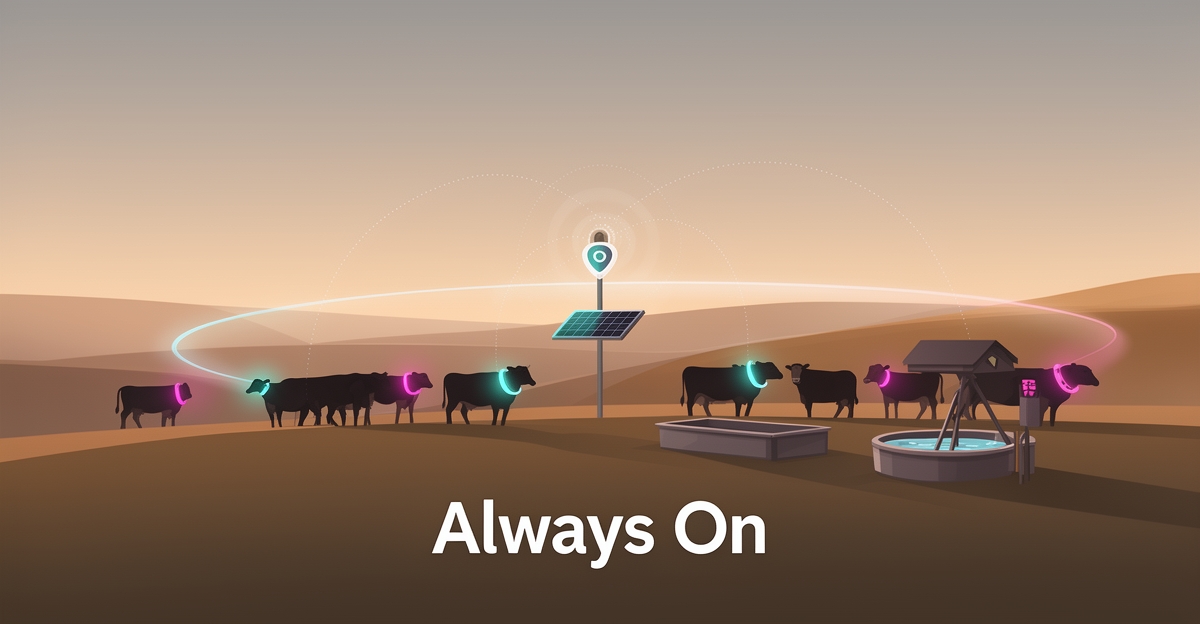
Herd movement management relies on virtual fencing technology that replaces physical barriers with GPS-enabled collars and audio cues. Solar-powered collars emit gentle sounds when animals approach digital boundaries, training them to stay within designated grazing zones without posts, wires, or maintenance. Connectivity options typically range from LoRaWAN for smaller properties to satellite links for larger or remote ranches, ensuring broad coverage. Real-time GPS tracking provides live herd location updates to phones or desktops, enabling remote monitoring and instant boundary adjustments via an app — turning pasture rotation and grazing planning into automated, data-driven processes.
Together, these automated essentials create a foundation for true autonomous operation. When feed, water, and movement systems work in concert, they reduce manual labor by eliminating repetitive checks and adjustments. AIQ Labs builds production-ready systems that integrate these capabilities into a unified operational framework — whether that starts as a single workflow rebuild or grows into a full AI operating system you own outright.
Continuous Intelligence: Health Monitoring and Audit-Ready Records Without the Paperwork
Smart collars and cloud connectivity now deliver the kind of round-the-clock oversight that used to require a night-shift crew. An integrated AI system combines GPS tracking with behavior analysis to flag illness before visible symptoms appear, sending real-time alerts to a phone or desktop from anywhere on the operation. This continuous intelligence layer replaces periodic visual checks with a data stream that never sleeps.
Paper logs and spreadsheets introduce gaps that auditors and veterinarians notice immediately. A dedicated ranch management app captures every calving event, breeding record, and vaccination treatment with crash-safe backups that survive force quits, crashes, and restarts. Each entry locks in animal tag, vaccine name, dose, date, and withdrawal days automatically, creating a tamper-evident chain that satisfies compliance reviews without manual reconciliation.
Structured data collection turns daily chores into audit-ready documentation by default. When hay inventory, pasture rotations, and water access are logged through the same system that tracks animal movement, the operation builds a living record that answers traceability requests in seconds rather than hours. Unified operating layers now replace fragmented workflows, combining scheduling, task assignment, and production tracking in one environment.
- AI-powered health monitoring detects illness early through behavior deviation alerts
- Automated calving logs capture date, dam tag, calf tag, sex, birth weight, and notes
- Vaccination records include withdrawal-day tracking for food-safety compliance
- Pasture rotation logs record acreage, animal count, move-in date, and planned rotation
- Hay and feed inventory calculates tonnage, daily consumption, and days remaining
The shift from reactive recordkeeping to continuous intelligence mirrors what AIQ Labs sees across industries: when structured data flows directly from field sensors into a central nervous system, compliance becomes a byproduct of operations rather than a separate project. Ranchers gain the freedom to focus on genetics, grazing strategy, and market timing while the system handles the documentation that proves they did it right.
Implementing Your AI Ranch Manager: From Single Workflow to Full Automation
Most ranches don't need a massive overhaul to start seeing results from AI — they need one workflow that actually works. The difference between a pilot that stalls and a system that scales comes down to ownership, integration, and a partner who stays after launch. AIQ Labs structures every engagement around those three pillars, whether you're automating a single feed schedule or deploying a full AI operating system across the operation.
- Pick one critical workflow — automated feed scheduling, water access logging, or animal movement tracking — and rebuild it as a production-grade AI agent
- Expand to department-level automation for herd health, grazing management, or compliance documentation
- Deploy a complete AI operating system that connects every workflow through a custom interface you own outright
The Start Monthly model puts an AI employee on your team for roughly 80% less than a comparable human hire — setup, training, tool integrations, monitoring, and continuous improvements included. You can pause or adjust anytime. For larger builds, the Build in Milestones approach lets you approve and pay per phase, keeping everything delivered if you stop. And when you're ready for full ownership, the Own It Outright option transfers all code, agents, and data to you — no vendor lock-in, no platform dependencies.
Ranch teams increasingly run daily field work, compliance records, and operational notes inside one unified system instead of scattered spreadsheets. That pattern — task-driven scheduling with activity history linked to production work — mirrors how AI agents execute repeatable workflows autonomously. Off-the-shelf ranch software, as of late 2026, still tends to trail broader farm platforms in maturity, which is why many operations benefit from custom-built automation rather than one-size-fits-all tools.
AIQ Labs builds on that same architecture: multi-agent systems that connect to your existing tools, reason through structured workflows, and operate 24/7 with validation layers and human-in-the-loop guardrails. The same infrastructure runs our own portfolio — 200+ multi-agent systems deployed and 4 live SaaS products we operate daily — so when we say a system is production-ready, it's because we run it ourselves.
Start with the two-minute Fit Check at aiqlabs.ai/apply, then a free 30-minute strategy call at aiqlabs.ai/book to map your biggest bottleneck and the fastest path to ROI. If there isn't a clear win, we'll tell you.
Still paying for 10+ subscriptions that don’t talk to each other?
We build custom AI systems you own outright. No vendor lock-in. Full control.
Not sure where to start? Ask our AI planner
Frequently Asked Questions
How does an AI ranch manager handle daily operations without human intervention?
Can AI really monitor cattle health 24/7 without ranchers checking on them constantly?
What specific tasks can be automated first when implementing an AI ranch manager?
How does virtual fencing technology work without physical barriers?
Is ranch-specific software mature enough to handle AI-driven automation, or do I need custom solutions?
How do AI systems ensure records are audit-ready and compliant without manual paperwork?
From Dawn Patrol to Strategic Growth
The 24/7 ranching bottleneck isn't the work itself — it's the human router in the middle of every loop. When feed scheduling, water access logging, and herd movement run on autopilot through virtual fencing, sensor monitoring, and real-time inventory calculations, the daily chores that once started before sunrise become background operations. Continuous intelligence adds the next layer: behavior-based health alerts, crash-safe calving and vaccination records, and pasture rotation logs that create audit-ready documentation without paperwork. That shift frees owners to focus on genetics, grazing strategy, and market timing instead of manual checks. AIQ Labs builds production-ready AI systems — 200+ multi-agent deployments and 4 live SaaS products run daily — that connect these workflows into a unified operational framework you own and control. Pick one critical workflow to automate first, prove the gain, then scale. Start the Fit Check at aiqlabs.ai/apply for a free 30-minute strategy call to map your biggest bottleneck and the fastest path to ROI. If there isn't a clear win, we'll tell you.
Make AI your competitive advantage — not just another tool.
Strategy, implementation and ongoing optimization. One partner, end to end.
Not sure where to start? Ask our AI planner