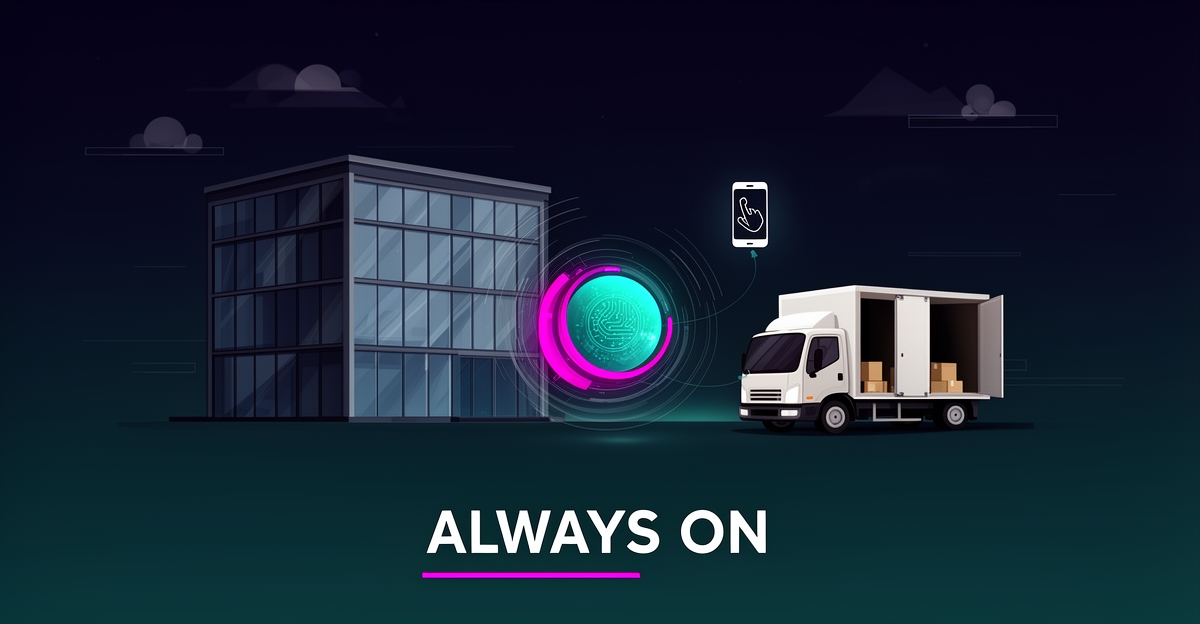
How an AI Receptionist Can Handle Office Moving Inquiries 24/7
Key Facts
- Most callers hang up if they aren't connected within the first few minutes — and many never call back
- A full-time human receptionist typically costs $50,000–$70,000 annually once salary, benefits, and training are included
- AI receptionists provide 24/7/365 coverage without sick days or vacation gaps, ensuring no missed inquiries
- AI receptionists handle multiple calls simultaneously with instant responses to late-night quote requests during peak moving seasons
- Implementation of an AI receptionist typically takes days, not weeks, compared to hiring and training staff
- AIQ Labs has deployed 200+ multi-agent systems and runs 4 live SaaS products daily
Hire a team member that works 24/7 — for less than a part-time wage.
AI receptionists, SDRs, dispatchers and 99+ roles. Trained on your business, fully managed.
Not sure where to start? Ask our AI planner
The After-Hours Problem: Why Moving Companies Lose Calls (and Customers)
Moving companies face a critical challenge: inquiries are time-sensitive and high-volume, but human receptionists create unavoidable coverage gaps. When potential customers call outside standard business hours or during peak moving seasons, they often encounter voicemail or long hold times—leading to immediate frustration and lost opportunities.
Industry research consistently shows that most customers hang up if they don't get connected within the first few minutes, and a large share of those callers never attempt to reach the company again. For moving businesses, where each lead represents a high-value job often worth thousands of dollars, this translates directly into significant revenue leakage—especially during evenings, weekends, and holidays when human staff are off duty.
Simply hiring more receptionists isn't a scalable solution. The true cost of employment for a single full-time receptionist typically ranges from $50,000 to $70,000 annually when salary, benefits, taxes, and training are factored in. Yet even with additional staff, gaps persist during shift changes, lunches, and unexpected absences. Moving companies need a way to capture every inquiry without inflating overhead—one that matches the urgency of their customers' needs.
- Instant response to late-night quote requests, eliminating voicemail frustration
- Consistent handling of FAQs about pricing, availability, and service areas
- Seamless appointment scheduling that syncs with existing calendars
- Intelligent call routing to the right human agent when needed
- 24/7 coverage without overtime, sick days, or vacation gaps
AIQ Labs helps moving companies deploy AI Employees — managed AI receptionists that integrate directly with their current CRM and scheduling tools, ensuring no disruption to existing workflows while capturing every lead, every hour of the day. This approach turns after-hours vulnerability into a competitive advantage, ensuring no inquiry goes unanswered and no opportunity slips away due to timing alone.
What an AI Receptionist Actually Does for a Moving Company
Moving companies face constant pressure to respond to inquiries at all hours, especially when customers are planning relocations outside standard business hours. An AI receptionist provides a reliable solution by handling routine moving inquiries with speed and precision, ensuring no opportunity is missed due to timing or staffing limitations. It answers common questions about pricing, services, and availability using pre-configured scripts that align with company policies, delivering the same accurate information every time. This consistency eliminates the variability that can occur with human agents affected by fatigue or mood, ensuring every caller receives reliable details about moving packages, insurance options, or service areas.
The AI receptionist excels at managing high-volume periods by handling multiple simultaneous calls without delay, a critical advantage when moving inquiries spike during peak seasons or after business hours. It can instantly respond to late-night quote requests, schedule surveys, and book consultations directly into the company's calendar system, capturing leads that would otherwise be lost. Because most callers won't wait long to be connected—and many never call back—immediate response is essential for conversion. By providing instant engagement, the AI receptionist significantly reduces missed opportunities and improves lead capture rates.
When inquiries involve complex scenarios—such as specialized equipment needs, multi-location moves, or unique timing constraints—the AI receptionist intelligently routes the call to a human agent with full context preserved. This seamless handoff ensures customers don't need to repeat information, maintaining a smooth experience while allowing staff to focus on high-value interactions. AIQ Labs designs these systems to integrate with existing CRM and scheduling tools, enabling real-time data synchronization without disrupting current operations. The result is a scalable, always-available front desk that supports both efficiency and customer satisfaction.
The Numbers: Cost, Coverage, and Consistency Compared
The financial and operational advantages of an AI receptionist become clear when comparing it directly to human staffing for moving inquiries. For moving companies, the average receptionist salary typically ranges from $30,000 to $45,000 annually, with true employment costs—including benefits, taxes, and training—often reaching $50,000 to $70,000 per year. A managed AI receptionist, by contrast, typically costs a small fraction of that—often less than a part-time hire—allowing businesses to reallocate resources toward growth initiatives while maintaining professional front-desk coverage.
Beyond cost, coverage and consistency present stark contrasts between AI and human receptionists. Human staff work standard shifts, creating unavoidable gaps during evenings, weekends, and holidays—precisely when time-sensitive moving inquiries often arise. In contrast, AI receptionists provide true 24/7/365 availability without fatigue, sick days, or shift changes, ensuring every call is answered immediately. Given that most callers won't stay on the line for long—and many never call back—constant availability is critical for lead capture. Additionally, AI systems eliminate performance variability caused by human factors like mood or fatigue, delivering consistent responses to every inquiry—whether it's the first call of the day or the hundredth at midnight.
Integration capabilities further widen the gap. AI receptionists connect with CRM platforms and calendar systems, enabling automatic appointment scheduling, lead logging, and follow-up tracking without manual data entry. This eliminates the errors and inconsistencies that commonly occur when human staff juggle multiple systems or rush during peak periods. While AI excels in routine, high-volume tasks like answering FAQs and booking moves, human receptionists still add unique value in emotionally complex situations or highly unusual scenarios requiring empathy, judgment, or creative problem-solving. For moving companies using AIQ Labs' AI Employee model, this balance allows human teams to focus on high-touch interactions while the AI handles repetitive inquiries with unwavering reliability—creating a hybrid approach that maximizes both efficiency and customer experience.
How to Implement an AI Receptionist Without Disrupting Operations
The biggest worry moving companies have about AI isn't whether it works — it's whether deployment will throw their front office into chaos during peak season. In practice, the opposite is true: a well-scoped rollout happens alongside your existing team, not over them.
The first step is an honest assessment of where calls break down. Pull your call logs and identify patterns: which hours produce the most missed calls, which questions repeat daily, and where leads stall before booking. This matters because most callers hang up if they aren't connected within a few minutes, and many never call back at all. Those patterns tell you exactly which pain points to target first.
From there, configuration is straightforward. You feed the system your business information — service areas, move types, pricing parameters, availability windows — and build scripts and FAQs from real call data rather than guesswork. In most cases, this initial setup takes days, not weeks, compared to the weeks required to hire and train a human receptionist.
A practical rollout sequence looks like this:
- Audit call data to pinpoint missed-call windows and repetitive inquiries
- Configure business details, pricing logic, and service parameters
- Draft scripts and FAQs from actual customer conversations
- Integrate with your existing calendar and CRM so bookings sync automatically
- Run test calls, refine responses, and expand coverage gradually
Integration is where zero-disruption deployment becomes real. Because the AI receptionist connects directly to your scheduling software and CRM, your human staff keep their existing workflows — the AI simply fills the gaps around them, handling overflow during lunch rushes and capturing the after-hours inquiries that currently go to voicemail. Modern systems integrate with existing CRM and scheduling platforms to create a unified view of every customer interaction, eliminating the manual data entry that causes errors.
The financial risk of piloting is also lower than most owners expect. With the true annual cost of a full-time receptionist typically running $50,000 to $70,000 once benefits and overhead are included, AIQ Labs' Start Monthly model — a flat plan costing less than a part-time hire, with build, training, integrations, and monitoring included — lets a moving company test an AI receptionist without restructuring payroll. You can pause or adjust anytime, which makes it a genuine pilot rather than a commitment.
Treat the first month as a calibration period. Review call recordings weekly, flag the unusual requests the AI escalates, and tighten scripts where callers seem confused. Test, refine, repeat — the system improves fastest when you feed it real outcomes rather than assumptions. Within weeks, most moving companies find the AI handling the predictable majority of inquiries flawlessly, freeing their team to give complex moves the human attention they deserve.
Getting Started: Prove the Value Before You Scale
Moving inquiries don't wait for business hours, and every missed call is a quote lost to a competitor. Proving value fast means starting small, measuring what matters, and expanding only when the numbers are clear.
A low-risk pilot focuses on after-hours and overflow calls where human coverage is thin. AI receptionists provide true 24/7/365 coverage without exception, capturing leads that would otherwise be lost due to after-hours calls. That availability matters because most customers won't stay on the line if they aren't connected quickly, and many never attempt to call back.
Start with a single inbound line for quotes and scheduling, tied to your existing calendar and CRM. AI receptionists can integrate with existing systems, including CRM and scheduling platforms, providing a unified view of customer interactions. This keeps human operations intact while the AI handles FAQs, captures move details, and books appointments.
Measure the pilot on lead capture and speed, not hype. Track these core signals for 30 days:
- After-hours calls answered vs. missed, and calls converted to booked quotes
- Average response time for late-night quote requests and first-contact resolution
- Cost per booked appointment compared to current staffing
Cost context helps set expectations. The average receptionist salary for moving companies typically ranges from $30,000 to $45,000 annually, with true employment cost often $50,000–$70,000 per year. A managed AI receptionist typically delivers the same coverage for a small fraction of that cost — often less than a part-time hire — while never missing a call.
Consistency is the other win. AI receptionists maintain consistent, accurate responses across all interactions, ensuring every potential customer receives information aligned with the company's policies. The pilot should use a prepared script and FAQ, then test, practice, and improve the AI receptionist based on real calls.
AIQ Labs helps moving companies deploy custom AI receptionists that integrate with existing calendars and CRM systems without disrupting human operations. Once the pilot shows captured leads and booked quotes, expand to daytime overflow and additional locations. For companies ready to rebuild more than the front desk, a phased AI Workflow Build targets the single workflow that costs the most, or a full AI Operating System connects the entire operation in owned phases.
Start the Fit Check for a free 30-minute strategy call with an AI engineer to map your biggest bottleneck. We'll review your current call flow and give honest guidance if there isn't a clear win.
Still paying for 10+ subscriptions that don’t talk to each other?
We build custom AI systems you own outright. No vendor lock-in. Full control.
Not sure where to start? Ask our AI planner
Frequently Asked Questions
How much does an AI receptionist cost compared to hiring a human receptionist for my moving company?
Will an AI receptionist really answer calls 24/7, including nights and weekends?
How long does it take to set up an AI receptionist, and will it disrupt my current operations?
What happens when a caller has a complex moving situation the AI can't handle?
Can an AI receptionist book appointments and sync with my calendar and CRM?
How do I test an AI receptionist without a big financial commitment?
Turn Missed Calls Into Booked Moves
The math is simple: every missed call is a booked move for your competitor. When most callers hang up within minutes and many never try again, relying on voicemail means watching high-value jobs disappear during evenings, weekends, and peak season rushes. An AI receptionist closes that gap by answering every inquiry instantly, booking appointments directly into your calendar, and maintaining consistent quality at 2 AM or 2 PM—all for a small fraction of the $50,000–$70,000 typical annual cost of human staffing. The result isn't just savings; it's a predictable pipeline of captured leads without adding payroll pressure. AIQ Labs builds these systems to integrate with your existing CRM and scheduling tools, so you capture every opportunity without disrupting your current operations. Ready to stop losing moves to missed calls? Start with the free Fit Check at aiqlabs.ai/apply to map your biggest bottleneck and see if a pilot makes sense for your business.
Make AI your competitive advantage — not just another tool.
Strategy, implementation and ongoing optimization. One partner, end to end.
Not sure where to start? Ask our AI planner