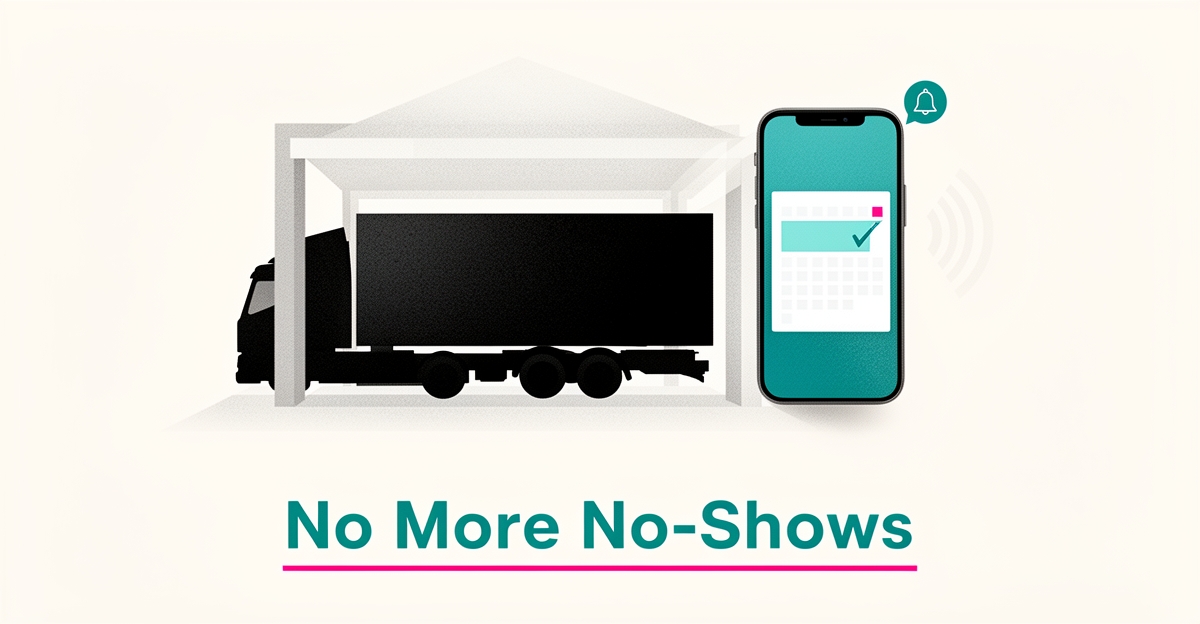
How an AI Receptionist Can Reduce No-Show Rates at Your Truck & Trailer Repair Shop
Key Facts
- Industry estimates put the value of a single auto repair call at roughly $150 to $500 in ticket revenue — every missed call is that money walking out the door
- A large share of customers go with whichever shop answers the phone first, so response speed is a direct revenue lever
- AI receptionists typically answer in under two seconds, versus four or more rings at a busy human front counter
- Shops deploying AI call handling commonly report meaningful lifts in booked appointments from calls that previously went to voicemail
- A well-configured AI receptionist can handle the bulk of routine inbound volume at a fraction of the cost of added headcount
- Automated confirmations and reminders are the most direct lever on no-show rates — customers who get reminders forget less
- A managed AI employee typically costs a small fraction of a full-time human hire — AIQ Labs pricing runs roughly 80% less than an equivalent human receptionist
Hire a team member that works 24/7 — for less than a part-time wage.
AI receptionists, SDRs, dispatchers and 99+ roles. Trained on your business, fully managed.
Not sure where to start? Ask our AI planner
The Hidden Cost of Missed Calls and No-Shows
The phone rings while a service writer is checking in a rig, processing a payment, and explaining a repair order. That's when calls get missed — and the revenue disappears without a trace in your shop management system.
A busy repair shop can field dozens of inbound calls per day, and industry estimates put the value of a single missed auto repair call at $150 to $500 in lost ticket revenue. During peak seasons, call volume can spike sharply, overwhelming already-stretched front-counter staff. The result is silent revenue leakage that compounds month after month.
Run the math on your own shop: five missed calls a day at a $300 average ticket is $1,500 in potential revenue lost daily — tens of thousands per month. You never see the appointment that didn't get booked. Your system doesn't log the call that rang out. The revenue just silently goes to someone else.
Customer behavior makes the problem more urgent. A large share of customers go with whichever shop picks up the phone first, and most expect a response within minutes. When a human-only system can't scale to unpredictable call patterns, the shop pays for it in lost trust and lost jobs.
The hidden cost shows up in several places:
- Missed inbound calls during morning rush and checkout bottlenecks
- After-hours calls from drivers who notice a problem on evening commutes
- No-shows from appointments booked without confirmation or reminders
- Front-counter stress that pulls service writers away from customers in the bay
The root cause isn't effort. It's architecture. A human-only phone system cannot scale to match unpredictable call patterns without overspending on labor. A full-time receptionist typically costs thousands per month in wages alone, plus benefits and training — and they still can't answer calls at 7 AM or 8 PM.
This is why inbound call management AI is increasingly used in repair environments. An AI receptionist answers every call instantly, books against real-time availability, and sends automated confirmations and reminders that directly reduce no-show rates. AIQ Labs deploys managed AI employees — including AI receptionists — that handle calls, confirm appointments, and send reminders without increasing overhead, at roughly 80% less cost than an equivalent human hire.
Why Human-Only Phone Systems Can't Keep Up
The front desk of a truck and trailer repair shop operates under constant pressure, where unpredictable call patterns expose the fundamental limitations of relying solely on human staff. A busy shop can field dozens of inbound calls per day, and during peak seasons — winter cold snaps, summer road-trip prep — call volume can spike sharply, overwhelming front-counter teams already juggling vehicle check-ins, payment processing, and repair explanations. When service writers are pulled between tasks, calls go unanswered, and each missed call represents real ticket revenue lost. This isn't a staffing shortage — it's an architectural flaw. Human-only systems cannot scale to match fluctuating demand without incurring excessive labor costs, yet they still fail to cover after-hours calls, lunch breaks, or simultaneous inquiries. As a result, shops lose revenue silently, with no record in their management system of the call that rang out and the appointment that never got booked. The problem isn't effort — it's that a human receptionist, no matter how dedicated, can only handle one call at a time and is unavailable outside standard business hours, leaving critical opportunities to competitors who answer first.
- Unpredictable call clusters during morning rush, checkout periods, and after-hours overwhelm limited front-desk staff
- Each missed call loses real ticket revenue — five missed calls daily at a $300 average ticket is $1,500+ in potential daily losses
- A full-time human receptionist typically costs $40,000–$55,000+ annually once wages, benefits, and overhead are loaded in
AIQ Labs helps repair shops overcome these structural limits by deploying AI receptionists that answer every call instantly, book appointments in real time, and capture after-hours opportunities human teams consistently miss — without requiring additional headcount or overtime pay. This shifts the front desk from a reactive bottleneck to a proactive revenue capture system, ensuring no call goes unanswered and every inquiry moves toward a scheduled service.
How AI Receptionists Reduce No-Shows and Capture Revenue
No-shows rarely start at the appointment — they start with a phone call that rang out, a booking that never got confirmed, or a reminder that never came. An AI receptionist closes each of those gaps with four specific mechanisms that work together to keep scheduled trucks in your bays.
The first mechanism is instant call answering. An AI receptionist picks up in under two seconds, compared to the four or more rings typical of a busy front counter, and handles unlimited simultaneous calls rather than one at a time. Modern voice agents routinely complete the vast majority of conversations without any human intervention. This matters because most customers expect a fast response, and a large share go with whichever shop picks up first.
Second, the AI books appointments against real-time availability and sends an automatic confirmation by text or email the moment the call ends. It knows how long a diagnostic takes versus a brake job and slots services into the right time blocks without double-booking bays. Automated reminders are the single most direct lever on no-show rates, since customers who receive confirmations are far less likely to forget their scheduled service.
Third, after-hours coverage captures demand human staff can't reach. A significant share of callers reach out outside business hours — after noticing a problem on an evening commute or first thing before doors open. Without coverage, those callers hear a recording and dial a competitor; with an AI receptionist, they get booked immediately or leave structured details for morning follow-up.
Fourth, consistent intake eliminates the variability that causes scheduling errors. A veteran service writer might ask eight qualification questions; a new hire might ask three. The AI asks the same questions on every call, capturing complete vehicle, service, and contact information before the appointment is ever confirmed.
The results from real deployments are measurable:
- Zero missed calls — every inbound call answered within seconds
- A meaningful lift in booked appointments from calls that previously went to voicemail
- Hold times collapsing because calls never queue behind a busy counter
- New revenue from evening and weekend callers who previously heard a recording
The most effective deployment is a hybrid model: the AI answers all inbound volume and handles after-hours booking, while your service writers focus on customers standing in the shop. Most businesses that deploy AI receptionists don't eliminate human staff — they redeploy them. AIQ Labs builds these systems around that pattern, training the AI on your specific services and integrating it directly with your scheduling platform so confirmations and reminders flow automatically, without adding overhead to your front counter.
The Hybrid Model: AI Handles Volume, Humans Handle Complexity
The phone rings while your service writer is explaining a repair order. It rings again while someone processes a payment. By the time anyone picks up, the caller has already dialed your competitor down the highway. This is exactly why the most successful deployments don't replace your front counter — they restructure it.
Most businesses that deploy AI receptionists don't eliminate human staff — they redeploy them. AI handles inbound volume, after-hours coverage, and routine qualification. Human staff handle the exceptions, complex calls, and outbound relationship management. This hybrid model is the most effective deployment pattern for repair shops, and it works because it matches each task to whoever does it best.
Here's what the division of labor looks like in practice:
- The AI answers every inbound call immediately — during business hours, it books routine appointments and transfers warm leads or complex questions to a human with full context.
- After hours, the AI handles everything — qualifying callers, booking appointments, and sending summaries to staff for morning review.
- Your service writers stay off the phone and in the shop, focused on customers standing in front of them.
- Long-term fleet accounts and high-stakes conversations remain with the humans who built those relationships.
The economics behind this split are compelling. A well-configured AI receptionist handles the bulk of inbound call volume — typically 80–90% of routine calls — at a fraction of the cost of added headcount, answering in under two seconds and managing unlimited simultaneous calls. That matters when your shop fields dozens of calls per day and a large share of customers go with whoever picks up first. Meanwhile, a significant share of calls arrive outside business hours entirely — repair shops see the same evening-commute pattern that other appointment-driven businesses report, with drivers calling after noticing a problem on the road.
The hybrid approach also wins on the human side. Shops implementing AI call handling commonly report a lift in booked appointments from calls that previously went to voicemail, while front-counter stress drops because service writers spend less time juggling the phone. Staff satisfaction improves too — humans spend their time on higher-value interactions instead of routine scheduling.
Know where the boundaries sit. AI excels at after-hours coverage, high call volume, and consistent qualification on every call. Humans win on emotionally complex conversations, premium client relationships, and genuinely novel requests that fall outside expected patterns — which is why well-configured AI escalates those calls gracefully rather than failing on them. This is precisely how AIQ Labs structures its AI receptionist deployments: the system answers, books, confirms, and reminds around the clock, while configurable escalation routes anything complex to your team with the caller's context intact.
The result is a front counter where nothing rings out, nobody burns out, and every appointment that gets booked actually shows up.
Implementing an AI Receptionist in Your Shop: A Step-by-Step Guide
The phone rings while your service writer is explaining a transmission rebuild to a customer. By the time they hang up, the caller has already dialed a competitor. That scenario plays out daily in shops across the country, but a structured rollout can close the gap in weeks, not months.
Start by quantifying the problem. Most truck and trailer shops field dozens of inbound calls per day, and each missed call represents $150 to $500 in lost ticket revenue on average. Track your actual volume for a week, note how many go to voicemail during peak hours, and multiply by your average repair order to see the daily revenue leak.
Next, evaluate options against the workflows that matter to you. Look for natural voice quality, intent-based routing that understands "I need a DOT inspection" versus "my check engine light is on," live transfer with full caller context, and native integration with your shop management system so appointments write back to the calendar in real time. Transparent pricing and a setup window measured in days — not weeks — are also strong signals of a system built for trades.
Configure the agent on your service catalog, not a generic script. Teach it the difference between a 30-minute oil change bay and a three-hour brake job so it slots the right work into the right technician window without double-booking. Build in your pricing ranges, warranty policies, and the qualifying questions your writers ask today — fleet account number, VIN, preferred contact method — so every call captures complete data.
- Integrate with your scheduling platform for real-time availability and instant confirmations
- Test call flows with your team role-playing common scenarios: after-hours breakdown, fleet manager booking five units, price shopper
- Deploy a hybrid model: AI answers every call instantly, transfers complex calls to staff during business hours, handles everything after hours
- Monitor answer rate, booking conversion, and no-show rate weekly; refine scripts and routing rules from the data
Shops that follow this sequence typically go live in one to two weeks and see a meaningful lift in booked appointments from calls that previously went to voicemail. AIQ Labs moves shops through each step — assessment, configuration, integration, and ongoing optimization — under a simple monthly model with no long lock-in, so the system keeps improving as your operation evolves. See current options at aiqlabs.ai/pricing.
Still paying for 10+ subscriptions that don’t talk to each other?
We build custom AI systems you own outright. No vendor lock-in. Full control.
Not sure where to start? Ask our AI planner
Frequently Asked Questions
How much revenue can a truck and trailer repair shop lose from missed calls each day?
How does an AI receptionist reduce no-show rates at repair shops?
Do customers really choose a shop based on who answers the phone first?
Can an AI receptionist handle after-hours calls for a repair shop?
How quickly can a repair shop expect to see results after implementing an AI receptionist?
Is it better to use an AI receptionist or keep a human-only front desk for a truck and trailer repair shop?
Stop Losing Revenue on Calls You Never Knew You Missed
Missed calls and silent no-shows are an architecture problem, not a staffing problem. When a service writer is tied up at the counter, calls ring out, after-hours demand goes unanswered, and appointments get booked without confirmation — revenue disappears with no record in your shop management system. An AI receptionist closes those gaps by answering instantly, booking against real-time availability, and sending automated confirmations and reminders that keep trucks in your bays. The most reliable path is a hybrid model: AI handles volume, after-hours coverage, and consistent qualification, while your team focuses on complex exceptions and relationship management. Start by tracking a week of call volume and missed opportunities, then test a tailored AI receptionist trained on your services and integrated with your scheduling platform. AIQ Labs deploys managed AI employees — receptionists, dispatchers, and 99+ other roles — at roughly 80% less cost than a human hire, so every call becomes a booked, confirmed appointment. Take the two-minute Fit Check at aiqlabs.ai/apply, then book a free 30-minute strategy call to map your biggest bottleneck and see if a clear win exists.
Make AI your competitive advantage — not just another tool.
Strategy, implementation and ongoing optimization. One partner, end to end.
Not sure where to start? Ask our AI planner