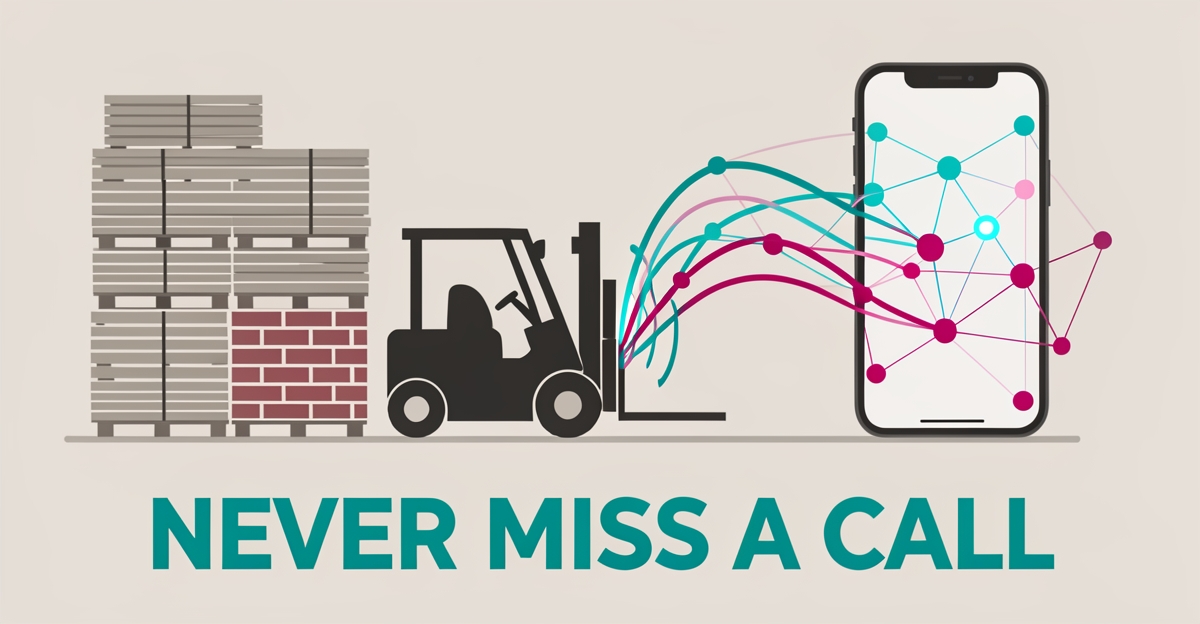
How an AI Receptionist Can Streamline Inbound Calls for a Building Supplies Business
Key Facts
- A fully loaded human receptionist typically costs $48,000–$72,000 per year, while a managed AI receptionist generally runs at roughly 80% less than a human hire.
- Industry benchmarks suggest AI receptionists can handle a large majority of inbound call volume for small and mid-size businesses, freeing staff for high-value conversations.
- A human receptionist covers roughly 40 hours a week, leaving 128 hours unstaffed, while an AI receptionist provides 24/7/365 coverage with no missed calls.
- Payroll taxes, health insurance, recruitment, and training add thousands per year to a human receptionist's cost—recurring expenses an AI receptionist avoids entirely.
- AI receptionists typically respond in under two seconds versus multiple rings for humans, and handle unlimited simultaneous calls without hold times.
- The hybrid model routes routine FAQs and lead qualification to AI while escalating urgent stockouts, delivery failures, and complex negotiations to human staff.
Hire a team member that works 24/7 — for less than a part-time wage.
AI receptionists, SDRs, dispatchers and 99+ roles. Trained on your business, fully managed.
Not sure where to start? Ask our AI planner
The Front Desk Bottleneck: Why Building Supplies Businesses Miss Calls and Money
It's 7:15 AM on a Tuesday. Your yard is already humming with forklifts, a contractor is at the counter needing a quote on 200 sheets of drywall, and the phone is ringing off the hook. For most building supplies businesses, this scenario isn't an anomaly; it's the daily reality that creates a significant front desk bottleneck.
When your team is stretched thin, inbound calls become a game of chance. During peak hours, customers are often placed on hold or sent to voicemail, leading to frustration and abandoned calls. A single employee can only handle one call at a time, leaving other lines unanswered—and as of late 2026, contractors have little patience for hold music.
The problem doesn't end when the "Closed" sign goes up. Contractors and builders often start their days early, planning projects and checking material availability before your doors even open. For businesses where leads arrive outside business hours, relying on a standard 9-to-5 schedule means missing critical opportunities. Every missed call represents a potential lost contractor account or a builder taking their project to a competitor who answered the phone.
The financial burden of staffing this bottleneck is substantial. The fully loaded cost of a human receptionist typically ranges from $48,000 to $72,000 annually, including base salary, payroll taxes, health insurance, and recruitment. Yet even with this significant investment, you are only paying for coverage for roughly 40 hours a week, leaving 128 hours of the week unstaffed.
This creates a cycle of inefficiency that impacts the bottom line:
- Missed Revenue: Unanswered calls during peak times or after hours directly translate to lost sales and abandoned quotes.
- Inconsistent Lead Qualification: When staff are rushed, they may fail to ask the right qualifying questions, leading to poor-quality leads for the sales team.
- High Labor Costs: Paying a premium for coverage that still leaves significant gaps in availability.
- Customer Frustration: Long hold times and voicemail tags erode the trust of busy contractors who value speed and efficiency.
In an industry where relationships and reliability are paramount, the inability to answer a simple query about inventory or pricing can damage your reputation. An AI receptionist can handle every call—qualifying, booking, and sending summaries to staff—so no opportunity slips through the cracks. By continuing to rely on a traditional front desk model, building supplies businesses are not just missing calls; they are actively limiting their growth potential in a competitive market.
Still paying for 10+ subscriptions that don’t talk to each other?
We build custom AI systems you own outright. No vendor lock-in. Full control.
Not sure where to start? Ask our AI planner
What an AI Receptionist Actually Does: From FAQs to Urgent Call Triage
A building supplies counter never closes on demand. Contractors call after hours about stock, pricing, and delivery windows, and every missed ring is a lost job. An AI receptionist keeps the line live, answers the routine questions instantly, and hands the urgent ones to the right person.
The system is built to handle the high-volume, repetitive work that dominates inbound calls. Industry benchmarks suggest an AI receptionist can handle the majority of inbound call volume for most small and mid-size businesses, freeing staff for consultative sales and site work. It answers common customer queries about product availability, pricing, and store hours with consistent, up-to-date information, and it typically responds in under two seconds compared with multiple rings for a human.
Triage is where the value compounds for a supplies business. The agent identifies urgent contractor requests, project deadlines, and delivery exceptions, then escalates immediately to sales, warehouse, or dispatch. Routine inquiries are resolved end-to-end: FAQs are answered, appointments for consultations or site visits are scheduled, and lead details are captured in a standardized format. Consistent lead qualification means every caller is asked the same set of questions, so sales teams receive complete information without variation.
Integration makes the interaction useful, not just polite. Calls connect to CRM, calendar, and inventory systems so the AI can check stock context, log interactions, and route messages to the appropriate team. This is inbound call management AI in practice: 24/7 coverage, near-instant response, and seamless handoff when human judgment is required.
Core capabilities for a building supplies operation include:
- Product and pricing FAQs answered instantly with current catalog data
- Store hours, delivery options, and pickup instructions provided 24/7
- Urgent contractor requests triaged and escalated to sales or dispatch
- Lead qualification and appointment booking with CRM integration
Cost pressure makes the case clearer. The fully loaded cost of a human receptionist typically runs $48,000–$72,000 per year, while an AI receptionist operates on a predictable subscription that costs a fraction of that and works around the clock. AIQ Labs deploys managed AI Employees to handle high-volume calls without hiring full-time staff, reducing labor costs and improving first-call resolution.
The result is a hybrid front desk that never misses a call. Routine work is automated, urgent work is prioritized, and human teams focus on complex, high-value conversations.
The Cost Math: AI Receptionist vs. Human Hire
For a building supplies business evaluating inbound call management, the financial comparison between a human receptionist and an AI-powered alternative reveals stark differences in total cost of ownership. While a human receptionist's base salary typically falls between $32,000 and $48,000 per year, the fully loaded expense—including payroll taxes, benefits, recruitment, and training—commonly reaches $48,000 to $72,000 annually. In contrast, an AI receptionist operates on a subscription model that typically comes in at roughly 80% less than a fully loaded human hire.
These savings stem from eliminating recurring human resource expenditures. Payroll taxes alone add thousands per year to a human hire's cost, and employer-sponsored health insurance contributes several thousand more. Additional outlays include recruitment and replacement, plus annual training and onboarding. An AI receptionist avoids these ongoing expenses entirely, with costs limited to a predictable monthly subscription—often less than what a part-time human employee would earn.
Beyond direct savings, AI receptionists deliver operational advantages that amplify their value. They handle unlimited simultaneous calls without hold times or missed inquiries, ensuring 100% call coverage 24/7, including weekends and holidays when human staff are unavailable. Unlike human workers who accrue paid time off and may call in sick, AI systems maintain consistent performance with zero downtime. For building supplies businesses managing urgent contractor inquiries or after-hours project questions, this reliability prevents lost opportunities and improves first-call resolution rates.
- Base salary: typically $32,000–$48,000/year
- Fully loaded human cost: typically $48,000–$72,000/year
- AI receptionist cost: typically roughly 80% less than a human hire
- Availability: 24/7 vs. ~40 hours/week
AIQ Labs supports this shift through managed AI Employees deployed on a Start Monthly model—flat-rate pricing that includes build, training, tool integration, and ongoing optimization—for less than the cost of a part-time hire. See the pricing page for how the payment models work. This approach allows building supplies businesses to redirect labor savings toward inventory, technician training, or market expansion while maintaining professional, uninterrupted customer engagement. The result is a scalable, cost-efficient front desk that never sleeps, never misses a call, and continuously improves through performance-based updates.
The Hybrid Model: Where AI Handles the Volume and Humans Handle the Judgment
Customer perception is the real blocker, not the technology. Building supplies buyers expect fast answers about stock, delivery windows and pricing, but they also want a human when a load is delayed or a specification is unclear. A hybrid model resolves that tension by design.
AI handles the predictable volume so humans can focus on judgment. An AI receptionist can answer common customer queries about product availability, pricing, and store hours while triaging incoming calls and identifying urgent requests for escalation. This is the core of inbound call management AI for building supplies businesses.
Industry comparisons suggest the majority of inbound call volume can be handled effectively by an AI receptionist for most small and mid-size businesses. That leaves the remainder for staff who add real value.
Cost pressure reinforces the approach. With a fully loaded human receptionist typically costing $48,000–$72,000 per year and an AI receptionist running at roughly 80% less, the hybrid model captures savings without sacrificing service on complex issues.
Escalation works when it is intentional, not accidental. AI can screen, qualify and collect context first, then hand off with a summary so the human conversation starts with answers, not questions. That structure improves first-call resolution and protects customer perception.
A practical hybrid flow for a building supplies business looks like this:
- AI answers FAQs, checks inventory status and delivery options, and books appointments for consultations or site visits
- AI qualifies contractor and builder leads by capturing project needs, budget range and timeline
- AI escalates urgent stockouts, delivery failures, or emotionally sensitive complaints to the right team member immediately
- Human staff handle nuanced pricing negotiations, custom specifications, and relationship-based problem solving
This division leverages AI for routine screening and humans for nuanced or emotionally sensitive issues. Customers get 24/7 coverage for the questions they expect automation to answer, and a seamless transfer when they need judgment.
AIQ Labs deploys managed AI Employees to handle high-volume calls without hiring full-time staff, reducing labor costs and improving first-call resolution. The model is built for inbound call management AI where escalation rules, CRM integration and human-in-the-loop controls are configured from day one.
The result is consistent lead qualification and faster response times without burning out staff. Routine work is automated, complex work is elevated, and the business maintains a human face where it matters most.
Getting Started: Deploying an AI Receptionist in Your Building Supplies Business
Getting started with an AI receptionist means defining clear call flows for the most common inquiries your building supplies business receives—whether it's checking inventory levels, scheduling deliveries, or requesting quotes. By mapping these interactions upfront, you ensure the AI can handle routine questions consistently and accurately, reducing the load on your team while keeping response times near-instant for most callers. This structured approach also allows the AI to triage urgent requests—like a contractor needing same-day materials—and escalate them to the right human agent without delay.
Next, train the AI on your specific product catalog, pricing tiers, and service areas so it can provide precise, up-to-date information during every interaction. This includes teaching it to distinguish between similar products, recognize SKUs, clarify delivery windows based on location, and pull real-time stock levels from your inventory system if integrated. With proper training, the AI can qualify leads by asking consistent questions about project scope, budget, and timeline—delivering standardized data to your sales team that improves follow-up efficiency.
Finally, integrate the AI receptionist with your CRM and calendar tools to automate appointment logging, lead capture, and scheduling—eliminating manual data entry and reducing errors. Once configured, run thorough tests across scenarios: after-hours inquiries, peak call volumes, and complex product questions—to refine responses and ensure smooth handoffs to human staff when needed. AIQ Labs' Start Monthly model simplifies this process by including setup, training on your business, tool integrations, monitoring, and ongoing improvements—all for a flat monthly cost less than a part-time hire, with the flexibility to pause or adjust as your needs evolve. To see how this fits your operation, start with the two-minute Fit Check and schedule a free 30-minute strategy call to map your biggest bottlenecks and identify high-ROI automation opportunities.
Frequently Asked Questions
Will an AI receptionist actually answer calls after hours for my building supply yard?
How much can I really save versus hiring a human receptionist?
Can an AI handle the volume we get during peak hours?
Will customers be annoyed by talking to an AI instead of a person?
Does an AI receptionist integrate with our CRM and inventory systems?
What does it take to get started with an AI receptionist for building supplies?
Stop Letting the Phone Decide Your Revenue
The front desk bottleneck, the cost math, and the hybrid model all point to the same conclusion: every unanswered ring is a contractor taking their next project to a competitor who picked up. An AI receptionist answers product and pricing questions instantly, qualifies leads consistently, and escalates urgent issues to your team 24/7—handling the majority of inbound call volume for most small and mid-size businesses at a fraction of a human hire's fully loaded cost. The path forward doesn't require overhauling your operation overnight. Start by mapping your most common call flows, training the AI on your catalog and delivery windows, and integrating it with your CRM so routine work is automated while your staff handles the judgment calls that build relationships. AIQ Labs deploys managed AI Employees through a Start Monthly model that includes the build, training, integrations, and ongoing improvements—with the flexibility to pause or adjust anytime. Take the two-minute Fit Check and book a free 30-minute strategy call to see exactly where the missed-call gap is costing you, and whether there's a clear win worth chasing. If there isn't, we'll tell you that too.
Make AI your competitive advantage — not just another tool.
Strategy, implementation and ongoing optimization. One partner, end to end.
Not sure where to start? Ask our AI planner