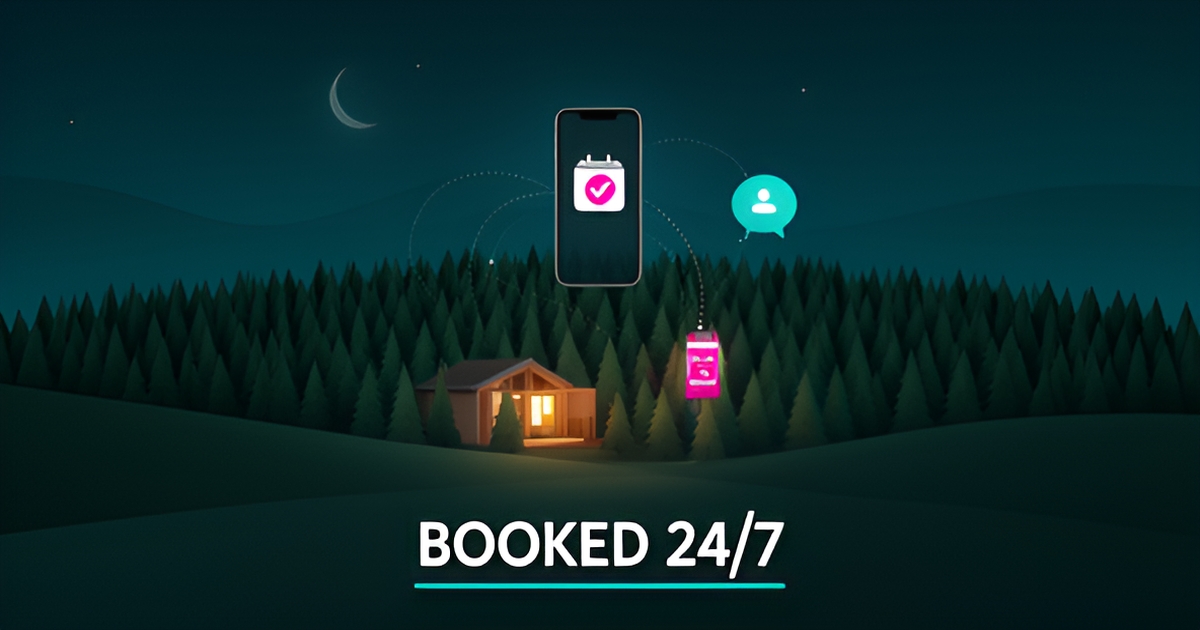
How an AI Receptionist Can Streamline Visitor Booking for Tree Farms
Key Facts
- Industry analyses estimate the AI receptionist market in the billions of dollars as of the mid-2020s, with continued growth projected through the 2030s.
- A substantial share of small and mid-sized businesses have adopted AI receptionist solutions to sharpen their competitive edge, per widely cited industry research.
- AI receptionists typically deliver major cost reductions compared to traditional staffing, since 24/7 coverage replaces or supplements human reception.
- A significant share of business calls—commonly estimated around 40%—happen after hours or during peak-time overflow.
- AI receptionists can reduce human-handled call volume substantially while answering every call.
- Most callers will not leave a voicemail; many never call back, so a missed call is often a lost booking.
Hire a team member that works 24/7 — for less than a part-time wage.
AI receptionists, SDRs, dispatchers and 99+ roles. Trained on your business, fully managed.
Not sure where to start? Ask our AI planner
The Visitor Management Crisis Facing Tree Farms
The phone rings at 7:47 p.m. on a Saturday in December. A family wants to book a choose-and-cut experience for tomorrow. Your crew is in the field, the office is dark, and the call rolls to voicemail—where most callers simply hang up, never to call back.
This isn't a hypothetical. It's the operational reality for tree farms during peak season. Industry analyses commonly estimate that around 40% of business calls happen after hours or during peak-time overflow, precisely when seasonal operations are least equipped to answer. Most of those callers don't leave messages, and they rarely try a second time.
- Missed calls during the 4–6 week holiday window
- Voicemail boxes that fill up and stop accepting messages
- No system to capture, qualify, or schedule inquiries after 5 p.m.
- Revenue walking to the farm down the road that answered the phone
The cost compounds fast. Businesses across industries have documented losing significant contracts simply because an urgent inquiry landed in an unmonitored voicemail box. For a tree farm, a single missed group booking or corporate event inquiry can represent thousands in seasonal revenue that never gets recovered.
The problem isn't call volume—it's coverage gaps. Traditional receptionists work business hours. Seasonal staff lack training on booking systems. And every minute spent fielding routine questions is a minute not spent managing inventory, coordinating crews, or nurturing the crop that pays the bills.
Why AI Receptionists Are Becoming Essential Infrastructure
Five years ago, an AI receptionist was a novelty. Today, as of late 2026, it is rapidly becoming as standard as a business website — and the market data explains why.
Industry analyses through the mid-2020s valued the AI receptionist market in the billions of dollars, with continued growth projected into the 2030s. The broader AI agents market is expanding even faster, with multi-year growth forecasts in the hundreds of percent.
This growth is not speculative. It reflects what businesses are already doing. A substantial share of small and mid-sized businesses have already adopted AI receptionist solutions to sharpen their competitive edge, and the technology has matured to the point where many callers cannot reliably distinguish an AI receptionist from a human one. For a tree farm fielding weekend booking calls, that means visitors get a professional, natural conversation whether they call at 2 p.m. on a Tuesday or 9 p.m. on a Saturday.
The financial case is just as decisive. AI receptionists typically cost a fraction of traditional staffing — AIQ Labs' managed AI employees, for example, run at roughly 80% less than an equivalent human hire — while answering every call, every time. Missed-call losses compound quickly for seasonal operations, and 24/7 coverage eliminates them without adding headcount.
Several forces are converging to make this a strategic imperative rather than an optional upgrade:
- Customer expectations have shifted — callers expect instant answers, and most will not leave a voicemail or call back
- The technology has crossed the realism threshold — modern voice AI handles interruptions, accents, and off-script moments naturally
- The economics are lopsided — 24/7 coverage at a fraction of a single part-time hire's cost
- Adoption is compounding — as more businesses deploy AI receptionists, callers increasingly expect immediate, competent responses from every business they contact
For tree farms competing for seasonal visitors, the question is no longer whether to adopt this infrastructure, but how quickly it can be working for them. AIQ Labs builds and manages AI receptionists as part of its AI Employees model — trained on the farm's specific booking rules, seasonal schedules, and visitor policies — so owners gain this capability without becoming technology managers themselves.
How AI Receptionists Handle Tree Farm Visitor Workflows
Tree farms face unique visitor management challenges, especially during peak seasons when inquiries about tree selection, cutting appointments, and farm tours surge simultaneously. An AI receptionist transforms this workflow by providing immediate, intelligent responses to every visitor interaction, ensuring no opportunity is lost due to delayed replies or missed calls.
The system excels at 24/7 instant response to booking inquiries, a critical capability given that a large share of business calls occur after hours or during peak-time overflow. Unlike traditional voicemail or limited-hour staffing, the AI receptionist engages callers immediately, capturing urgent requests for same-day tree cutting appointments or weekend visit scheduling that might otherwise go unanswered. This constant availability directly addresses the seasonal nature of tree farm operations, where customer demand can spike unexpectedly based on weather or holiday timing.
Calendar integration enables seamless appointment scheduling without manual coordination. When a visitor expresses interest in booking a tree cutting slot or farm tour, the AI receptionist checks real-time availability across Google Calendar, Calendly, or similar systems and confirms the appointment instantly. This eliminates the back-and-forth emails or phone tag that typically consumes hours of staff time each week, allowing tree farm owners to focus on tree nurturing rather than administrative scheduling.
Multi-channel support ensures consistent service whether visitors call, email, or use website chat. The AI receptionist maintains context across these channels, so a visitor who starts an inquiry via chat and follows up by phone receives continuous, personalized service without repeating information. This unified approach prevents the frustration of disconnected communications and ensures no inquiry falls through the cracks during busy periods.
Intent recognition capabilities allow the system to distinguish between different types of visitor needs—such as general farm information, specific tree variety questions, booking requests, or media inquiries—and route them appropriately. Routine questions about farm hours, location, or tree pricing are handled automatically, while complex requests about custom tree shaping or large-group event planning are seamlessly transferred to the appropriate human team member with full context preserved.
Perhaps most significantly, AI receptionists deliver structured summaries that eliminate inbox chaos. Instead of scattered voicemails, email threads, and chat logs, each interaction generates a clear, actionable summary that includes visitor contact details, specific requests, preferred timing, and any follow-up needed. This organized approach ensures tree farm staff can quickly prioritize and respond to visitor needs without digging through multiple communication channels.
This streamlined workflow delivers measurable efficiency gains, with AI receptionists commonly reducing the volume of routine inquiries requiring human intervention by a substantial margin. For tree farms, this means staff spend less time answering repetitive questions about pricing or availability and more time providing expert guidance on tree selection, cutting techniques, and farm experiences—directly enhancing the visitor experience while optimizing operational resources. AIQ Labs builds custom AI receptionists that integrate these capabilities specifically for agricultural visitor management contexts.
Implementation Best Practices for Seasonal Operations
Seasonal visitor spikes can overwhelm a tree farm's front desk, turning quick booking questions into missed calls and lost revenue. An AI receptionist deployed with seasonal operations in mind handles the surge without adding temporary staff, while keeping the visitor experience consistent year-round.
Start with a knowledge base built from existing farm information. Upload current hours, tour routes, group size limits, pricing, and seasonal closures so the AI can answer accurately on first contact. Setup is straightforward: uploading a knowledge base document and syncing contacts can get an AI receptionist live quickly. Keeping that knowledge base current is a best practice for seamless integration, because outdated answers erode trust during peak booking windows.
Integration with CRM and calendar is what turns inquiries into confirmed visits. The AI should qualify visitor intent, check availability in real time, and book directly into the farm calendar, then send structured summaries to the team. Call notes are only valuable when they plug straight into the tools you already run, such as CRM, calendar, and help desk. For tree farms, that means no duplicate data entry and faster follow-up on high-value group bookings.
A hybrid escalation path protects revenue and reputation. Routine questions about directions, pricing, and availability stay with the AI, while complex requests, custom event planning, or upset callers route to a human. AI can reduce the calls a human team handles directly by a substantial margin, freeing staff for conversations that require a human. This hybrid model mirrors how AIQ Labs designs AI Employees to work alongside human teams for inbound call management.
Performance monitoring closes the loop for seasonal operations. Track answer rate, booking completion, escalation rate, and response time, then adjust scripts and knowledge before the next peak. Best practice guidance recommends consistently updating knowledge bases and monitoring performance for adjustments. Seasonal farms benefit from reviewing metrics after each holiday or harvest rush and retraining the agent on new offerings.
Change management matters as much as technology. Adoption of AI receptionists stalls in many industries without proper workforce enablement—teams need to understand how the system works, when it escalates, and how to act on its summaries. Successful deployments invest heavily in enabling the workforce, not just deploying the tool.
Practical deployment steps for seasonal tree farms include:
- Map seasonal workflows and build a knowledge base from existing farm documents, pricing sheets, and tour schedules
- Connect the AI receptionist to CRM and calendar for real-time booking and automatic confirmation messages
- Define escalation rules for high-value conversations and complex visitor requests
- Monitor performance after each peak period and update scripts, hours, and capacity limits
With AI receptionist adoption now mainstream among small and mid-sized businesses, the approach is proven rather than experimental. Seasonal readiness is not about running more staff, it is about deploying an AI receptionist that learns your farm's rhythms and scales with demand.
Measuring Impact and Scaling Beyond the Front Desk
The numbers tell a story that goes far beyond the front desk. With the AI agents market expanding rapidly and virtual receptionist adoption accelerating, tree farms that start with visitor booking are essentially building the foundation for a much larger automation strategy.
The metrics that matter extend well beyond "calls answered." Forward-thinking operations track booking conversion rates from inquiry to confirmed appointment, cost per scheduled visit across channels, and first-response time during peak seasons when every minute of delay means a lost family outing. AI receptionists answer every call while cutting the volume your team handles directly—freeing your staff for the complex conversations that actually require agricultural expertise.
- Dispatch coordination for harvest crews and delivery logistics
- Inventory forecasting tied to real-time booking data
- Automated marketing follow-ups that convert one-time visitors into repeat customers
- Multi-location resource allocation during peak season
AIQ Labs builds on this same infrastructure—starting with an AI receptionist as one of its AI Employees, then expanding into workflow builds or a full AI operating system as the data proves its worth. The architecture doesn't change; only the scope does.
Still paying for 10+ subscriptions that don’t talk to each other?
We build custom AI systems you own outright. No vendor lock-in. Full control.
Not sure where to start? Ask our AI planner
Frequently Asked Questions
What happens if someone calls my tree farm after hours or on weekends?
Will visitors know they're talking to an AI instead of a person?
How much does an AI receptionist cost compared to hiring seasonal staff?
Can the AI actually book appointments, or does it just take messages?
What if someone has a complicated request, like planning a corporate event?
How long does it take to set up an AI receptionist for my tree farm?
Your Front Desk Never Sleeps — And Neither Should Your Revenue
The math is straightforward: a large share of calls arrive after hours, most callers never leave a voicemail, and a single missed group booking can cost thousands during your six-week window. An AI receptionist closes that gap by answering every call, qualifying intent, and booking directly into your calendar — 24/7, without adding headcount. The technology has crossed the realism threshold; many callers can't distinguish it from a human. For tree farms, that means families get instant confirmation for choose-and-cut slots at 9 p.m. on a Saturday, while your crew stays focused on the field. Implementation starts with your existing knowledge base — hours, pricing, tour routes — and connects to the CRM and calendar you already use. Performance metrics like booking conversion and first-response time tell you exactly what's working before the next peak season. AIQ Labs builds and manages these AI employees as part of a done-for-you model, so you gain the capability without becoming a technology manager. Ready to see what 24/7 coverage looks like for your farm? Start the two-minute Fit Check at aiqlabs.ai/apply and we'll map your biggest bottleneck on a free strategy call.
Make AI your competitive advantage — not just another tool.
Strategy, implementation and ongoing optimization. One partner, end to end.
Not sure where to start? Ask our AI planner