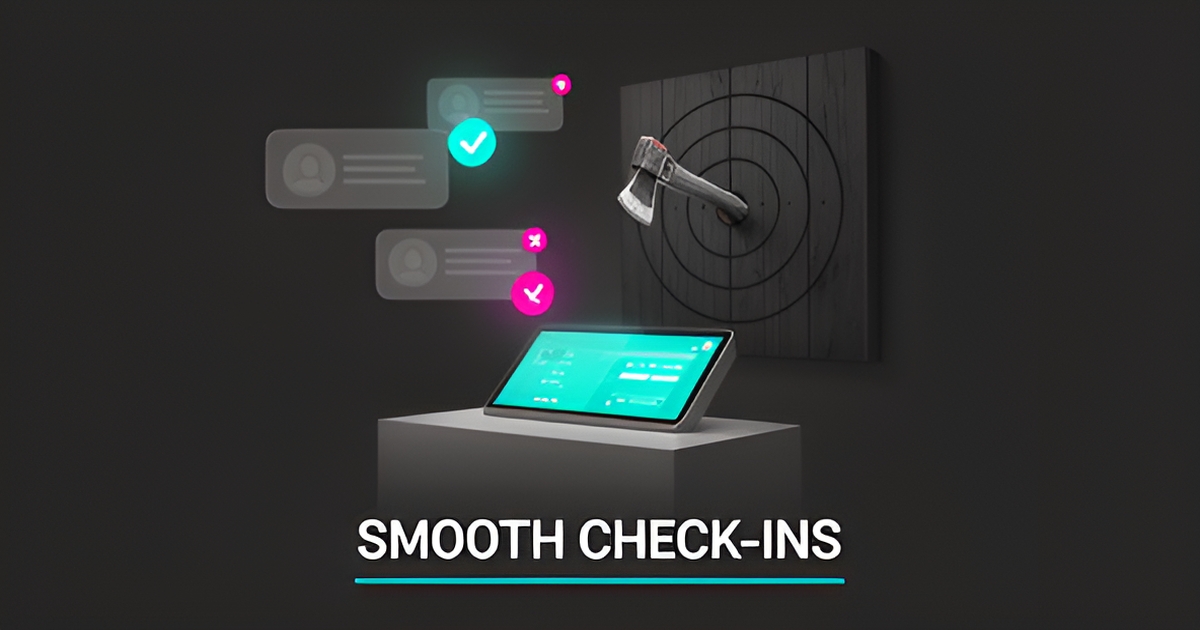
How an AI Receptionist Can Transform Guest Check-In at Your Axe Throwing Venue
Key Facts
- AI receptionists can handle multiple guests simultaneously, eliminating queues during peak check-in times
- AI receptionists provide round-the-clock availability, so guests can book or check in at any hour
- AI receptionists typically reduce front-desk labor costs by automating routine tasks and handling higher inquiry volumes than a single human hire
- AI receptionists deliver identical safety protocols every single time, ensuring consistency across all guest interactions
- Successful AI implementations follow a phased approach rather than replacing all human interactions at once
- AI receptionists can analyze guest preferences and demand patterns to improve services and lane utilization
- Implementation requires connecting with your booking system, payment processing, and guest communication platforms
Hire a team member that works 24/7 — for less than a part-time wage.
AI receptionists, SDRs, dispatchers and 99+ roles. Trained on your business, fully managed.
Not sure where to start? Ask our AI planner
The Bottleneck at Your Front Desk
The Friday night rush hits your axe throwing venue like clockwork — groups of eight stacking up at the front desk, waivers half-signed on clipboards, safety briefings delivered in fragments between phone calls. This isn't just a busy night; it's a structural bottleneck that traditional staffing can't solve.
AI receptionists handle multiple guests simultaneously, eliminating queues during peak check-in times, and they're available around the clock so guests can book or get answers at any hour. For axe throwing venues operating evenings and weekends, the gap between human shift limits and guest demand creates lost bookings and frustrated first-timers.
- Long check-in queues that eat into lane time
- Waiver processing delays from paper forms and manual entry
- Safety briefing inconsistencies across different staff members
- Missed bookings after hours when no one answers the phone
- Variable service quality depending on who's at the desk
The comparison is stark: traditional front desks operate within human constraints — limited hours, one conversation at a time, knowledge that varies by employee. An AI receptionist handles multiple guest inquiries at once, cutting wait times and delivering identical safety protocols every single time. AIQ Labs builds AI Employees that integrate directly with your booking system, waiver platform, and calendar — handling check-ins, answering questions, and routing complex requests to human staff only when needed, typically at a fraction of the cost of another hire. The result isn't just shorter lines; it's a first impression that matches the precision your venue promises.
Why AI Receptionists Fit Axe Throwing Operations
Axe throwing venues live and die by the first five minutes after a guest walks in. Lane availability, waiver compliance, safety briefings and group coordination all have to happen fast, or the energy drops and the night gets messy.
AI receptionists are built for that kind of high-touch, high-volume front desk work. They provide round-the-clock availability, so guests can book or check in at any hour, and they handle multiple guests simultaneously, eliminating the queue that forms when a party of eight arrives at 7:30 p.m. on a Friday.
For axe throwing operations, the fit is operational, not cosmetic. The system manages lane bookings, digital waivers, safety protocol delivery, group coordination, and equipment tracking without adding headcount. By automating routine tasks and handling higher inquiry volumes than a single staff member, it frees floor staff to coach, monitor safety, and upsell.
A production-ready AI receptionist handles venue-specific workflows end-to-end:
- Lane bookings and real-time availability checks tied to the booking and payment systems
- Digital waiver collection and verification before guests step onto the floor
- Standardized safety instructions delivered consistently to every group
- Group coordination for staggered arrivals, coaching add-ons, and private events
- Equipment tracking and maintenance alerts integrated with operations tools
Integration is what makes it reliable. Implementation requires connecting the AI to your booking engine, payment processing, and guest communication platforms. In an axe venue that translates to booking software, waiver storage, SMS reminders, and calendar tools working as one surface.
AIQ Labs approaches this through its AI Employees service, where a managed AI receptionist answers calls, routes inquiries, takes messages, and schedules appointments 24/7. The model is built for venues that need consistent service delivery regardless of time or day, not a chatbot that hands off after one question.
The result is shorter wait times, fewer missed calls, and a first impression that feels professional and prepared. Guests get instant confirmation, clear safety guidance, and a smooth check-in, while the team focuses on running a safe, fun experience instead of juggling the front desk.
Implementation Roadmap: From Pilot to Full Deployment
Launching an AI receptionist at your axe throwing venue doesn't require flipping a switch and hoping for the best. Proven hospitality implementations show that a phased rollout—moving from careful mapping to full deployment—protects the guest experience while delivering measurable operational gains. AIQ Labs builds in milestones for exactly this reason: you approve each phase before the next one starts.
The groundwork begins with process mapping. Document every front-desk interaction the AI will touch: lane reservations, waiver collection, safety briefings, group bookings, and walk-in questions. This mapping step identifies the specific integration points your AI needs—typically the booking system, payment processing, and guest communication platforms. For an axe throwing venue, that means connecting the AI to your scheduling software, waiver management tools, and payment gateway so it can confirm bookings and process deposits in real time.
Next comes knowledge base training. The AI must absorb venue-specific details before it ever greets a guest: lane availability, coaching packages, age restrictions, safety protocols, and answers to the questions your staff hears daily. This is where a partner like AIQ Labs differs from off-the-shelf tools—custom training on your actual operations produces an AI that sounds like your venue, not a generic script.
With the AI trained, shift focus to your people. Staff need hybrid-operation training so they understand which tasks the AI owns, how to monitor its interactions, and when to step in. Successful venues frame the AI as a tool that enhances staff capabilities rather than replaces them—critical for buy-in from a team that prides itself on personal, high-energy guest interactions.
Key elements to lock down before go-live include:
- Escalation protocols that transfer complex or frustrated guests to human staff seamlessly
- Clear "escape hatches" so guests can always request a person
- Testing periods that catch errors in booking logic or waiver handling
- Gradual rollout—perhaps AI handles after-hours calls first, then expands to peak check-in support
Finally, establish KPIs before launch. Track wait time reduction, booking conversion rates, and guest satisfaction scores. Because the AI works 24/7, you should also measure after-hours bookings that previously went to voicemail. AIQ Labs builds this monitoring into every deployment, with ongoing optimization that treats launch day as the starting line, not the finish.
Overcoming Adoption Barriers: Guest Trust & Staff Buy-In
Introducing AI receptionists at axe throwing venues requires addressing human factors that influence successful implementation. Guests often prefer having a human fallback option available, especially when dealing with complex inquiries or technical difficulties, which means venues must design systems with clear escalation paths to staff. Providing this choice helps maintain guest satisfaction by respecting individual preferences while still offering the efficiency benefits of automation. Hybrid models—where guests can choose between AI and human assistance—tend to produce higher overall satisfaction than fully automated or fully human-only approaches.
Data privacy compliance and technical reliability are equally critical for building trust. AI receptionist systems must implement robust security measures including encryption and regular audits to protect sensitive guest information such as waivers and payment details, aligning with applicable privacy regulations. Additionally, venues need safeguards against software glitches or connectivity issues through proactive maintenance, monitoring, and strong partnerships with solution providers for rapid issue resolution. These measures ensure consistent performance and prevent frustration that could undermine confidence in the technology.
Successfully adopting AI also depends on how staff perceive their role alongside the new system. Training should emphasize that AI receptionists handle routine tasks like booking management and safety instructions, freeing employees to focus on personalized guest experiences and complex problem-solving. Framing the technology as a staff enhancement tool rather than a replacement reduces resistance and encourages collaboration. When team members understand they remain essential for handling nuanced situations and providing the human touch that defines hospitality, adoption becomes smoother and more sustainable. Venues that invest in comprehensive staff training and clear communication about the AI's supportive role typically see faster integration and better long-term outcomes. AIQ Labs supports this transition with managed AI Employees that work alongside human teams, ensuring seamless integration without disrupting the guest experience.
Still paying for 10+ subscriptions that don’t talk to each other?
We build custom AI systems you own outright. No vendor lock-in. Full control.
Not sure where to start? Ask our AI planner
Frequently Asked Questions
How can an AI receptionist help reduce wait times during peak check-in at my axe throwing venue?
Will using an AI receptionist mean I have to replace my front desk staff?
Can an AI receptionist really work 24/7, and how does that benefit my axe throwing venue?
What kind of integration is needed for an AI receptionist to work with my existing booking and waiver systems?
How do I ensure guests still feel welcomed and not frustrated by interacting with an AI instead of a person?
What's the best way to roll out an AI receptionist without disrupting our current guest experience?
From Friday Night Bottleneck to First-Class First Impression
The Friday rush doesn't have to define your guest experience. An AI receptionist removes the structural limits of a traditional front desk by handling check-ins, digital waivers, safety briefings and group coordination simultaneously, while delivering the same protocol every time. That means shorter lines, fewer missed after-hours bookings, and staff freed to coach and monitor safety instead of juggling clipboards and phones. The venues that get the most value start with a clear process map, connect the AI to booking, waiver and payment systems, and roll out in phases with clear escalation paths for human support. AIQ Labs has deployed 200+ multi-agent systems and runs four live SaaS products daily, so this isn't theory—it's the work we do every week. If you want to see where your biggest bottleneck is, take the 2-minute Fit Check at https://aiqlabs.ai/apply, then book a free 30-minute strategy call to map your front-desk workflow and identify high-ROI automation opportunities. You can start monthly, build in milestones, or own the system outright—whichever fits how you want to grow.
Make AI your competitive advantage — not just another tool.
Strategy, implementation and ongoing optimization. One partner, end to end.
Not sure where to start? Ask our AI planner