How an AI Safety Monitor Can Enhance Skate Park Risk Management
Key Facts
- A significant share of skateboarding injuries—industry analysis suggests close to half—occur in skate parks according to industry analysis
- Documentation burdens can consume 30-40% of safety officers' working time in document-heavy industries as reported by SmartQHSE
- AI safety monitors can capture snapshots every 60 seconds to detect surface defects and equipment issues per Urban Grind Indoor Skate Park implementation
- Industry analyses report 15-35% reductions in incident rates when predictive alerts are consistently acted upon by site management based on UK, US, and Australia infrastructure programs
- Workplace injury rates in the United States have declined by more than 60% since the early 1970s per Bureau of Labor Statistics data
- Predictive safety models typically need 12-18 months of structured incident data to generate reliable forecasts per SmartQHSE analysis
- AI can reduce first-draft time for safety documents by 70-80% through generative AI automation
Hire a team member that works 24/7 — for less than a part-time wage.
AI receptionists, SDRs, dispatchers and 99+ roles. Trained on your business, fully managed.
Not sure where to start? Ask our AI planner
The Hidden Cost of Reactive Safety in Skate Parks
The traditional approach to skate park safety relies heavily on reactive measures, where hazards are often identified only after an incident occurs. This creates a dangerous gap between risk emergence and intervention, particularly in high-traffic environments where conditions change rapidly. Industry analysis suggests a large share of skateboarding injuries—close to half—occur in skate parks, underscoring the limitations of waiting for incidents to trigger safety responses.
Manual safety inspections further compound this issue by consuming significant time and resources that could otherwise be dedicated to proactive hazard mitigation. Documentation burdens alone can consume 30-40% of safety officers' working time in document-heavy industries, diverting attention from real-time monitoring and preventive maintenance. This administrative overhead reduces the frequency and consistency of physical inspections, leaving subtle but dangerous surface defects or equipment wear undetected until they contribute to an accident.
The reactive model also increases liability exposure, as delayed hazard identification can be perceived as negligence in legal proceedings. Without continuous oversight, skate park operators struggle to demonstrate due diligence in maintaining safe conditions. AIQ Labs addresses this challenge through AI Workflow Builds that rebuild the safety workflow costing you the most—deploying AI safety monitors that analyze incident reports, automate follow-up communications with stakeholders, and generate compliance alerts. This transforms safety management from a periodic checklist into a continuous, data-driven process, enabling teams to act on risks before they result in harm.
How AI Safety Monitors Provide Continuous, Proactive Oversight
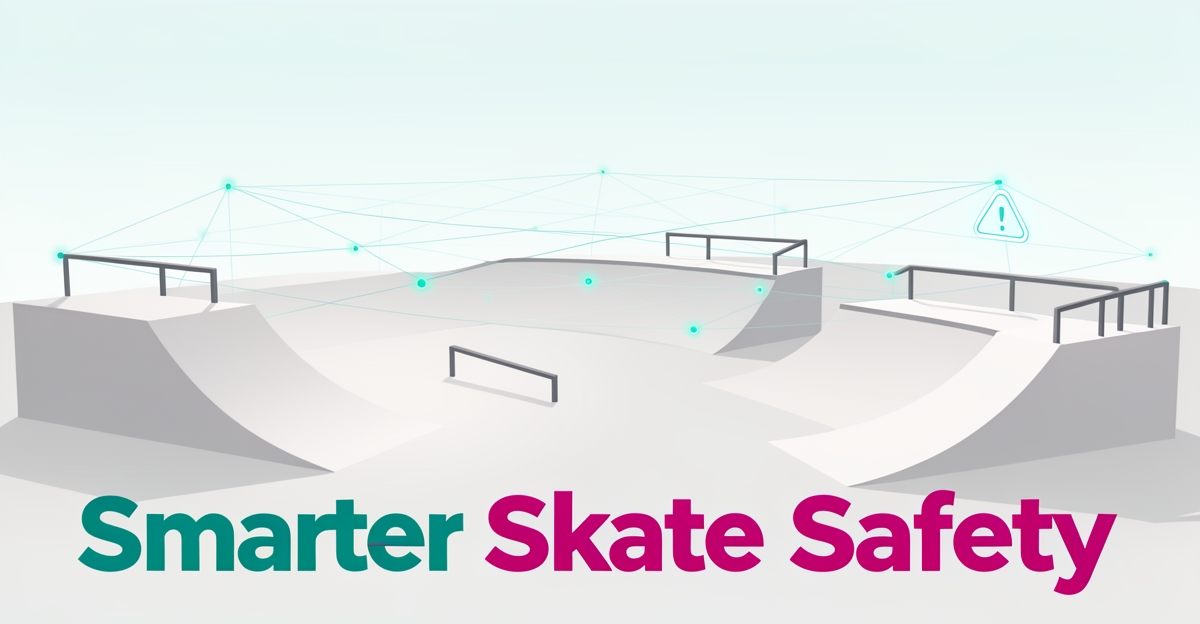
Skate parks operate in high-intensity environments where manual safety checks often miss emerging hazards between inspections. AI safety monitoring systems provide continuous, proactive oversight by leveraging computer vision and edge processing to analyze concrete surfaces and equipment in real time. As demonstrated by Urban Grind Indoor Skate Park's integration of XVision AI with existing CCTV, the system captures snapshots every 60 seconds to detect surface defects, equipment issues, and unsafe behaviors while delivering automated alerts with criticality ratings and precise location data. This implementation enables maintenance teams to address structural concerns before they escalate, reducing reliance on periodic visual inspections that consume significant staff time.
The technology differentiates between cosmetic wear and genuine safety risks through deep learning algorithms trained on skate park-specific hazards, ensuring alerts prioritize actionable threats. Privacy is preserved via face blurring and anonymization techniques that maintain detection accuracy without compromising user identity. By operating 24/7 without fatigue, AI monitors deliver consistent oversight that traditional methods cannot match—particularly valuable in facilities where a large share of skateboarding injuries occur. This continuous analysis supports data-driven maintenance decisions and helps prevent accidents by identifying risks earlier than reactive approaches allow.
For skate park operators managing complex environments, AI safety monitoring extends beyond hazard detection to streamline administrative workflows. The system can analyze incident reports, trigger automated follow-ups to parents or staff, and generate compliance alerts—functions that pair naturally with AIQ Labs' AI Employees, managed AI staff that handle routine communications and reporting around the clock. This integration reduces documentation burdens, which can consume 30-40% of safety officers' time in document-heavy industries, while ensuring timely responses to safety issues. By combining real-time monitoring with automated administrative support, AI systems create a comprehensive risk management framework that enhances both safety standards and operational efficiency in high-traffic skate parks.
From Alerts to Action: Implementing AI for Measurable Risk Reduction
Moving from reactive incident response to proactive risk management requires a structured approach that balances technological capability with operational reality. For skate park operators, this means building on existing infrastructure while establishing clear protocols for how AI-generated alerts translate into concrete safety actions.
The foundation begins with assessing your current CCTV network and monitoring capabilities. According to Urban Grind Indoor Skate Park's implementation, facilities can integrate AI technology directly with existing camera systems rather than replacing entire infrastructures. This approach leverages current investments while adding edge processing units that capture and analyze snapshots every 60 seconds, creating continuous oversight without disrupting daily operations.
Once hardware integration is complete, the focus shifts to configuring hazard-specific detection algorithms. Modern computer vision systems can be trained to differentiate between minor cosmetic surface issues and significant structural concerns that threaten rider safety. AWS Architecture research indicates that these systems employ dual-detection annotation methods, capturing both object outlines and their spatial relationships to safety markings while maintaining privacy through automated face blurring and anonymization techniques.
The true value of AI monitoring emerges in the response protocols that follow detection. When the system identifies a hazard—whether a surface crack, equipment malfunction, or unsafe behavior—it must trigger immediate, appropriate action. This is where automated communication workflows become essential, bridging the gap between detection and resolution.
- Automated alert dispatch to maintenance teams with detailed snapshots, location data, and criticality ratings
- Immediate follow-up communications to staff or parents when incidents involve minors or require witness statements
- Compliance documentation generation that maintains audit trails for regulatory requirements
- Escalation protocols that route high-priority hazards to management while logging routine maintenance items
Industry analysis suggests documentation burdens can consume 30-40% of safety officers' working time in document-heavy industries, making automation particularly valuable for compliance-heavy environments. AIQ Labs addresses this through intelligent communication systems that handle routine follow-ups automatically, ensuring nothing falls through the cracks while freeing staff to focus on complex safety decisions requiring human judgment.
Implementation should follow a phased approach that builds organizational confidence. Start with document automation and basic alert systems during the first three months, then expand to structured incident reporting and analysis. Research from infrastructure safety programs reports 15-35% reductions in incident rates at facilities that act on predictive alerts, but these results require consistent human follow-through on AI-generated recommendations.
The final phase integrates predictive analytics once sufficient data accumulates—typically 12-18 months of structured incident reports. For operators ready to connect monitoring, alerting, reporting, and compliance into one layer, AIQ Labs' AI Operating Systems offering builds that connected foundation in phases, owned outright. Throughout this progression, maintaining human oversight remains critical; AI amplifies safety managers' capabilities rather than replacing the nuanced judgment required for effective risk management.
Still paying for 10+ subscriptions that don’t talk to each other?
We build custom AI systems you own outright. No vendor lock-in. Full control.
Not sure where to start? Ask our AI planner
Frequently Asked Questions
How does an AI safety monitor actually detect hazards in a skate park without needing new cameras?
Will AI monitoring replace the need for human safety officers in skate parks?
How does the system protect skaters' privacy while still monitoring for hazards?
What kind of reduction in injuries can skate parks expect from acting on AI-generated alerts?
Is it true that nearly half of all skateboarding injuries happen in skate parks?
How long does it take to see measurable safety improvements after installing an AI monitor?
Building Safer Skate Parks Through Intelligent Oversight
AI safety monitoring transforms skate park risk management from reactive checks to continuous, data-driven oversight—detecting surface defects, equipment issues, and unsafe behaviors in real time while reducing documentation burdens that can consume 30-40% of safety officers' time. By integrating with existing CCTV and automating alerts, follow-ups, and compliance reporting, facilities like Urban Grind Indoor Skate Park demonstrate how proactive monitoring prevents accidents before they happen. For skate park operators seeking to enhance safety without overhauling infrastructure, AIQ Labs offers three clear entry points: AI Employees for managed monitoring and communication staff, AI Workflow Builds to rebuild your highest-cost safety workflow at a fixed price, and AI Operating Systems to connect it all into one layer you own outright. To explore how AI monitoring can reduce liability and improve operational resilience in your facility, start with the 2-minute Fit Check, then book a free 30-minute strategy call to map your highest-impact opportunities.
Make AI your competitive advantage — not just another tool.
Strategy, implementation and ongoing optimization. One partner, end to end.
Not sure where to start? Ask our AI planner