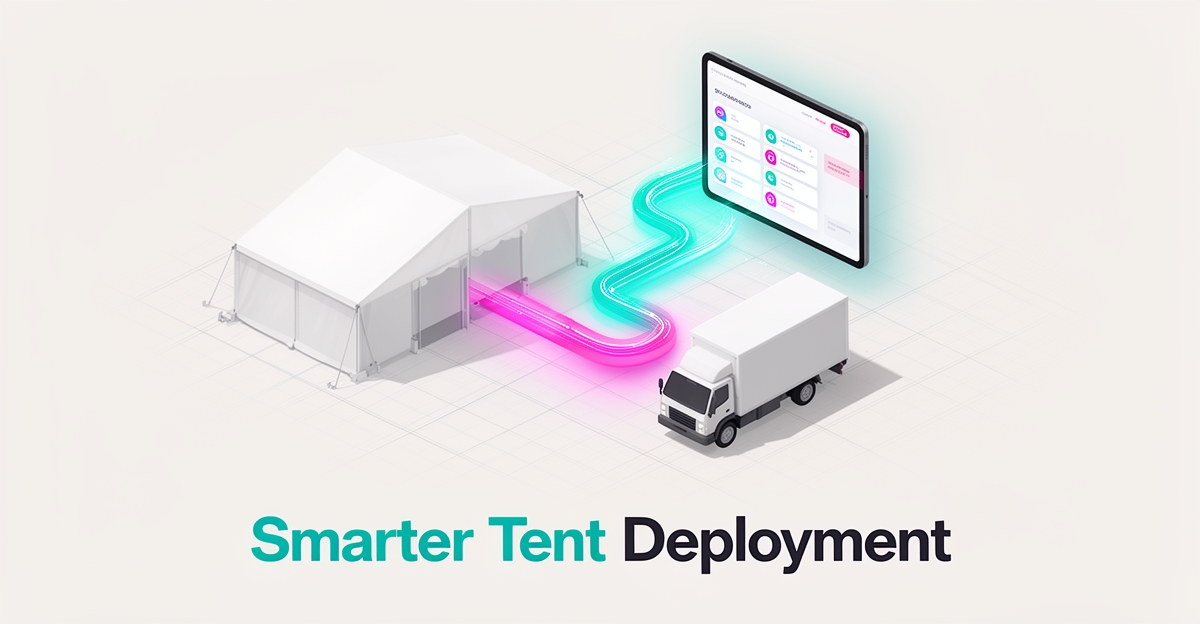
How an AI Site Coordinator Can Improve On-Site Tent Deployment for Rental Businesses
Key Facts
- Construction and field-service professionals typically spend a large share of their working hours—often cited around 35%—on non-productive activities like searching for information and managing rework, a drag AI is well suited to reduce.
- A majority of field operations teams report frequent communication breakdowns that lead to costly delays and rework, per operations leaders.
- Poor project data and miscommunication are widely reported as a leading driver of field rework, representing billions in avoidable annual U.S. costs research shows.
- AI-driven scheduling and workflow automation is commonly credited with accelerating project completion by roughly 15–25% industry analysis suggests.
- Project managers and site leads routinely lose several hours each week compiling documents and hunting for correct versions data confirms.
- Many enterprise AI pilots fail to deliver measurable ROI, with failures often traced to poor data quality—so start with clean, standardized workflows research underscores.
- AIQ Labs deploys AI Employees as proactive site coordinators that automate inventory verification, delivery routing, and client check-in triggers, at roughly 80% less cost than a human hire.
Hire a team member that works 24/7 — for less than a part-time wage.
AI receptionists, SDRs, dispatchers and 99+ roles. Trained on your business, fully managed.
Not sure where to start? Ask our AI planner
The Hidden Cost of Manual Tent Deployment
Tent rental businesses lose significant operational capacity to inefficiencies that compound quickly on job sites. Manual scheduling and communication gaps force teams into reactive problem-solving, turning routine deployments into costly delays. Field professionals commonly spend around 35% of their working hours on non-productive activities like searching for information and managing rework, a burden that directly impacts rental crews coordinating deliveries, setups, and client check-ins. Industry data suggests this lost time erodes productivity before the first stake is even driven into the ground.
Communication breakdowns are a primary driver of these inefficiencies, with a majority of firms reporting frequent issues that lead to delays and rework. When warehouse staff, delivery drivers, and on-site crews rely on fragmented phone calls or paper logs, critical details like site access instructions or equipment specifications get lost in transit. This fragmentation forces teams to backtrack, correct errors on-site, or wait for clarifications—each minute adding to labor costs and pushing back completion times. The administrative toll compounds: project managers and site leads routinely lose several hours each week compiling documents and hunting for the correct versions, creating dozens of person-hours of document overhead for a typical crew. These inefficiencies don't just slow operations—they inflate expenses and frustrate clients waiting for timely, flawless setups.
The cumulative effect of these manual processes extends beyond delayed timelines to measurable financial and reputational risks. A large share of field rework is widely attributed to poor data and miscommunication, representing billions of dollars annually in avoidable U.S. costs. For tent rental businesses, this translates to wasted labor hours, incorrect equipment deployments, and avoidable return trips—all of which erode profit margins and damage client trust. When crews spend valuable time chasing down missing stakes or verifying setup instructions instead of executing deployments, the opportunity cost mounts rapidly. Research underscores that without intervention, these patterns become entrenched, making scalability difficult without proportional headcount increases.
AIQ Labs addresses this challenge by deploying AI Employees that function as proactive site coordinators, automating routine tasks like inventory verification, delivery routing, and client check-in triggers—at roughly 80% less cost than a comparable human hire. By shifting from manual, error-prone workflows to intelligent, execution-focused systems, rental businesses can reclaim lost productivity and reduce the human overhead associated with coordination. This approach doesn't replace skilled crews—it frees them to focus on quality control and client engagement, turning potential delays into opportunities for superior service. The result is a leaner, more responsive operation where every hour on site contributes directly to successful deployments rather than administrative catch-up.
How an AI Site Coordinator Transforms On-Site Operations
The difference between a smooth tent deployment and a chaotic one often comes down to who is watching the schedule in real time. Traditional coordination relies on phone chains and spreadsheets that only tell you what should happen, leaving crews to react when reality intervenes. An AI site coordinator shifts this dynamic by acting as a system of execution that automates scheduling, monitors logistics in real time, and manages client communication without waiting for a human prompt.
Field professionals commonly spend a large share of their working hours on non-productive activities like searching for information and managing rework, a burden that mirrors the administrative drag on rental crews. By automating repetitive check-ins and documentation, an AI coordinator recovers that time for actual setup work. For example, instead of a dispatcher manually calling a driver to confirm arrival, geofencing triggers an automatic client notification the moment the crew pulls on-site. This proactive approach mirrors how AI construction tools analyze large numbers of schedule options to find the most efficient path, turning reactive firefighting into predictive routing.
- Automated customer check-ins triggered by crew GPS location
- Predictive routing that adjusts delivery sequences for traffic or weather
- Real-time risk alerts for missing equipment or site access issues
- Auto-generated setup reports that eliminate end-of-day paperwork
The practical impact is measurable: firms using AI-driven site management commonly report accelerating project completion by roughly 15–25% through dynamic scheduling and automated workflows. For a rental business, that translates directly into more jobs per crew per week and fewer costly delays. AIQ Labs applies this same execution-first architecture to rental operations, deploying AI Employees that integrate with existing booking and dispatch tools to handle the coordination layer so human teams can focus on the build. If the coordination layer is your single biggest cost, a Workflow Build can rebuild that one workflow at a fixed price, in phases.
Phased Implementation: From Pilot to Proactive Coordination
Rolling out an AI site coordinator doesn't require a full operational overhaul on day one. The most successful deployments follow a deliberate, phased approach that prioritizes process standardization before automation, ensuring the technology amplifies existing workflows rather than magnifying their inconsistencies.
Start by documenting every step of your current deployment cycle—from the moment a booking hits the calendar to the final stake pull. Field professionals commonly spend a large share of their working hours on non-productive activities like searching for information and managing rework, a pattern that mirrors the administrative drag on rental crews juggling delivery logs, site access details, and inventory checks. Standardizing these workflows creates the clean data foundation AI requires; without it, even the best models produce unreliable outputs.
- Pilot a single, high-volume workflow such as automated customer check-ins or delivery ETA alerts triggered by GPS geofencing
- Audit and clean core data sources—inventory SKUs, client site addresses, crew schedules—before expanding scope
- Keep human oversight on all safety-critical decisions, such as ground condition assessments or wind-load approvals
- Track concrete metrics: average setup time, on-time arrival rate, and hours spent on manual reporting
This incremental strategy aligns with how AIQ Labs deploys AI Employees—starting with a defined role, integrating with existing tools, and optimizing continuously based on performance data. A recent implementation guide emphasizes that the goal is not to transform everything at once, but to integrate AI in ways that reinforce productivity rather than stall it. By proving value in one contained workflow—like cutting check-in calls from ten minutes to thirty seconds—you build the internal confidence and quantitative justification needed to scale toward proactive, predictive coordination across the entire operation. Businesses that want a connected layer across everything eventually graduate to an AI Operating System, built in phases and owned outright.
Still paying for 10+ subscriptions that don’t talk to each other?
We build custom AI systems you own outright. No vendor lock-in. Full control.
Not sure where to start? Ask our AI planner
Frequently Asked Questions
How much time do field professionals typically waste on non-productive tasks like searching for information or managing rework?
Can an AI site coordinator really reduce delays in tent deployment, and by how much?
What specific tasks can an AI site coordinator automate for a tent rental business?
Is it necessary to overhaul all our processes before implementing an AI site coordinator?
What are the biggest risks to AI adoption in site coordination, and how can they be avoided?
How does an AI site coordinator differ from traditional scheduling tools like spreadsheets?
From Stake to System: Your Next Move
Manual tent deployment doesn't fail in one dramatic moment—it leaks capacity through missed check-ins, fragmented communication, and hours of administrative catch-up. Field teams commonly lose a large share of their working hours to non-productive activities, and a substantial portion of rework is traced back to poor data and miscommunication (construction workflow research)—so the cost of standing still compounds every season. The path forward doesn't require a full overhaul: standardize your deployment workflow, pilot one high-volume automation like GPS-triggered client check-ins, and track the metrics that matter—setup time, on-time arrivals, and hours reclaimed from paperwork. That's exactly how AIQ Labs deploys its AI Employees: starting with a defined role, integrating with your existing booking and dispatch tools, and optimizing from real performance data—with 200+ multi-agent systems deployed behind the approach. If you're curious whether an AI site coordinator fits your operation, take the two-minute Fit Check at aiqlabs.ai/apply, then book a free 30-minute strategy call—a genuine working session with an AI engineer to map your biggest bottleneck. If there's no clear win, we'll tell you that too.
Make AI your competitive advantage — not just another tool.
Strategy, implementation and ongoing optimization. One partner, end to end.
Not sure where to start? Ask our AI planner