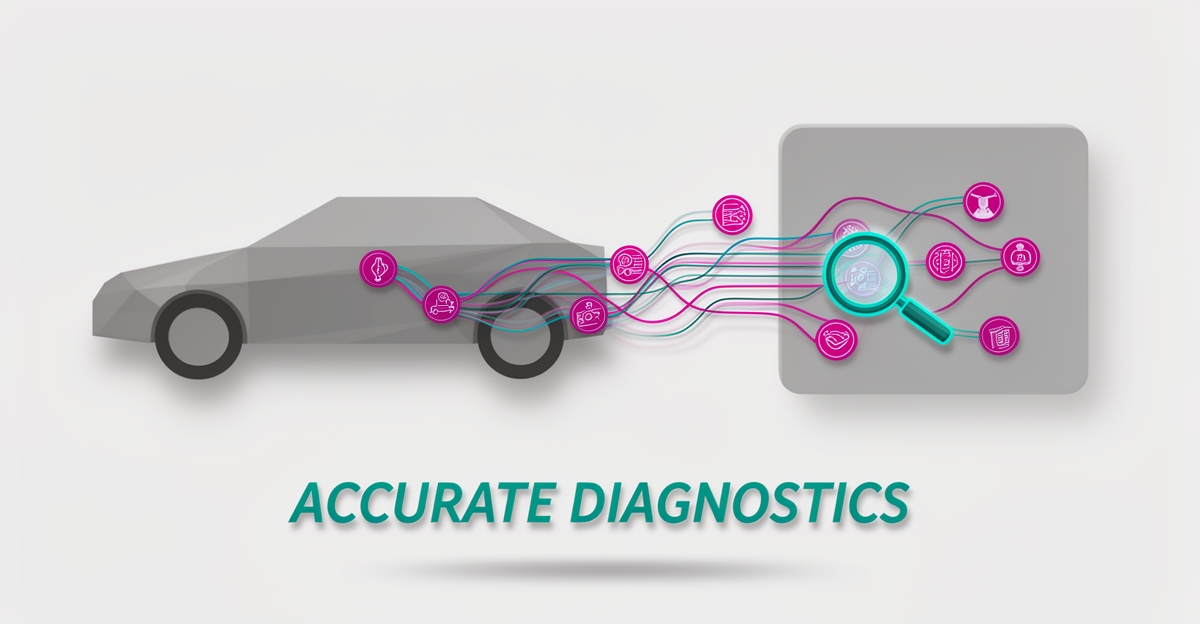
How an AI Technician Assistant Can Improve Emissions Diagnostics Accuracy
Key Facts
- AI diagnostic systems can process large volumes of vehicle data in seconds, significantly reducing diagnosis time compared to manual troubleshooting
- The average vehicle on the road is typically well over a decade old, and repair complexity on aging vehicles has been rising for years
- A growing share of repair shops now use some form of digital diagnostics, including AI imaging and remote estimates
- AI-powered diagnostic tools can improve first-time fix rates by surfacing the most likely root causes and repair suggestions
- AI can help technicians diagnose issues more accurately by analyzing historical repair data and vehicle performance, even across a fleet
Hire a team member that works 24/7 — for less than a part-time wage.
AI receptionists, SDRs, dispatchers and 99+ roles. Trained on your business, fully managed.
Not sure where to start? Ask our AI planner
Why Emissions Diagnostics Are Harder Than Ever
Repair shops face mounting pressure as the average vehicle on the road is now well over a decade old, repair complexity on aging vehicles keeps climbing, and emissions regulations continue to tighten. This combination makes emissions diagnostics more complex than ever, with aging systems prone to intermittent failures that are harder to isolate. Technicians often spend excessive time on trial-and-error approaches, leading to misdiagnosed failures, repeat visits, and costly comebacks that erode both profitability and customer trust.
The cost of inaccurate diagnostics extends beyond labor hours—it includes wasted parts, extended vehicle downtime, and potential compliance risks when vehicles fail retesting. As repair complexity grows, relying solely on symptom-based troubleshooting increases the likelihood of overlooking root causes, especially in older vehicles with multiple interacting systems. This environment demands smarter, more efficient diagnostic support to reduce guesswork and improve first-time fix rates.
An AI-powered assistant can help by reviewing vehicle history, identifying common failure points tied to specific makes and models, and cross-referencing live test results with known emissions issues. By analyzing patterns across large datasets, such tools can surface the most probable causes in seconds, significantly reducing diagnostic time. AIQ Labs builds role-specific AI employees designed for operational environments like automotive repair, where consistent, accurate technical support directly impacts compliance and efficiency. In practice, that support looks like:
- Reviewing historical repair patterns for similar vehicles
- Correlating sensor data with known emissions failure modes
- Prioritizing likely causes based on vehicle age, mileage, and service history
- Reducing reliance on trial-and-error part replacement
- Supporting consistent compliance with evolving emissions standards
This shift toward data-guided diagnostics not only improves accuracy but also builds technician confidence, especially when dealing with complex or intermittent emissions issues that defy conventional troubleshooting. As vehicles age and repair severity rises, the ability to quickly pinpoint true failures becomes critical—not just for fixing cars, but for maintaining shop productivity, customer satisfaction, and regulatory adherence in an increasingly demanding landscape.
Inside the AI Technician Assistant: How It Works in the Bay
When a vehicle rolls into the bay with a failed emissions test, the clock starts ticking—and every minute spent chasing the wrong component eats into your shop's efficiency. An AI technician assistant changes this dynamic by putting deep diagnostic intelligence directly at your technicians' fingertips.
Modern AI diagnostic systems can process sensor data, fault codes, and repair histories in seconds, cutting diagnosis time dramatically compared to traditional troubleshooting. This isn't about replacing your experienced technicians—it's about giving them a digital assistant in the bay that never forgets a pattern and never overlooks a correlation.
Here's how the process unfolds in practice. When a vehicle arrives with an emissions failure, the AI assistant immediately pulls the complete vehicle history, including previous repairs, maintenance records, and any recurring fault codes. It then cross-references current sensor readings and diagnostic trouble codes against known emissions issues, identifying patterns that match similar failures across comparable vehicles.
The system doesn't just spit out generic possibilities. By analyzing historical repair data and vehicle performance—even from other vehicles across a fleet—AI provides context-specific recommendations. That means your technician receives the most likely root causes ranked by probability, along with suggested diagnostic steps to confirm the issue.
The workflow typically follows this sequence:
- Vehicle arrives with failed emissions test or check engine light
- AI assistant retrieves complete vehicle history and maintenance records
- System analyzes current sensor data and diagnostic trouble codes
- Machine learning identifies patterns and correlations across similar cases
- Technician receives ranked list of probable causes with specific repair suggestions
- Human technician validates findings and performs targeted testing
This approach improves first-time fix rates because technicians start with the most probable failure points rather than working through generic troubleshooting trees. Instead of replacing three oxygen sensors before discovering a faulty catalytic converter, the AI assistant flags the converter as the likely culprit based on the specific combination of symptoms, vehicle age, and historical patterns.
AIQ Labs builds these role-specific AI assistants to handle the heavy analytical lifting while keeping human expertise at the center of the repair process. The technology acts as an always-available second opinion, particularly valuable when diagnosing intermittent issues or rare failure modes that a technician might encounter only a handful of times in their career.
The result is faster turnaround times, fewer comebacks, and technicians who can focus their expertise on the physical repair work rather than spending hours researching obscure fault code combinations.
The Measurable Payoff: Speed, First-Time Fix Rates, and Compliance
The measurable impact of AI-powered diagnostics is already reshaping how repair shops approach emissions testing. AI diagnostic systems can process large volumes of vehicle data in seconds, cutting diagnostic time substantially. That acceleration doesn't just save hours—it transforms bay throughput, allowing technicians to move from guesswork to targeted action faster than ever before.
With faster diagnostics comes a direct improvement in first-time fix rates. AI-powered tools provide technicians with the most likely root causes and repair suggestions by cross-referencing real-time sensor data with historical failure patterns across similar vehicles. This context-aware guidance reduces trial-and-error repairs, leading to fewer comebacks and higher customer satisfaction. Shops using these tools typically see fewer repeat visits for the same emissions-related issue, directly protecting both reputation and workflow efficiency.
This precision has tangible compliance and profitability implications. Accurate, first-time diagnoses mean vehicles are more likely to pass emissions tests on initial inspection, reducing the risk of failed retests, regulatory penalties, or customer dissatisfaction. As a growing share of repair shops adopt some form of digital diagnostics—including AI imaging and remote estimates—AI-assisted diagnostics is becoming a competitive necessity rather than a luxury.
For shops aiming to strengthen their technical consistency, AIQ Labs supports the integration of role-specific AI assistants that can review vehicle history, flag common emissions failure points, and align diagnostic steps with known regulatory benchmarks. By grounding technician decisions in data-driven insights, these tools help turn emissions compliance from a reactive checkpoint into a predictable, repeatable outcome—benefiting both the shop's bottom line and the vehicles they service.
Where AI Stops and the Technician Starts
The most effective AI diagnostic tools are designed not to replace the technician, but to augment their expertise. While these systems can process large volumes of data in seconds, they still require a skilled human to interpret the results and make the final call.
AI-powered diagnostic tools can dramatically reduce diagnostic time, but they are not infallible. These systems excel at identifying patterns across large datasets, yet they can struggle with rare or unusual issues that fall outside their training data. A technician's experience remains critical for validating AI-generated recommendations and catching edge cases that algorithms might miss.
The quality of AI output depends entirely on the quality of its input. If the training data is incomplete or biased, the recommendations will reflect those gaps. This is why human oversight is non-negotiable in emissions diagnostics, where accuracy directly impacts compliance and vehicle safety.
Here are key areas where technicians remain indispensable:
- Validating AI-generated repair suggestions against real-world conditions
- Diagnosing rare or complex issues that lack sufficient historical data
- Interpreting ambiguous sensor readings that require contextual judgment
- Ensuring compliance with evolving emissions regulations and standards
AI tools are most effective when they function as a second set of eyes, not a replacement for the first. A technician using an AI assistant can cross-reference test results with known emissions issues, review vehicle history, and receive ranked repair suggestions—but the final decision always rests with the human expert. This collaborative approach improves first-time fix rates while maintaining the accountability that regulated environments demand.
At AIQ Labs, we design role-specific AI employees that work alongside technicians, not in place of them. Our systems are built with validation layers and human-in-the-loop controls to ensure that AI recommendations are always reviewed by qualified professionals before action is taken. This balance of speed and oversight is what makes AI a practical tool in high-stakes diagnostic work.
The goal is not to eliminate the technician—it's to give them better tools. When AI handles the data-heavy lifting, technicians can focus on what they do best: applying experience, judgment, and hands-on skill to solve problems that no algorithm can fully anticipate.
Implementing an AI Diagnostic Assistant in Your Shop
The most successful AI rollouts in repair shops don't start with a full transformation—they start with one workflow done well. With the average vehicle on the road well past a decade old and repair complexity still climbing, technicians face increasingly difficult diagnostics on aging systems. A phased approach lets you prove value before scaling.
Start with a single, high-friction workflow. For emissions shops, cross-referencing test results against known failure patterns is an ideal candidate. An AI assistant can review vehicle history, suggest common failure points, and flag likely root causes in seconds. Pick the workflow where trial-and-error costs you the most bay time, and target it first. This is exactly how AIQ Labs approaches workflow builds: rebuild the one workflow that costs the most, at a fixed price, in phases.
Integrate with the tools you already use. The assistant should pull from your existing systems—repair orders, maintenance records, and test equipment—rather than forcing technicians into a new interface. The goal is context-sensitive support in the bay, not another screen to manage. Integration quality often determines whether the tool gets adopted or ignored.
Train on your own data. Generic AI models miss shop-specific patterns. Training the assistant on your vehicle history and repair outcomes lets it surface the failure correlations that matter in your service area. AI diagnoses more accurately when it can analyze historical repair data—even from other vehicles across a fleet.
Keep humans in the loop. AI-powered tools are not a replacement for technicians. They may struggle with complex or rare issues, and their accuracy depends heavily on the quality of training data. Every recommendation should be validated by a qualified technician before work begins—this is non-negotiable in a regulated emissions environment.
This is the model AIQ Labs follows when building role-specific AI employees: a defined job, training on the shop's actual processes and data, integration with existing tools, and configurable human oversight for critical decisions. Flexible engagement options—Start Monthly, Build in Milestones, or Own It Outright—let shops prove the concept before committing to broader automation. For shops ready to connect diagnostics, scheduling, and customer communication into one layer, an AI operating system built in phases is the next step.
Roll out one workflow, measure first-time fix rates and diagnostic speed, then expand. The shops seeing the biggest gains treat AI as a teammate that improves with every repair, not a one-time software purchase.
Still paying for 10+ subscriptions that don’t talk to each other?
We build custom AI systems you own outright. No vendor lock-in. Full control.
Not sure where to start? Ask our AI planner
Frequently Asked Questions
Can an AI technician assistant really speed up emissions diagnostics?
Will AI replace my technicians or just help them?
How does an AI assistant improve first-time fix rates for emissions issues?
Is AI diagnostics accurate enough for regulated emissions work?
What kind of data does an AI technician assistant use?
How do shops start using AI for emissions diagnostics without a full overhaul?
From Guesswork to Precision: The New Standard for Emissions Diagnostics
Emissions diagnostics have reached a tipping point. With vehicles on the road well past a decade old and repair complexity still rising, the old trial-and-error playbook no longer works. AI technician assistants change the equation by cross-referencing live sensor data against large volumes of historical repair patterns, cutting diagnostic time dramatically and giving technicians a ranked list of probable causes before they even open the hood. The result is fewer comebacks, faster bay turnover, and compliance that holds up on the first test. But the technology works best when it stays in its lane — processing data at scale while technicians apply the judgment no algorithm can replicate. Shops that start with one high-friction workflow, integrate the assistant into existing tools, and keep a qualified technician in the loop see the fastest returns. If your emissions workflow is where bay time goes to die, it's worth a conversation. Start the two-minute Fit Check at AIQ Labs to see where an AI employee could plug in — no obligation, just clarity on the opportunity.
Make AI your competitive advantage — not just another tool.
Strategy, implementation and ongoing optimization. One partner, end to end.
Not sure where to start? Ask our AI planner