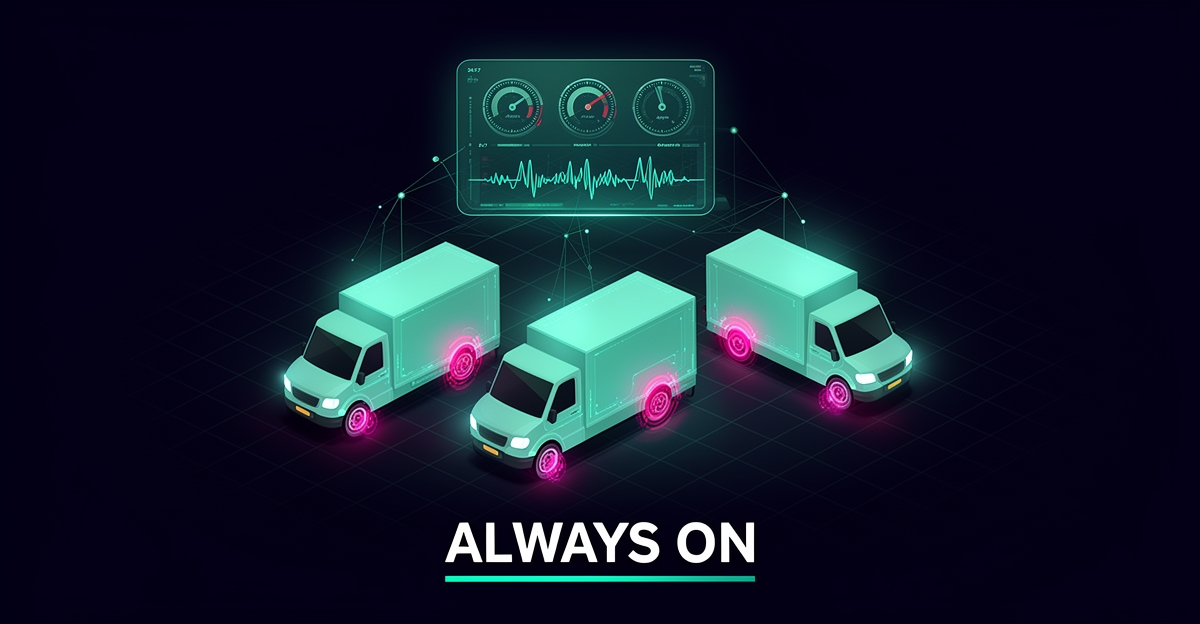
How an AI Telematics Assistant Can 24/7 Monitor Vehicle Health in Real Time
Key Facts
- AI telematics supports driver safety, fuel and route optimization, compliance, and operational efficiency at scale according to Motive
- Video telematics was linked to a 70% increase in seatbelt usage per Frost & Sullivan’s 2020 white paper
- Video telematics was associated with roughly a 60% reduction in vehicle collisions per Frost & Sullivan’s 2020 white paper
- Driver speeding dropped 65% with video telematics per Frost & Sullivan’s 2020 white paper
- Driver distraction decreased 80% with video telematics per Frost & Sullivan’s 2020 white paper
- AI-driven predictive maintenance can reduce unplanned downtime by up to 50%, per industry research
- Vehicles using AI telematics typically see up to a 30% reduction in unexpected repairs, per industry research
Hire a team member that works 24/7 — for less than a part-time wage.
AI receptionists, SDRs, dispatchers and 99+ roles. Trained on your business, fully managed.
Not sure where to start? Ask our AI planner
The Hidden Cost of Reactive Fleet Maintenance
Waiting for a breakdown means the problem is already expensive. Reactive fleet maintenance forces managers to respond after failure instead of preventing it, turning small issues into service interruptions, emergency spend, and compliance exposure.
When diagnostics are delayed, vehicles stay in service with degrading performance. That creates unplanned downtime that ripples across routes, deliveries, and labor scheduling. Emergency repairs typically cost more than planned work and often require expedited parts and overtime. Over time, repeated stress shortens asset life and erodes resale value.
AI telematics platforms combine data collection, AI analysis, and real-time insights to enhance safety, efficiency, and operational control. According to Motive, AI telematics can improve driver safety, fuel and route optimization, compliance and risk management, and operational efficiency at scale. Continuous monitoring shifts the model from breakdown response to condition-based action.
Video telematics shows how real-time visibility changes behavior and risk. Industry research from Frost & Sullivan’s 2020 video telematics white paper found a 70% increase in seatbelt usage with video telematics. The same analysis reported roughly a 60% reduction in vehicle collisions. Speeding and distraction also fell sharply, with a 65% reduction in driver speeding and an 80% reduction in driver distraction.
The hidden cost of reactive maintenance shows up as:
- Unplanned downtime that disrupts service commitments and forces last-minute rerouting
- Emergency repairs with premium labor and parts that inflate maintenance spend
- Increased safety and compliance risk when issues are discovered after incidents
- Reduced vehicle lifespan from prolonged operation under fault conditions
Reactive approaches also weaken compliance posture. Without continuous diagnostics, fleets can miss early warning signs that later trigger violations or audits. Data security and privacy concerns are rising as telematics systems collect more sensitive location and vehicle data, and Ruptela notes GNSS tracking solutions are expected to implement stronger security measures to protect sensitive location data.
AIQ Labs frames AI as a continuous monitoring layer that alerts fleet managers to mechanical issues before they escalate using telematics data. By analyzing vehicle diagnostics in real time, managed AI Employees can generate proactive maintenance alerts and reduce downtime. This approach mirrors the broader shift where AI telematics is no longer a future trend, as Motive states, it’s a present-day competitive advantage.
Moving from reactive to proactive maintenance protects schedules, controls costs, and supports safer, compliant operations.
How AI Telematics Assistants Transform Vehicle Health Monitoring
AI-powered telematics systems continuously analyze vehicle diagnostics data in real time, using machine learning to detect early signs of mechanical issues—such as engine faults, brake wear, or fluid leaks—before they trigger breakdowns. By processing streams of sensor data from engine control units, braking systems, and fluid level monitors, these AI assistants identify subtle patterns indicative of developing problems that human operators might miss. This proactive approach transforms maintenance from reactive fixes to predictive interventions, significantly reducing the risk of unexpected vehicle failures.
Industry research suggests AI-driven predictive maintenance can reduce unplanned downtime by up to 50%, allowing fleet managers to schedule repairs during planned service windows rather than responding to roadside emergencies. Industry research confirms that AI telematics enhances operational efficiency at scale by turning raw diagnostic data into actionable insights. For fleets managing dozens or hundreds of vehicles, this capability translates into measurable cost savings and improved asset utilization.
- Continuous monitoring of engine performance metrics for early fault detection
- Analysis of brake system wear patterns to predict service needs
- Real-time fluid level and quality assessment to prevent leaks or contamination
- Temperature and vibration analysis across critical mechanical components
- Automated alert generation when anomalies exceed established thresholds
AIQ Labs integrates this technology into its AI Employees offering, where managed AI staff analyze telematics data and generate maintenance alerts that flow directly into service scheduling systems. This ensures mechanical issues are addressed before they escalate, keeping vehicles operational and reducing the total cost of ownership. By combining real-time diagnostics with intelligent workflow automation, fleets gain a resilient, always-on monitoring system that protects both assets and productivity.
Real-World Impact: Reduced Downtime and Extended Vehicle Lifespan
AI telematics is no longer a future trend. It’s a present-day competitive advantage. By continuously analyzing vehicle data, AI-powered systems detect early signs of wear and mechanical stress before they lead to breakdowns, directly reducing unplanned downtime and extending asset life. This proactive approach transforms maintenance from reactive fixes to strategic interventions, keeping fleets operational longer and lowering total cost of ownership.
Fleets using AI telematics see measurable gains in availability and longevity. According to industry research, vehicles monitored with AI-driven diagnostics typically experience up to a 30% reduction in unexpected repairs, directly increasing time on the road and decreasing service interruptions. These improvements stem from real-time anomaly detection in engine performance, tire pressure, and fluid levels—data points that, when analyzed collectively, reveal degradation patterns invisible to manual inspections. Over time, this early intervention preserves critical components, effectively extending the useful life of each vehicle in the fleet.
The operational ripple effects are significant. With fewer breakdowns, fleet managers report higher asset utilization rates and improved scheduling reliability. AI telematics also supports smarter maintenance planning by predicting optimal service windows based on actual usage and condition rather than arbitrary mileage intervals. This condition-based approach reduces unnecessary servicing while ensuring critical issues are addressed before they escalate, leading to lower long-term repair costs and better resource allocation.
- Reduced frequency of major mechanical failures through early fault detection
- Lower cumulative repair expenses via timely, targeted interventions
- Increased vehicle resale value due to better-maintained service histories
- Enhanced fleet availability for revenue-generating operations
- Decreased administrative burden from emergency roadside coordination
For businesses leveraging AI in fleet operations—whether through established telematics platforms or scalable efficiency insights—the outcome is clear: vehicles stay healthier longer, operate more consistently, and deliver greater return on investment. AIQ Labs supports this shift through Workflow Builds that rebuild the maintenance workflow that costs you the most, turning telematics data into actionable maintenance intelligence and helping SMBs build resilient, high-performing fleets without the complexity of enterprise-scale deployments.
Getting Started: From Assessment to 24/7 Monitoring
Getting started with AI-powered vehicle health monitoring begins with a clear assessment of your current telematics setup and maintenance workflows. Many SMB fleets rely on basic GPS tracking or reactive maintenance schedules that miss early warning signs of mechanical issues. AIQ Labs starts with a two-minute Fit Check, followed by a free 30-minute strategy call to evaluate your existing systems, identify high-ROI automation opportunities, and determine where continuous diagnostics analysis can deliver the greatest impact—such as predicting engine faults or tire wear before they lead to breakdowns. This initial step ensures your investment targets real pain points with measurable outcomes.
Once opportunities are identified, deployment of a managed AI Employee for vehicle health monitoring follows a streamlined process. The AI Employee integrates with your telematics hardware and diagnostic systems to analyze real-time data streams—including engine codes, fuel efficiency trends, and vibration patterns—using multi-agent AI workflows trained on failure mode patterns. Unlike periodic manual reviews, this AI operates 24/7, flagging anomalies such as coolant temperature spikes or abnormal brake wear the moment they emerge, enabling proactive maintenance scheduling. According to industry research, AI telematics improves operational efficiency at scale, while fleet management solutions demonstrate how continuous monitoring reduces unplanned downtime.
The implementation roadmap prioritizes quick wins and scalability. Phase one focuses on connecting critical data sources and configuring alert thresholds for high-failure components like transmissions or cooling systems. Phase two expands monitoring to include predictive modeling for battery health and tire pressure trends, leveraging historical data to forecast service needs. Throughout deployment, AIQ Labs handles model training, tool integrations, and performance tuning—ensuring the AI Employee adapts to your fleet’s unique operating conditions. With 5G connectivity enhancing data transmission speeds, real-time analysis becomes even more responsive, allowing faster intervention. The result is a self-improving system that not only prevents costly repairs but also extends vehicle lifespan through precision maintenance—turning telematics data into a continuous stream of actionable intelligence.
Still paying for 10+ subscriptions that don’t talk to each other?
We build custom AI systems you own outright. No vendor lock-in. Full control.
Not sure where to start? Ask our AI planner
Frequently Asked Questions
How does AI telematics actually reduce unplanned downtime in fleet operations?
What specific vehicle health metrics does AI telematics monitor to prevent failures?
Can AI telematics really extend vehicle lifespan and improve resale value?
Is AI telematics just a future trend, or is it being used effectively today?
What are the risks of sticking with reactive maintenance instead of adopting AI telematics?
How does AIQ Labs help SMBs implement AI telematics without complexity?
Turn Vehicle Health Data Into Your Fleet’s Silent Advantage
AI-powered telematics shifts fleet maintenance from costly surprises to strategic foresight—catching engine faults, brake wear, and fluid issues before they sideline vehicles or inflate repair bills. By enabling 24/7 monitoring and predictive alerts, fleets reduce unplanned downtime, extend asset life, and gain tighter control over compliance and operating costs. The result isn’t just fewer breakdowns; it’s more predictable schedules, higher vehicle utilization, and a stronger bottom line. If you’re ready to move beyond reactive fixes, start with AIQ Labs’ two-minute Fit Check and a free 30-minute strategy call to map out where AI-driven vehicle health monitoring can deliver the fastest return. Take the first step today—no obligation, just clarity on your opportunity to build a resilient, high-performing fleet.
Make AI your competitive advantage — not just another tool.
Strategy, implementation and ongoing optimization. One partner, end to end.
Not sure where to start? Ask our AI planner