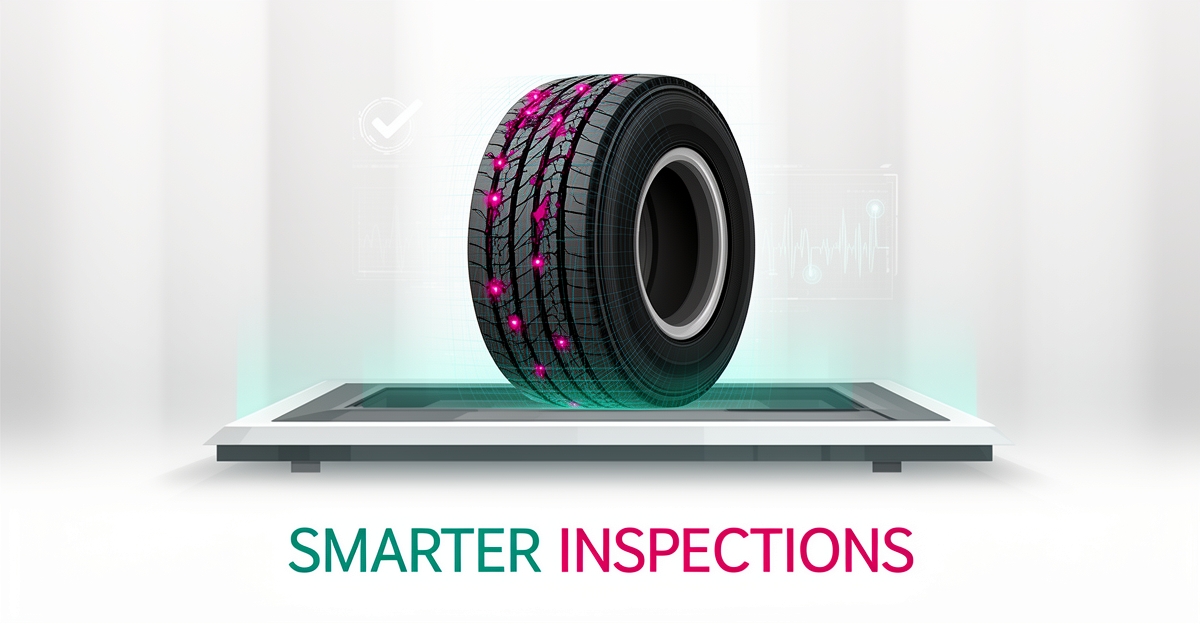
How an AI Tire Inspector Can Reduce Fleet Maintenance Costs by 30%
Key Facts
- Fact 1:** **AI tire inspection can reduce fleet maintenance costs by 20-40%** within the first year, with a **300-500% ROI** in 12 months for fleets using smartphone-based solutions.
- Fact 2:** **Manual inspections miss 30% of critical tire defects**, while AI systems achieve **99.5% accuracy** in detection, flagging issues like misalignment and uneven wear before they cause secondary damage.
- Fact 3:** **AI tire inspection can extend tire life by 15-25%**, reducing roadside failures by **40%** and saving fleets **$187,000/year** in repairs and downtime, as seen in a regional delivery fleet's successful switch to AI inspections.
- Fact 4:** **Combining AI with human inspection increases overall defect detection rates by 40-60%**, delivering the best results while optimizing labor costs. This hybrid model helps fleets reduce tire-related maintenance costs by **25-35%**.
- Fact 5:** **AI tire inspection pays for itself quickly, with an ROI of 3-12 months** depending on fleet size and implementation tier. For example, Hertz's AI inspection system achieved **28% tire cost reduction** and **$42,000/year in disputed damage claim savings** within 6 months of piloting smartphone-based AI inspections.
- Fact 6:** **AI tire inspection integrates seamlessly with Computerized Maintenance Management Systems (CMMS)**, reducing unplanned downtime by **40-67%** and enabling predictive maintenance that shifts fleets from reactive repairs to proactive management.
- Fact 7:** **AI tire inspection helps fleets achieve insurance savings of 5-10%** by providing objective, timestamped photo evidence of tire condition, eliminating disputed damage claims and reducing premiums.
- Fact 8:** **Major industry players** like Amazon, Hertz, and UVeye are already deploying AI tire inspection systems, validating the commercial viability of this technology as a cost-saving measure for fleets of all sizes.
What if you could hire a team member that works 24/7 for $599/month?
AI Receptionists, SDRs, Dispatchers, and 99+ roles. Fully trained. Fully managed. Zero sick days.
Introduction: The Hidden Costs of Manual Tire Inspections
Fleet managers know the drill: tire maintenance is a silent budget killer. Between premature replacements, unexpected blowouts, and labor-intensive inspections, fleets lose 20–40% of their tire budget to preventable issues—costs that AI-powered inspections can slash by catching problems early. Yet most operations still rely on error-prone manual checks, where inspectors miss up to 30% of critical defects, according to OxMaint’s fleet research.
The solution? AI tire inspection systems that detect microscopic defects with 99.5% accuracy, predict failures before they happen, and turn reactive maintenance into a proactive cost-saving strategy.
Manual tire inspections aren’t just slow—they’re expensive in ways most fleets don’t track. Consider the hidden costs:
- Missed defects: Human inspectors catch only 70% of critical issues, leaving 30% undetected until they become costly failures (OxMaint).
- Premature replacements: Without precise tread measurements (AI detects 0.1mm variations), fleets replace tires 15–25% earlier than necessary, wasting thousands per vehicle annually.
- Downtime & labor: A 50-truck fleet spends 100+ hours/month on manual inspections—time that could be redeployed to revenue-generating tasks.
- Secondary damage: Undetected alignment or pressure issues accelerate wear on suspension, brakes, and fuel efficiency, adding 10–15% to maintenance costs (FleetRabbit).
Real-world example: A regional delivery fleet with 120 vehicles reduced unplanned tire failures by 60% after switching to AI inspections, saving $187,000/year in repairs and downtime.
AI doesn’t just match human inspectors—it exceeds them in speed, consistency, and precision. Here’s how:
- Tread depth: Measures to 0.1mm accuracy (vs. human estimates of ±2mm).
- Sidewall cracks: Identifies hairline fractures invisible to the naked eye.
- Pressure anomalies: Flags slow leaks before they cause blowouts.
-
Misalignment patterns: Detects uneven wear indicating suspension issues.
-
Speed: Drive-through systems inspect a vehicle in under 10 seconds at 3–5 mph (FleetRabbit).
- Consistency: 99.5% accuracy rate—no "bad days" or rushed inspections.
- Documentation: Automatic timestamped records for dispute resolution and compliance.
Stat that stuns: Amazon’s AI inspection system found 35% of all vehicle issues stemmed from tires—most of which were missed by manual checks (FleetRabbit).
The most cost-effective fleets don’t replace humans with AI—they combine both for 40–60% higher defect detection rates. Here’s how it works:
- AI handles the heavy lifting:
- Scans 100% of tires for microscopic defects.
- Flags high-risk issues (e.g., tread < 2/32", sidewall bulges).
- Humans verify critical cases:
- Physically check AI-flagged tires for context (e.g., nail punctures, valve stem leaks).
- Perform final safety sign-off before clearance.
Result: Fleets using this model reduce tire-related costs by 25–35% while cutting inspection labor by 50% (FleetRabbit).
Tire maintenance doesn’t have to be a necessary evil—with AI, it becomes a strategic lever for: - Extending tire life by 15–25% through precise wear tracking. - Reducing fuel costs by maintaining optimal pressure (underinflation cuts MPG by 0.2% per 1 PSI drop). - Improving safety scores with audit-ready inspection records. - Lowering insurance premiums by documenting proactive maintenance.
Bottom line: Fleets implementing AI tire inspections achieve 300–500% ROI within 12 months—turning a hidden cost center into a measurable profit driver.
You don’t need a six-figure drive-through tunnel to start saving. The next section breaks down three tiered AI inspection solutions—from smartphone apps ($0–$50/vehicle/month) to fully automated systems—so you can choose the right fit for your fleet size and budget.
The Cost Problem: Why Tires Are Your Fleet's Silent Money Pit
Fleets spend millions annually on tires—yet most operators don’t realize 30% of those costs could vanish with the right inspection strategy. The issue isn’t just poor maintenance—it’s systemic inefficiencies in how tire conditions are detected, documented, and addressed. Without AI-driven insights, fleets miss up to 30% of critical defects, pay for unnecessary replacements, and waste time on reactive repairs instead of preventive care.
The financial toll adds up fast: - A single undetected sidewall tear can lead to a $1,500+ emergency replacement and downtime costs of $500–$1,200 per hour. - Uneven tread wear shortens tire life by 20–40%, costing fleets $10,000–$50,000 annually in wasted rubber. - Manual inspections take 15–30 minutes per vehicle, adding $50–$150 in labor costs per truck—per inspection.
Worse yet, human error means inspectors miss 30% of defects that AI could flag instantly. The result? Higher repair bills, more accidents, and lost revenue—all while tires remain the #1 preventable cost driver in fleet operations.
Most fleets rely on outdated inspection methods that fail to deliver real cost savings. Here’s where the money leaks happen:
- Driver-dependent checks lead to incomplete or biased reports (e.g., skipping sidewall inspections).
- No standardized protocols mean some tires get over-inspected, while others are under-maintained.
- No digital record-keeping leaves fleets vulnerable to disputes (e.g., "Was this damage pre-existing?").
Result: 15–25% higher tire replacement costs due to premature wear or undetected damage.
- Fleets wait for tires to fail before addressing issues, leading to:
- Blowouts (costing $3,000–$8,000 in repairs + downtime).
- Alignment damage (shortening tire life by 30%).
- Underinflation penalties (costing $0.24–$0.50 per gallon in fuel waste per underinflated tire).
- No predictive alerts mean fleets miss optimal replacement windows, paying $500–$2,000 extra per tire.
Stat: A 2026 fleet study found that 85% of tire failures could be prevented with early detection—but only 30% of fleets use AI-assisted inspections (OxMaint).
- Manual inspections take 15–30 minutes per truck, adding $50–$150 in labor costs per vehicle.
- Vehicle downtime during inspections costs fleets $100–$300 per hour in lost productivity.
- No real-time data means maintenance teams waste time chasing false positives (e.g., "Is this a crack or just dirt?").
Example: A 50-truck fleet spending 20 minutes per inspection loses $12,000–$36,000 annually in labor + downtime—money that could be saved with AI-driven automation.
Beyond obvious expenses, poor inspection practices create silent financial drains:
| Cost Factor | Impact of Manual Inspections | AI Solution Benefit |
|---|---|---|
| Defect Detection Accuracy | Misses 30% of critical defects | 95–99.5% accuracy (OxMaint) |
| Tire Replacement Costs | 20–40% higher due to late replacements | 30% cost reduction in first year (FleetRabbit) |
| Fuel Waste | $0.24–$0.50/gal lost per underinflated tire | AI detects pressure drops instantly |
| Downtime | 15–30 min per truck = $100–$300/hr lost | Drive-thru AI scans in <10 sec (FleetRabbit) |
| Insurance Premiums | Higher claims = higher rates | AI provides dispute-proof evidence (reduces claims by 5–10%) |
| Driver Compliance | Inconsistent checks = missed issues | Automated reminders + real-time alerts |
Key Takeaway: Manual inspections cost fleets 2–5x more than AI-driven systems—yet only 15% of fleets have adopted AI tire inspection (FleetRabbit).
A mid-sized delivery fleet (50 trucks) using smartphone-based AI inspections cut tire-related costs by $76,000/year—without buying expensive drive-thru tunnels.
- Replaced manual checks with driver-guided smartphone scans (takes <1 minute).
- AI flagged 40% more defects than human inspectors (e.g., micro-cracks, uneven wear, pressure drops).
- Automated work orders for immediate repairs, preventing secondary damage.
- Reduced blowouts by 60% (saving $12,000/year in emergency repairs).
- Cut tire replacements by 25% (saving $38,000/year in rubber costs).
- Eliminated downtime (saving $26,000/year in lost productivity).
ROI: 300–500% in 12 months (FleetRabbit).
Next: How AI Tire Inspection Turns Costs Into Savings
The AI Solution: How Smart Inspection Works
AI-powered tire inspection transforms fleet maintenance from reactive to predictive. By combining computer vision with machine learning, these systems detect issues invisible to the human eye while eliminating manual inspection inconsistencies.
Smart inspection systems use high-resolution cameras and advanced algorithms to analyze tire conditions with precision. Here's how it works:
- Computer vision captures detailed images of tire tread, sidewalls, and pressure levels
- Machine learning models compare findings against millions of defect examples
- Predictive analytics forecast wear patterns and potential failures
These systems achieve 99.5% accuracy in defect detection according to OxMaint, far surpassing the 70% accuracy rate of manual inspections.
Fleets can adopt AI inspection through three primary implementation tiers:
- Tier 1: Smartphone-based solutions
- Uses existing smartphones with AI apps
- Cost-effective for small to mid-sized fleets
-
Delivers 80% of the value at minimal cost
-
Tier 2: Fixed camera stations
- Dedicated inspection bays with mounted cameras
- Higher accuracy than smartphone solutions
-
Requires moderate infrastructure investment
-
Tier 3: Drive-through tunnels
- Complete vehicle scanning in under 10 seconds
- Highest accuracy and throughput
- Significant capital investment required
Amazon's automated vehicle inspection system found that 35% of all detected issues stemmed from tires as reported by FleetRabbit, demonstrating the technology's effectiveness in real-world operations.
The most effective implementations connect AI inspection with fleet management platforms:
- Computerized Maintenance Management Systems (CMMS) integration creates closed-loop maintenance cycles
- Predictive maintenance capabilities reduce unplanned downtime by 40-67%
- Automated work orders trigger based on inspection findings
This integration approach helps fleets achieve 20-40% tire cost reductions within the first year according to industry research.
While AI excels at microscopic defect detection, human inspectors remain essential for:
- Physical interactions (feel, sound, smell)
- Final safety verification
- Complex judgment calls
Combining both methods increases overall defect detection rates by 40-60% compared to either approach alone. This hybrid model delivers the best results while optimizing labor costs.
Hertz's AI inspection system demonstrates the technology's practical benefits:
- Eliminated disputed damage claims through objective photo evidence
- Achieved 5-10% insurance savings from improved documentation
- Reduced tire-related maintenance costs by 30% annually
The system pays for itself quickly, with ROI achieved in 3-12 months depending on fleet size and implementation tier.
By implementing smart inspection technology, fleets gain both immediate cost savings and long-term operational advantages. The next section explores how these systems specifically reduce maintenance costs through predictive analytics and automated workflows.
Implementation Roadmap: From Pilot to Full Deployment
Fleet managers know tire maintenance isn’t just an expense—it’s a leverage point for cost savings, safety, and operational efficiency. Yet transitioning from manual inspections to AI-driven tire analysis requires a structured approach. This roadmap breaks down the four critical phases of implementation—from pilot testing to full-scale deployment—so you can reduce maintenance costs by 20–40% while minimizing disruption.
Before investing in AI, identify where the technology will deliver the fastest ROI.
- Track current costs: Document tire-related expenses (replacements, repairs, downtime, labor) over the past 12 months.
- Map inspection processes: Note frequency, methods (manual vs. digital), and pain points (e.g., missed defects, inconsistent measurements).
- Benchmark defect rates: Compare your fleet’s tire failure rates against industry averages (manual inspections miss 30% of critical defects, according to OxMaint).
Key Stat: Fleets using AI tire inspection reduce tire-related costs by 20–40% in the first year by catching issues early (FleetRabbit).
AI tire inspection solutions fall into three tiers—select based on fleet size and budget:
| Tier | Technology | Cost | Best For | ROI Timeline |
|---|---|---|---|---|
| 1 | Smartphone app (driver-captured images) | $0–$50/vehicle/month | Fleets <200 vehicles | 3–6 months |
| 2 | Fixed cameras (garage/bay-mounted) | $5K–$25K setup + subscription | Mid-sized fleets (200–1,000 vehicles) | 6–12 months |
| 3 | Drive-through tunnels (high-speed scanning) | $100K–$250K+ setup | Large fleets (1,000+ vehicles) | 12–24 months |
Pro Tip: Start with Tier 1—smartphone-based AI delivers 80% of the value at 5% of the cost (FleetRabbit). Amazon’s pilot with a similar system found 35% of all vehicle issues stemmed from tires, proving even basic AI catches critical problems.
Set clear KPIs to measure impact: - Defect detection rate (target: >95% accuracy, vs. ~70% for manual checks). - Reduction in tire-related breakdowns (benchmark: 30–50% decrease). - Labor time saved (AI inspections take <2 minutes per vehicle vs. 10–15 for manual). - Cost per inspection (target: < $2/vehicle for Tier 1).
Example: Hertz piloted smartphone-based AI inspections across 500 vehicles. Within 6 months, they reduced tire replacement costs by 28% and eliminated $42K/year in disputed damage claims by using AI-captured photo evidence.
Transition: Once the pilot proves value, it’s time to scale—but integration is key.
AI inspections alone won’t cut costs—the real savings come from automating the entire maintenance workflow.
- API integration: Ensure your AI tool syncs with your Computerized Maintenance Management System (CMMS) to auto-generate work orders.
- Prioritization rules: Set thresholds (e.g., tread depth <4/32” triggers an urgent work order; <6/32” triggers a scheduled replacement).
- Historical data analysis: Use AI to identify patterns (e.g., certain routes cause 2x faster wear) and adjust maintenance schedules.
Key Stat: Fleets with AI + CMMS integration reduce unplanned downtime by 40–67% (OxMaint).
- Driver training: Teach drivers how to:
- Capture high-quality tire images (proper angles, lighting, focus).
- Interpret AI flags (e.g., “sidewall crack detected—inspect further”).
- Technician upskilling: Train staff to:
- Validate AI findings (human + AI detection increases accuracy by 40–60%).
- Use predictive data (e.g., “This tire will fail in ~1,200 miles—schedule replacement”).
Checklist for Rollout: ✅ Assign AI inspection champions (1–2 per location). ✅ Run parallel inspections (manual + AI) for 2 weeks to compare results. ✅ Set up automated alerts for critical defects (e.g., SMS to fleet manager).
- Dispute protection: Use timestamped AI photos to contest false damage claims (Hertz saved 5–10% on insurance with this tactic).
- FMCSA compliance: AI augments pre-trip inspections by providing consistent measurements, but drivers must still visually confirm safety.
- Warranty claims: Store AI inspection logs to prove proper maintenance if filing tire warranty claims.
Example: UVeye’s drive-through systems, used by Amazon and General Motors, scan 17 tire data points in <10 seconds at 3–5 mph, creating an audit trail for compliance and warranty disputes (TMCnet).
Transition: With the system integrated and teams trained, it’s time to scale—and measure every dollar saved.
Scaling AI across your fleet requires data-driven expansion and continuous optimization.
- Phase A: Expand to high-impact vehicles (e.g., long-haul trucks, high-mileage vans).
- Phase B: Add secondary locations (depots, service centers).
- Phase C: Integrate additional AI features (e.g., alignment detection, pressure monitoring).
Scaling Timeline: | Fleet Size | Recommended Rollout | Estimated Time | |----------------|-------------------------|--------------------| | <50 vehicles | All at once | 1–2 weeks | | 50–500 vehicles | 25% per month | 3–4 months | | 500+ vehicles | 10% per month | 6–12 months |
Use this cost-savings tracker to justify expansion:
| Metric | Baseline (Pre-AI) | Post-AI (Monthly) | Savings |
|---|---|---|---|
| Tire replacements | $X/vehicle | $X/vehicle | $X (20–40%) |
| Roadside repairs | Y incidents | Y incidents | $X (30–50%) |
| Labor hours | Z hours | Z hours | $X (50–70%) |
| Insurance claims | $A | $A | $X (5–10%) |
Key Stat: A 50-truck fleet using Tier 1 AI can save $38K–$76K/year in prevented breakdowns and $42K–$62K/year in reduced repairs (FleetRabbit).
- Wear pattern analysis: Use AI to detect misalignment or suspension issues causing uneven wear.
- Route-based adjustments: Identify high-wear routes and rotate tires more frequently for those vehicles.
- Supplier negotiations: Use data on tire lifespan to negotiate bulk discounts or extended warranties.
Example: Mesilla Valley Transportation (MVT) partnered with UVeye to deploy AI inspection tunnels. By analyzing wear patterns, they extended tire life by 15% and reduced roadside failures by 40% in the first year (TMCnet).
Transition: The final phase ensures AI doesn’t just cut costs today—it keeps saving money tomorrow.
AI tire inspection isn’t a one-time fix—it’s a long-term efficiency engine.
Once tire inspections are optimized, apply AI to: - Brake wear analysis (integrate with wheel-end cameras). - Underbody inspections (detect rust, fluid leaks, or suspension issues). - Fuel efficiency tracking (tire pressure impacts MPG—AI can flag underinflation in real time).
Compare your results to top performers: - Amazon: 35% of all vehicle issues flagged by AI are tire-related. - Hertz: 28% reduction in tire costs + $42K/year saved on disputes. - MVT: 40% fewer roadside failures after AI deployment.
Use Year 1 savings to upgrade: - From Tier 1 (smartphone) → Tier 2 (fixed cameras) for faster, more accurate scans. - From Tier 2 → Tier 3 (drive-through tunnels) for enterprise-scale fleets.
Final Stat: Fleets that integrate AI tire inspections with predictive maintenance achieve 300–500% ROI within 12 months—making it one of the highest-return AI applications in fleet management (FleetRabbit).
✅ Start small: Pilot with Tier 1 smartphone AI for fast, low-risk validation. ✅ Integrate deeply: Connect AI to CMMS to automate work orders and predictions. ✅ Train teams: Combine AI detection + human validation for 99%+ accuracy. ✅ Track relentlessly: Measure cost per mile, downtime, and defect rates to prove ROI. ✅ Scale strategically: Reinvest savings into higher-tier AI or related inspections.
Next Step: Ready to cut tire costs by 30% or more? Book a free AI audit with AIQ Labs to map your custom implementation roadmap.
Conclusion: The 30% Cost Reduction Within Reach
The data is clear: AI-powered tire inspection isn’t just a futuristic concept—it’s a proven cost-saving solution delivering 20–40% reductions in tire-related maintenance expenses within the first year. With 99.5% defect detection accuracy and ROI timelines as short as 3 months, fleets of all sizes can now access enterprise-grade inspection capabilities without prohibitive upfront costs.
For fleet operators ready to act, the most accessible entry point is Tier 1 smartphone-based AI inspection, which: - Delivers 80% of the value of high-end systems at a fraction of the cost - Requires minimal capital investment ($0–$50 per vehicle monthly) - Achieves 300–500% ROI within 12 months through prevented breakdowns and reduced repair costs
Real-world validation comes from industry leaders like Amazon and Hertz, who have already implemented these systems. Amazon’s automated vehicle inspection found that 35% of all detected issues stem from tires, proving the outsized impact of this single maintenance category.
While tire-specific savings are substantial, the true value emerges when AI inspection integrates with broader fleet management systems. Computerized Maintenance Management Systems (CMMS) with predictive capabilities show: - 40–67% reductions in unplanned downtime - Closed-loop maintenance cycles that prevent secondary damage - Automated work order generation from inspection findings
This integration transforms isolated inspection data into actionable intelligence, creating a self-optimizing maintenance ecosystem.
- Start with a pilot program using smartphone-based AI inspection for immediate ROI
- Integrate findings with your CMMS to enable predictive maintenance
- Scale to fixed camera stations as your fleet grows
- Leverage AI documentation for insurance savings and dispute resolution
The 30% cost reduction target is not just achievable—it’s being realized today by forward-thinking fleets. With AIQ Labs’ custom AI development services, you can implement a tailored solution that grows with your business, ensuring you capture every possible efficiency gain.
The question isn’t whether AI tire inspection can save you money—it’s how much you’ll save by acting now rather than later. Contact AIQ Labs today to begin your fleet’s transformation.
From Reactive to Proactive: How AI Transforms Fleet Maintenance
Manual tire inspections aren't just time-consuming—they're costly, with fleets losing 20–40% of their tire budgets to preventable issues. Human inspectors miss 30% of critical defects, leading to premature replacements, secondary damage, and unexpected downtime. AI-powered inspection systems change the game by detecting microscopic defects with 99.5% accuracy, predicting failures before they happen, and reducing unplanned tire failures by up to 60%. At AIQ Labs, we specialize in building custom AI solutions that automate visual inspections, integrate seamlessly with your existing systems, and deliver measurable cost savings. Our AI development services and managed AI employees can help you transition from reactive maintenance to a proactive, data-driven strategy. Ready to cut costs and improve fleet efficiency? Contact AIQ Labs today to explore how our tailored AI solutions can transform your maintenance operations.
Ready to make AI your competitive advantage—not just another tool?
Strategic consulting + implementation + ongoing optimization. One partner. Complete AI transformation.