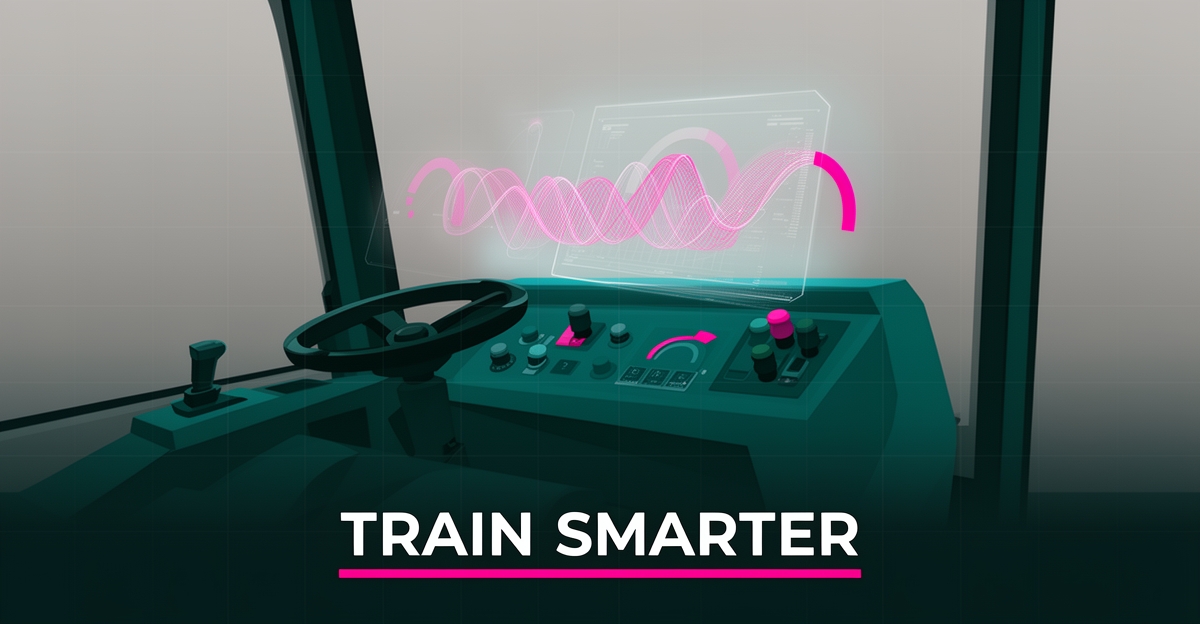
How an AI Training Coach Can Improve Hands-On Skill Development for Equipment Operators
Key Facts
- AI training coaches simulate real operating scenarios and deliver consistent, real-time feedback during practice sessions
- Simulation removes trainees from live machinery, reducing safety incidents, equipment wear, and fuel costs
- AI coaches enable near-unlimited practice scalability without consuming physical training resources
- Structured AI implementations typically yield measurably better outcomes than ad-hoc experimentation
- Consistent AI feedback reduces the instructor subjectivity that creates uneven skill foundations
- Human instructors remain essential for contextual judgment and nuanced skill refinement—AI augments, not replaces
Hire a team member that works 24/7 — for less than a part-time wage.
AI receptionists, SDRs, dispatchers and 99+ roles. Trained on your business, fully managed.
Not sure where to start? Ask our AI planner
The High-Stakes Problem: Why Traditional Equipment Training Falls Short
Most equipment-heavy organizations know their training process is a bottleneck. The challenge isn't recognizing the problem—it's that traditional hands-on training methods create operational risks and scalability constraints that are hard to engineer around.
Traditional equipment training carries inherent safety hazards. Novice operators practicing on live machinery risk damaging expensive assets, injuring themselves, or endangering nearby personnel. These high-stakes environments leave little room for the trial-and-error learning that builds true mastery. Instructor availability compounds the problem—experienced operators are often pulled from production lines to supervise trainees, creating bottlenecks that delay certification and increase labor costs.
Feedback quality also varies depending on which instructor oversees a session. One trainer might emphasize precise joystick control while another prioritizes situational awareness, leaving operators with inconsistent skill foundations. Without standardized, real-time correction, bad habits cement themselves before anyone notices.
- Safety incidents during live practice sessions
- Instructor shortages creating training backlogs
- Inconsistent coaching standards across shifts
- Equipment downtime and wear from training use
- Difficulty replicating rare but critical failure scenarios
AIQ Labs addresses these constraints by deploying AI Employees that function as virtual instructors. These systems simulate real-world operating scenarios and provide real-time feedback during training sessions, helping operators master equipment handling more effectively. The result is a consistent, scalable, and safe practice environment available around the clock—without pulling skilled operators off productive work.
Simulation + Real-Time Feedback: The AI Training Coach Advantage
AI training coaches create safe, repeatable practice environments where equipment operators can develop hands-on skills without risk. By simulating real-world operating scenarios, these systems allow learners to practice complex maneuvers and emergency responses in a controlled setting. AIQ Labs' AI employees function as virtual instructors, delivering consistent guidance that adapts to individual performance levels while maintaining safety standards. This approach addresses a critical gap in traditional training where access to equipment and supervised practice time is often limited.
When operators receive immediate, specific feedback on their actions—control inputs, timing, spatial awareness—they correct errors faster and build muscle memory more effectively than with delayed or generic instruction. The immediacy of AI feedback closes the learning loop, transforming mistakes into teachable moments without damaging equipment or creating safety hazards.
- Real-time performance analysis identifies subtle technique flaws
- Scenario variability prepares operators for uncommon but critical situations
- Consistent feedback reduces instructor subjectivity
- Progress tracking enables personalized learning pathways
- Safe repetition builds confidence before live equipment operation
The effectiveness of AI training coaches is amplified when positioned as a "good servant" that augments rather than replaces human expertise. Instructors remain essential for contextual judgment, motivational support, and nuanced skill refinement—roles AI cannot replicate. Instead, AI handles repetitive practice sessions and objective performance measurement, freeing human trainers to focus on higher-value guidance. This synergy creates a more efficient training ecosystem where technology supports pedagogy without diminishing the irreplaceable role of experienced operators in developing true mastery.
The Business Case: Scalability, Safety, and Measurable ROI
Training programs live or die on their return on investment, and the economics behind AI-assisted instruction are straightforward. As of late 2026, most large organizations have already adopted AI in some form, and the question is no longer whether to use it—but how to deploy it strategically in high-cost areas like operator training.
Traditional equipment training carries hidden costs that compound quickly: machine wear from trainee errors, fuel consumption during practice hours, and the logistical challenge of scheduling limited equipment across multiple learners. AI training coaches largely eliminate these constraints, offering near-unlimited practice scalability without physical resource consumption.
The safety implications alone justify the investment. Trainees can experience dangerous scenarios—hydraulic failures, unstable loads, emergency maneuvers—without risking injury or equipment damage. This capability transforms how organizations approach high-stakes skill development.
Consistency represents another measurable advantage. Human instructors vary in teaching quality, availability, and patience. AI virtual instructors deliver identical, high-quality guidance to every trainee, every time. And in training environments where consistent feedback accelerates skill acquisition, that consistency translates directly into faster time-to-proficiency.
The distinction between structured and ad-hoc AI deployment proves critical. Organizations that treat AI training as a systematic workflow typically see better outcomes than those pursuing fragmented experimentation:
- Structured implementations include task decomposition and clear scoping of training objectives
- Ad-hoc approaches often create knowledge gaps and inconsistent skill assessment
- Strategic deployment enables quantifiable progress tracking across entire trainee cohorts
- Planned integration supports continuous optimization based on performance data
This structural discipline matters because recognition without implementation strategy yields disappointing results. As industry observers often put it, "AI is a good servant, but a bad master"—technology serves organizational goals only when deployed with clear intention.
AIQ Labs approaches AI training coaches as managed AI employees rather than standalone software. This model ensures virtual instructors integrate with existing training curricula, adapt to specific equipment types, and provide the audit trails that regulated industries require. The result is training infrastructure that scales without proportional cost increases—typically a fraction of the cost of adding equivalent human training staff. For organizations that need to rebuild one costly training workflow first, a scoped Workflow Build is often the right entry point; those consolidating training, scheduling, and compliance into one layer can move toward a full AI Operating System built in phases and owned outright.
The financial case becomes compelling when organizations calculate cost per competency achieved. Reduced equipment downtime, eliminated fuel costs for practice runs, and accelerated time-to-proficiency create compounding returns—advantages early adopters secure while late movers keep paying for instructor hours and machine wear.
Implementation Blueprint: From Assessment to AI-Powered Training Programs
Deploying an AI training coach requires a methodical approach that bridges the gap between theoretical knowledge and practical expertise. Structured AI workflows typically improve reliability and efficiency compared to ad-hoc implementation methods.
Begin by identifying high-risk or complex procedures where simulation offers the greatest safety and learning benefits. Task decomposition serves as the foundation here: break intricate equipment operations into granular, manageable components that the AI can address individually. This scoping process ensures that trainees master fundamental skills before progressing to advanced maneuvers, creating a scaffolded learning environment where each module builds logically upon the last.
Structure progressive skill-building workflows that mirror real-world operational demands. AI functions best as a capable servant rather than a master, requiring thoughtful human direction to maximize its educational value.
- Map high-risk operational scenarios suitable for simulation
- Decompose complex procedures into discrete, achievable learning modules
- Establish progressive difficulty curves with clear competency milestones
- Integrate real-time AI feedback loops with human instructor oversight
- Implement continuous assessment protocols to validate skill acquisition
AIQ Labs implements these principles through AI Employees that function as virtual instructors, providing consistent, scalable practice environments with enterprise-grade reliability. These systems operate with human-in-the-loop controls, ensuring that automated guidance always aligns with safety standards and organizational objectives.
Success ultimately depends on maintaining human oversight throughout the deployment lifecycle. Establish clear escalation protocols where experienced operators review AI-generated feedback and intervene when scenarios exceed predetermined complexity thresholds. This hybrid approach preserves the nuanced judgment that human experts provide while leveraging AI's capacity for tireless, patient repetition and instantaneous performance analysis.
Still paying for 10+ subscriptions that don’t talk to each other?
We build custom AI systems you own outright. No vendor lock-in. Full control.
Not sure where to start? Ask our AI planner
Frequently Asked Questions
How does AI training actually improve safety for equipment operators?
What kind of ROI can businesses expect from AI training coaches?
Will AI replace human instructors in equipment operator training?
How widespread is AI adoption for workforce training?
What makes AI training more effective than traditional instruction methods?
How should companies implement AI training programs for equipment operators?
Turning Training Gaps into Competitive Advantage
The evidence is clear: traditional equipment operator training struggles with safety risks, inconsistent feedback, and scalability limits—challenges that directly impact operational readiness and cost. AI training coaches address these gaps by delivering safe, repeatable simulations with real-time, objective feedback, accelerating skill development while reducing equipment wear and instructor burden. When implemented as a structured workflow—decomposing tasks, integrating human oversight, and tracking progress—organizations typically see measurable gains in proficiency and safety. For equipment-heavy industries looking to modernize skill-building without compromising safety or quality, the path forward begins with a focused assessment. Start the Fit Check—our free two-step process to identify your highest-impact automation opportunities and map a realistic AI training strategy. No obligation, just clarity on where AI can serve as a true force multiplier for your team.
Make AI your competitive advantage — not just another tool.
Strategy, implementation and ongoing optimization. One partner, end to end.
Not sure where to start? Ask our AI planner