How Aquaculture Farms Can Use AI to Optimize Fish Feed Efficiency
Key Facts
- Feed is typically the largest operating expense in aquaculture, so even small dosing improvements compound quickly across a production cycle
- Feed conversion ratio drives profitability, and inconsistent application erodes it fast due to overfeeding guesswork
- Overfeeding creates waste, spikes costs, and delivers uneven growth across cages and ponds due to manual feeding schedules
- Real-time monitoring enables predictive insights and simplified management tasks for smarter aquaculture decisions
- Digital twins simulate feed response under different water conditions to optimize inputs and forecast yield without risking live stock
- AI analyzes historical feeding patterns, water conditions, and fish growth to dynamically adjust feed dosages and reduce waste
- Custom AI systems learn optimal feed conversion ratios specific to each farm's species, stocking density, and environmental conditions
Hire a team member that works 24/7 — for less than a part-time wage.
AI receptionists, SDRs, dispatchers and 99+ roles. Trained on your business, fully managed.
Not sure where to start? Ask our AI planner
The Feed Waste Problem Costing Aquaculture Farms
Overfeeding is the silent margin killer in aquaculture, and it starts with guesswork. Manual feeding schedules and visual checks leave farms reacting late while feed drifts into the water column unused.
Feed conversion ratio drives profitability, and inconsistent application erodes it fast. Without precise data, operators overcompensate to avoid underfeeding, which creates waste, spikes costs, and delivers uneven growth across cages and ponds.
Aquaculture is the controlled cultivation of aquatic organisms under managed conditions, as NOAA defines it — and that "controlled" part is exactly where most farms lose money. When control depends on manual observation instead of data, precision slips.
In practice, that precision gap shows up as:
- Excess feed settling to the bottom, fueling algae blooms and oxygen demand
- Manual feeding rounds that cannot adapt to daily changes in water temperature, dissolved oxygen, and fish appetite
- Inconsistent growth rates that complicate harvest planning and market pricing
- Rising input costs with no clear link to biomass gain
Real-time monitoring changes the dynamic. Connected sensor systems give farms continuous visibility into water conditions and feeding activity, replacing spot checks with a continuous record the whole team can act on.
Digital twins extend that capability by creating AI-driven virtual replicas that continuously sync with real-world data. In agriculture broadly, these models are used to run what-if scenarios, optimize inputs, forecast yield, and improve sustainability — benefits that translate directly to aquaculture feed management.
For fish farms, the waste problem compounds because feed is both the largest operating expense and the primary pollution source. Uneaten pellets degrade water quality, stress fish, and invite disease. Manual schedules cannot capture the moment-to-moment interplay of appetite, temperature, and stocking density.
AI can analyze historical feeding patterns, water conditions, and fish growth to dynamically adjust feed dosages. This approach reduces waste and improves fish health through data-driven decisions rather than fixed rations.
The business pain is measurable in low feed conversion ratio and volatile production costs. Farms that rely on fixed schedules trade efficiency for simplicity, accepting waste as normal.
AIQ Labs helps aquaculture businesses build custom AI systems tailored to real-world farm operations, ensuring cost savings and better yields without relying on generic tools. The focus is on precision over promotion, with systems that learn from each farm's specific patterns.
Precision feeding is not about feeding less; it is about feeding right. When dosage matches demand, waste falls, water stays cleaner, and growth becomes consistent and predictable.
How AI Reads Farm Data to Adjust Feed in Real Time
Modern aquaculture operations generate vast streams of data from sensors and IoT devices — tracking everything from water temperature and dissolved oxygen levels to fish growth rates and historical feeding behaviors. AI systems analyze this interconnected data to identify patterns that inform precise feed adjustments, ensuring fish receive optimal nutrition at the right time without overfeeding. By processing real-time inputs alongside historical trends, these systems move beyond static feeding schedules to dynamic, responsive dosing strategies that adapt to changing pond or pen conditions. Software-driven farm automation enables this level of responsiveness, turning raw sensor data into actionable insights that reduce waste and support healthier stock.
Digital twins play a critical role in this process by creating virtual replicas of the aquaculture environment that continuously sync with live farm data. These AI-powered models simulate how changes in feed dosage might affect water quality, fish growth, and waste accumulation under current conditions — allowing farmers to test "what-if" scenarios before making physical adjustments. For example, a digital twin can predict how a 10% reduction in feed might impact ammonia levels or growth rates over the next 48 hours, helping avoid unintended consequences. This predictive capability minimizes guesswork and supports more sustainable, data-informed decision-making across the farm.
AIQ Labs helps aquaculture businesses build custom AI systems that integrate these capabilities into a unified operational framework. By combining historical feeding patterns, real-time water quality metrics, and fish growth trajectories, the system learns optimal feed conversion ratios specific to each farm's species, stocking density, and environmental conditions. Over time, the AI refines its predictions through continuous feedback loops, typically delivering meaningful feed waste reduction while maintaining or improving growth performance. Data-driven decision-making improves efficiency and reduces waste — principles that apply directly to optimizing feed efficiency in fish farming operations. Through this approach, farms achieve better yield consistency, lower operational costs, and reduced environmental impact — all without relying on off-the-shelf tools that fail to capture local variables.
From Data to Action: Building a Custom Feed Optimization System
Turning historical farm data into live feed decisions is where aquaculture operations gain measurable efficiency. A custom system starts by connecting the signals already on the farm — feeding logs, water quality sensors, growth measurements — and letting AI find the patterns humans miss.
Software-driven farm automation increasingly relies on AI, sensors, and connected devices to monitor livestock and equipment. For aquaculture, that means real-time monitoring and predictive insights replace fixed feeding schedules with responsive ones. The result is smarter decisions, fewer manual tasks, and greater precision across the production cycle.
A tailored build maps directly to existing farm systems rather than forcing generic dashboards. Integration points typically include:
- Feeding systems and automated dispensers for dosage control
- Water quality sensors for temperature, dissolved oxygen, pH and ammonia
- Growth tracking and biomass estimation from imaging or sampling
- Operational software for labor scheduling and inventory management
Digital twins — AI-driven virtual replicas of farms that continuously sync with real-world data — extend this further. In fish farming, a digital twin can simulate feed response under different water conditions, run what-if scenarios for ration changes, and flag anomalies before they impact health. That capability supports dynamic adjustment of feed dosages based on historical feeding patterns, water conditions, and fish growth.
Generic tools struggle because aquaculture is site-specific. Water chemistry, species behavior, and infrastructure vary farm to farm. A custom AI system is trained on a farm's own history, owns the data pipeline, and evolves with the operation. AIQ Labs builds these owned systems with deep two-way API integrations so feed optimization works inside the tools crews already use.
The implementation model follows a production-ready approach rather than a prototype. True ownership means the farm controls the code, agents, and data, with no vendor lock-in. Engineering excellence ensures the system handles enterprise-level demands, from sensor ingestion to automated actuation, with validation layers and human-in-the-loop controls for critical decisions.
Because the system is built around real workflows, adoption is practical. Teams see feed waste reduction, improved fish health, and cost savings without changing daily routines. For aquaculture, that translates into a feed optimization system that learns continuously and delivers consistent yields. If you want to see how this maps to your operation, AIQ Labs' Workflow Builds rebuild the one workflow that costs you the most — for most farms, that is feeding — at a fixed price and in phases.
Implementation Roadmap for Aquaculture Teams
Aquaculture teams move from manual feeding rounds to data-driven operations by building the system in layers, not all at once. A structured roadmap reduces risk, protects fish health, and creates a foundation for continuous learning.
Start with an honest audit of current feeding and monitoring workflows. Map when and how much feed is delivered, how water quality is checked, and how growth is tracked. Document manual steps, data gaps, and decisions that rely on experience alone. This baseline reveals where sensors, logs, and automation add the most value.
Deploy sensors and connected data collection next. For aquaculture, that means water temperature, dissolved oxygen, pH, turbidity, and feeding activity sensors feeding into a central system. Real-time monitoring simplifies management tasks and creates the historical record AI needs to learn.
The pilot phase focuses on a single pond, tank, or raceway. Connect historical feeding patterns, water conditions, and fish growth data to a recommendation engine that dynamically adjusts feed dosages. The goal is to reduce waste and improve fish health while keeping human oversight in the loop. Teams review recommendations daily, validate outcomes, and refine rules before expanding.
Scale to farm-wide optimization with continuous learning once the pilot proves reliable. Digital twins offer a practical way to simulate and test changes safely. AI-driven virtual replicas continuously sync with real-world data to enable remote sensing, predictive models, and anomaly detection. Farms can run what-if scenarios for feed rates, simulate stress events, and forecast yield and ROI without risking live stock.
A practical rollout sequence helps teams stay aligned:
- Audit workflows and data sources to define KPIs like feed conversion ratio and growth rate.
- Install sensors and integrate existing farm management software for unified data capture.
- Pilot AI-driven feed recommendations on one system with daily human review.
- Expand farm-wide and activate continuous learning loops for model improvement.
AIQ Labs supports aquaculture businesses building custom AI systems tailored to real-world farm operations, ensuring cost savings and better yields without relying on generic tools. Larger operations can go further with an AI Operating System — one connected layer across feeding, water quality, and harvest planning, built in phases and owned outright. The roadmap ends with governance, adoption, and ongoing optimization so AI becomes embedded in daily operations rather than a one-off project.
Still paying for 10+ subscriptions that don’t talk to each other?
We build custom AI systems you own outright. No vendor lock-in. Full control.
Not sure where to start? Ask our AI planner
Frequently Asked Questions
How much feed waste can AI actually reduce on my aquaculture farm?
What makes a custom AI system better than off-the-shelf aquaculture software?
Do I need to replace my existing feeding equipment and sensors to use AI?
How does a digital twin help with feed decisions without risking my fish?
What's the typical implementation timeline for AI feed optimization?
Will I own the AI system or be locked into a vendor subscription?
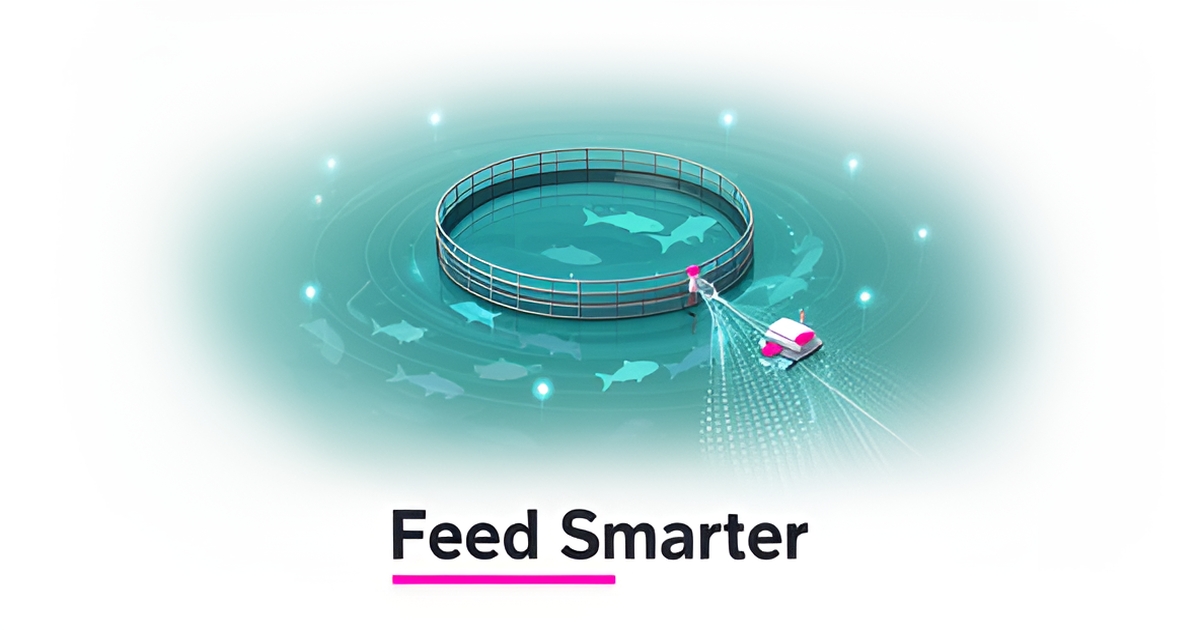
Feed Smarter, Grow Predictably
Precision feeding is not about feeding less, it is about feeding right. By connecting feeding logs, water quality sensors, and growth measurements, AI can replace guesswork with dynamic, responsive dosing that adapts to temperature, dissolved oxygen, appetite and stocking density in real time. Digital twins extend that capability by simulating what-if scenarios before changes hit the pond, while continuous learning refines feed conversion ratios specific to each farm's species and conditions. The result is less waste settling to the bottom, cleaner water, more consistent growth, and harvests you can plan with confidence. If you are mapping an upgrade path, start with an honest audit of current workflows and data gaps, pilot recommendations on a single system with human oversight, then scale farm-wide with integrated sensors and owned systems that fit your crews' tools. AIQ Labs helps aquaculture businesses build custom AI systems tailored to real-world operations for cost savings and better yields without generic tools. Start the two-minute Fit Check at https://aiqlabs.ai/apply and book a free 30-minute strategy call to map your biggest bottleneck.
Make AI your competitive advantage — not just another tool.
Strategy, implementation and ongoing optimization. One partner, end to end.
Not sure where to start? Ask our AI planner