How Beekeepers Can Use AI to Automate Hive Monitoring and Data Collection
Key Facts
- Roughly 40% of bee colonies reportedly collapse each year, driven by climate stress, pesticides and disease (as of late 2026 reporting)
- Over half of managed US hives were reportedly lost in the 2024–2025 season, one of the highest failure rates on record
- Vendors of AI-directed robotic hives report up to 70% lower colony loss versus traditional methods
- AI monitoring platforms claim roughly 40% fewer hive losses through early disease and queen-issue detection
- Year-round chemical-free Varroa treatment has been credited with honey yield gains of around 50% in vendor-reported results
- One commercial robotic-hive operator credits its systems with saving hundreds of millions of bees over recent seasons
- Modern robotic hives offer 24/7 monitoring and significantly better insulation than standard wooden hives
Hire a team member that works 24/7 — for less than a part-time wage.
AI receptionists, SDRs, dispatchers and 99+ roles. Trained on your business, fully managed.
Not sure where to start? Ask our AI planner
The Crisis in Modern Beekeeping: Why Traditional Monitoring Fails
Modern beekeeping is fighting a losing battle with tools inherited from the 1850s. Colony losses keep climbing while manual inspections remain the default, leaving beekeepers blind to problems until it is too late.
Industry reporting as of late 2026 suggests roughly 40% of bee colonies collapse each year, driven by climate stress, pesticides and disease. During the 2024–2025 U.S. beekeeping season, more than half of managed honeybee hives were reportedly lost — one of the highest colony failure rates on record.
Manual inspections were designed for a calmer era. Beekeepers open hives on a schedule, often weekly or monthly, and rely on visual cues from a few frames. That approach creates blind spots between visits. Traditional beekeeping is inherently reactive: manual inspections often miss early warning signs of disease, pests and stress until damage is already done.
The limitations are structural, not just labor:
- Inspections are episodic, so sudden weight loss, queen failure or mite spikes go undetected for days
- Opening hives disturbs the colony and risks robbing, stress and weather exposure
- Human observation cannot continuously track temperature, humidity, sound and flight activity across hundreds of sites
Without real-time data, beekeepers risk hive losses, reduced productivity and their livelihoods. Reactive practices mean interventions arrive after brood damage is visible, honey stores are depleted or swarming has already started.
That delay turns manageable issues into preventable failures. Late Varroa treatment, missed queenlessness and delayed feeding all compound into colony collapse and lower honey yields. AI monitoring platforms claim their early alerts on disease, pests and queen issues can reduce hive losses by around 40% — a vendor-reported figure, but one consistent with what continuous monitoring makes possible.
The shift from inspection to continuous monitoring is why beekeepers are turning to sensor data and AI analytics. AIQ Labs helps build custom AI systems that integrate with existing monitoring tools, turning raw hive sensor data into actionable insights without requiring in-house expertise. The goal is not to replace the beekeeper, but to give them early warning before a problem becomes a loss.
How AI Transforms Raw Hive Data into Actionable Health Insights
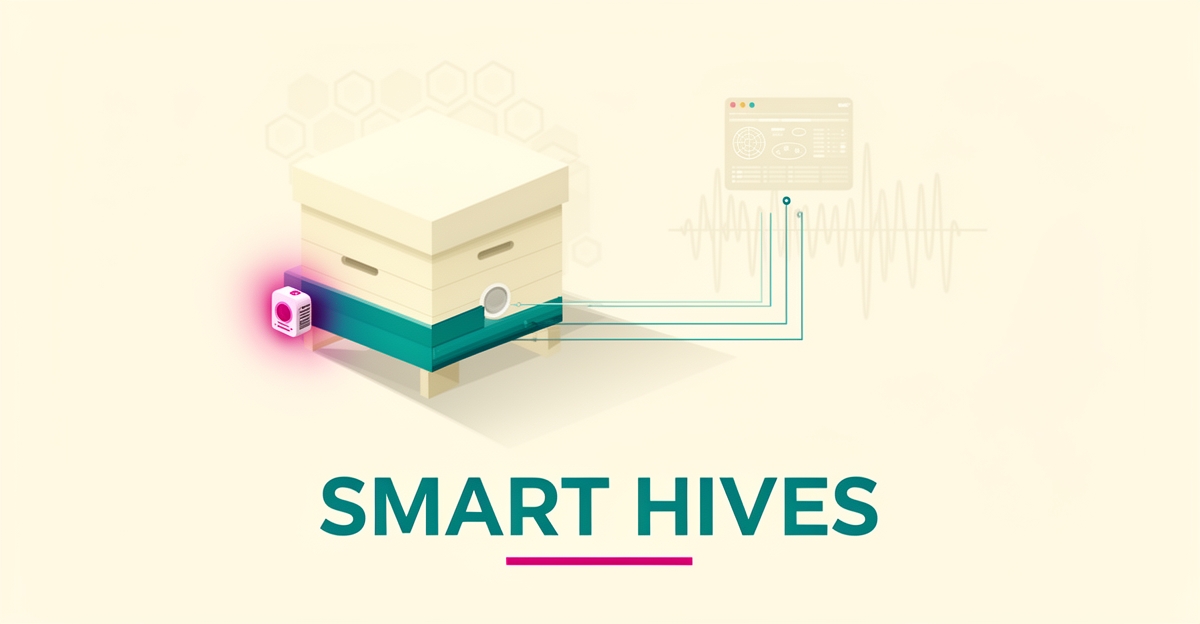
Raw sensor data sits idle until AI translates it into the language of colony health. Modern smart hives layer weight scales, temperature and humidity probes, acoustic microphones, and visual cameras into a single monitoring stack, each stream feeding machine-learning models trained on thousands of hive-seasons. Weight trends alone can reveal honey stores, brood development, and swarming preparation, while acoustic signatures flag queen piping and the distinctive buzz associated with certain brood diseases.
- Weight sensors track nectar flow and sudden drops that signal robbing or colony collapse
- Acoustic analysis detects queenlessness, swarming prep, and disease-specific sound patterns
- Thermoregulation metrics expose brood-nest stress before visual symptoms appear
- Flight-activity cameras correlate foraging drops with pesticide exposure or queen failure
Computer-vision systems now inspect frames down to individual cells, counting bees and spotting mite loads without lifting a lid. Robotic hive vendors report their AI-powered vision reduces manual inspections while enabling remote Varroa heat treatments that cut chemical use. Early AI alerts on disease, pests, and queen issues are credited with reducing hive losses by roughly 40 percent. These models learn each apiary's baseline — climate, genetics, forage — so anomalies trigger actionable notifications, not false alarms. AIQ Labs applies the same multi-agent architecture to help beekeepers unify disparate sensor feeds into a single decision layer, turning noise into timely interventions.
From Alerts to Automation: Closing the Loop on Hive Management
Modern beekeeping is shifting from reactive alerts to fully automated interventions, where AI doesn't just warn beekeepers — it acts on their behalf. Robotic hive systems use AI-powered computer vision to analyze hive conditions and trigger remote actions such as feeding, Varroa heat treatment, and entrance closure during pesticide exposure, all without requiring the beekeeper to be on-site. This closed-loop capability transforms hive management from periodic checks into continuous, proactive care.
AIQ Labs helps beekeepers build custom AI systems that integrate with existing sensor data to enable similar automation, turning raw inputs like weight, temperature, and acoustic signals into trigger-based workflows for hive protection. By connecting monitoring tools to decision-making engines, these systems reduce the need for manual labor while increasing response speed to threats. Vendors report that automated Varroa treatment via heat chambers can increase honey yields by around 50% compared to traditional methods, while remote hive equalization and feeding reduce inspection frequency and associated stress on colonies.
- Over half of managed honeybee hives were reportedly lost during the 2024–2025 U.S. beekeeping season, highlighting the urgency for more resilient management approaches.
- One robotic-hive operator credits AI-driven systems with saving hundreds of millions of bees in recent seasons through year-round mite treatment without chemicals.
- Modern robotic hives provide 24/7 remote monitoring and significantly better insulation than standard wooden hives, improving resilience against extreme weather events.
These capabilities allow beekeepers to scale operations without proportional increases in labor, particularly valuable during peak seasons or in geographically dispersed apiaries. By automating routine interventions — such as sealing entrances before pesticide spray or initiating feeding during nectar shortages — AI systems ensure consistent hive care even when human oversight is limited. This shift from alert-based response to automated action not only reduces colony losses but also frees beekeepers to focus on strategic tasks like queen breeding, honey processing, and pollination contract management.
As AI models continue to learn from hive-specific patterns — adjusting to local climate, forage availability, and bee genetics — their predictive accuracy improves, enabling earlier and more precise interventions. The result is a self-optimizing system where data collection, analysis, and action form a continuous feedback loop, supporting healthier colonies and more sustainable beekeeping practices.
Integrating AI with Existing Operations: No Rip-and-Replace Required
One of the biggest misconceptions about AI-powered hive monitoring is that it requires beekeepers to abandon the equipment and workflows they have relied on for years. In reality, the most effective solutions are designed to slot directly into existing operations, working alongside standard frames, conventional forklifts, and established management routines.
Robotic hive systems are typically engineered to work with standard wooden frames and existing beekeeping workflows rather than forcing beekeepers into proprietary frames or specialized transport equipment. This compatibility means a commercial operation can adopt AI-driven monitoring without restructuring how hives are moved, inspected, or managed day to day.
Connectivity is another practical concern, especially for apiaries located in rural or remote areas where cellular coverage can be unreliable. Modern systems address this with multi-band LTE modules and SIMs that automatically select the strongest available network at each hive location, removing the burden of manual carrier selection.
For beekeepers who already use sensors from multiple vendors or have data scattered across different platforms, the challenge shifts from hardware compatibility to data unification. This is where custom AI integration layers become essential. Rather than replacing existing monitoring tools, these systems pull disparate data streams into a single, coherent view.
AIQ Labs specializes in building exactly this kind of unified decision-making dashboard through its AI Workflow Builds — rebuilding the one workflow that costs your operation the most, at a fixed price and in phases. By connecting existing sensor feeds, weather data, and historical records into one custom-built system, beekeepers gain a centralized platform that transforms raw numbers into actionable insights — without requiring in-house technical expertise to manage it.
The practical benefits of this integrated approach include:
- No need to replace standard frames, forklifts, or transport equipment already in use
- Reliable cellular connectivity even in rural areas with inconsistent coverage
- A single dashboard consolidating data from multiple sensor types and hive locations
- Automated alerts that flag anomalies like disease, queenlessness, or swarming risk
- Scalable architecture that grows with the operation, from a handful of hives to thousands
Industry guidance on smart beekeeping notes that many modern systems use machine learning to adapt to the specific conditions of each apiary, learning what is normal for a given location, climate, and bee genetics. This personalization improves accuracy over time and reduces false alarms, making the technology genuinely useful rather than another source of noise.
The goal is not to replace the beekeeper but to augment their expertise with continuous, reliable data. When AI handles the monitoring and data collection, beekeepers can focus their time and skill where it matters most — making informed decisions that protect colony health and maximize productivity.
Measurable Outcomes: Survival Rates, Yields, and Labor Economics
The numbers tell a story that manual inspections simply cannot. When colony collapse threatens a large share of hives annually, beekeepers need more than periodic check-ups — they need continuous intelligence that catches problems before they become catastrophes. Commercial operations using AI-directed robotic hives report up to 70% lower colony loss compared to traditional methods — a vendor-reported figure, but one that fundamentally changes the economics of pollination services and honey production.
- Around 50% higher honey yields reported from hives with year-round, chemical-free Varroa treatment
- Roughly 40% fewer hive losses credited to early disease and queen issue detection
- Substantial reductions in weekly manual inspection labor — often 20+ hours per 100 hives
- Real-time pesticide protection via automated entrance closure
These outcomes stem from a shift that AIQ Labs sees across agricultural data systems: moving from reactive sampling to proactive, sensor-driven decision-making. AI-powered monitoring platforms analyze weight, temperature, humidity, and acoustic signatures continuously, detecting anomalies like unusual buzzing patterns or sudden weight drops that signal swarming, robbing, or disease onset. The same principle applies whether the sensors sit inside a robotic hive or retrofit onto existing wooden frames — the intelligence layer transforms raw data into intervention triggers.
For mid-scale apiaries managing 500–2,000 colonies, the labor economics are compelling. Automated inspections replace truck rolls and suit-ups with smartphone alerts, letting beekeepers deploy human expertise only where the data demands it. One commercial operator credited this approach with saving hundreds of millions of bees over recent seasons while cutting treatment costs. The ROI equation shifts from "cost per hive visit" to "value per hive saved" — a distinction that separates sustainable operations from those fighting annual replacement cycles.
Still paying for 10+ subscriptions that don’t talk to each other?
We build custom AI systems you own outright. No vendor lock-in. Full control.
Not sure where to start? Ask our AI planner
Frequently Asked Questions
Do I have to replace my existing hives and frames to use AI monitoring?
How much can AI really reduce colony losses?
What sensors does AI actually use to assess hive health?
Will AI monitoring work in remote apiaries with poor cell coverage?
Can AI do more than just send alerts?
Is AI monitoring expensive for a mid-size apiary?
The Hive Has Always Been Smart — Now It Finally Has a Voice
The reported results point one direction: operations using AI-directed monitoring see substantially lower colony loss and meaningfully higher honey yields — not because the technology replaces beekeeping skill, but because it extends that skill across every hour and every hive. Weight sensors catch robbing before stores collapse. Acoustic models hear queenlessness days before a visual check would. Automated heat treatment eliminates Varroa without chemicals, and remote entrance closure shields foragers from pesticide drift — all while the beekeeper focuses on breeding, contracts, and growth. The shift from episodic inspection to continuous intelligence isn't a futuristic concept; it's the operational baseline for apiaries that intend to stay viable. AIQ Labs builds the custom integration layer that unifies your existing sensors, weather feeds, and historical records into a single decision dashboard — no rip-and-replace, no in-house engineering required. If you're managing hundreds of colonies and still relying on weekly suit-ups to find problems, the math has already changed. Start the two-minute Fit Check at aiqlabs.ai/apply and we'll map the highest-ROI automation opportunities for your operation — no obligation, just clarity.
Make AI your competitive advantage — not just another tool.
Strategy, implementation and ongoing optimization. One partner, end to end.
Not sure where to start? Ask our AI planner