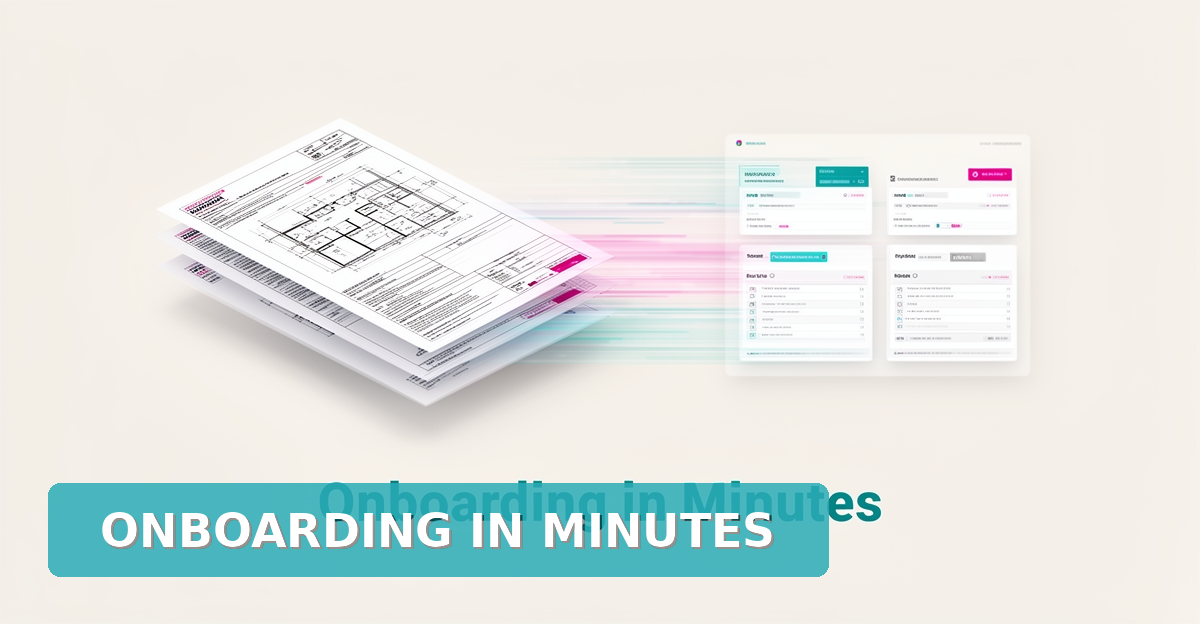
How Builders Risk Insurance Brokers Can Cut Client Onboarding Time with AI-Powered Document Processing
Key Facts
- Brokers typically process just 15-25 simple claims per day due to manual document processing bottlenecks according to industry analysis
- Manual policy quote requests consume 30-60 minutes when working across multiple carriers per industry benchmarks
- Manual data entry carries an inherent 1-5% error rate, triggering costly delays and compliance headaches in builders risk insurance as documented in research
- AI-powered document processing achieves data accuracy rates above 99% for standard processes, eliminating manual effort per industry research
- AI systems can process documents in minutes instead of days, drastically reducing onboarding timelines while maintaining precision per industry analysis
- AI systems handle dozens of quote requests at once, extracting and validating data from varying layouts with consistent accuracy per industry studies
- Brokers regain 15-20 hours per week per employee previously lost to manual processing for higher-value activities per operational metrics
Hire a team member that works 24/7 — for less than a part-time wage.
AI receptionists, SDRs, dispatchers and 99+ roles. Trained on your business, fully managed.
Not sure where to start? Ask our AI planner
The Onboarding Bottleneck: Why Manual Document Processing Is Killing Your Speed
The average builders risk broker spends more time on paperwork than on advising clients. While your expertise lies in assessing construction risks and structuring coverage, your day likely disappears into manual document processing—extracting data from ACORD forms, cross-referencing carrier requirements, and rekeying information into multiple systems.
Consider the mathematics of manual workflows. According to industry analysis, brokers typically process just 15-25 simple claims per day, while a single policy quote request consumes 30-60 minutes when working across multiple carriers. Even routine renewals require 20-30 minutes per policy under optimal conditions. For a brokerage managing dozens of active construction projects, these minutes compound into weeks of lost productivity annually.
The bottleneck extends beyond speed to accuracy. Manual data entry carries an inherent 1-5% error rate, meaning that for every hundred fields your team types, at least one mistake slips through. In builders risk insurance—where project values, location details, and coverage dates must align perfectly—these errors trigger costly delays, compliance headaches, and E&O exposure.
The specific friction points in traditional onboarding include:
- Extracting project details from unstructured PDFs and handwritten forms
- Validating contractor licenses and certificates of insurance manually
- Rekeying identical data across multiple carrier portals and agency management systems
- Chasing missing documentation through endless email threads
These manual processes create a scalability ceiling. When your team spends 30-60 minutes per quote request, you cannot respond to market opportunities quickly. Complex commercial claims stretch into days or weeks, frustrating contractors who need certificates immediately to break ground. The result is a operational bottleneck that limits growth regardless of how many producers you hire.
AIQ Labs works with insurance brokers to replace these error-prone workflows with custom AI document processing systems. By automating the extraction, validation, and categorization of policy documents, brokers can handle higher volumes without expanding headcount—transforming onboarding from a multi-day administrative burden into a competitive advantage.
How AI-Powered Document Processing Transforms Insurance Onboarding
AI-powered document processing is transforming how insurance brokers handle client onboarding by automating the collection, validation, and categorization of policy documents. Using optical character recognition (OCR), natural language processing (NLP), and machine learning, these systems achieve data accuracy rates above 99% for standard processes, eliminating the manual effort traditionally required to review and input information from diverse carrier forms. Industry research shows that AI systems can process documents in minutes instead of days, drastically reducing onboarding timelines while maintaining precision across high volumes of submissions.
This technology enables brokers to manage multiple carrier formats simultaneously without proportional increases in staff, addressing a core scalability challenge in insurance operations. Unlike manual workflows where agents spend 30-60 minutes per quoting request when working with multiple carriers, AI systems handle dozens of quote requests at once, extracting and validating data from varying layouts and terminology with consistent accuracy. Studies confirm that AI-powered platforms can manage hundreds of renewal touches per day without human intervention, demonstrating their capacity to sustain performance under fluctuating workloads. By automating routine document tasks, brokers free up skilled professionals to focus on complex risk assessment, client consultation, and relationship-building—activities that directly impact retention and growth.
- Automates data extraction from unstructured forms using OCR and NLP
- Validates information against carrier rules in real time
- Categorizes documents by type, policy, and client automatically
- Flags discrepancies or missing fields for human review only when needed
- Integrates with agency management systems via API for seamless data flow
AIQ Labs supports brokers in building custom AI document processing systems that own their intellectual property and integrate directly with existing tools—avoiding reliance on third-party templates or locked-in platforms. This approach ensures long-term control, compliance alignment, and the ability to adapt as carrier requirements evolve. By replacing manual document handling with intelligent automation, brokers not only cut onboarding time but also reduce error rates tied to manual data entry, which historically range between 1-5%. Research indicates that AI systems minimize such errors through consistent rule application and automated validation, leading to cleaner data, faster approvals, and improved trust in the underwriting process. The result is a more agile, accurate, and scalable onboarding experience that strengthens both operational efficiency and client satisfaction.
The Real ROI: Speed, Accuracy, and Scalability Gains from AI Automation
The real value of AI-powered document processing for builders risk insurance brokers extends far beyond simple time savings—it transforms core operational metrics that directly impact profitability and client experience. Manual document handling, such as collecting and validating policy forms, certificates of insurance, and contractor details, typically consumes 30-60 minutes per client onboarding request, according to industry benchmarks on manual policy quoting time. By contrast, AI systems can extract, validate, and categorize these same documents in under five minutes per file, accelerating processing speeds by up to 12x while eliminating bottlenecks during peak submission periods.
This dramatic increase in speed is matched by a near-elimination of costly errors. Manual data entry in insurance workflows carries an inherent error rate between 1-5%, often stemming from fatigue, inconsistent interpretation of forms, or rushed processing during high-volume periods. AI-powered processing, however, achieves data accuracy rates above 99% for standard document types by leveraging optical character recognition (OCR), natural language processing (NLP), and validation logic trained on insurance-specific formats. For builders risk brokers, this means fewer policy discrepancies, reduced back-and-forth with clients and carriers, and stronger compliance posture—especially critical when managing project-specific endorsements or jurisdictional requirements.
Beyond speed and accuracy, AI automation delivers scalable efficiency without proportional headcount growth. While manual processes scale linearly with volume—requiring additional staff to handle seasonal surges in construction project starts—AI systems can process hundreds of document sets simultaneously across multiple carriers and formats. This allows brokerages to absorb growth in client volume or expand into new markets without the lag and expense of hiring and training new administrators. The result is a predictable, repeatable onboarding workflow that maintains performance even as demand fluctuates.
These gains translate directly into operational capacity. By automating repetitive tasks like data extraction, form validation, and document routing, brokers reclaim 15-20 hours per week per employee previously lost to manual processing. This freed time isn’t just saved—it’s redirected toward higher-value activities: conducting detailed risk assessments for complex construction projects, advising clients on coverage gaps, and strengthening relationships through proactive consultation. In an industry where trust and expertise differentiate service providers, shifting focus from paperwork to partnership isn’t just efficient—it’s strategically advantageous.
- Processing speed increases from 30-60 minutes per request to under 5 minutes per document
- Data accuracy improves from 95-99% manual to above 99% with AI validation
- Scalability expands to handle hundreds of simultaneous document sets without added staff
- Brokers regain 15-20 weekly hours per employee for relationship-building and risk analysis
AIQ Labs supports this transformation by building custom AI document processing systems that integrate directly with brokerage workflows—owned outright, fully auditable, and designed to evolve with changing regulatory and market demands. The outcome isn’t just faster onboarding; it’s a more agile, accurate, and client-centric brokerage operation positioned for sustainable growth.
Implementation Roadmap: Integrating AI Document Processing into Your Brokerage
Cutting client onboarding time starts with replacing manual document handling with an automated system that fits how your brokerage actually works. Builders risk brokers juggle diverse forms, carrier requirements, and tight timelines, so implementation success depends on scope, integration, and adoption planning rather than generic templates.
Integration complexity drives the timeline. An industry comparison notes AI operating system integration can range from weeks for simple setups to months for comprehensive implementations. Complexity varies significantly between vendors, with some requiring extensive custom development and others offering pre-built connectors. That variance makes a custom-fit approach critical for broker workflows.
Carrier portal connectivity is a core design point. Manual portal management consumes staff hours and introduces friction when quoting across multiple carriers. Research on AI operating systems highlights the ability to connect with multiple carriers and manage diverse data formats as a key consideration for agencies with specific carrier relationship requirements. A custom system can map each portal’s fields, validation rules, and submission formats to your agency management system.
Data security and compliance must be built in from day one. Insurance documents contain sensitive client and project information, so encryption, access controls, audit trails, and role-based permissions are non-negotiable. True ownership of the system ensures brokers control data residency and compliance posture instead of relying on third-party templates.
Change management determines adoption. Staff who currently spend 30-60 minutes per policy quoting request when working with multiple carriers, per manual process benchmarks, need clear workflows and training to trust automation. Manual data entry error rates between 1-5% improve to AI system accuracy above 99% for standard processes, but only if teams validate outputs and handle edge cases.
A practical roadmap typically includes:
- Discovery and workflow mapping of intake, document collection, validation, and carrier submission
- Custom AI document processing build with OCR, NLP, and validation tuned to builders risk forms
- Secure integration with AMS and carrier portals with API or middleware connectors
- Pilot with a single carrier or project type, then phased rollout with performance monitoring
AIQ Labs emphasizes custom development over generic tools, building production-ready systems brokers own and control. That ownership model supports long-term optimization without vendor lock-in, and aligns with the need for workflows that reflect specific broker processes rather than one-size-fits-all automation.
Beyond Automation: How AI Elevates the Broker's Role in Client Relationships
AI document processing does more than streamline workflows—it redefines the broker’s role from document handler to strategic advisor. By automating the collection, validation, and categorization of insurance policy documents, AI frees brokers from hours of manual data entry and error-prone tasks, allowing them to focus on what truly drives value: understanding client needs, advising on coverage options, and building lasting relationships. Industry research shows that manual policy quoting takes 30–60 minutes per request, while AI systems handle dozens of carrier requests simultaneously, accelerating response times and reducing friction in the onboarding process. This shift enables brokers to move beyond transactional interactions and into consultative roles where expertise and empathy matter most.
With routine tasks automated, brokers gain the bandwidth to engage in higher-value activities that directly impact client retention and business growth. They can dedicate time to interpreting complex policy language, identifying coverage gaps, and tailoring solutions to evolving client circumstances—activities that require judgment, experience, and interpersonal skills no algorithm can replicate. Studies confirm that teams using AI-powered platforms report increased capacity to focus on complex claims adjustment and client relationship management, leading to improved satisfaction and stronger trust. AI doesn’t replace the broker; it amplifies their ability to deliver personalized, insight-driven service.
This evolution positions brokers as trusted advisors rather than paperwork processors, enhancing both client outcomes and professional fulfillment. Data indicates that AI systems achieve data accuracy rates above 99% for standard processes, minimizing costly errors and rework that once consumed valuable time. As administrative burdens lift, brokers can invest in proactive client check-ins, educational outreach, and risk management consultations—strategies that deepen loyalty and open doors to cross-selling and referrals. AIQ Labs supports this transformation by building custom AI systems that integrate seamlessly into broker workflows, ensuring ownership, compliance, and long-term scalability without reliance on fragmented third-party tools. The result is a smarter, more human-centered approach to insurance brokerage—one where technology elevates expertise rather than obscuring it.
Still paying for 10+ subscriptions that don’t talk to each other?
We build custom AI systems you own outright. No vendor lock-in. Full control.
Not sure where to start? Ask our AI planner
Frequently Asked Questions
How much time can AI actually save on builders risk client onboarding?
Will AI document processing really reduce errors compared to my current manual workflow?
Can AI handle the different formats and requirements from multiple insurance carriers?
How long does it take to implement an AI document processing system?
Is my client data secure when using AI for insurance document processing?
Will AI replace my brokers or change their role in client relationships?
From Paperwork to Partnership: How AI Frees Builders Risk Brokers to Do What They Do Best
Builders risk insurance brokers don’t lose time to paperwork because they lack skill—they lose it because manual document processing consumes 30-60 minutes per quote request, limits scalability, and introduces avoidable errors that slow down projects and increase risk. AI-powered document processing changes that by automating data extraction, validation, and routing with above 99% accuracy, turning hours of administrative work into minutes and freeing brokers to focus on risk assessment, client consultation, and relationship-building—the activities that actually drive growth and retention. The result isn’t just faster onboarding; it’s a brokerage that can handle more volume without adding staff, reduce costly mistakes, and position itself as a trusted advisor rather than a forms processor. If you’re ready to reclaim that time and shift your team’s focus from paperwork to partnership, the next step is simple: start with a free, no-obligation strategy call to map your biggest bottleneck and see where AI can deliver the fastest, most sustainable impact. Book your free 30-minute strategy call and discover how a custom AI system built for your workflow can transform onboarding from a burden into a competitive advantage.
Make AI your competitive advantage — not just another tool.
Strategy, implementation and ongoing optimization. One partner, end to end.
Not sure where to start? Ask our AI planner