How Civil Engineering Firms Can Use AI to Improve Client Communication and Expectations
Key Facts
- Communication breakdowns are a leading driver of budget overruns and schedule delays on complex projects, alongside technical and permitting issues
- AI-powered communication delivers instant, accurate updates and answers routine client questions without delay by interpreting project data in real time
- AI employees cost roughly 80% less than a human hire in an equivalent role—and work around the clock according to AIQ Labs
- AIQ Labs has deployed 200+ multi-agent systems and runs 4 live SaaS products daily
- AI project liaisons provide 24/7 availability for urgent inquiries without interrupting field teams, ensuring consistent client communication
Hire a team member that works 24/7 — for less than a part-time wage.
AI receptionists, SDRs, dispatchers and 99+ roles. Trained on your business, fully managed.
Not sure where to start? Ask our AI planner
Why Client Communication Breaks Down in Civil Engineering Projects
Civil engineering projects often falter not from technical shortcomings, but from communication breakdowns that erode trust and inflate costs. Manual status updates, delayed responses to client inquiries, and fragmented information across teams create a perfect storm where expectations drift and problems fester unseen. These silos force clients to chase basics while engineers juggle disjointed tools, turning routine coordination into a drain on time and morale. The result is predictable: budget overruns and schedule delays that persist despite advances in scheduling software. Traditional project management tools fail to fix this because they still rely on human input for updates and interpretation—leaving gaps where assumptions replace clarity. Without real-time, consistent information flow, even well-planned projects veer off track as misunderstandings compound into costly rework or disputes.
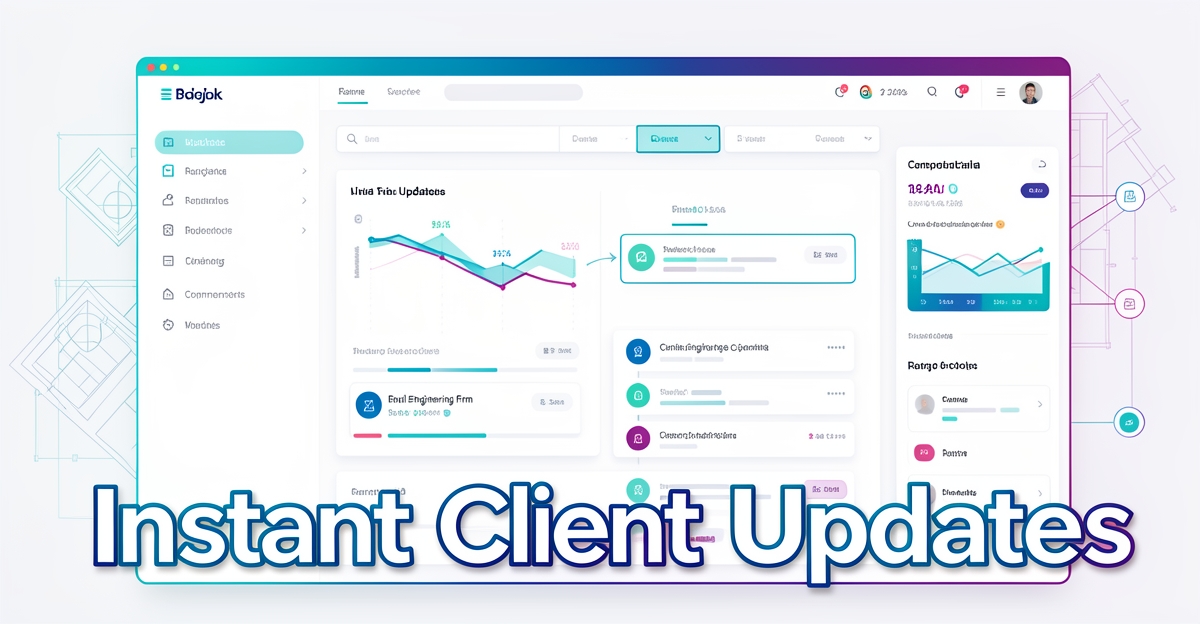
AI-powered communication bridges these gaps by delivering instant, accurate updates and answering routine client questions without delay. Unlike static dashboards that require manual refreshing, AI employees can interpret project data in real time, translate technical milestones into plain-language progress reports, and flag emerging risks before they escalate. This isn't about replacing engineers—it's about freeing them from repetitive explanations so they can focus on solving complex problems. AIQ Labs deploys AI employees as dedicated project liaisons, ensuring clients receive timely, context-aware responses through their preferred channels, whether that's chat, email, or voice. By automating the flow of information, firms eliminate the lag between field developments and client awareness, turning uncertainty into confidence.
The root causes of communication failure are systemic: teams update schedules in isolated spreadsheets, clients receive conflicting versions of timelines, and critical changes get buried in email threads. These issues persist because most tools treat communication as an afterthought rather than a core workflow. AI transforms this dynamic by embedding communication into the project lifecycle itself—automatically generating summaries after site visits, surfacing delay risks early, and proactively notifying stakeholders of scope impacts. Firms using AI-driven communication typically report fewer surprise change orders and higher client satisfaction, not because they built more, but because they communicated better. When clients feel informed and heard, trust deepens, and projects move forward with fewer costly interruptions.
How AI Project Liaisons Close the Communication Gap
Civil engineering projects live or die on clear, timely communication. Clients expect instant answers about timelines, change orders, and site progress, while teams are stretched across drawings, permits, and field coordination. That gap creates delays and frustration.
AI project liaisons close that gap by acting as a dedicated communication layer between firm and client. They deliver instant updates, answer routine questions, clarify timelines, and stay available 24/7 without adding headcount. The result is faster response time and higher client satisfaction throughout the project lifecycle.
AI adoption has moved well past the experimental stage across construction and engineering. As of late 2026, most firms are at least evaluating where AI fits into their workflows—and client communication is one of the clearest starting points, because the payoff is immediate and visible to the client.
An AI employee project liaison works like a trained team member, not a widget. It is built to perform real job tasks, communicate naturally via phone, email, chat and SMS, and integrate with CRMs, calendars, and project management tools. AIQ Labs deploys AI employees as project liaisons across 99+ roles, ensuring clients stay informed and engaged throughout the project lifecycle.
Day-to-day, the liaison handles the repetitive questions that consume project managers' time:
- Instant project updates on milestones, approvals, and site activities
- Routine client questions about timelines, deliverables, and change requests
- Clarification of schedules and next steps with automated summaries
- 24/7 availability for urgent inquiries without interrupting field teams
This is communication that scales without adding headcount. The liaison learns the project's voice, processes, and tools, then continuously improves based on performance data. It never calls in sick and maintains consistent messaging across channels.
For civil engineering firms, that consistency protects margins and reputation. Proactive updates reduce status-call volume, predictive context helps anticipate client concerns, and documented interactions create an audit trail. AI is not meant to replace project managers, but to augment their capabilities and empower them to make better decisions.
As AI adoption accelerates in construction, firms that embed intelligent communication early gain a durable advantage. The liaison model delivers enterprise-grade support at SMB-appropriate investment: with Start Monthly, firms pay a managed monthly cost that typically runs far below a part-time hire, with no long-term commitment required.
Implementation Roadmap: From Pilot to Embedded AI Communication
Most civil engineering firms don't struggle with whether AI can improve client communication — they struggle with where to begin without disrupting active projects. A phased approach that starts small, measures rigorously, and scales deliberately turns experimentation into embedded capability.
- Phase 1 — Pilot a single workflow: Deploy an AI project liaison for status updates or RFI responses on one active project, integrating with existing PM and CRM tools via API
- Phase 2 — Establish governance: Define escalation paths, data privacy rules, and human-in-the-loop checkpoints before expanding scope
- Phase 3 — Measure ROI: Track response time reduction, client satisfaction scores, and engineer hours reclaimed against baseline metrics
- Phase 4 — Scale across projects: Replicate the proven agent template across the portfolio, adjusting for project type and client preferences
- Phase 5 — Embed in operating model: Make AI communication a standard project deliverable with dedicated oversight and continuous optimization
Budget overruns and schedule delays are often rooted in communication gaps that compound silently. Gains compound when communication workflows are automated end-to-end. AIQ Labs helps firms navigate this maturity curve by deploying managed AI employees as project liaisons that integrate directly with tools like Procore, Autodesk Construction Cloud, and HubSpot, ensuring clients receive instant updates while engineers stay focused on design. For firms that want to go deeper than a single liaison, a Workflow Build rebuilds the one communication workflow that costs the most at a fixed price, phased and measured. The firms capturing value aren't waiting for perfect conditions — they're starting with one workflow, one project, and one measurable win.
Measuring Impact: Metrics That Matter for Client-Facing AI
Civil engineering firms can no longer afford slow client updates and manual status chasing. When communication lags, costs rise, timelines slip, and client trust erodes—often before anyone realizes the root cause was information flow, not engineering.
Measuring the impact of client-facing AI turns anecdotal improvement into a business case for expansion. Firms that track the right KPIs can prove ROI, refine workflows, and justify scaling AI across the portfolio.
Response time is the most visible signal. AI-powered liaisons provide instant project updates and answer common client questions without waiting for a human handoff—often cutting first-response time from days to minutes.
Client satisfaction scores capture the human impact. When clients receive timely, accurate timeline clarifications, trust rises. Tracking Net Promoter Score or post-update surveys before and after AI deployment shows whether faster answers translate into stronger relationships.
Manual update hours reveal operational savings. Project teams traditionally spend hours compiling reports, chasing approvals, and repeating the same status briefings. Reducing those hours frees engineers for design and field work, not administration.
Schedule adherence improvement ties communication to delivery. AI that surfaces risks early supports proactive mitigation. Civil firms that measure adherence gains can benchmark against their own pre-AI baseline rather than industry averages.
A practical dashboard for client-facing AI should include:
- Average first-response time to client inquiries, measured in minutes not days
- Client satisfaction scores tied to communication touchpoints
- Hours per week saved on manual status updates and reporting
- Schedule adherence improvement on projects with AI liaisons versus control projects
These metrics also support governance. As AI adoption grows across the industry, disciplined measurement is what separates firms that scale AI successfully from those that stall at the pilot stage.
AIQ Labs deploys AI employees as project liaisons that keep clients informed throughout the project lifecycle. When firms track response time, satisfaction, manual hours, and adherence together, they can demonstrate measurable client experience gains and build a clear roadmap for portfolio-wide rollout.
Still paying for 10+ subscriptions that don’t talk to each other?
We build custom AI systems you own outright. No vendor lock-in. Full control.
Not sure where to start? Ask our AI planner
Frequently Asked Questions
Will AI replace my project managers in civil engineering?
How much is poor client communication really costing civil engineering projects?
Can an AI liaison actually talk to clients 24/7 without adding headcount?
Is AI adoption common enough to be worth piloting now?
What efficiency gains do firms see with AI-powered project communication?
How do I start without disrupting active projects?
From Miscommunication to Measurable Momentum: Turning AI into Your Project Advantage
Civil engineering firms lose valuable time and budget not to design flaws, but to fragmented communication that leaves clients guessing and teams firefighting. AI project liaisons close that gap by delivering instant, consistent updates, answering routine questions, and freeing engineers to focus on complex problem-solving—without adding headcount. Firms that start small, measure impact through response times, satisfaction scores, and reclaimed hours, then scale deliberately, transform communication from a liability into a competitive advantage. The result is fewer surprises, stronger client trust, and projects that stay on track. Ready to see how AI communication can work for your firm? Start the Fit Check — a free, no-obligation session to map your biggest bottleneck and identify high-ROI opportunities—then book your free 30-minute strategy call with an AI engineer to explore what's possible.
Make AI your competitive advantage — not just another tool.
Strategy, implementation and ongoing optimization. One partner, end to end.
Not sure where to start? Ask our AI planner