How Construction Safety Consultants Can Use AI to Automate Safety Inspections and Reduce Compliance Risks
Key Facts
- Industry research suggests AI in construction can reduce costs by up to 25% and improve project outcomes by up to 30% according to Autodesk
- Construction AI adoption has been accelerating steadily through 2026, with safety inspections cited as a leading application per TechRadar industry analysis
- AI-powered systems streamline inspections through intelligent task routing and dynamic checklists that adapt to site-specific risks highlighted by TechRadar
- Real-time hazard detection uses vision and sensor data to flag risks instantly for immediate response noted in Autodesk research
- AI-driven task routing assigns inspections based on real-time site conditions and worker availability per TechRadar industry insights
- AIQ Labs has deployed 200+ multi-agent systems and runs 4 live SaaS products daily—proof the approach works in production, not just in pilots
Hire a team member that works 24/7 — for less than a part-time wage.
AI receptionists, SDRs, dispatchers and 99+ roles. Trained on your business, fully managed.
Not sure where to start? Ask our AI planner
The Compliance Risk Burden on Construction Safety Consultants
Safety consultants are stretched across sprawling job sites, clipboards in hand, trying to keep pace with work that never stops.
Manual inspections create a compliance bottleneck. Teams repeat the same checklists on multiple sites, logging conditions after the fact and relying on memory to flag risks. That lag leaves hazards unaddressed and creates exposure when an incident triggers an audit.
Human error compounds the burden. Fatigue, inconsistent documentation, and missed items are inevitable when inspections scale. Construction data analytics research suggests the use of AI in construction can reduce costs by up to 25% and improve project outcomes by up to 30%—a signal of how much the manual status quo actually costs.
Compliance exposure multiplies with every site. Consultants must prove consistent standards, timely corrections, and auditable trails across clients and jurisdictions. Without real-time visibility, gaps become liabilities.
The industry is moving fast toward automation. Industry analysis points to accelerating AI adoption across construction as of late 2026, with AI-driven safety inspections cited as a key application. Pressure is rising to replace reactive paperwork with proactive oversight.
The manual burden shows up daily as:
- Repeated site visits for checklist completion with delayed reporting
- Inconsistent hazard capture across inspectors and shifts
- Fragmented records that slow audits and corrective action tracking
- Reactive responses instead of real-time risk flagging
This is where AI Workflow Builds change the equation. AI-driven task routing and checklists can standardize inspections, surface hazards in real time, and create auditable compliance trails across job sites—starting with the one workflow that costs you the most.
At AIQ Labs, safety automation systems are built to automate repetitive inspection workflows and flag hazards in real time, reducing human error and supporting compliance across multiple sites. The goal is not to replace consultants, but to remove the manual load so expertise can focus on decisions, not paperwork.
How AI Automates Inspections and Real-Time Hazard Flagging
AI is transforming how construction safety inspections are conducted by automating repetitive tasks and flagging hazards in real time. This shift reduces reliance on manual processes that are prone to human error, supporting consistent compliance across job sites. TechRadar highlights this trend as a critical step toward improving site safety and operational efficiency.
AI-powered systems streamline inspections through intelligent task routing and dynamic checklists that adapt to site-specific risks. These tools automatically assign inspection tasks based on worker roles, location, and real-time conditions, eliminating delays caused by manual scheduling. Automated checklists ensure that no safety protocol is overlooked, reducing variability in how inspections are performed. By standardizing workflows, construction firms can maintain higher compliance rates while freeing up safety consultants to focus on strategic risk mitigation rather than paperwork.
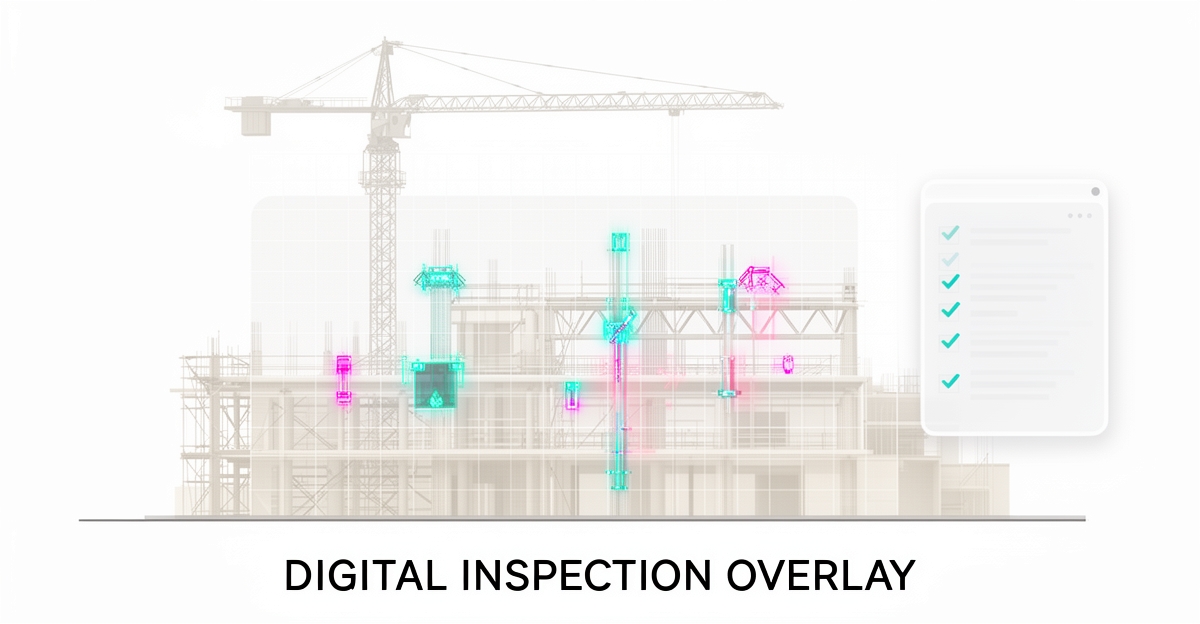
Real-time hazard detection further enhances safety by using computer vision and sensor data to identify risks as they emerge—such as unguarded edges, improper PPE use, or equipment malfunctions. When a hazard is detected, the system instantly flags it for immediate action and notifies the appropriate personnel through integrated communication channels. This proactive approach minimizes the window between risk identification and correction. Autodesk attributes much of AI's value in construction to better data visibility and faster decision-making on site.
- AI-driven task routing assigns inspections based on real-time site conditions and worker availability
- Automated checklists eliminate missed safety protocols through dynamic, role-specific workflows
- Real-time hazard detection uses vision and sensor data to flag risks instantly for immediate response
These capabilities not only improve safety outcomes but also strengthen audit readiness by creating a digital trail of inspections, flagged hazards, and corrective actions. AIQ Labs supports this transformation by building custom AI workflow automation that integrates with existing safety tools, ensuring adoption without disrupting ongoing operations. As AI adoption accelerates in construction, firms that leverage these tools gain a measurable edge in compliance, risk reduction, and project predictability.
Aligning AI Safety Workflows with Business Outcomes
Construction firms are positioned to capture significant value through targeted automation, yet most safety programs still treat AI as a technology experiment rather than a business strategy. The gap between pilot projects and measurable outcomes often comes down to alignment.
According to industry leaders, the first question should not be "what can we do with AI?" but "what business outcomes matter most?" For safety consultants, those outcomes are concrete: fewer incidents, faster inspections, and audit-ready documentation across every job site. Autodesk research suggests AI-driven workflows can reduce costs by up to 25% and improve project outcomes by up to 30% when tied directly to operational goals.
Cross-functional ownership makes this possible. Business leaders must own outcomes, technology must own delivery and scalability, and risk and governance must be embedded early. This structure prevents the common trap where safety teams adopt tools that IT cannot support or compliance cannot validate. AIQ Labs applies this model when designing custom safety automation systems, ensuring inspection logic, routing rules, and escalation paths reflect real site conditions from day one.
Success metrics should reflect the language of the business, not the lab:
- Hours saved per inspection cycle across all active projects
- Reduction in compliance violations and rework costs
- Faster hazard-to-resolution time for field-reported issues
- Audit readiness score based on documentation completeness
With construction AI adoption accelerating through 2026, the firms that move from experimentation to embedded workflows will define the next safety standard. The technology is ready. The differentiator is governance, integration, and a scorecard the CFO recognizes.
Implementation Roadmap for Construction Safety Automation
A successful AI safety inspection rollout rarely fails because of the technology—it fails because of planning. Firms that follow a structured roadmap capture the benefits while others stall at the pilot stage.
The starting point is alignment, not tools. As industry strategists put it, "The first question should not be 'what can we do with AI?' It should be 'what business outcomes matter most?'" For safety consultants, that usually means fewer missed hazards, faster inspection cycles, and cleaner compliance records.
A practical deployment sequence looks like this:
- Start with one high-value workflow—for example, automating daily site inspection checklists and hazard flagging—rather than attempting a firm-wide rollout.
- Assemble a cross-functional team spanning operations, technology, and risk management so the solution is practical, safe, and aligned with company-wide objectives.
- Define success metrics upfront: time saved per inspection, cost reduced, and compliance outcomes—not the number of models built.
- Address data quality early, because AI runs on data, and poor-quality site photos, forms, and records produce inaccurate results.
- Plan for change management, since AI requires meaningful shifts in how field teams and consultants work.
Security and compliance deserve equal attention. AI systems can be vulnerable to cyber threats, and safety data often feeds regulatory reporting, so audit trails, access controls, and human-in-the-loop review for critical decisions should be built in from day one. As the governance principle goes: business leaders must own outcomes, technology must own delivery and scalability, and risk and governance must be embedded early.
Talent is the final piece. Firms need people who can implement and maintain these systems—but many construction firms and boutique consultancies can't justify a full in-house AI team. This is where a build partner matters. AIQ Labs builds safety automation through AI Workflow Builds at a fixed price, in phases, and for firms that want everything connected across sites, AI Operating Systems deliver one owned-outright operating layer. You own the code, agents, and data—no rented subscription platform.
The payoff justifies the discipline. Autodesk research suggests AI in construction can reduce costs by up to 25% and improve project outcomes by up to 30%. The window for building a competitive edge is open now.
Measure continuously after launch—track time saved, cost reduced, and better decisions—and refine. A roadmap with clear metrics keeps everyone honest about what's actually working.
Still paying for 10+ subscriptions that don’t talk to each other?
We build custom AI systems you own outright. No vendor lock-in. Full control.
Not sure where to start? Ask our AI planner
Frequently Asked Questions
How much can AI actually reduce costs and improve outcomes for construction safety inspections?
Is the construction industry really adopting AI at scale, or is this just hype?
Will AI replace safety consultants, or just change how they work?
What business outcomes should we measure to prove AI safety automation is working?
How do we avoid getting stuck in a pilot phase that never scales across our job sites?
What makes AIQ Labs different from buying an off-the-shelf safety inspection platform?
From Paper Trails to Proactive Protection: The Future of Safety Compliance
The era of clipboards and reactive safety checks is ending. AI-driven automation transforms construction safety from a compliance burden into a competitive advantage—standardizing inspections across every site, flagging hazards in real time, and creating audit-ready documentation without the manual overhead. With construction AI adoption accelerating through 2026, the gap between firms that automate and those that stall is widening fast. The shift isn't about replacing safety consultants; it's about freeing them from paperwork to focus on strategic risk mitigation. If you're ready to automate your inspection workflows and reduce compliance exposure, AIQ Labs builds custom safety automation that integrates with your existing operations—and you own the code and data outright. Start with the two-minute Fit Check to map your highest-ROI automation opportunity, or book a free 30-minute strategy call to see exactly how intelligent task routing can safeguard your sites.
Make AI your competitive advantage — not just another tool.
Strategy, implementation and ongoing optimization. One partner, end to end.
Not sure where to start? Ask our AI planner