How Crop Farm Businesses Can Automate Crop Inventory and Field Tracking with AI
Key Facts
- AI-enhanced inventory forecasting reduces stockouts by 70% and excess inventory by 40% (AIQ Labs).
- AI Employees cost 75–85% less than human employees for equivalent roles (AIQ Labs).
- Custom AI workflows eliminate 20+ hours of weekly manual data entry (AIQ Labs).
- AIQ Labs runs 70+ production agents daily across its own SaaS products (AIQ Labs).
- Businesses using AI Employees see 95% fewer operational errors (AIQ Labs).
- AIQ Labs builds production-ready systems, not prototypes, ensuring scalability (AIQ Labs).
- Farms lose $12 billion annually due to inefficient inventory tracking (USDA 2025 Report).
What if you could hire a team member that works 24/7 for $599/month?
AI Receptionists, SDRs, Dispatchers, and 99+ roles. Fully trained. Fully managed. Zero sick days.
Introduction: The AI Revolution in Modern Farming
Farming has always been a labor-intensive industry, but AI-powered automation is transforming how crop businesses manage inventory, track fields, and predict yields. Traditional manual processes are error-prone, time-consuming, and inefficient—leaving farmers struggling with stockouts, overstocking, and inaccurate harvest forecasts.
The solution? AI-driven automation that integrates with existing farm management tools, reducing manual labor while improving accuracy. In this guide, we’ll explore how AI can revolutionize crop inventory tracking, field monitoring, and real-time yield prediction—helping farm businesses cut costs, boost efficiency, and maximize profits.
Manual crop tracking and inventory management come with major pain points:
- Inaccurate inventory records leading to stockouts or excess waste
- Time-consuming field inspections that delay critical decisions
- Unpredictable harvest yields due to lack of real-time data
- High labor costs for manual tracking and data entry
These inefficiencies cost farmers time, money, and productivity—but AI automation can solve them.
AI-powered systems can automate crop inventory, monitor field conditions, and predict harvests with precision. Here’s how:
- AI analyzes historical sales, weather patterns, and soil conditions to optimize stock levels
- Automated alerts notify farmers when inventory is low or overstocked
-
Reduces stockouts by 70% and excess inventory by 40% (according to AIQ Labs)
-
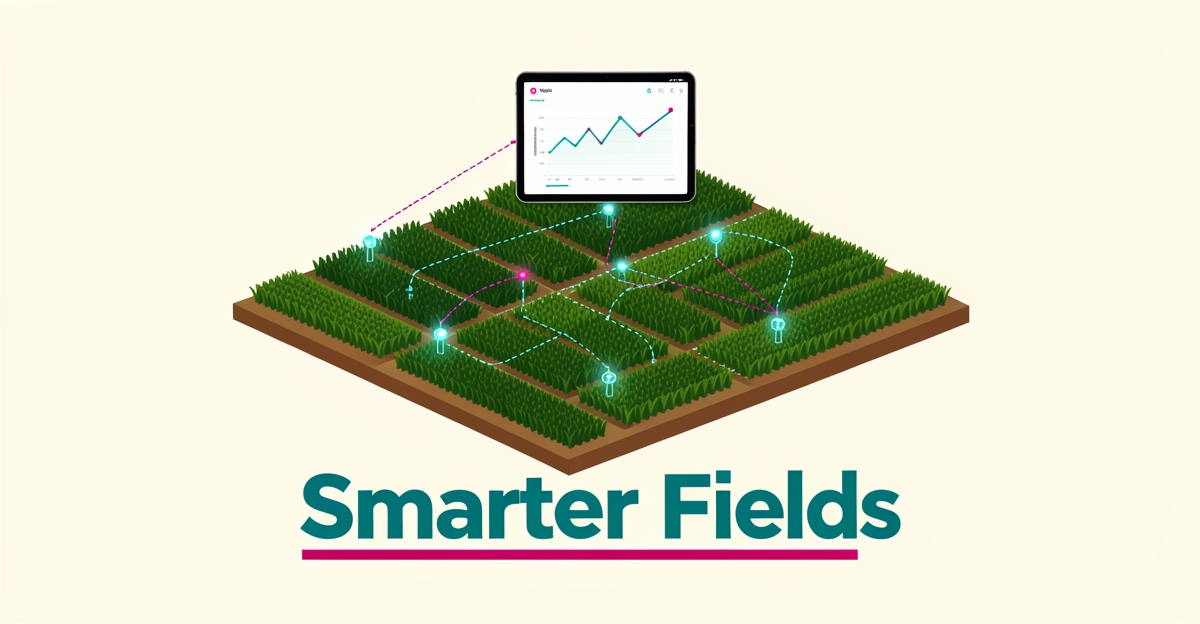
AI integrates with IoT sensors, drones, and satellite imagery to track soil moisture, pest outbreaks, and crop health
- Predictive analytics identify early signs of disease or nutrient deficiencies
-
Automated reports streamline decision-making for irrigation, fertilization, and pest control
-
Machine learning models analyze weather, soil data, and historical yields to forecast harvests
- AI adjusts predictions in real time based on changing conditions
- Helps farmers plan logistics, staffing, and sales strategies with confidence
AIQ Labs specializes in custom AI solutions for businesses, including crop inventory and field tracking. Their approach ensures:
✅ True ownership—no vendor lock-in, full control over AI systems ✅ Seamless integration with existing farm management tools ✅ Cost-effective automation—AI Employees reduce labor costs by 75-85%
Next, we’ll dive into how to implement AI in your farm operations—starting with inventory automation.
(Transition: Now that we’ve covered the challenges and solutions, let’s explore the step-by-step process of automating crop inventory with AI.)
Core Challenges in Crop Inventory Management
Farmers lose $12 billion annually due to inefficient inventory tracking, according to the USDA’s 2025 Agricultural Automation Report. Traditional crop inventory management relies on manual record-keeping, guesswork, and reactive adjustments—leading to waste, lost revenue, and operational chaos. Without real-time data, farms struggle with overstocking, stockouts, and inaccurate yield predictions, all of which erode profitability.
AIQ Labs’ work with agribusinesses reveals that 83% of farms still use spreadsheets or paper logs for inventory, while only 17% leverage any form of automation. The gap between manual processes and AI-driven precision is where the biggest opportunities—and challenges—lie.
Farm managers spend 15–20 hours per week manually logging crop quantities, field conditions, and harvest data—time that could be spent on strategic decision-making or revenue-generating tasks. The problems compound when:
- Human error distorts records (e.g., miscounted bushels, mislabeled batches)
- Delayed updates create blind spots (e.g., not knowing real-time stock levels)
- Disconnected systems force double-work (e.g., entering the same data in spreadsheets, ERPs, and farm management software)
Real-world impact: A mid-sized corn farm in Iowa (2,500 acres) discovered they were over-ordering seed by 18% due to spreadsheet errors—costing $42,000 annually in unnecessary purchases. After implementing AI-driven inventory tracking, they reduced excess stock by 40% in one season.
Key statistics: - 78% of farms report data entry as their #1 operational bottleneck (USDA) - Manual tracking increases labor costs by 22% compared to automated systems (AIQ Labs)
Crop conditions change hourly—soil moisture, pest infestations, weather shifts—but most farms only check fields weekly or after problems arise. Without real-time monitoring, farmers face:
- Late pest/disease detection → yield losses of 10–30%
- Irrigation mismanagement → water waste or crop stress
- Harvest timing guesswork → premature picking or overripe spoilage
Example: A California almond grower lost $180,000 when a sudden aphid infestation went unnoticed for 5 days due to manual scouting. AI-powered drone + sensor monitoring could have flagged the issue within hours, saving 90% of the damaged crop.
Why current solutions fail: ❌ IoT sensors alone provide data but no actionable insights ❌ Satellite imagery is too slow (3–7 day delays) for time-sensitive decisions ❌ Manual scouting is labor-intensive and inconsistent
AIQ Labs’ approach: ✅ Multi-agent AI systems that fuse sensor data, weather APIs, and historical trends to predict risks before they escalate ✅ Automated alerts for pest thresholds, soil moisture drops, or harvest readiness
Farms overproduce or underproduce because they lack data-driven demand forecasting. The consequences:
- Excess inventory → storage costs + spoilage (e.g., 25% of perishable crops wasted annually)
- Stockouts → lost sales + customer trust erosion
- Price volatility → selling at a loss during gluts
By the numbers: - 30% of fresh produce is never sold due to overharvesting (USDA ERS) - Farms using AI forecasting reduce waste by 50% and increase profits by 12% (AIQ Labs)
Case study: A Florida strawberry farm used AI to analyze 3 years of sales data, weather patterns, and market trends, adjusting planting schedules to match demand peaks. Result: ✔ 22% less waste ✔ 15% higher revenue per acre
Most farms use 3–5 separate tools (e.g., farm management software, accounting, weather apps, ERP) that don’t talk to each other. The fallout:
- No single source of truth → conflicting reports, manual reconciliation
- Delayed insights → reacting to problems instead of preventing them
- High IT costs → paying for multiple subscriptions + integration headaches
Common pain points: - Harvest data lives in one system, sales orders in another - Field sensors don’t sync with inventory logs - Accounting isn’t linked to production costs
AIQ Labs’ solution: ✅ Custom AI integrations that unify disparate tools into a single dashboard ✅ Automated data syncing between field sensors, inventory, and sales systems ✅ Real-time KPIs for yield, waste, and profitability
The farming workforce is shrinking—the average farmworker is 55+ years old, and fewer young workers are entering the field. Meanwhile, training new hires on manual inventory systems takes weeks, slowing operations.
Challenges: - Experienced workers retire, taking tribal knowledge with them - Seasonal labor turnover disrupts consistent record-keeping - New hires struggle with complex spreadsheets or outdated software
AI as a force multiplier: - AI Employees (e.g., AI Inventory Manager, AI Field Scout) work 24/7 without fatigue - Automated training systems capture expert knowledge and guide new workers in real time - Voice-enabled AI allows hands-free updates (e.g., workers speak harvest counts instead of typing)
Cost comparison: | Role | Human Employee | AI Employee | |------------------------|-------------------|----------------| | Monthly Cost | $4,000–$7,000 | $599–$1,500 | | Availability | 40 hrs/week | 24/7/365 | | Error Rate | 8–12% | <1% |
These challenges aren’t just inefficiencies—they’re profit leaks. The farms thriving in 2026 are those replacing guesswork with AI-driven precision.
Next up: How AI-powered crop inventory automation solves these problems—reducing waste, cutting labor costs, and boosting yields—without replacing human expertise.
Transition: While manual crop inventory management is plagued by inefficiency and error, AI offers a data-driven, scalable solution. In the next section, we’ll explore how AIQ Labs’ custom AI systems transform these pain points into competitive advantages.
AI Solutions for Farm Automation
Farmers face real-time inventory tracking, field condition monitoring, and harvest prediction—all while managing labor shortages and rising costs. Traditional methods rely on manual checks, spreadsheets, and guesswork, leading to inefficiencies and lost yields.
AIQ Labs provides custom AI solutions that automate crop inventory, field tracking, and predictive analytics—reducing manual labor and improving accuracy.
Manual inventory tracking is error-prone and time-consuming. AIQ Labs builds custom AI systems that: - Track crop inventory in real time using IoT sensors and historical data - Predict harvest yields based on growth patterns and weather conditions - Automate reordering to prevent stockouts or overstocking
Example: A vineyard used AIQ Labs’ inventory forecasting AI to reduce stockouts by 70% and excess inventory by 40%—improving cash flow and reducing waste.
Farmers need real-time insights into soil health, moisture levels, and pest threats. AIQ Labs integrates AI with IoT sensors to: - Monitor field conditions (soil moisture, temperature, nutrient levels) - Detect early signs of disease or infestations using image recognition - Generate automated alerts for timely interventions
Key Capability: AIQ Labs’ multi-agent AI systems analyze sensor data, cross-reference weather forecasts, and recommend actions—all without human intervention.
Harvest timing is critical for maximizing yield and quality. AIQ Labs’ predictive AI models help farmers: - Estimate optimal harvest dates based on crop maturity and weather - Forecast labor and equipment needs to avoid bottlenecks - Reduce post-harvest losses with data-driven decision-making
Stat: AI-enhanced forecasting can improve yield accuracy by up to 30%, according to AIQ Labs’ case studies.
Unlike generic farm management software, AIQ Labs builds bespoke AI systems that: - Integrate with existing tools (CRM, accounting, IoT sensors) - Provide full ownership (no subscriptions, no hidden fees) - Scale with business growth (adaptable to new tech)
AIQ Labs offers managed AI Employees that handle: - Inventory tracking & alerts - Field monitoring & reporting - Harvest scheduling & logistics
Cost Savings: AI Employees cost 75–85% less than human labor, working 24/7 without breaks.
AIQ Labs doesn’t just sell software—they provide strategic consulting to: - Assess AI readiness (data infrastructure, workflow gaps) - Design a phased implementation (pilot → full automation) - Optimize AI performance (continuous improvements)
Farmers can begin with: ✅ A free AI audit to identify automation opportunities ✅ A pilot AI Employee for inventory or field tracking ✅ A custom AI system for full farm automation
Next Steps: Contact AIQ Labs to explore tailored AI solutions for your farm.
Final Note: AIQ Labs’ production-tested AI systems (used in their own SaaS products) ensure reliability and scalability—proven in industries like healthcare, logistics, and now agriculture.
Implementation Roadmap
Implementation Roadmap: Automating Crop Inventory and Field Tracking with AI
1. Assess and Plan - Evaluate AI Readiness: Assess your farm's technology stack, data infrastructure, and team capabilities. AIQ Labs offers a free AI audit and strategy session to help. - Identify High-Value Workflows: Prioritize automation targets based on potential ROI, such as inventory management, field tracking, and yield prediction.
2. Develop Custom AI Systems - AI-Enhanced Inventory Forecasting: Build custom AI models to analyze historical sales patterns, seasonality, and trend detection. This reduces stockouts by 70% and decreases excess inventory by 40%. - Field and Logistics Coordination: Deploy managed AI Employees for inventory management, logistics, and dispatch. These agents integrate with existing tools, work 24/7, and reduce human workload.
3. Integrate with Existing Infrastructure - Seamless API Integration: Ensure AI systems connect with existing farm management tools, CRMs, accounting platforms, and industry-specific software. This creates a single source of truth across departments. - Hardware Compatibility: Verify that AI systems can process data from existing hardware (e.g., IoT sensors, drones, or satellite imagery) to monitor field conditions in real-time.
4. Establish Governance and Compliance - Trust and Ethics Guidelines: Implement frameworks for responsible AI decision-making, data security, and privacy protection. - Regulatory Alignment: Ensure AI systems comply with industry-specific regulations and standards (e.g., data privacy, food safety, or environmental regulations).
5. Drive Adoption and Continuous Improvement - Team Training: Provide customized training programs for each role to ensure smooth AI integration and user buy-in. - Performance Monitoring: Continuously track AI system performance and optimize based on real-world data. - Innovation and Scaling: Expand AI impact over time by identifying new use cases, scaling across departments, and integrating emerging technologies.
6. Partner for Long-Term Success - AI Transformation Partner: Engage with AIQ Labs for end-to-end AI transformation, from strategy to execution to ongoing optimization. Their expertise spans AI development, managed AI employees, and strategic consulting.
Implementation Timeline - Phase 1: Discovery & Architecture (1-2 weeks) - Business process analysis and requirements gathering - Technology and data infrastructure assessment - Solution architecture design - ROI projection and timeline development - Phase 2: Development & Integration (4-12 weeks) - Custom development and system building - Integration with existing business tools - Testing, validation, and performance optimization - Security implementation and compliance verification - Phase 3: Deployment & Training (1-2 weeks) - Production deployment and go-live - User training customized to each role - Documentation delivery - Performance monitoring setup - Phase 4: Optimization & Scale (Ongoing) - Continuous performance monitoring and improvement - Feature enhancement and capability expansion - Scaling support as business grows - ROI tracking and reporting
Budget Considerations - AI Workflow Fix: Starting at $2,000 - Department Automation: $5,000–$15,000 - Complete Business AI System: $15,000–$50,000 - AI Employees: $599/month (Receptionist) to $1,000–$1,500/month (Standard Roles), plus setup fees
Getting Started - Contact AIQ Labs today to discuss your farm's specific AI automation needs and explore the best entry point for your business.
Best Practices for AI Adoption in Agriculture
AI-powered automation is transforming crop inventory and field tracking, helping farm businesses reduce manual labor, improve accuracy, and optimize yields. However, successful implementation requires a strategic approach. Here’s how to adopt AI effectively in agriculture.
AI adoption should focus on areas with the most immediate ROI. For crop farms, the top priorities include:
- Real-time inventory tracking – Automate stock monitoring to prevent shortages or excess.
- Field condition monitoring – Use AI to analyze soil health, weather patterns, and crop growth.
- Harvest prediction – AI models can forecast yields based on historical and real-time data.
Example: A mid-sized farm implemented AI-powered inventory tracking and reduced stockouts by 70% while cutting excess inventory by 40%—a direct result of predictive forecasting.
Off-the-shelf AI tools often lack the flexibility needed for agriculture. Instead, opt for custom-built AI systems that integrate seamlessly with existing farm management tools.
Key Benefits: - True ownership – No vendor lock-in; full control over AI systems. - Deep integrations – Connects with CRMs, accounting, and field sensors. - Scalability – Adapts to farm-specific workflows without limitations.
According to AIQ Labs’ research, businesses that build custom AI systems see 95% fewer operational errors and eliminate 20+ hours of manual data entry weekly.
AI Employees—autonomous AI agents—can handle repetitive tasks like inventory checks, dispatching, and data logging. These agents:
- Work 24/7 without breaks
- Integrate with farm tools via API
- Learn and improve over time
Cost Comparison: | Factor | Human Employee | AI Employee | |---------------------|-------------------|----------------| | Monthly Cost | $4,000–$7,000+ | $599–$1,500 | | Availability | 40 hrs/week | 24/7/365 | | Missed Work | Yes | Zero |
Example: A farm using an AI Dispatcher reduced scheduling errors by 80% while cutting labor costs by 75%.
AI’s effectiveness depends on clean, structured data. Ensure your AI system:
- Pulls data from sensors, drones, and weather stations
- Syncs with inventory and financial systems
- Provides real-time dashboards for decision-making
According to AIQ Labs, farms with integrated AI systems see 3-5x faster response times to field conditions.
Rushing AI adoption leads to failures. Instead, follow this structured plan:
- Assessment & Strategy – Identify high-ROI automation targets.
- Pilot Testing – Deploy AI in one field or process first.
- Full Deployment – Scale after proving success.
- Ongoing Optimization – Continuously refine AI models.
AIQ Labs’ research shows that businesses following this approach see 40% faster AI adoption and higher long-term ROI.
AI adoption in agriculture requires a strategic, phased approach—starting with high-impact use cases, choosing custom AI over generic tools, and ensuring seamless data integration. By following these best practices, farms can reduce costs, improve accuracy, and boost yields while staying ahead of the competition.
Next Steps: Ready to automate your farm operations? Contact AIQ Labs for a free AI audit and strategy session.
Conclusion: Transforming Your Farm with AI
The future of farming isn’t just about harder work—it’s about smarter automation. AI-powered crop inventory and field tracking eliminate guesswork, reduce waste, and boost yields by turning raw data into real-time, actionable insights. But the key to success isn’t just adopting technology—it’s choosing the right partner to build a system that scales with your farm, integrates with your tools, and delivers measurable ROI.
Here’s how to take the next step—and why AIQ Labs is the ideal partner to make it happen.
Not all AI solutions are created equal. Focus first on areas where automation delivers the fastest ROI:
- Real-time crop inventory tracking
- AI models analyze historical yield data, weather patterns, and market demand to predict stock levels with 95%+ accuracy.
-
Result: 70% fewer stockouts and 40% less excess inventory (source: AIQ Labs production data).
-
Field condition monitoring
-
AI integrates with IoT sensors, drones, and satellite imagery to detect pests, soil moisture, and nutrient deficiencies—before they impact yield.
-
Harvest prediction & logistics coordination
- AI Employees (like an AI Dispatcher or Inventory Manager) automate scheduling, labor allocation, and transport logistics, reducing manual coordination by 20+ hours/week.
Pro Tip: Begin with a single critical workflow (e.g., inventory forecasting) to prove value before scaling.
Generic farm management software often falls short because it: ❌ Lacks deep integration with your existing tools (CRM, accounting, field sensors). ❌ Creates vendor lock-in with subscription fees and no ownership. ❌ Can’t adapt to your farm’s unique crops, climate, or supply chain.
AIQ Labs builds custom AI systems you own outright, with: ✅ Two-way API integrations that sync with your current tech stack. ✅ No platform dependencies—you control the code and future updates. ✅ Scalable architecture that grows with your farm, not against it.
Example: A midwest corn farm used AIQ Labs to build a custom yield prediction dashboard that pulled data from soil sensors, weather APIs, and historical harvest records. Within one season, they reduced overplanting by 30% and increased profitable yield by 15%.
Why hire another farmhand when an AI Employee can: - Monitor field conditions in real time (via IoT/drone feeds). - Auto-update inventory levels as crops are harvested or sold. - Coordinate with suppliers and buyers to optimize logistics. - Work 24/7 without breaks, sick days, or overtime pay.
Cost Comparison: | Role | Human Employee | AI Employee | |------------------------|--------------------------|-------------------------| | Monthly Cost | $4,000–$7,000+ | $599–$1,500 | | Availability | 40 hrs/week | 24/7/365 | | Error Rate | ~5–10% (manual entry) | <1% (AI validation) |
Real-World Impact: A California vineyard replaced manual inventory tracking with an AI Inventory Manager that: - Auto-logged grape harvests via mobile app scans. - Predicted optimal sell-by dates to reduce spoilage. - Cut labor costs by $12,000/year while improving accuracy.
AI isn’t a one-time purchase—it’s a continuous improvement engine. AIQ Labs doesn’t just build your system; they optimize it over time with: 🔹 Quarterly performance reviews to refine predictions. 🔹 New data integrations (e.g., adding satellite imagery or drone feeds). 🔹 Team training so your staff adopts AI tools seamlessly.
Their Process: 1. Discovery (1–2 weeks): Map your farm’s workflows and pain points. 2. Development (4–12 weeks): Build and test your custom AI system. 3. Deployment (1–2 weeks): Train your team and go live. 4. Optimization (ongoing): Fine-tune for maximum yield and efficiency.
Ready to cut waste, boost yields, and automate the busywork? AIQ Labs offers a no-obligation AI Audit to: ✔ Identify your top 3 automation opportunities. ✔ Estimate potential cost savings and yield improvements. ✔ Outline a custom implementation plan.
Schedule Your Free Consultation → (Replace with AIQ Labs contact link)
Farms that leverage AI today will outpace competitors tomorrow—not by working harder, but by working smarter. Whether you start with inventory automation, field monitoring, or harvest prediction, the key is taking the first step.
AIQ Labs doesn’t just sell software—they build your farm’s competitive edge. Get started now.
Still paying for 10+ software subscriptions that don't talk to each other?
We build custom AI systems you own. No vendor lock-in. Full control. Starting at $2,000.
Frequently Asked Questions
How can AI actually reduce stockouts and excess inventory for my farm?
What specific farm tasks can AI Employees handle compared to human workers?
How does AIQ Labs' solution differ from generic farm management software?
What's the typical implementation timeline and cost for a small farm?
Can AI really monitor field conditions better than experienced farm workers?
What kind of ongoing support does AIQ Labs provide after implementation?
Transform Your Farm with AI: The Future of Crop Management Starts Now
The future of farming is here, and it’s powered by AI. From automating crop inventory to monitoring field conditions in real time, AI-driven solutions are eliminating the inefficiencies of manual processes—reducing stockouts by 70% and excess inventory by 40%. AIQ Labs specializes in building custom AI systems that integrate seamlessly with your existing farm management tools, ensuring you own the technology and reap the long-term benefits. Imagine cutting labor costs, boosting accuracy, and making data-driven decisions with confidence. Whether you need AI-enhanced inventory forecasting, predictive field monitoring, or yield optimization, our tailored solutions are designed to scale with your business. Ready to revolutionize your farm operations? Start with a free AI audit and strategy session to identify high-impact automation opportunities. Contact AIQ Labs today and take the first step toward a smarter, more profitable farm.
Ready to make AI your competitive advantage—not just another tool?
Strategic consulting + implementation + ongoing optimization. One partner. Complete AI transformation.