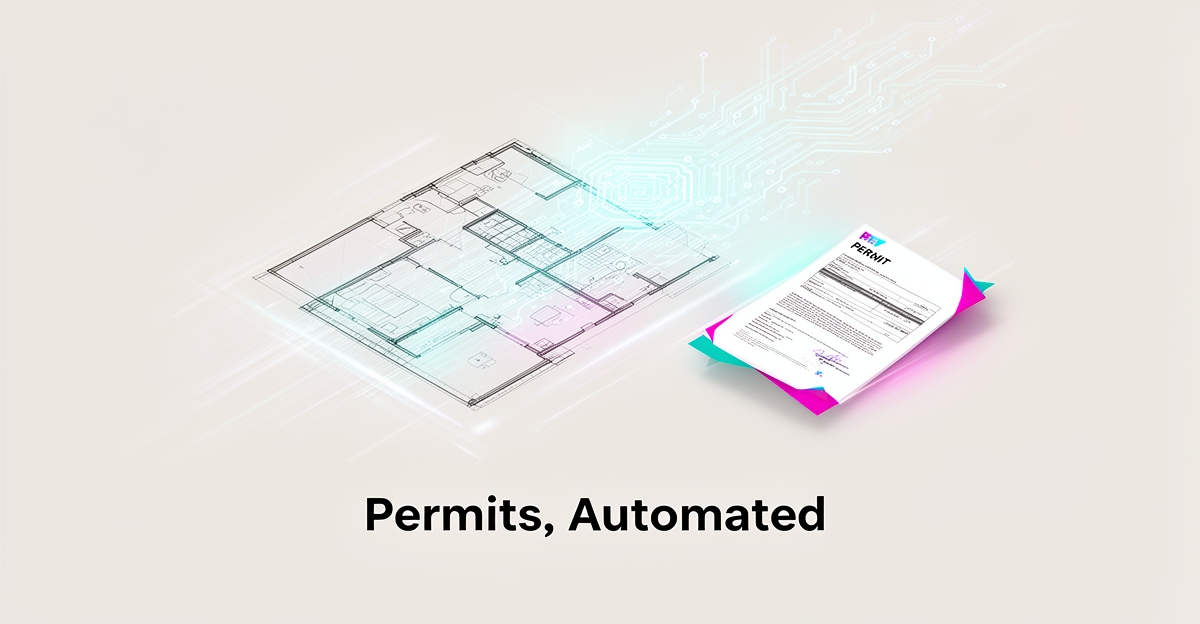
How Custom Home Builders Can Automate Permit Applications with AI
Key Facts
- AI cut a 12,000 SF takeoff from 6 hours to 40 minutes in head-to-head AI vs. manual testing.
- Only 8.5% of U.S. construction projects finish on time and within budget according to industry analysis.
- The AI construction market is projected to grow from $4 billion in 2025 to nearly $12 billion by 2026 per market research.
- Builders using Houzz AI generate client-ready schedules 45% faster according to the platform's own data.
- AI takeoff adoption typically breaks even at roughly 12-15 bids per year on projects over 10,000 SF based on cost analysis.
- Human review still adds 90 minutes to 4 hours to AI takeoffs, since errors cluster around ambiguous plan details testing found.
- AIQ Labs has deployed 200+ multi-agent systems and runs 4 live SaaS products daily across production platforms.
Hire a team member that works 24/7 — for less than a part-time wage.
AI receptionists, SDRs, dispatchers and 99+ roles. Trained on your business, fully managed.
Not sure where to start? Ask our AI planner
The Permit Bottleneck Costing Builders Time and Margin
The permit application process remains a stubborn bottleneck for custom home builders, with only 8.5% of U.S. construction projects finishing on time and within budget. This pre-construction friction stems from manual blueprint analysis, data extraction, and document generation—tasks that consume hours of skilled labor and delay project starts. AI can directly address these pain points by automating the extraction of measurements from plans, generating accurate material takeoffs, and creating permit-ready documentation in minutes instead of days. AIQ Labs builds custom AI systems that process and validate construction documents, turning a manual workflow into a streamlined, reliable operation.
- AI-powered blueprint analysis can reduce takeoff time from 6 hours to 40 minutes for a 12,000 SF project
- Human review still adds 90 minutes to 4 hours depending on complexity
- AI errors cluster around plan ambiguity, requiring disciplined verification
How AI Extracts, Validates and Auto-Generates Permit-Ready Documentation
AI is transforming how custom home builders prepare permit applications by extracting, validating, and auto-generating documentation with speed and consistency. AI-powered blueprint analysis can automatically detect, measure, and classify spaces from 2D plans, reducing what once took hours to mere minutes—such as cutting a 12,000 SF tenant improvement takeoff from 6 hours manually to 40 minutes with AI, plus 90 minutes of human review Source 7. This acceleration extends to material takeoffs, where AI autocalculates quantities for estimates and schedules, enabling builders to generate client-ready proposals 45% faster than traditional methods Source 4.
Once blueprints are analyzed, AI systems can auto-generate permit-ready documentation including fully formatted estimates, proposals, and project schedules based on simple text or voice descriptions of the scope Source 4. These tools expand, refine, and update financial documents automatically, ensuring consistency between takeoffs, cost breakdowns, and timelines—critical for passing municipal reviews. AI also assists with code compliance research by citing sources when checking building regulations, allowing builders to verify requirements without manual cross-referencing Source 3.
Multi-agent AI orchestration takes this further by connecting blueprint data to submission packages through specialized agents that handle research, validation, and document assembly. AIQ Labs’ production systems demonstrate this capability, with 200+ multi-agent systems deployed and 4 live SaaS products the company runs daily to process and validate construction documents Source 2. This end-to-end automation transforms fragmented manual steps into a seamless workflow—from blueprint upload to authority submission—saving days of effort while maintaining the precision required for permit approval.
From Pilot to Production: A 10-Step Implementation Playbook
Moving from a promising pilot to reliable production requires discipline, not just tools. Custom home builders who follow a structured rollout cut manual work while keeping human judgment in the loop.
Start by digitizing and standardizing plans. Upload clean, well-organized PDFs with clear dimensions and consistent notation. AI takeoff testing shows blurry PDFs or hand-drawn revisions cause obvious errors, so quality in equals accuracy out.
Run AI-powered blueprint analysis on the prepared set. Tools can automatically detect, measure and classify spaces from 2D blueprints, counting rooms, walls and square footage from PDF plans. Deep learning analysis reduces hours of manual work to minutes on clean plans.
Generate material takeoffs and quantities automatically, then apply a hybrid review. For a 12,000 SF tenant improvement, AI completes takeoff in about 40 minutes plus 90 minutes review versus ~6 hours manual. Human review is not optional; AI errors cluster around ambiguous walls and details on separate sheets.
Auto-generate permit documentation from the analyzed data. AI can create estimates, proposals and schedules with labor, materials and totals from a project description, and convert estimates into phased schedules automatically.
Research and verify code compliance with source-cited tools. Checking building codes and regulations is critical for permit acceptance, and cited research helps document compliance decisions.
Set up automated workflows for submission and tracking. AI-powered workflows can request, collect and organize required documents, send personalized status updates when milestones are logged, and route requests to the correct authority. This shifts from manual handoffs to automated orchestration—the kind of rebuild AIQ Labs delivers through its AI Workflow Builds.
Implement a disciplined review and quality control rhythm. Plan for 4-6 weeks of training for estimators to become comfortable trusting and verifying output without over-reviewing. Hybrid manual-AI review remains the standard for complex or revised plans.
Handle plan revisions strategically. Most AI tools require re-uploading revised sheets and re-running analysis; delta comparison is not yet production-ready. For fast-moving bids, manual digitizing can be more efficient for partial changes.
Integrate with core systems via deep two-way APIs. Connect the AI layer to Procore, HubSpot and QuickBooks for real-time data flow and eliminate re-entry. System integration is where AIQ Labs builds custom AI systems that process and validate construction documents.
Monitor and optimize for ROI. The break-even point for AI takeoff adoption is typically around 12-15 bids per year on projects over 10,000 SF. Measurable ROI in construction typically appears in 30-60 days, with substantial operational cost reductions possible through 24/7 AI Employees.
Production readiness checklist:
- Clean plan library and naming conventions established
- Review SOPs defined for AI outputs with time budgets
- API connections live to Procore, QuickBooks, HubSpot
- Estimator training completed and accuracy baselines tracked
Builders who pilot narrowly, review rigorously, and integrate deeply move from experiment to competitive advantage.
Build vs Buy and Why Ownership Matters for Permit Automation
Off-the-shelf takeoff tools often lock builders into rigid workflows and recurring subscription costs, while custom AI systems built by AIQ Labs provide true ownership and deep integration with existing construction software like Procore, HubSpot, and QuickBooks via two-way APIs—ensuring seamless data flow without manual re-entry. Unlike vendor-dependent platforms that limit customization and create long-term dependencies, AIQ Labs transfers full intellectual property and code ownership to clients, eliminating platform lock-in and enabling builders to adapt their systems as permitting requirements evolve. This ownership model aligns with AIQ Labs’ three entry points—AI Employees, AI Workflow Builds, and AI Operating Systems—allowing SMB builders to scale automation strategically through flexible payment models: Start Monthly for managed AI employees handling 24/7 authority communication, Build in Milestones for phased workflow automation, or Own It Outright for complete control of a custom permit automation system. AI Employees, in particular, can monitor application status, respond to authority inquiries, and manage document submissions around the clock at roughly 80% less cost than a human hire, reducing delays caused by manual follow-ups. For builders processing 12-15+ bids annually, this approach delivers measurable ROI typically within 30-60 days by cutting permit prep time from hours to minutes—turning a bottleneck into a competitive advantage.
Still paying for 10+ subscriptions that don’t talk to each other?
We build custom AI systems you own outright. No vendor lock-in. Full control.
Not sure where to start? Ask our AI planner
Frequently Asked Questions
How much time can AI save on takeoff for a 12,000 square foot project?
Is human review still necessary when using AI for permit applications?
What is the break-even point for adopting AI takeoff tools in custom home building?
Can AI help with code compliance research for permit applications?
What are the main limitations of AI when handling plan revisions?
Turn Permit Delays Into Your Competitive Edge
Custom home builders no longer need to accept permit bottlenecks as a cost of doing business. By automating blueprint analysis, material takeoffs, and documentation generation with AI, teams can cut prep time from hours to minutes—freeing skilled estimators to focus on high-value work instead of manual re-entry. The real advantage comes not just from speed, but from reducing delays that erode margins and frustrate clients, turning a pain point into a streamlined, reliable process. For builders handling 12-15+ bids annually on projects over 10,000 SF, the break-even point is within reach, with measurable ROI often appearing in 30-60 days. The next step is simple: take the 2-minute Fit Check to assess where AI can remove friction in your pre-construction workflow, then book a free 30-minute strategy call to map your biggest bottleneck—no obligation, just clarity on your AI opportunity.
Make AI your competitive advantage — not just another tool.
Strategy, implementation and ongoing optimization. One partner, end to end.
Not sure where to start? Ask our AI planner