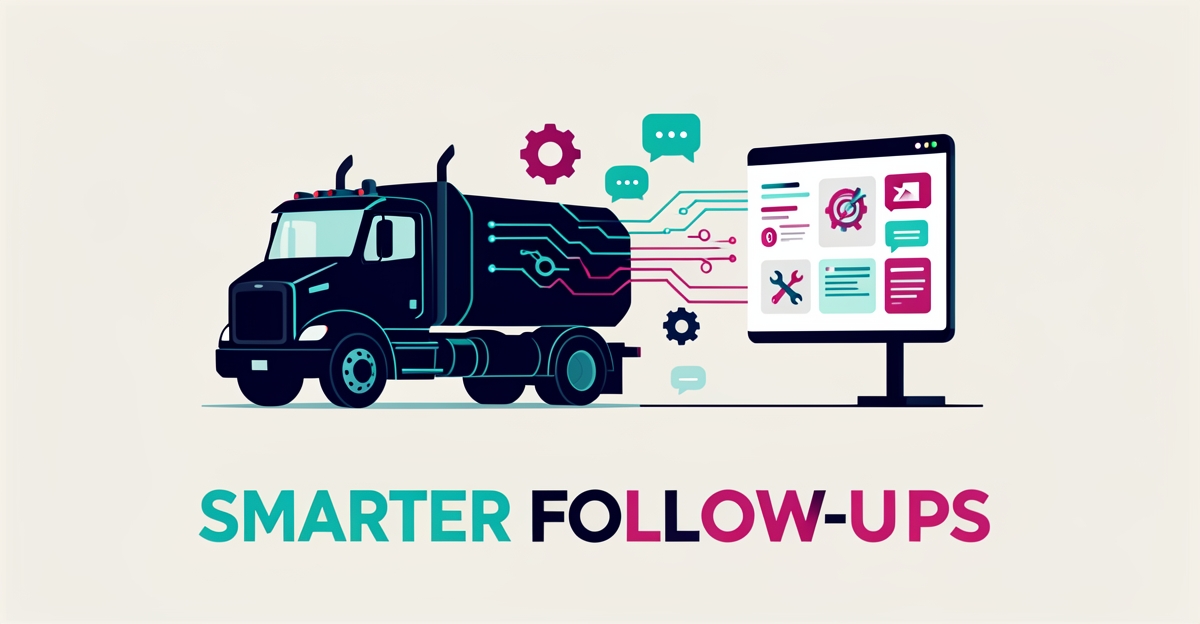
How Diesel Repair Shops Can Use AI to Automate Customer Communication After Service
Key Facts
- AI-assisted diagnostics are widely reported to improve first-time fix rates meaningfully in diesel repair shops according to industry analysis
- Shops using AI report significant reductions in diagnostic time for diesel technicians based on industry commentary
- Machine learning approaches can flag component wear well before breakdowns occur in diesel engines per predictive maintenance discussions
- Shops typically recover technology costs within roughly 6-18 months through labor savings and throughput per industry commentary
- The diesel repair service market has been valued at roughly $50 billion as of 2024, with steady annual growth per industry analysis
- AI-powered diagnostic tools are reported to improve diagnostic accuracy in heavy-duty repair per technical commentary
- AI-assisted inventory management can meaningfully reduce parts ordering delays for diesel repair shops per operational commentary
Hire a team member that works 24/7 — for less than a part-time wage.
AI receptionists, SDRs, dispatchers and 99+ roles. Trained on your business, fully managed.
Not sure where to start? Ask our AI planner
The Hidden Cost of Ignoring Post-Service Communication
For most diesel repair shops, the job ends when the truck rolls out of the bay. But in a market valued at roughly $50 billion as of 2024 and still growing steadily, the shops winning repeat business are the ones that keep the conversation going long after the invoice is paid.
Post-service communication is where customer lifetime value is quietly won or lost. When a shop services a fleet vehicle and never follows up, it leaves money on the table in three distinct ways.
- Missed maintenance revenue: machine learning can flag component wear well before breakdowns occur, yet without a follow-up system, that predictive insight never reaches the customer as a scheduled service.
- Erosion of trust: customers who hear nothing after a repair assume the shop is indifferent, making them vulnerable to the next competitor's outreach.
- Lost referrals: satisfied customers refer others, but satisfaction fades quickly when communication stops at handoff.
The financial math is unforgiving. According to industry analysis, shops can typically recover technology costs within 6-18 months through labor savings and increased throughput — but that assumes customers keep coming back. Retention is the multiplier that makes those numbers work, and silence after service is the fastest way to break it.
Consider what a single follow-up accomplishes. A personalized message about a part that will need attention soon, or a maintenance tip tied to the specific repair performed, positions the shop as a partner rather than a vendor. Fleet managers, in particular, reward proactive communication with predictable, scheduled work — the opposite of the emergency-repair treadmill most shops live on.
The problem, of course, is capacity. Service advisors are already stretched thin, and manual follow-up is the first task to fall off the list. This is precisely where AI changes the equation. AI systems can send personalized messages about maintenance tips, part recommendations, or upcoming service needs automatically — no additional staff hours required. AIQ Labs' AI Employees communicate in a friendly, professional tone tailored to each shop's brand and service style, handling follow-ups consistently at scale for a fraction of the cost of another hire.
The shops that treat post-service communication as an afterthought are effectively handing their customer lifetime value and referral rates to competitors who don't. In a steadily growing market, that's a cost no shop can afford to ignore.
How AI Transforms Post-Service Engagement for Diesel Shops
The repair is done, the invoice is paid, and your customer drives away — but for most diesel shops, that's where the relationship goes silent until something breaks again. AI-powered post-service communication flips that script, turning a one-time transaction into an ongoing conversation that keeps your shop top of mind.
The diesel repair industry keeps growing — the market was valued at roughly USD 49.7 billion in 2024, according to industry research. With that growth comes more competition for every customer relationship. Shops that stay engaged between service visits capture more of that expanding market; shops that don't risk losing customers to whoever reaches out first.
AI makes that engagement automatic and personal. Instead of generic email blasts, intelligent systems analyze each vehicle's service history, mileage patterns, and component data to send messages that actually matter to the customer. A fleet manager gets a reminder that a specific truck is approaching its next PM interval. An owner-operator receives maintenance tips tied to the exact repair performed last month. This is personalized communication at scale — something no service advisor has time to do manually for hundreds of customers.
The data behind this approach is compelling. Industry reporting suggests AI systems can meaningfully improve first-time fix rates and cut diagnostic time substantially. When that same intelligence extends to post-service follow-up, it creates a continuous feedback loop — every completed repair generates data that sharpens the next recommendation, the next reminder, the next interaction.
Predictive maintenance is where this gets especially powerful. Machine learning approaches can flag component failures well before breakdowns occur, transforming reactive repair into planned maintenance. An AI system monitoring these patterns can automatically reach out to customers with timely, specific recommendations — not generic "time for service" messages, but targeted alerts about parts showing early wear indicators or service intervals approaching based on actual usage data.
Here's what effective AI-driven post-service communication looks like in practice:
- Personalized maintenance tips tied to the specific repair or service just completed
- Part replacement recommendations based on wear patterns and mileage data
- Service reminders triggered by predictive analytics, not arbitrary calendar dates
- Follow-up check-ins after major repairs to confirm everything is running right
- Seasonal preparation alerts relevant to each customer's equipment and duty cycle
AI-powered diagnostic tools have already shown the ability to improve diagnostic accuracy in heavy-duty repair. Extending that accuracy into customer communication means every message your shop sends is grounded in real vehicle data — which builds trust and positions your shop as a proactive partner, not just a place to go when something breaks.
The tone matters as much as the timing. AIQ Labs' AI Employees communicate in a friendly, professional voice tailored to your shop's brand — so automated follow-ups feel like they come from your team, not a robot. Whether it's a text about an upcoming service interval or a detailed maintenance recommendation, the message sounds like your shop because it's trained on how your shop actually communicates.
For diesel shops already seeing the benefits of AI in the bay, post-service engagement is the logical next step. It's where operational intelligence becomes customer retention — and where the shops investing in AI today build the loyal customer base that sustains them tomorrow.
Implementing AI Communication: From Setup to Ongoing Optimization
Rolling out AI for post-service follow-ups starts with a single, well-defined workflow — not a shop-wide overhaul. Most diesel shops see traction within weeks when they begin with automated appointment reminders or maintenance tips tied to the last service performed. The key is connecting the AI employee to the tools your team already uses: the CRM, the scheduling platform, and the shop management system that holds every vehicle's history.
- Map the customer journey from invoice close to next recommended service interval
- Define the AI employee's role — service advisor, retention specialist, or dispatcher
- Connect via API to your CRM and scheduling software for real-time data sync
- Train the agent on your shop's tone, common repairs, and fleet-specific protocols
- Launch with one message type, measure response rates, then expand
Shops that integrate AI into their existing stack avoid the integration gaps that stall most pilots. The diagnostic and fix-rate gains reported in the industry only materialize when the AI has live access to repair orders, parts history, and technician notes. AIQ Labs builds these connections during setup — as a fixed-price Workflow Build that rebuilds the one workflow costing you the most — so the AI employee reads the same data your service writers see: no duplicate entry, no stale records.
Ongoing optimization runs on a simple loop: review conversation logs weekly, flag edge cases, and retrain the agent on new failure patterns or seasonal service campaigns. The Start Monthly model includes this continuous tuning — monitoring, retraining, and refinement happen automatically as part of the monthly plan. For shops that prefer phased investment, Build in Milestones lets you approve each integration phase before moving to the next, keeping risk low and ownership high. And for shops that want the whole operation connected — bays, scheduling, follow-ups, billing — an AI Operating System is built in phases and owned outright.
Industry data suggests full cost recovery within roughly 6-18 months through labor savings and increased throughput, and the same compounding effect applies to communication automation. Every follow-up message that brings a truck back for scheduled maintenance instead of a roadside breakdown compounds the shop's revenue per bay. The AI employee doesn't replace your team — it handles the repetitive outreach that falls through the cracks when techs are buried in diagnostics.
Still paying for 10+ subscriptions that don’t talk to each other?
We build custom AI systems you own outright. No vendor lock-in. Full control.
Not sure where to start? Ask our AI planner
Frequently Asked Questions
How much does it cost to implement AI for customer follow-ups, and when will I see ROI?
Will automated messages sound robotic and damage my shop's reputation with fleet customers?
What specific types of follow-up messages can AI actually send after a diesel repair?
How does the AI know when a customer's truck needs service before it breaks down?
Do I need to replace my current shop management software to use AI follow-ups?
What if I only want to start with one type of follow-up message instead of everything at once?
Turning Service Silence into Sustainable Growth
The diesel repair industry's growth isn't just about fixing trucks—it's about building relationships that keep them coming back. Post-service communication is where customer lifetime value is either strengthened or silently eroded. AI doesn't replace your team; it handles the consistent, personalized follow-ups that service advisors simply don't have time for—turning predictive insights into scheduled maintenance, missed opportunities into referral engines, and one-time repairs into lasting partnerships. For shops ready to move beyond reactive cycles and into predictable, data-driven engagement, the path forward starts with a focused conversation. Take the 2-minute Fit Check, then book a free 30-minute strategy call to see how AI employees can work for your specific workflow—no guesswork, just clarity on where AI delivers real, measurable value for your shop.
Make AI your competitive advantage — not just another tool.
Strategy, implementation and ongoing optimization. One partner, end to end.
Not sure where to start? Ask our AI planner