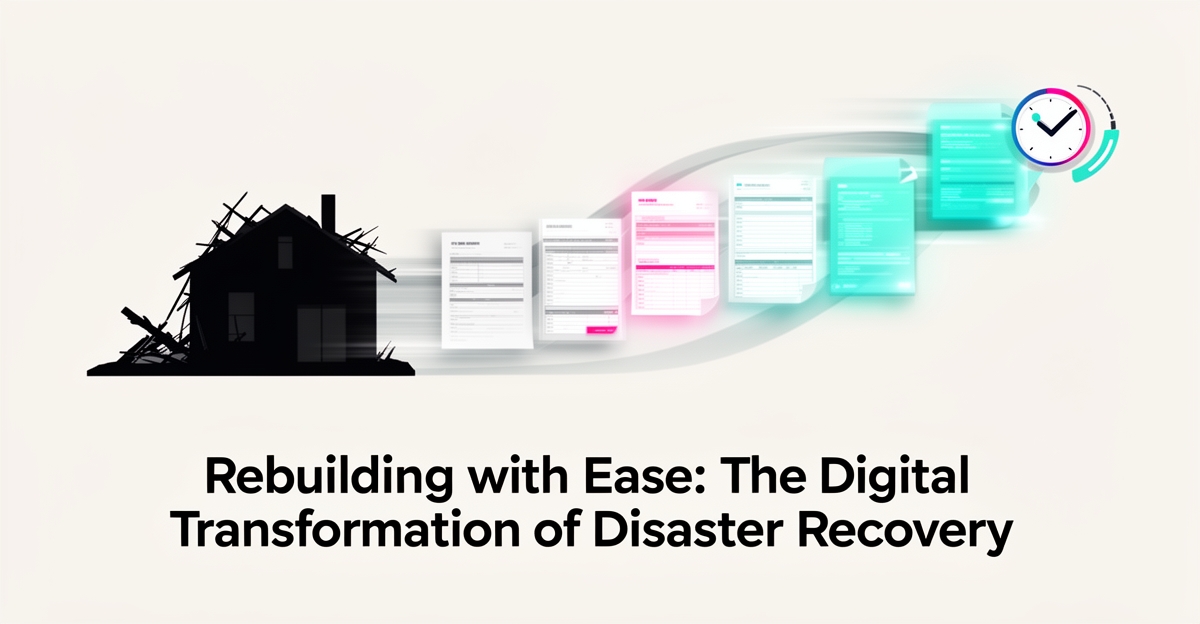
How Disaster Rebuild Contractors Can Automate Insurance Claim Submission with AI
Key Facts
- Manual property and casualty claims in the US typically take weeks to process; AI automation can compress qualifying claims to hours
- Insurers adopting AI report major reductions in straight-through processing time for automated claim categories
- Manual data entry is a common source of transcription errors in claim submissions, driving denials and follow-up requests
- Document gathering from emails, photos, and field notes typically consumes the better part of a workday per claim
- Follow-up requests for missing information can add days to claim resolution timelines
- AI Employees from AIQ Labs cost roughly 80% less than a human hire in an equivalent role while working around the clock
Hire a team member that works 24/7 — for less than a part-time wage.
AI receptionists, SDRs, dispatchers and 99+ roles. Trained on your business, fully managed.
Not sure where to start? Ask our AI planner
The Hidden Cost of Manual Insurance Claims in Disaster Rebuild
The insurance claim submission process remains one of the biggest operational bottlenecks for disaster rebuild contractors. Manual workflows create cascading delays that directly impact project timelines and cash flow. Property and casualty claims in the US typically take weeks to cycle through, a timeframe that stretches critical recovery efforts and ties up working capital when it's needed most. These processing delays aren't anomalies—they're systemic inefficiencies inherent in manual claims handling.
These extended timelines translate into tangible financial leakage, with contractors experiencing revenue delays that disrupt payroll, material procurement, and subcontractor scheduling. Manual submission processes also introduce high error rates—missing documentation, incorrect formatting, or incomplete damage assessments—that trigger claim denials or requests for additional information, further extending resolution times. Industry analyses of claims automation consistently point to meaningful reductions in handling costs and leakage when manual bottlenecks are removed, highlighting the substantial financial upside for contractors.
- Document gathering from emails, photos, and field notes typically consumes the better part of a workday per claim
- Manual data entry introduces transcription errors that trigger denials and follow-ups
- Follow-up requests for missing information can add days to resolution timelines
- Inconsistent formatting across carriers leads to reformatting delays on every claim
- Lack of real-time status tracking creates uncertainty in cash flow forecasting
For disaster rebuild contractors operating on tight margins and urgent timelines, these hidden costs accumulate rapidly—turning what should be a streamlined reimbursement process into a drain on operational efficiency. The impact extends beyond individual claims, affecting the ability to take on new projects, maintain crew utilization, and respond swiftly to subsequent disasters. Addressing these manual inefficiencies isn't just about faster payments; it's about restoring predictability to a business model built on urgency and precision.
How AI Transforms Insurance Claim Submission from Days to Hours
The traditional insurance claim submission process often stretches from days to weeks, creating cash flow delays and operational strain for disaster rebuild contractors. AI-powered automation transforms this workflow by instantly extracting, validating, and formatting claim data from emails, photos, and forms into compliant submissions. For claims that fall within defined parameters, AI automation can compress cycle times from days or weeks down to hours, with insurers adopting these systems reporting major reductions in straight-through processing time for automated claim categories.
AIQ Labs' production systems demonstrate this transformation in practice. AIQ Labs has deployed 200+ multi-agent systems and runs four live SaaS products daily—this is proven infrastructure, not a concept. An AI document processing workflow ingests unstructured inputs—such as adjuster photos, contractor estimates, and policy documents—and uses multi-agent workflows to extract key fields like loss dates, damage descriptions, and policy numbers with high accuracy. These agents cross-reference extracted data against carrier-specific rules and regulatory requirements, flagging inconsistencies for human review while auto-correcting common formatting errors. The system then generates standardized claim packages in the exact format required by each insurer, eliminating manual rework and reducing denial rates caused by missing or incorrect information.
This end-to-end automation cuts processing time from weeks down to hours for qualifying cases. For disaster rebuild teams, this means faster access to funds, quicker mobilization of crews, and shorter project timelines—turning a traditional bottleneck into a competitive advantage.
- Ingest claim documents from email, mobile uploads, or scanned forms
- Extract and validate data using AI agents trained on carrier-specific requirements
- Auto-correct formatting errors and flag exceptions for human review
- Generate compliant submission packages in insurer-required formats
- Dramatically reduce straight-through processing time for qualifying claims
By embedding AI into the claim submission workflow, contractors shift from reactive, paper-heavy processes to proactive, data-driven operations—ensuring every claim starts strong and moves swiftly toward approval.
Implementing AI Claim Automation: A Step-by-Step Guide for Contractors
Disaster rebuild contractors often spend days manually compiling insurance claim documents from emails, photos, and forms, creating bottlenecks that delay reimbursements and strain cash flow. AI-powered claim automation transforms this process by extracting, validating, and formatting submission-ready documents in hours instead of days, directly reducing manual effort and accelerating payments.
Implementing AI claim automation begins with a clear assessment of your current workflow. Identify the top three pain points—such as manual data entry from adjuster reports, photo documentation sorting, or carrier-specific form completion—that consistently slow down submissions. Map out how documents flow from field teams to your office and where delays typically occur, noting which steps involve repetitive, rule-based tasks ideal for automation. This discovery phase ensures your AI solution targets the right bottlenecks without overcomplicating simple processes. AIQ Labs' Workflow Builds service is built exactly for this: rebuild the one workflow that costs you the most, at a fixed price, in phases.
Next, deploy AI Employees to handle document intake and processing. These managed AI agents can be trained to monitor email inboxes for claim-related messages, extract data from photos and PDF forms, validate information against carrier requirements, and populate standardized submission templates. Unlike generic chatbots, AI Employees function as dedicated team members that integrate with your existing tools—connecting to your CRM to update claim statuses, your accounting system to track reimbursements, and project management software to align documentation with job progress. They work around the clock at roughly 80% less cost than an equivalent human hire, and they handle complex, multi-step workflows while maintaining audit trails for compliance.
Integration with your current systems is critical for seamless operation. Custom AI workflow automation synchronizes data between your claim submission AI Employee and platforms like QuickBooks, Salesforce, or field service software, eliminating duplicate entry and ensuring real-time updates across departments. For contractors who want everything connected—claims, scheduling, billing, reporting—an AI Operating System builds one connected operating layer across the business, in phases, and you own it outright. Throughout implementation, prioritize compliance with insurance provider rules and cybersecurity best practices—AI systems must encrypt sensitive data, maintain detailed logs for auditability, and include human-in-the-loop controls for exceptions.
Finally, establish ongoing monitoring and optimization. Track key metrics like submission-to-approval time, denial rates, and staff hours saved to measure ROI. Regularly retrain your AI Employees on new carrier guidelines or document formats, and refine workflows as your business scales. By following this step-by-step roadmap, disaster rebuild contractors can turn insurance claims from an administrative burden into a streamlined, competitive advantage—cutting processing time significantly while improving accuracy and cash flow.
To explore how AI claim automation fits your specific operations, start with the two-minute Fit Check at aiqlabs.ai/apply, then book a free 30-minute strategy call to assess your readiness and identify high-ROI opportunities. Whether you start monthly with a managed AI Employee, build in milestones, or own your system outright, AIQ Labs provides the end-to-end partnership needed to automate claims without disruption.
Still paying for 10+ subscriptions that don’t talk to each other?
We build custom AI systems you own outright. No vendor lock-in. Full control.
Not sure where to start? Ask our AI planner
Frequently Asked Questions
How long does an insurance claim usually take, and how much faster can AI make it?
Why do insurance claims get denied or delayed so often for disaster rebuild contractors?
How much money can contractors save by automating insurance claims?
How many hours do we waste gathering documents for each claim?
Will AI claim automation work with our existing CRM, QuickBooks, and project management tools?
Is AI claim submission secure and compliant with insurance carrier rules?
Turn Claims Into Cash Flow, Not Bottlenecks
Manual insurance claim submission is quietly draining disaster rebuild contractors through multi-week cycles, transcription errors, and repeated follow-ups for missing information. AI changes that equation by ingesting emails, photos and forms, extracting and validating data against carrier rules, and generating compliant packages in hours instead of days. The result is faster approvals, fewer denials, and predictable cash flow that lets crews mobilize and projects move forward without waiting on paperwork. For contractors ready to act, start by mapping the three workflows that create the most delay, then automate intake and formatting with AI Employees that integrate with your CRM, accounting and project tools. With the right setup, you can dramatically compress straight-through processing time for qualifying claims while keeping systems secure and compliant. AIQ Labs builds secure, compliant AI systems that work within insurance provider rules to reduce denial rates and accelerate reimbursement—with 200+ multi-agent systems deployed and four live SaaS products running daily. Start the two-minute Fit Check at aiqlabs.ai/apply, then book a free 30-minute strategy call at aiqlabs.ai/book to map your biggest bottleneck. Whether you start monthly, build in milestones, or own your system outright, you'll get a clear path to automating claims without disruption.
Make AI your competitive advantage — not just another tool.
Strategy, implementation and ongoing optimization. One partner, end to end.
Not sure where to start? Ask our AI planner