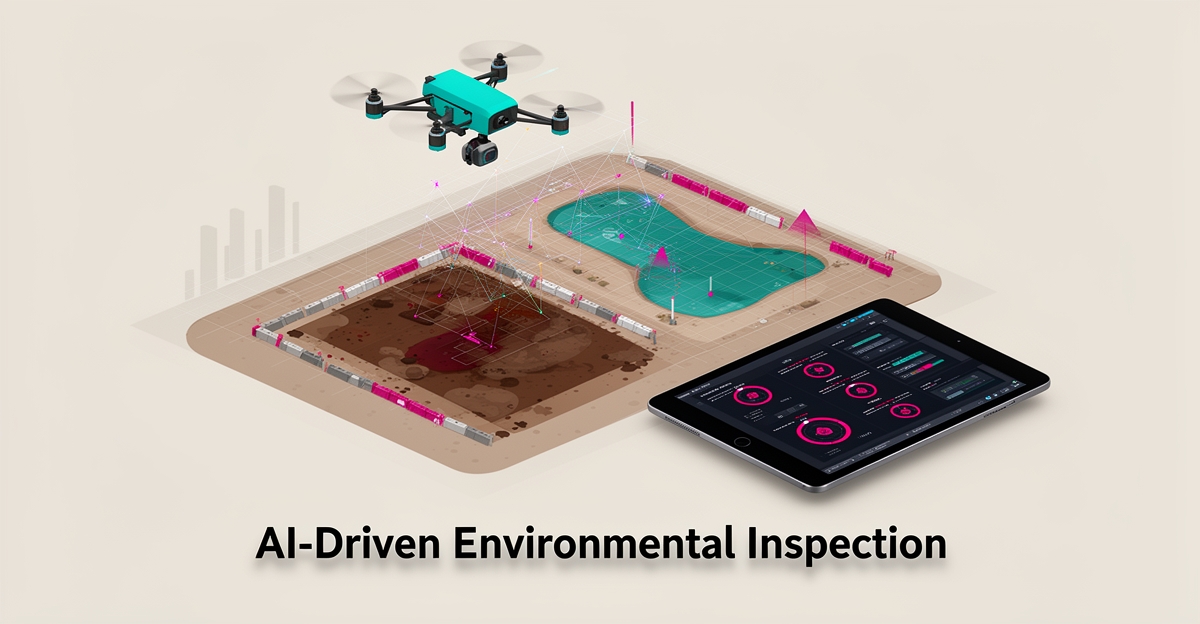
How Environmental Remediation Contractors Can Automate Site Inspections with AI
Key Facts
- Industry analyses project the global environmental remediation market to grow several-fold over the coming decade, driven by stricter regulations and expanding contamination sites according to market projections
- AI can analyze extensive environmental data from satellite imagery and sensor networks to detect pollution trends and forecast future contamination per industry trend research
- Drones can cover terrain at speed and volume far beyond manual efforts for environmental assessments based on industry analysis
- AI-driven models have contributed to advanced remediation technologies including intelligent bioremediation systems according to peer-reviewed research
Hire a team member that works 24/7 — for less than a part-time wage.
AI receptionists, SDRs, dispatchers and 99+ roles. Trained on your business, fully managed.
Not sure where to start? Ask our AI planner
Introduction
Environmental remediation contractors face increasing pressure to conduct thorough site inspections while managing rising operational costs. Widely cited market projections show the global environmental remediation market growing substantially through the 2030s, driven by stricter regulations and expanding contamination sites. That growth intensifies the need for efficient, accurate inspection processes that can keep pace with demand.
AI is emerging as a critical tool for transforming how contractors approach site assessments. AI techniques, particularly machine learning and deep learning, have been successfully employed to forecast pollution trends and enhance remediation approaches. These technologies enable contractors to analyze vast datasets from satellite imagery, sensor networks, and historical records to identify contamination patterns that might be missed during manual inspections.
AIQ Labs helps environmental remediation contractors integrate AI into their inspection workflows through AI Workflow Builds — fixed-price, phased projects that rebuild the one workflow costing the most, like repetitive field documentation and preliminary hazard analysis. By reducing reliance on manual labor for routine assessments, contractors can redirect skilled personnel toward complex decision-making and client engagement. AI-driven models have also contributed to advanced remediation technologies, including intelligent bioremediation systems that adapt to site-specific conditions.
Key benefits of AI automation in site inspections include improved accuracy in detecting subtle contamination indicators and faster turnaround times for reporting. Contractors using AI-powered analysis can process environmental data more consistently than manual methods, reducing human error in hazard identification. This leads to more reliable remediation planning and better regulatory compliance outcomes.
As the industry evolves, contractors who adopt AI for site inspections gain a competitive advantage through increased operational efficiency. The ability to quickly assess large or hard-to-reach areas using AI-analyzed drone imagery or sensor data allows for more comprehensive site characterization. This capability is especially valuable for projects involving widespread contamination or difficult terrain where traditional inspection methods are time-consuming and costly.
Key Concepts
Site inspection work sits at the heart of every remediation project—and it's also where contractors lose the most hours to repetitive field documentation. As the industry scales, manual inspection processes simply can't keep pace with demand.
Understanding a few core concepts makes it easier to see where AI fits into this picture.
AI as an analytical engine. Machine learning and deep learning techniques have been successfully employed to forecast pollution trends, enhance remediation approaches, and assess the ecological effects of contaminants. Rather than replacing inspectors, AI augments their judgment by processing data at a scale no human team can match. According to industry trend research, AI can analyze extensive environmental data from satellite imagery and sensor networks to detect pollution trends and forecast future contamination.
Automated data collection in the field. Drones have become a practical entry point for AI-assisted inspections. They can map terrain and track environmental conditions across large, hard-to-reach landscapes—and as one industry analysis notes, "drones can cover terrain at speed and volume far beyond manual efforts." For contractors, that means faster site assessments with fewer boots on the ground.
Workflow integration. The real value emerges when field data flows directly into analysis and reporting. A typical automated inspection workflow follows five stages:
- Assess the site using AI-powered drones to identify areas of contamination
- Collect environmental data from satellite imagery, sensor networks, and other sources
- Analyze the data with AI algorithms to detect pollution trends and forecast future contamination
- Develop a remediation plan based on the analysis and the most effective technologies
- Implement the plan and continuously monitor the site's progress
This is where custom workflow automation matters. AIQ Labs builds systems that connect field data collection with real-time analysis, so inspection findings move straight into compliant reports without manual re-entry—no specialized data staff required.
The technology landscape. AI-driven models have contributed to advanced remediation technologies, including intelligent bioremediation systems and nanotechnology-based solutions, according to peer-reviewed research. AI now ranks among the top remediation trends, alongside reverse osmosis, activated carbon, and big data analytics.
Know the limits. AI requires large datasets and significant computational power, and the industry still faces challenges around data quality, model transparency, and regulatory requirements. Contractors who treat AI as a tool within a governed workflow—rather than a fully autonomous decision-maker—get the best results. With the remediation market projected to keep growing steadily through the decade, contractors who understand these fundamentals now will be positioned to capture that growth with leaner, more accurate operations.
Best Practices
Environmental remediation contractors can transform site inspections from time-consuming manual processes into efficient, data-driven operations through strategic AI integration. By focusing on practical implementation steps, teams can achieve measurable improvements in accuracy and operational speed while maintaining compliance with environmental regulations.
Start by deploying AI-powered drones for initial site assessments, which can cover terrain at speed and volume far beyond manual efforts. Drone technology enables rapid terrain mapping and contamination identification, cutting field time significantly in preliminary surveys. Pair this with systematic data collection from satellite imagery and sensor networks to build comprehensive environmental datasets for analysis.
Next, implement AI algorithms to process collected data and detect pollution trends with greater precision than traditional methods. AI analyzes extensive environmental data from multiple sources to forecast contamination patterns and identify remediation priorities. This approach enhances hazard identification accuracy while reducing human error in data interpretation—critical for meeting regulatory requirements and avoiding costly oversights.
Finally, establish a continuous monitoring loop where AI systems track remediation progress and adjust plans in real time. AI has emerged as a vital instrument in tackling intricate environmental issues, enabling contractors to develop adaptive remediation strategies based on evolving site conditions. This creates a feedback loop that improves long-term outcomes while optimizing resource allocation across projects.
- Standardize data collection protocols to ensure AI models receive consistent, high-quality inputs
- Train field teams on AI tool interpretation to bridge technology and practical expertise
- Schedule regular AI model retraining with new site data to maintain prediction accuracy
- Document AI-assisted findings for compliance reporting and regulatory audits
- Integrate AI insights with existing project management workflows for seamless adoption
AIQ Labs supports environmental remediation contractors through AI Workflow Builds that integrate field data collection with real-time analysis, ensuring faster reporting and compliance without requiring specialized staff. By following these practices, contractors can harness AI's potential to enhance efficiency, accuracy, and sustainability in managing polluted air, water, and soil—turning inspection challenges into opportunities for operational excellence.
Implementation
Automating site inspections starts with connecting field data collection to real-time analysis so hazards are flagged before a crew returns to the office. For environmental remediation contractors, that means replacing manual walk-throughs with AI workflows that assess, collect, analyze, and report in one continuous loop.
Begin by assessing the site with AI-enabled capture. AI-powered drones assess the site and identify areas of contamination faster than manual surveys. Drones can cover terrain at speed and volume far beyond manual efforts, mapping terrain across large, hard-to-reach landscapes. This aerial-first view sets the boundaries for targeted ground validation.
Next, collect environmental data from multiple sources. AI can analyze extensive environmental data from satellite imagery, sensor networks, and more to detect pollution trends and forecast future contamination. Integrating drone imagery with sensor feeds and historical records creates a unified dataset that improves model accuracy and supports compliance documentation.
Analysis is where repetitive tasks compress. AI algorithms analyze the data and detect pollution trends and forecast future contamination, surfacing anomalies that human review would miss. Machine learning and deep learning have been successfully employed to forecast pollution trends, enhance remediation approaches, and assess the ecological effects of contaminants. The result is faster hazard identification and more consistent reporting.
Implementation follows a practical sequence contractors can adopt immediately:
- Assess the site with AI-powered drones to identify areas of contamination
- Collect environmental data from satellite imagery, sensor networks, and field sensors
- Analyze data with AI algorithms to detect pollution trends and forecast future contamination
- Develop a remediation plan based on analysis and identify the most effective remediation technologies
- Implement the plan and monitor the site's progress with automated reporting
With the remediation market projected to keep expanding through the decade, efficiency gains directly protect margins. Growing demand increases pressure to deliver faster, more accurate inspections without adding headcount.
AIQ Labs helps contractors build custom workflows that integrate field data collection with real-time analysis, ensuring faster reporting and compliance without requiring specialized staff. The approach aligns with AI Workflow Builds — fixed-price, phased projects that turn inspection data into actionable decisions inside your existing tools, with milestones you approve before anything ships.
Operationalizing this requires attention to data quality and model openness, multidisciplinary collaboration, and regulatory requirements. AI-driven models have contributed to advanced remediation technologies, including intelligent bioremediation systems and nanotechnology-based solutions, showing how analysis can extend beyond inspection into technology selection.
Contractors who embed automated inspections gain enhanced efficiency, accuracy, and sustainability in managing polluted air, water, and soil. The workflow becomes repeatable, auditable, and scalable across sites, reducing manual labor while improving hazard identification.
Conclusion
The environmental remediation market is projected to keep growing substantially through the decade, and contractors who continue relying on manual inspection workflows will find themselves competing against firms that have already automated. The question is no longer whether AI belongs in site inspections, but how quickly your operation can adopt it without disrupting the work you do today.
Throughout this article, we've seen how AI streamlines the most repetitive parts of inspection work: drones that cover terrain at speed and volume far beyond manual efforts, machine learning models that detect pollution trends and forecast future contamination from satellite imagery and sensor networks, and AI-driven remediation technologies like intelligent bioremediation systems. Each of these directly reduces manual labor while improving accuracy in hazard identification.
Getting started doesn't require a wholesale transformation. A practical path looks like this:
- Assess one high-friction workflow, such as initial site assessment or hazard documentation, as a pilot.
- Connect your existing field data collection tools so information flows into analysis automatically.
- Use AI algorithms to analyze collected data and flag contamination patterns your team should verify.
- Build reporting templates that turn raw field data into compliance-ready documentation faster.
- Expand gradually, applying lessons from the pilot to the next workflow.
It's worth acknowledging the real challenges: data quality, model transparency, regulatory requirements, and rising insurance and material costs all demand attention. These are manageable when you approach automation deliberately rather than bolting on tools without a plan. Industry trends analysis places AI and big data among the top remediation trends, confirming that the industry is moving in this direction whether individual firms are ready or not.
This is where the right partner matters. Custom workflows that integrate field data collection with real-time analysis deliver faster reporting and stronger compliance without requiring specialized in-house AI staff. At AIQ Labs, we've deployed 200+ multi-agent systems and run four live SaaS products of our own daily — we build these systems to work in the field, not just in a demo, and you own the build outright with no vendor lock-in.
If you're ready to explore what automation could look like for your inspection process, start with the two-minute Fit Check at aiqlabs.ai/apply, then book a free 30-minute strategy call at aiqlabs.ai/book. It's a working session with an AI engineer to map your biggest bottleneck and identify high-ROI opportunities—and if there isn't a clear win, we'll tell you that too. You can also reach the team at [email protected]. The contractors who act now will set the pace for everyone else.
Still paying for 10+ subscriptions that don’t talk to each other?
We build custom AI systems you own outright. No vendor lock-in. Full control.
Not sure where to start? Ask our AI planner
Frequently Asked Questions
How can AI actually improve the accuracy of site inspections for environmental remediation contractors?
Do I need to hire AI specialists or data scientists to use AI for site inspections?
What role do drones play in AI-powered site inspections for environmental remediation?
Is AI in site inspections just about automation, or does it help with long-term remediation planning?
What are the main challenges contractors should consider before implementing AI for site inspections?
How fast is the environmental remediation market growing, and why does that make AI adoption urgent?
From Inspection Bottleneck to Competitive Advantage
The environmental remediation market is projected to keep growing substantially through the decade, and the firms capturing that growth won't be the ones still walking every site with clipboards. AI-powered drones, machine learning models that forecast contamination from satellite and sensor data, and automated reporting workflows are already cutting field hours while improving hazard detection accuracy. The technology isn't theoretical — it's being deployed today by contractors who recognized that manual inspection processes don't scale. Starting small is the smartest move: pick one high-friction workflow, connect your existing field tools to an AI analysis layer, and build a pilot that proves the ROI before expanding. The real challenges — data quality, model transparency, regulatory compliance — are manageable with a governed approach rather than bolt-on tools. AIQ Labs builds custom workflows that integrate field data collection with real-time analysis, delivering faster reporting and stronger compliance without requiring specialized in-house AI staff. If you're ready to see what automation could look like for your operation, start with the two-minute Fit Check at aiqlabs.ai/apply, then book a free 30-minute strategy call at aiqlabs.ai/book — no obligation, just a clear map of your highest-impact opportunities.
Make AI your competitive advantage — not just another tool.
Strategy, implementation and ongoing optimization. One partner, end to end.
Not sure where to start? Ask our AI planner