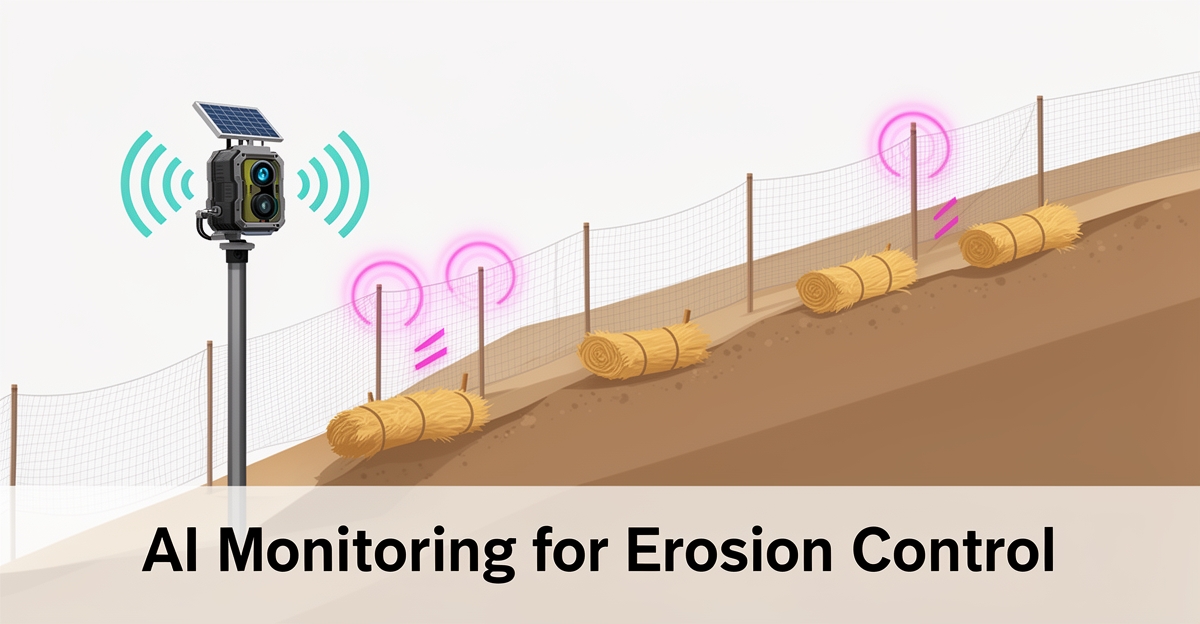
How Erosion Control Contractors Can Automate Site Inspections with AI-Powered Field Cameras
Key Facts
- Stormwater compliance is one of the most commonly violated environmental regulations in construction, largely because consistent execution across dynamic sites is genuinely difficult.
- Erosion is the process by which water, wind, ice, or gravity removes and transports soil and rock from one location to another — and construction sites accelerate it dramatically.
- Most stormwater permits require inspections after qualifying rainfall events, which makes fixed manual inspection schedules insufficient on their own.
- Environmental violations are almost always cheaper to prevent than to correct — a silt fence repair typically costs a few hundred dollars, while fines for resulting sediment discharge can reach tens of thousands.
- Managed AI employees from AIQ Labs typically cost around 80% less than an equivalent human hire while providing 24/7 availability.
- AIQ Labs has deployed 200+ multi-agent systems and runs four live SaaS products of its own daily.
Hire a team member that works 24/7 — for less than a part-time wage.
AI receptionists, SDRs, dispatchers and 99+ roles. Trained on your business, fully managed.
Not sure where to start? Ask our AI planner
The Hidden Cost of Manual Erosion Control Site Inspections
Erosion control contractors face mounting pressure from manual site inspections that drain resources and expose them to avoidable risks. The time spent traveling to sites, completing paperwork, and chasing documentation creates a hidden tax on every project. These inefficiencies directly translate into compliance gaps and financial penalties when inspections are missed or reports are delayed. Contractors who automate routine work redirect team attention to project execution, site management, and client relationships, freeing hours previously lost to administrative overhead.
Manual processes create blind spots that regulators quickly find during audits. When inspections rely on sporadic human visits, critical erosion events between checks often go undocumented until visible damage occurs. Erosion itself is the process by which water, wind, or gravity removes and transports soil from one location to another — and on an active construction site it can move fast, especially after a storm. A reactive, visit-based approach fails to meet the continuous monitoring requirements embedded in most stormwater permits, leading to preventable violations. The delays in corrective action that follow not only risk environmental harm but also trigger fines that far exceed the cost of preventive measures.
The financial toll of manual inspections extends beyond labor costs to include cascading project impacts. Documentation delays slow down payment cycles and strain client relationships when proof of compliance isn't readily available. Teams routinely spend large portions of their week on manual data entry and report assembly that could be redirected toward proactive erosion prevention. By automating routine inspection workflows, contractors shift from scrambling to meet deadlines to maintaining consistent compliance that protects both the environment and their bottom line.
How AI-Powered Field Cameras Enable Real-Time Erosion Risk Detection
Erosion control contractors often struggle to maintain compliance across dynamic sites, where changing weather and terrain can quickly render manual inspection schedules obsolete. AI-powered field cameras solve this by analyzing site conditions continuously, shifting operations from reactive paperwork to proactive risk management. These systems monitor visual data around the clock, identifying potential failures before they trigger violations.
The AI processes images from field cameras to detect specific erosion indicators, such as sediment buildup, silt fence failures, or inadequate stabilization. These systems can automatically trigger inspection requirements based on rainfall events and monitor weather data to support compliance with stormwater regulations. This capability addresses a critical gap: stormwater compliance remains one of the most commonly violated environmental regulations in construction, not because contractors lack knowledge, but because consistent execution across dynamic sites proves genuinely difficult.
Beyond visual analysis, AI integrates multiple data streams to assess risk comprehensively. Effective environmental compliance monitoring typically combines inputs from weather stations tracking rainfall intensity, dust monitors measuring particulate levels, water quality sensors detecting turbidity at discharge points, and camera systems providing visual verification of control measures. By correlating these data sources, the AI generates actionable insights rather than simple alerts.
Key capabilities include:
- Automatic flagging of erosion risks like sediment discharge or damaged barriers
- Real-time compliance triggers based on rainfall thresholds and site conditions
- Generation of corrective action items with severity-based timeframes
- Continuous documentation for audit trails and regulatory reporting
Implementing these capabilities requires robust integration with existing field tools. AIQ Labs builds systems that connect camera feeds with project management platforms like Procore and accounting software like QuickBooks, creating a unified compliance workflow — whether as a single AI Workflow Build or as part of a broader AI Operating System. This integration eliminates the data silos that typically cause compliance gaps and documentation errors. Rather than forcing contractors to adopt entirely new software, these AI solutions enhance current workflows with intelligent automation.
The financial impact of early detection is significant. Environmental violations are almost always easier and cheaper to prevent than to correct — a silt fence repair costs a few hundred dollars, while the fine for a resulting sediment discharge can reach tens of thousands. By catching risks in real time, contractors avoid these penalties and reclaim the administrative hours that manual monitoring consumes. This shift allows teams to focus on project execution rather than paperwork, transforming compliance from a burden into a competitive advantage.
From Manual Workflows to AI-Driven Inspection Automation: Implementation Steps
Erosion control contractors often find themselves overwhelmed by manual inspection workflows that drain time and increase compliance risks. Shifting to AI-driven automation starts with a clear assessment of current processes and ends with a system that works continuously in the field.
The first step involves a detailed workflow analysis to pinpoint where manual tasks create bottlenecks, such as scheduling sediment basin cleanouts or tracking inspection deadlines. AIQ Labs uses this discovery phase to design solutions like an AI Project Coordinator that monitors milestones across sites and automatically flags overdue items before they become violations. This approach transforms reactive compliance into proactive system management.
Deployment follows a phased integration plan, during which AI systems connect with existing tools like Procore for project tracking, QuickBooks for invoicing, and CRM platforms for client management. These connections eliminate manual data entry and reduce the operational errors that come from re-keying information between systems. For example, an AI Dispatcher can autonomously reschedule crews based on weather delays, ensuring erosion control installations stay on track without constant human intervention. Contractors who need ongoing field and office coverage can also layer in AI Employees — managed AI staff covering reception, dispatch, and dozens of other roles — typically at around 80% less cost than a human hire.
Once live, the system enters an optimization phase where performance is monitored and refined based on real-world site data. Contractors can scale confidence by adding capabilities over time, paying monthly to start, building in milestones, or owning the system outright — whichever model fits. Throughout this journey, AIQ Labs acts as a lifecycle partner, ensuring the technology evolves with project demands while maintaining full client ownership of the built systems. To begin this transformation, contractors can start with a free strategy call to map their biggest bottlenecks and identify high-ROI automation opportunities.
Still paying for 10+ subscriptions that don’t talk to each other?
We build custom AI systems you own outright. No vendor lock-in. Full control.
Not sure where to start? Ask our AI planner
Frequently Asked Questions
How do AI field cameras reduce manual inspection work for erosion control contractors?
Can AI systems integrate with tools like Procore and QuickBooks that erosion control contractors already use?
How does AI help prevent costly environmental violations in erosion control projects?
What does it cost to get started with inspection automation?
Do contractors own the AI systems that get built?
From Reactive Checks to Proactive Protection
Manual inspections are quietly draining erosion control contractors with travel time, paperwork, and compliance gaps that turn into fines. AI-powered field cameras change that equation by delivering continuous visual monitoring, rainfall-triggered inspection alerts, and automated documentation that keeps stormwater permits in good standing without constant site visits. The shift is from scrambling to prove compliance after the fact to preventing risks in real time, freeing teams to focus on execution, client relationships, and project delivery. Contractors who start with a workflow assessment can build from there with integrations to Procore, QuickBooks, and other field tools they already use. If you're ready to map where automation will have the biggest impact, take the two-minute Fit Check at https://aiqlabs.ai/apply, then book a free 30-minute strategy call with an AI engineer to identify high-ROI opportunities specific to your sites. No pitch, just a working session to find a clear win.
Make AI your competitive advantage — not just another tool.
Strategy, implementation and ongoing optimization. One partner, end to end.
Not sure where to start? Ask our AI planner