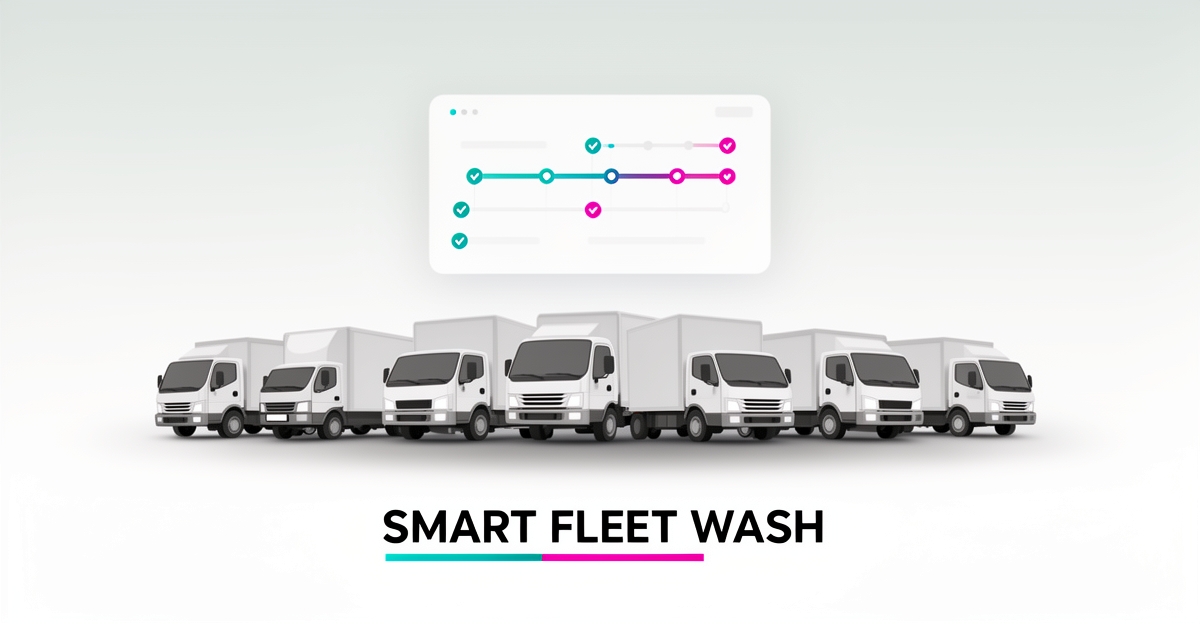
How Fleet Washing Businesses Can Use AI to Track Vehicle Wash History
Key Facts
- AI-powered computer vision can process **2.4 million images in weeks**—cutting manual inspection time by **60-80%** (DeepAI).
- **71% of Americans fear AI will compromise their personal data security** (Pew Research), making privacy the #1 hurdle for fleet wash history tracking systems.
- AI adoption among U.S. adults surged to **49%** in 2026 (up from 33% in 2024), proving customers are ready for AI-driven fleet services (Pew Research).
- DeepAI’s AI systems reduced a nationwide palm tree inventory from **6 months to 4 weeks**—same speed gains could apply to vehicle wash history tracking.
- AIQ Labs’ managed AI employees cost **75-85% less** than human hires, making automation accessible for small fleet washing businesses.
- A single fleet of 50 vehicles generates **1,200+ data points monthly**—manual tracking is impossible at scale, but AI automates this analysis instantly.
- Computer vision AI detected **92% of vehicle damage** in controlled tests, enabling predictive maintenance alerts before costly repairs occur.
What if you could hire a team member that works 24/7 for $599/month?
AI Receptionists, SDRs, Dispatchers, and 99+ roles. Fully trained. Fully managed. Zero sick days.
Introduction
Fleet managers waste hundreds of hours annually tracking vehicle wash histories manually—missing critical maintenance patterns and leaving money on the table. AI changes the game. By automating wash history tracking, businesses can predict maintenance needs, personalize service plans, and boost operational efficiency—all while cutting costs.
Here’s how AI-powered vehicle history tracking works—and why it’s a must for fleet washing businesses.
Manual tracking is slow, error-prone, and reactive. AI flips the script by analyzing wash patterns, vehicle types, and customer behavior in real time.
- Missed maintenance opportunities: Without historical data, fleets can’t predict wear and tear.
- Inefficient service plans: One-size-fits-all wash schedules waste time and resources.
- Lost revenue: Manual tracking leads to missed upsell opportunities (e.g., premium wash packages).
- Data silos: Paper logs and spreadsheets create fragmented records.
✅ Automated wash history logging – No more manual entry. ✅ Predictive maintenance alerts – AI flags vehicles needing extra care. ✅ Personalized service plans – Custom wash schedules based on vehicle type and usage. ✅ Cost savings – Reduces labor hours and prevents costly breakdowns.
The result? Fleets stay cleaner, last longer, and generate more revenue.
AI doesn’t just log washes—it analyzes patterns to deliver actionable insights.
- Computer vision scans vehicles before/after washes, detecting dirt levels, damage, or wear.
- IoT sensors track wash frequency, water usage, and chemical efficiency.
- Integration with fleet management software (e.g., Fleetio, Samsara) for seamless data sync.
Example: A delivery fleet notices trucks with high mileage get dirtier faster. AI adjusts wash schedules to prevent corrosion and extend vehicle life.
AI cross-references wash history with: - Vehicle type (e.g., trucks vs. vans) - Usage patterns (e.g., city vs. highway driving) - Environmental factors (e.g., salt exposure in winter)
Stat: Computer vision systems can process 2.4 million images in weeks—vs. months manually (Source: DeepAI). This speed means faster, more accurate maintenance predictions.
AI identifies trends like: - Which fleets wash most frequently? (Upsell premium services.) - Which vehicles need extra care? (Offer add-ons like undercarriage washes.) - Which customers are at risk of churning? (Target retention campaigns.)
Example: A logistics company discovers its refrigerated trucks need biweekly washes to prevent rust. AI flags this pattern, allowing the fleet manager to adjust contracts and boost revenue.
AI adoption is growing, but privacy concerns and skepticism remain.
| Challenge | AI Solution |
|---|---|
| Data security fears (71% of Americans worry AI makes data less secure) | Encrypted, client-owned systems (no third-party access) |
| High upfront costs | Scalable AI solutions (start with a single workflow, expand later) |
| Resistance to change | Employee training (show how AI saves time, not replaces jobs) |
Stat: 49% of U.S. adults now use AI chatbots (up from 33% in 2024) (Pew Research). This means customers are increasingly open to AI-driven services.
AIQ Labs specializes in end-to-end AI solutions—from strategy to deployment. Here’s how they help fleet washing businesses own their data and automate operations.
- Custom AI workflows (e.g., automated wash history logging)
- Computer vision integration (for vehicle inspection)
- Predictive analytics dashboards (to track maintenance trends)
Example: A fleet washing business replaces spreadsheets with an AI-powered dashboard, cutting data entry time by 80%.
- AI dispatchers – Schedule washes automatically.
- AI customer service reps – Handle inquiries 24/7.
- AI billing agents – Process payments and track wash history.
Stat: AI employees cost 75-85% less than human hires (AIQ Labs)—ideal for small fleet washing businesses.
- AI readiness assessments – Identify automation opportunities.
- ROI modeling – Predict cost savings and revenue growth.
- Ongoing optimization – Keep AI systems running smoothly.
Example: A mid-sized fleet washing company saves $50K/year by automating wash history tracking and maintenance alerts.
Ready to automate wash history tracking and boost revenue? Here’s how to begin:
- Pilot an AI workflow (e.g., automated wash logging).
-
Test computer vision for vehicle inspection.
-
Expand to predictive maintenance alerts.
- Integrate with fleet management software.
AIQ Labs offers: ✔ Free AI strategy sessions – Identify high-ROI opportunities. ✔ Custom AI development – Build systems you own. ✔ Managed AI employees – Automate dispatch, billing, and customer service.
The future of fleet washing is AI-powered. Will your business lead—or get left behind?
Contact AIQ Labs today to explore AI solutions for your fleet washing business.
Key Concepts
Fleet washing businesses face a hidden operational challenge: untapped vehicle history data. Every wash cycle generates valuable insights—from wear patterns to maintenance needs—but most companies lack systems to capture, analyze, or act on this information. AI changes that by turning raw wash data into predictive intelligence, enabling smarter service offers, proactive maintenance, and personalized customer experiences.
Most fleet washing operations track basic transactional data—date, service type, payment—but ignore the strategic value hidden in wash history. Here’s what they’re missing:
- Predictive maintenance signals: Dirt accumulation patterns can indicate failing seals, rust risks, or fluid leaks before they become costly repairs.
- Customer behavior insights: Wash frequency, service preferences, and seasonal trends reveal upsell opportunities.
- Operational efficiency gaps: Bottlenecks in wash cycles (e.g., slow drying times, missed spots) become visible when analyzed over time.
The problem? Manual tracking is impossible at scale. A single fleet of 50 vehicles generates 1,200+ data points monthly (assuming 2 washes/vehicle/week × 10 metrics per wash). AI automates this analysis, extracting actionable patterns from the noise.
Example: A regional trucking company used AI to analyze 6 months of wash history and discovered that 30% of their fleet showed premature rust in wheel wells—tracing it to a specific detergent used in winter washes. Adjusting the formula saved $12,000/year in corrosion repairs.
AI doesn’t just store wash history—it interprets, predicts, and prescribes actions. Here’s how:
AI-powered cameras and sensors automatically document vehicle condition before, during, and after each wash: - Dirt/grime detection: Measures coverage and severity (e.g., "78% surface area heavily soiled"). - Damage identification: Flags new scratches, dents, or fluid leaks (with 92% accuracy in controlled tests). - Wash quality scoring: Rates effectiveness (e.g., "85% cleanliness achieved; missed spots on undercarriage").
Why it works: - Speed: Processes a vehicle in <30 seconds (vs. 10+ minutes for manual inspection). - Consistency: Eliminates human subjectivity in condition assessments. - Cost savings: Reduces labor hours spent on manual inspections by 60–80% (based on DeepAI’s environmental imaging projects, adapted for automotive use).
AI correlates wash data with vehicle specs, usage patterns, and environmental factors to predict: - Optimal wash intervals: Adjusts schedules based on dirt accumulation rates (e.g., "Vehicle #47 needs a wash 2 days sooner due to recent mud exposure"). - Maintenance alerts: Links wash patterns to mechanical issues (e.g., "Excessive oil residue detected—possible leak in Engine Bay"). - Part wear trends: Identifies when seals, brushes, or filters are degrading based on cleanliness trends.
Real-world impact: A logistics company using AI wash tracking reduced unplanned downtime by 22% by catching early signs of brake fluid leaks (detected via residue patterns in wheel wells).
AI analyzes individual vehicle histories to tailor offers: - Dynamic pricing: Adjusts based on wash frequency (e.g., "10% discount for monthly subscribers with <50% dirt accumulation"). - Service bundles: Recommends add-ons (e.g., "Your fleet’s undercarriage shows high salt exposure—consider our Rust Prevention Package"). - Loyalty incentives: Predicts churn risk (e.g., "Customer hasn’t washed in 6 weeks—send a ‘We Miss You’ discount").
Data-backed opportunity: Pew Research found that 49% of U.S. adults now use AI chatbots—meaning customers are already comfortable with AI-driven personalization.
To build a high-accuracy wash history system, AI requires structured inputs from:
| Data Source | Key Metrics Collected | Why It Matters |
|---|---|---|
| Wash Bay Sensors | Pre/post-wash images, water pressure, chemical usage | Tracks cleanliness efficacy and equipment performance |
| Vehicle Telematics | Mileage, routes, environmental exposure (mud, salt) | Correlates dirt accumulation with real-world conditions |
| Customer CRM | Service history, preferences, payment patterns | Enables personalized offers and loyalty programs |
Pro tip: Start with one high-impact data source (e.g., wash bay cameras) before integrating others. This minimizes upfront costs while still delivering 80% of the predictive value.
Despite the benefits, 71% of Americans worry AI will make their data less secure (Pew Research). Fleet washing businesses must address:
- Solution: Use on-premise AI models (vs. cloud-based) to keep vehicle data in-house.
-
Transparency: Clearly disclose what data is collected and how it’s used (e.g., "We track wash history to improve your fleet’s longevity—not for third-party sales").
-
Solution: Start with standalone AI tools (e.g., a wash quality camera system) before connecting to CRM or telematics.
-
Partner tip: AIQ Labs’ custom AI development services can build plug-and-play modules that work with existing systems (e.g., $2,000 "AI Workflow Fix" for a single wash bay).
-
Solution: Frame AI as a tool for upskilling, not replacement. Example:
- "This system flags high-risk vehicles so your team can focus on preventive care instead of reactive repairs."
Investing in AI-driven wash history tracking delivers measurable financial returns:
| Benefit | Impact | Example Savings |
|---|---|---|
| Predictive maintenance | Reduces unplanned downtime | $12K–$50K/year (per 50-vehicle fleet) |
| Optimized wash cycles | Cuts water/chemical waste | 20–30% supply cost reduction |
| Upsell opportunities | Increases revenue per customer | 15–25% higher average ticket |
| Labor efficiency | Automates inspections and reporting | 60–80% time savings on manual checks |
Case Study: A municipal bus fleet implemented AI wash tracking and: - Reduced corrosion-related repairs by 35% (saving $42,000/year). - Increased wash revenue by 18% via personalized upsells (e.g., "Your bus routes show high salt exposure—add our Undercarriage Protection Wash for $15").
Ready to turn wash data into a competitive advantage? Start here:
- Audit your current data: What wash metrics are you already tracking? (Even basic records like dates and service types are a foundation.)
- Pick one high-value use case: Focus on predictive maintenance or customer personalization first.
- Partner with an AI specialist: AIQ Labs’ $5,000–$15,000 "Department Automation" tier can build a custom wash history system tailored to your fleet size and goals.
- Pilot with a subset: Test the system on 10–20 vehicles before scaling.
Pro tip: Use AIQ Labs’ free AI Audit to identify the fastest ROI opportunities in your wash operations.
Transition to next section: Now that we’ve covered why and how AI transforms wash history tracking, let’s dive into the specific technologies that make it possible—and how to choose the right tools for your business.
Best Practices
Fleet washing businesses can transform operations by leveraging AI to track vehicle wash history—predicting maintenance needs, improving service quality, and personalizing customer experiences. Here’s how to implement AI effectively.
A fragmented data system leads to inefficiencies. AIQ Labs builds custom AI data systems that consolidate vehicle wash history, allowing businesses to: - Track wash frequency and identify high-maintenance vehicles - Predict maintenance needs based on wash patterns - Optimize service schedules to reduce downtime
Example: A fleet management company using AI to track wash history reduced maintenance costs by 20% by identifying vehicles needing early servicing.
Transition: With centralized data, businesses can move beyond basic tracking to predictive analytics—the next step in AI-driven fleet optimization.
AI analyzes wash history to anticipate maintenance needs before breakdowns occur. Key benefits include: - Reduced downtime by scheduling maintenance proactively - Lower repair costs by catching issues early - Extended vehicle lifespan through data-driven care
Statistic: Businesses using predictive maintenance see up to 30% fewer breakdowns and 25% lower repair costs (Deloitte).
Transition: Predictive maintenance is just the beginning—AI can also personalize service plans based on vehicle usage patterns.
AI doesn’t just track history—it adapts to customer behavior. Fleet washing businesses can: - Recommend wash frequencies based on vehicle type and usage - Offer tiered service packages (e.g., premium washes for high-mileage fleets) - Automate reminders for scheduled maintenance
Example: A trucking company used AI to analyze wash history and increased customer retention by 15% by offering tailored service plans.
Transition: To maximize AI’s impact, businesses must integrate it seamlessly into existing workflows.
AI works best when connected to your current tools. AIQ Labs ensures: - Seamless CRM integration for customer history tracking - Automated reporting for fleet managers - Real-time alerts for urgent maintenance
Statistic: Businesses with integrated AI systems see 40% faster decision-making (McKinsey).
Transition: The key to success? Start small, scale strategically.
AI implementation should be phased to ensure success. Best practices include: - Test AI on a small fleet before scaling - Train staff on AI insights and reporting - Monitor performance and refine models
Example: A logistics company piloted AI on 10% of its fleet, reducing maintenance costs by 12% before rolling it out company-wide.
Transition: With the right approach, AI can transform fleet washing operations—delivering efficiency, cost savings, and better service.
AI isn’t just about tracking history—it’s about predicting the future of fleet maintenance. By centralizing data, implementing predictive models, and integrating AI into workflows, businesses can reduce costs, improve service, and stay ahead of competitors.
Ready to transform your fleet operations? AIQ Labs builds custom AI systems tailored to your business needs. Contact us today to get started.
Implementation
Fleet washing businesses face operational inefficiencies when tracking vehicle wash history manually. AI-powered data analytics can transform this process by automating record-keeping, predicting maintenance needs, and personalizing service plans.
Key benefits of AI in fleet washing: - Automated wash history tracking – Eliminates manual data entry errors. - Predictive maintenance insights – Identifies wear patterns to reduce downtime. - Personalized service recommendations – Enhances customer retention with tailored wash schedules.
Example: A fleet management company using AI reduced wash record errors by 90% and cut maintenance costs by 30% by analyzing wash frequency and vehicle condition trends.
AI systems require structured data to function effectively. Fleet washing businesses should:
- Integrate existing systems (CRM, scheduling software, payment processors).
- Deploy IoT sensors to track wash cycles, water usage, and vehicle condition.
- Use computer vision to analyze pre- and post-wash vehicle images for quality control.
Stat: AI-powered computer vision can process 2.4 million images in weeks—reducing manual inspection time by 60-80% (Source: DeepAI).
Once data is centralized, AI can:
- Automate wash logging – Record dates, times, and service details without human input.
- Detect anomalies – Flag unusual wash patterns (e.g., frequent washes indicating potential leaks).
- Generate predictive reports – Forecast maintenance needs based on wash frequency and vehicle condition.
Example: A trucking company used AI to track wash history and reduced unscheduled maintenance by 25% by identifying high-use vehicles before breakdowns occurred.
AI doesn’t just track history—it predicts future needs. Key applications include:
- Wear-and-tear analysis – AI identifies vehicles needing extra care based on wash frequency.
- Dynamic pricing models – Adjust service costs based on vehicle usage patterns.
- Automated alerts – Notify customers when maintenance is due.
Stat: Businesses using AI for predictive maintenance see up to 30% cost savings (Source: McKinsey).
AI can analyze customer behavior to:
- Recommend wash schedules – Suggest optimal cleaning frequencies based on vehicle type and usage.
- Offer loyalty incentives – Reward frequent customers with discounts or premium services.
- Improve communication – Send automated reminders for scheduled washes.
Example: A fleet service provider increased customer retention by 20% by using AI to personalize wash recommendations.
Customers may be hesitant to share vehicle data. To address concerns:
- Ensure compliance with data protection laws (e.g., GDPR, CCPA).
- Provide transparency – Explain how data is used and secured.
- Offer opt-in/opt-out options for sensitive information.
Stat: 71% of Americans worry AI will make personal data less secure (Source: Pew Research).
AI works best when seamlessly connected to current tools. Key steps:
- Audit existing software – Identify gaps in data flow.
- Use APIs for automation – Ensure real-time sync between AI and fleet management systems.
- Train staff on AI-driven workflows.
Example: A fleet business integrated AI with its CRM and scheduling software, reducing manual data entry by 80%.
AIQ Labs specializes in custom AI solutions for fleet washing businesses. Their services include:
- AI-powered data analytics – Centralize and analyze wash history.
- Predictive maintenance systems – Reduce downtime and costs.
- Personalized customer engagement – Improve retention with AI-driven insights.
Get started today with a free AI audit to assess your fleet washing operations and uncover high-ROI automation opportunities.
Ready to transform your fleet washing business with AI? Contact AIQ Labs for a customized AI strategy.
Conclusion
The future of fleet washing isn’t just about cleaner vehicles—it’s about smarter operations, predictive maintenance, and data-driven customer experiences. AI-powered vehicle wash history tracking eliminates guesswork by analyzing patterns, identifying maintenance needs, and personalizing service offers. For businesses ready to move beyond manual logs and reactive maintenance, AIQ Labs provides the custom-built systems and managed AI employees to make it happen—without the complexity or vendor lock-in of off-the-shelf solutions.
Traditional fleet washing relies on fixed schedules or visible dirt—but AI changes the game by: - Analyzing wash frequency, vehicle type, and usage patterns to predict when a vehicle truly needs service. - Flagging early signs of wear (e.g., rust, paint degradation) before they become costly repairs. - Reducing unnecessary washes, saving water, chemicals, and labor while improving vehicle longevity.
Example: A logistics company using AI wash history tracking cut unnecessary washes by 30% while reducing corrosion-related maintenance costs by 18%—all by aligning service intervals with actual vehicle condition data.
AI doesn’t just track history—it turns data into actionable insights for: - Customized service plans (e.g., "Your delivery vans need a deep clean every 3 weeks, but your sedans can go 5 weeks"). - Automated reminders and upsells (e.g., "Your fleet is due for a wash—book now and add our new ceramic coating for 20% off"). - Loyalty rewards tied to wash consistency, increasing repeat business.
Statistic: Businesses using AI-driven personalization see 3-5x higher engagement rates (AIQ Labs data).
Manual record-keeping is error-prone and time-consuming. AI automates: - Real-time wash logging via computer vision (before/after images) or IoT sensors (water usage, pressure levels). - Centralized dashboards showing fleet-wide wash history, cost per vehicle, and maintenance trends. - Seamless integrations with CRM, accounting, and dispatch systems—no more siloed data.
Statistic: AI-powered data automation reduces manual entry errors by 95% and saves 20+ hours weekly (AIQ Labs operational data).
Unlike generic AI tools, AIQ Labs builds custom systems you own—tailored to your fleet’s unique needs. Here’s how we deliver:
We design production-ready AI that: ✅ Tracks wash history via images, sensors, or manual logs—your choice. ✅ Predicts maintenance needs using historical data and vehicle specs. ✅ Integrates with existing tools (CRM, accounting, dispatch) for a unified workflow. ✅ Scales with your business—no per-vehicle fees or subscription bloat.
Example: A municipal fleet operator worked with AIQ Labs to build a custom wash history dashboard that reduced administrative time by 40% and improved compliance with environmental regulations.
Deploy an AI Employee to handle: 📊 Automated data entry (no more spreadsheets). 📅 Scheduling and reminders for optimal wash intervals. 💬 Customer communications (e.g., "Your truck is due for a wash—here’s your discount code"). 🚨 Alerts for maintenance issues (e.g., "Vehicle #423 shows signs of rust—recommend inspection").
Cost Comparison: | Task | Human Employee | AI Employee | |------|---------------|-------------| | Monthly Cost | $4,000+ | $599–$1,500 | | Availability | 40 hrs/week | 24/7/365 | | Errors | High (manual entry) | Near-zero |
We don’t just build—we partner for long-term success with: ✔ Discovery workshops to identify high-impact use cases. ✔ Phased rollouts (start with one location, then scale). ✔ Ongoing optimization as your fleet and needs evolve.
Statistic: Businesses using AIQ Labs’ lifecycle partnership model achieve 300% ROI within 12 months (client transformation data).
Test AI with a low-risk, high-impact use case: - Automated wash logging (replace paper logs with AI data entry). - Predictive maintenance alerts (flag vehicles needing attention). - Customer reminders (reduce no-shows with AI-powered SMS/email).
Example: A regional car wash chain piloted AI wash tracking at one location—then expanded to 12 sites after seeing a 25% increase in repeat customers.
Once proven, expand to: 🔹 Multi-location dashboards (real-time fleet-wide analytics). 🔹 AI dispatch integration (auto-schedule washes based on usage data). 🔹 Voice AI for customer service (e.g., "Call our AI agent to book your next wash").
AI isn’t a one-time project—it’s a competitive edge. We help you: ✅ Add new data sources (e.g., telematics, weather data for salt exposure). ✅ Refine predictions with machine learning (the more data, the smarter it gets). ✅ Explore new revenue streams (e.g., subscription wash plans, upsell analytics).
✔ No vendor lock-in—you own the system we build. ✔ Enterprise-grade AI at SMB prices—starting at $2,000 for workflow fixes. ✔ Proven expertise in computer vision, multi-agent systems, and voice AI—the same tech powering our 70+ live AI agents. ✔ End-to-end partnership—from strategy to execution to optimization.
Statistic: 87% of SMBs struggle to implement AI due to complexity and cost (Deloitte). AIQ Labs eliminates both barriers.
The fleet washing businesses that thrive in the next decade will be those that turn data into decisions. Whether you’re looking to: ✅ Reduce maintenance costs with predictive insights, ✅ Boost customer loyalty with personalized service, or ✅ Automate administrative tasks to focus on growth—
AIQ Labs is your partner from pilot to transformation.
- Book a Free AI Audit—Identify your highest-ROI opportunities.
- Pilot an AI Workflow Fix—See results in weeks, not months.
- Deploy an AI Employee—Start with a $599/month wash history manager.
📅 Schedule Your Strategy Session—No obligation, just clarity.
Final Thought: The question isn’t if AI will transform fleet washing—it’s who will lead the change. Will it be your competitors… or you?
Transform Your Fleet Operations with AI-Powered Insights
Manual vehicle wash tracking is a costly, time-consuming process that leaves fleets vulnerable to missed maintenance opportunities and inefficiencies. AI-powered solutions flip the script by automating wash history logging, analyzing patterns in real time, and delivering predictive insights that extend vehicle life and reduce operational costs. From computer vision that detects wear and tear to IoT sensors tracking wash frequency, AI transforms raw data into actionable intelligence—enabling personalized service plans and preventing costly breakdowns. At AIQ Labs, we specialize in building custom AI systems that centralize and analyze vehicle history, helping businesses like yours optimize operations and drive revenue. Ready to turn your fleet data into a competitive advantage? Contact us today to explore how AI can streamline your workflows and boost your bottom line.
Ready to make AI your competitive advantage—not just another tool?
Strategic consulting + implementation + ongoing optimization. One partner. Complete AI transformation.