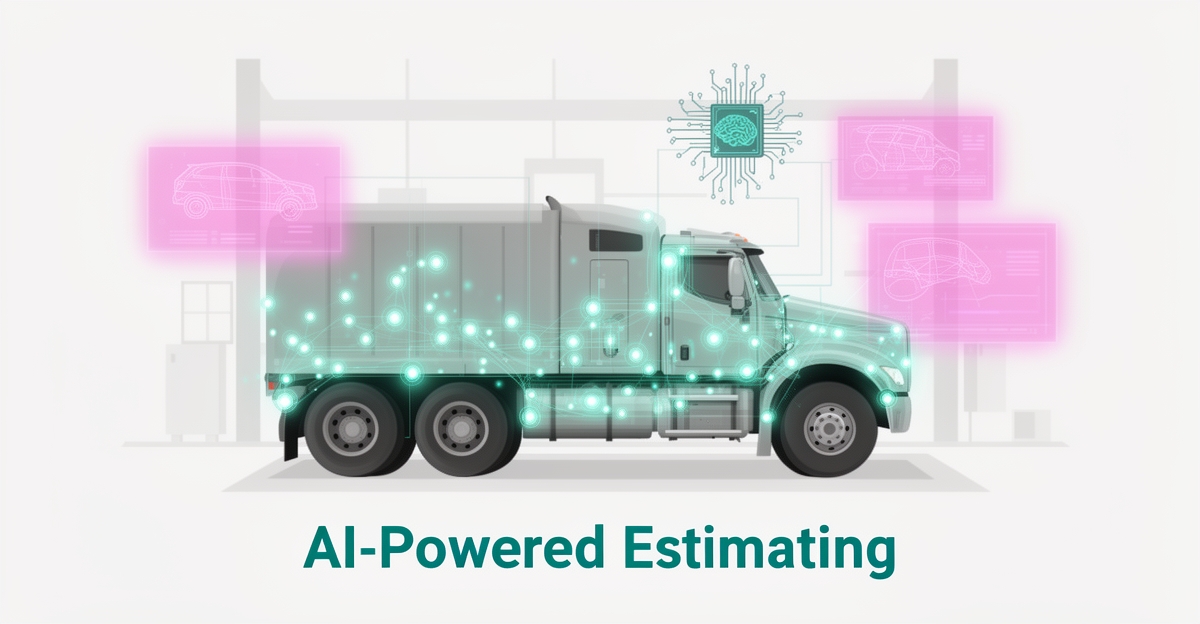
How Heavy Truck Body Shops Can Automate Repair Estimations with AI
Key Facts
- Manual estimating ties up senior staff for hours per job and creates bottlenecks when the shop is busy.
- Two estimators can produce different numbers for the same damage, which erodes trust with fleet managers and insurers.
- AI systems analyze damage photos and historical repair data to generate fast, consistent repair estimates.
- Integration with CAD and inventory systems ensures estimates reflect real parts availability and labor procedures.
- Custom AI builds follow your shop's business rules instead of forcing generic workflows on your estimators.
- AIQ Labs builds owned AI systems for small and mid-sized shops—see the Fit Check → free 30-minute strategy call below.
Hire a team member that works 24/7 — for less than a part-time wage.
AI receptionists, SDRs, dispatchers and 99+ roles. Trained on your business, fully managed.
Not sure where to start? Ask our AI planner
The Manual Bottleneck: Why Traditional Heavy Truck Estimating Is Broken
Manual estimates are costing heavy truck body shops more than they realize. What looks like a routine appraisal is actually a labor drain that slows every repair and erodes margin.
Traditional estimating remains labor-intensive and inconsistent. Estimators walk the vehicle, photograph damage, measure components, and manually cross-reference parts and labor guides. That process ties up senior staff for hours per job and creates bottlenecks when the shop is busy—pressure that heavy duty repair operations across the industry continue to report around repair cycles and labor availability.
Pricing inconsistency follows directly from manual assessment. Two estimators can produce different numbers for the same damage, and fatigue or missing history leads to underestimates that hurt profitability. Customers sense the variability, which damages trust and increases back-and-forth with fleet managers and insurers.
Hidden costs accumulate in estimator time. Senior estimators spend a disproportionate share of their week on appraisal rather than on quality control, customer relations, or throughput planning. When estimates take hours or days instead of minutes, trucks sit longer, rental costs rise, and shop capacity is wasted.
The competitive disadvantage is real. Shops relying on manual workflows struggle to commit to fast turnaround promises while competitors using digital estimating tools author appraisals faster and with more consistent structure. The industry has long relied on structured estimating platforms to support a wide range of vehicle types—reflecting how established the shift away from fully manual appraisal already is.
Manual estimating creates recurring pain points:
- Damage documentation is slow and error-prone without standardized photo capture and measurement
- Historical repair data stays siloed, so similar jobs are re-estimated from scratch each time
- Integration gaps with CAD and inventory tools force duplicate entry and delays
- Long estimate turnaround reduces customer trust and risks losing work to faster shops
These constraints are systemic, not just operational. Heavy truck body shops need real-time pricing transparency and faster cycle times to stay competitive. AI workflows can address the bottleneck by analyzing vehicle damage photos and historical repair data to generate accurate, real-time repair estimates.
AIQ Labs helps body shops build custom AI systems that integrate with existing CAD and inventory tools to deliver fast, reliable estimations without relying on manual assessments. The shift reduces labor time spent on appraisal and gives estimators a consistent, data-backed starting point for every job.
How AI Analyzes Damage Photos and Repair Data to Generate Instant Estimates
Heavy truck damage is complex, and manual estimating slows shops down while eroding pricing transparency. AI changes that by turning photos and historical repair records into fast, data-driven estimates.
Machine learning models are trained on historical repair data to recognize patterns across makes, models, and damage types. When a shop uploads vehicle damage photos, the system identifies affected components, assesses severity, and maps the damage to prior repairs. This analysis generates accurate, real-time repair estimates that reduce labor time and improve pricing transparency.
The technology works by combining visual analysis with structured repair history. Computer vision scans images for dents, cracks, and structural deformation, then cross-references findings with a database of past jobs. Severity scoring adjusts parts and labor calculations automatically, while integration with CAD and inventory tools ensures recommendations reflect current availability and costs.
Heavy duty repair is evolving quickly. Industry reporting continues to highlight trends and challenges around parts sourcing, labor variability, and cycle times, underscoring the need for faster, more consistent estimating. Shops that stay aligned with these trends can reduce bottlenecks and improve customer trust.
Collision repair software has long supported this shift. Established estimating platforms are designed to simplify estimate authoring for collision repairers, independent appraisers, and insurance carriers, and they typically support a broad range of vehicle types for anytime, anywhere authoring. That breadth of vehicle support is critical for heavy truck body shops handling diverse fleets.
AI-powered estimating systems build on that foundation by automating the appraisal itself. Instead of manual measurements and lookups, the model delivers:
- Component identification from damage photos
- Severity assessment based on historical repair data
- Real-time cost calculation with parts and labor
- Integration with CAD and inventory tools for immediate validation
The dual benefit is clear. Labor hours spent on estimating shrink, and customers receive transparent, explainable pricing faster. Reduced labor time frees estimators for higher-value work, while consistent outputs strengthen trust with fleet managers and insurers.
Implementation requires careful data preparation and integration. AIQ Labs helps body shops build custom AI systems that integrate with existing CAD and inventory tools to deliver fast, reliable estimations without relying on manual assessments. The approach focuses on owned systems that fit existing workflows rather than forcing process change.
Industry expertise matters for accuracy. The depth of knowledge embedded in established estimating platforms informs how modern tools are structured, and AI models benefit from that same principle when trained on high-quality historical records from your own shop.
Preparedness is also operational. Timing pressures in trucking translate directly to repair bay priorities—every day a truck waits for an estimate is a day it is not earning. Faster estimates mean faster approvals and quicker returns to service.
Beyond Standalone Tools: Integrating AI Estimating with CAD and Inventory Systems
Most estimating platforms stop at generating a parts-and-labor total, leaving shops to manually cross-reference inventory availability and CAD drawings. Modern cloud estimating tools demonstrate what real-time authoring from any web-enabled device can achieve, but off-the-shelf platforms rarely connect deeply with a shop's proprietary parts databases or design workflows.
Established estimating software provides a foundation, yet heavy-duty repair operations face unique complexity. Parts sourcing delays and labor variability compound estimation challenges for commercial fleets. A custom AI layer bridges these gaps by ingesting historical repair data, live inventory feeds, and CAD specifications to produce estimates that reflect actual shop conditions.
- Real-time parts availability checks against inventory management systems
- CAD-driven labor calculations based on structural repair procedures
- Shop-specific pricing rules applied automatically to every line item
- Historical accuracy feedback loops that improve future estimates
AIQ Labs builds these integration layers so estimation becomes a continuous, data-driven workflow rather than a disconnected event. When the AI references live inventory, technicians avoid ordering parts that sit on shelves for weeks. When it reads CAD repair procedures, labor hours align with the actual structural work required. The result is an estimate that holds up from first inspection to final invoice.
Implementation Roadmap: Building a Custom AI Estimating System for Your Shop
Heavy truck body shops can transform their estimating workflows by building a custom AI system tailored to their specific vehicle types and repair processes. The first step is gathering high-quality data, including labeled damage photos, historical repair records, and parts pricing from inventory systems. AIQ Labs helps shops structure this data to train models that recognize damage patterns across heavy-duty trucks, from frame misalignment to panel deformation, ensuring the AI learns from real shop experience rather than generic datasets.
Integration complexity is often a concern, but custom AI systems can connect directly with existing tools like estimating platforms, CAD software, and parts databases through secure APIs. This allows the estimating AI to pull labor guides, OEM specifications, and current inventory levels to generate estimates that reflect actual shop capabilities. Unlike off-the-shelf solutions, a custom build ensures the AI follows the shop's unique business rules, such as preferred repair techniques or vendor-specific pricing tiers.
Accuracy validation is critical before deployment. Shops should test the AI against past repair orders, comparing its estimates to final invoices across a meaningful sample of completed jobs to measure variance. Properly calibrated systems can meaningfully reduce appraisal labor time, but only if the system is continuously refined with feedback from estimators and technicians. Human-in-the-loop reviews during the first weeks help catch edge cases, like unusual frame damage or rare truck models, building confidence in the system's reliability.
Staff training focuses on collaboration, not replacement. Estimators learn to interpret AI-generated estimates, adjust for shop-specific factors, and use the system as a starting point for negotiations with insurers or fleet managers. Clear communication with customers about how AI improves estimate speed and transparency helps maintain trust, especially when estimates are generated within minutes of photo upload. Over time, the AI becomes a force multiplier, handling routine assessments so estimators can focus on complex diagnostics and customer engagement—principles that apply directly to custom AI builds for heavy truck shops.
Still paying for 10+ subscriptions that don’t talk to each other?
We build custom AI systems you own outright. No vendor lock-in. Full control.
Not sure where to start? Ask our AI planner
Frequently Asked Questions
How does AI-powered estimating actually reduce labor time for heavy truck body shops?
What kind of data do I need to get started with a custom AI estimating system for my shop?
Can AI estimating integrate with the tools I already use, like my estimating platform or CAD software?
How accurate are AI-generated estimates compared to manual ones, and how do I know I can trust them?
Will using AI for estimates make my shop less personal or damage customer trust?
Is AI estimating only for big shops, or can small and mid-sized body shops benefit too?
Turning Repair Estimates into a Competitive Edge
Heavy truck body shops no longer need to accept slow, inconsistent estimates as the cost of doing business. By leveraging AI to analyze damage photos and historical repair data, shops can generate real-time, transparent estimates that free up estimators for higher-value work, reduce appraisal labor, and improve trust with fleet managers and insurers. Integrating these systems with existing CAD and inventory tools ensures estimates reflect actual shop conditions, from parts availability to structural repair procedures. The result is faster cycle times, fewer bottlenecks, and a real advantage in a market where speed and accuracy win contracts. For shops ready to move beyond manual assessments, the next step is to explore how a custom AI system built around your specific workflows can deliver immediate impact. Start the Fit Check — a quick, no-obligation session to identify your highest-ROI automation opportunity — followed by a free 30-minute strategy call, and see if AI-powered estimating is the right fit for your shop.
Make AI your competitive advantage — not just another tool.
Strategy, implementation and ongoing optimization. One partner, end to end.
Not sure where to start? Ask our AI planner