How Hemp Farms Can Use AI to Automate Crop Monitoring and Reduce Labor Costs
Key Facts
- Many hemp farms still rely on manual checks only once or twice a week according to Time 4 Hemp coverage
- A 50-acre operation can manage with a small crew but scaling to 200 acres typically triples labor needs
- AI-powered sensors can monitor soil moisture, pH, temperature and light exposure in real time per Time 4 Hemp analysis
- Early detection is widely considered the single most important factor in saving a hemp crop from disease spread
- Computer vision can detect subtle leaf color and texture changes invisible to the naked eye
- AIQ Labs has deployed 200+ multi-agent systems and runs 4 live SaaS products daily
- AI Employees work 24/7/365 versus a human employee's 40 hrs/week, at roughly 80% less cost than a human hire
Hire a team member that works 24/7 — for less than a part-time wage.
AI receptionists, SDRs, dispatchers and 99+ roles. Trained on your business, fully managed.
Not sure where to start? Ask our AI planner
The Labor-Intensive Reality of Hemp Farming Today
Hemp farming is not for the faint of heart. Beneath the promise of high-value CBD and fiber markets lies a daily grind of manual labor, razor-thin margins, and constant vigilance against crop threats.
Most hemp operations still depend on workers walking fields row by row, checking plants for stress, pests, and disease. This manual scouting is slow, expensive, and prone to human error. A single missed infestation or nutrient deficiency can wipe out entire sections of a crop before anyone notices.
The stakes are especially high for hemp because the plant is notoriously sensitive. Soil moisture, pH levels, temperature swings, and light exposure all directly impact cannabinoid content and overall plant health. According to industry coverage from Time 4 Hemp, AI-powered sensors and cameras can monitor these variables in real time, yet many farms still rely on manual checks that happen only once or twice a week.
That gap between inspections creates a dangerous blind spot. Diseases like powdery mildew, botrytis, and root rot can spread rapidly in dense hemp canopies. By the time a scout spots visible symptoms during a weekly walkthrough, the damage is often irreversible. Early detection is the single most important factor in saving a hemp crop, yet manual processes make it nearly impossible to catch problems at scale.
The labor challenge goes beyond disease detection. Hemp farms face a compounding set of operational burdens:
- Rising labor costs that eat into already tight profit margins
- Inconsistent scouting quality depending on worker experience and fatigue
- Delayed response times between identifying a problem and taking action
- Difficulty scaling operations without proportionally increasing headcount
- Seasonal labor shortages that leave fields unmonitored during critical growth windows
These pain points are not unique to hemp. Across the broader agricultural technology landscape, farms of all sizes struggle with the same fundamental tension: the need for constant, accurate crop data versus the cost and availability of human labor to collect it. As highlighted in TechRadar's analysis of AI workflow automation, modern AI agents can now run in the background and perform complex tasks without constant supervision, effectively giving operations the support of a small team at a fraction of the cost.
For hemp farms, this shift matters enormously. Manual monitoring does not scale. A 50-acre operation might manage with a small crew, but expanding to 200 acres means either tripling your labor budget or accepting that large portions of your crop go unchecked for days at a time.
The result is a system where farmers are forced to choose between cost and coverage, and both choices carry risk. AIQ Labs works with agricultural operations to break this cycle by building custom monitoring systems tailored to specific growing conditions—replacing the impossible choice between spending more and seeing less. You can explore how this works via AI Workflow Builds or AI Employees.
How AI-Powered Sensors and Image Analysis Transform Crop Monitoring
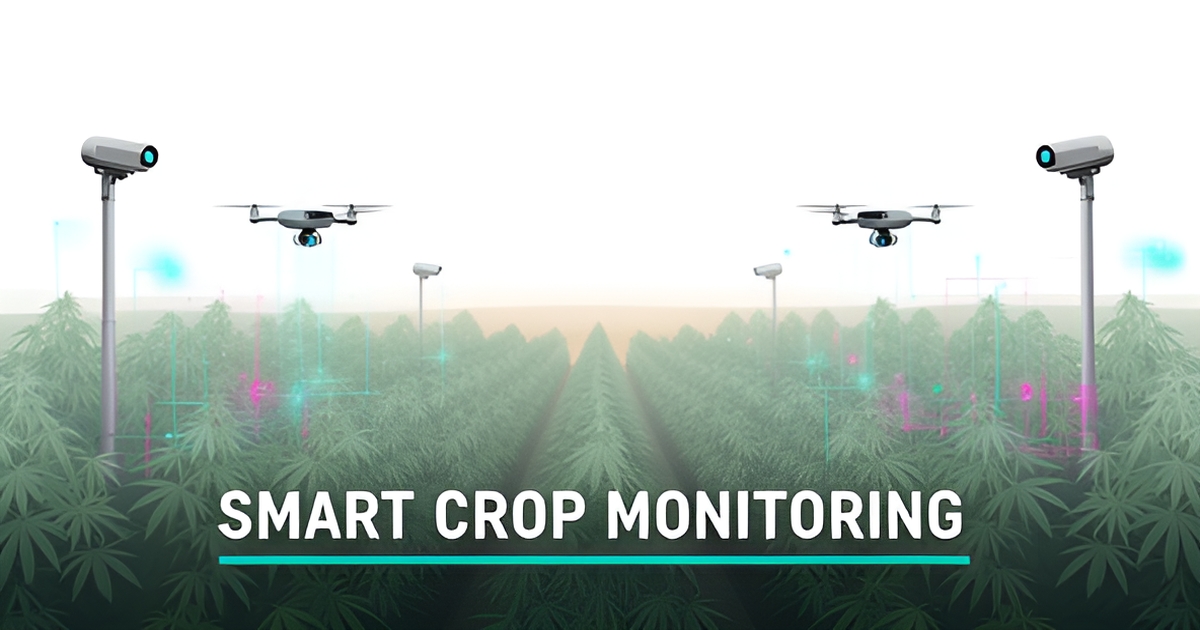
AI-powered sensors and image analysis are transforming how hemp farms monitor crop health, enabling real-time tracking of plant conditions and early detection of issues that would otherwise require labor-intensive field walks. By continuously gathering data on soil moisture, temperature, light exposure, and plant morphology, these systems provide actionable insights that optimize growing conditions and reduce the need for manual inspections. This shift not only improves responsiveness but also cuts the labor hours tied up in routine monitoring. Industry reporting suggests that AI-driven monitoring helps farmers anticipate problems before they spread, preserving yield and reducing reliance on chemical interventions.
Computer vision technology, when applied to hemp cultivation, allows for the automated identification of early signs of disease, nutrient deficiencies, or pest infestations through regular image capture and analysis. These systems can detect subtle changes in leaf color, texture, or growth patterns that are invisible to the naked eye until significant damage has occurred. By flagging anomalies at their onset, farmers can intervene precisely and efficiently, minimizing crop loss and input waste. Open-source AI agent frameworks support this capability by enabling customizable, scalable monitoring solutions that adapt to specific farm conditions without locking producers into proprietary platforms.
Predictive analytics further enhances monitoring by forecasting potential risks based on historical and real-time data, such as weather patterns, soil health, and plant development stages. This forward-looking approach allows hemp farmers to optimize irrigation, lighting, and harvesting schedules in alignment with plant needs and market timelines. Such predictive models typically improve resource efficiency and help stabilize yields across growing seasons. Together, these AI-driven tools create a proactive monitoring ecosystem that reduces manual labor, increases accuracy, and supports sustainable, data-informed farming practices.
- Continuous tracking of soil and plant health metrics
- Early detection of disease and pest threats
- Dynamic adjustment of irrigation and lighting
- Yield and risk forecasting based on environmental data
- Reduction in manual field inspection time
Implementing Custom AI Monitoring Systems with AIQ Labs
Moving from pilot projects to a production-grade monitoring system requires a partner who understands both the technology and the unique variables of hemp cultivation. AIQ Labs offers three entry points—AI Employees for managed AI staff, AI Workflow Builds to rebuild your costliest workflow at a fixed price, and AI Operating Systems for one connected operating layer—all designed to give farms full ownership of their AI assets with no vendor lock-in. According to industry analysis, AI-powered sensors and cameras already monitor soil moisture, pH levels, temperature, and light exposure in real time, creating the data foundation these custom systems require.
The engagement begins with a discovery and architecture phase that maps your specific growing conditions, existing hardware, and labor bottlenecks to a tailored solution—built in phases, at a fixed price, so you always know what you're paying for. Rather than forcing generic models onto diverse microclimates, the team builds multi-agent workflows that reason over your proprietary data streams—drone imagery, fixed-camera feeds, and IoT sensor networks—to detect early signs of pests, nutrient stress, or irrigation faults. As noted in technical research, open-source agent frameworks can automate complex, multi-step workflows at a fraction of traditional software costs, a principle AIQ Labs has applied across 200+ deployed multi-agent systems.
- AI Workflow Builds unify disconnected field tools into a single operational dashboard
- AI-Enhanced Inventory Forecasting adapts to hemp's seasonal harvest cycles and biomass variability
- Automated Internal Knowledge Base Generation preserves agronomic expertise across seasonal workforces
- AI Employees such as Field Managers and Quality Assurance Agents execute monitoring routines 24/7 at roughly 80% less cost than a human hire
Payment is straightforward: Start Monthly, Build in Milestones, or Own It Outright—no fake prices, no invented case-study numbers. The result is a scalable, owned intelligence layer that reduces manual inspection hours, catches crop threats days earlier, and positions the farm to expand automation into processing and compliance workflows over time.
Still paying for 10+ subscriptions that don’t talk to each other?
We build custom AI systems you own outright. No vendor lock-in. Full control.
Not sure where to start? Ask our AI planner
Frequently Asked Questions
How can AI actually help reduce labor costs on a hemp farm?
What specific crop threats can AI detect early in hemp farming that manual scouting often misses?
Is implementing AI monitoring on a hemp farm going to lock me into a specific vendor's platform long-term?
Can AI really improve resource efficiency like water and energy use in hemp cultivation?
What kind of return on investment can a hemp farm expect from implementing AI monitoring?
Do I need to be a tech expert to use an AI monitoring system on my hemp farm?
From Field Walks to Full Ownership: The Future of Hemp Monitoring
Hemp farming no longer requires choosing between exhaustive manual labor and flying blind between weekly inspections. By deploying AI-powered sensors, computer vision, and predictive analytics, growers can monitor soil moisture, detect early signs of disease, and optimize irrigation around the clock without expanding headcount. This shift from reactive scouting to proactive, data-driven management protects yields and stabilizes margins. AIQ Labs helps hemp operations implement these custom monitoring systems with full ownership and no vendor lock-in, tailoring the technology to your specific microclimates and workflows. Ready to eliminate the bottleneck? Start with the two-minute Fit Check at aiqlabs.ai/apply, then book a free 30-minute strategy call to map your highest-ROI automation opportunity. If there isn't a clear win, we'll tell you—no obligation, just clarity on your path forward.
Make AI your competitive advantage — not just another tool.
Strategy, implementation and ongoing optimization. One partner, end to end.
Not sure where to start? Ask our AI planner