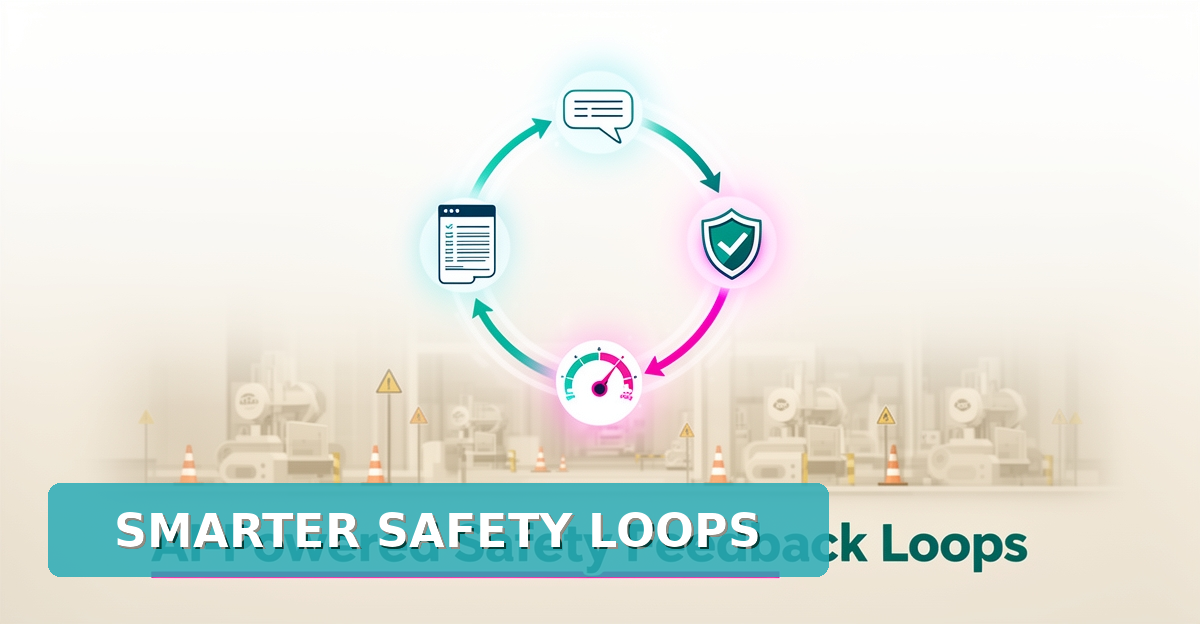
How OSHA Compliance Teams Can Use AI to Improve Employee Safety Feedback Loops
Key Facts
- The average economic cost of a single medically consulted workplace injury is typically estimated at roughly $48,000, including both direct and indirect costs, according to National Safety Council-style analyses cited across the EHS industry
- A work-related fatality can carry a total cost of approximately $1.5 million or more when lost income, medical expenses, and administrative overhead are factored in
- The average lost-time workers' compensation claim has recently run in the mid-$40,000 range, per industry benchmarking data as of late 2026
- Predictive analytics can surface workplace risks before incidents occur, giving compliance teams an early warning window, per OH&S
- AI can quickly scan for industry compliance updates relevant to any business, per OH&S
- Computer vision can identify workers not wearing PPE or standing too close to dangerous equipment in construction settings
Hire a team member that works 24/7 — for less than a part-time wage.
AI receptionists, SDRs, dispatchers and 99+ roles. Trained on your business, fully managed.
Not sure where to start? Ask our AI planner
The Hidden Cost of Delayed Safety Feedback
The hidden cost of delayed safety feedback often starts long before an incident report is filed. When hazards go unaddressed due to slow or incomplete feedback loops, organizations face direct financial consequences that extend far beyond medical bills. The average economic cost of a single medically consulted workplace injury is typically estimated at roughly $48,000, and average lost-time workers' compensation claims have recently run in the mid-$40,000 range. These figures represent immediate expenses like treatment and wage replacement, but they don't capture the full operational toll—such as disrupted workflows, retraining needs, or overtime costs to cover absent workers. In high-risk sectors like manufacturing and construction, where injury incidence rates remain consistently above average, these delays compound quickly. A single unreported near-miss today can evolve into a costly injury tomorrow, especially when patterns of risk go unnoticed due to fragmented reporting systems.
Beyond direct injury costs, delayed feedback amplifies regulatory and reputational exposure. OSHA's maximum per-violation penalty thresholds remain elevated as of late 2026, meaning that failure to address known hazards—especially those identified by employees but not acted upon—can result in significant fines. A work-related fatality can carry a total cost of approximately $1.5 million or more when lost income, medical expenses, and administrative overhead are considered, underscoring the severe consequences of unmitigated risks. When safety concerns are buried in paper logs, delayed in supervisor inboxes, or lost in inconsistent reporting, compliance teams lose the ability to intervene early. This gap between observation and action transforms preventable issues into liabilities. AI-powered feedback loops, such as those AIQ Labs builds, help close this gap by continuously gathering anonymous employee feedback, analyzing sentiment for emerging risks, and flagging recurring concerns before they escalate—turning delayed reactions into proactive safety improvements.
AI-Powered Feedback Loops for OSHA Compliance
Employee safety feedback often stalls between the shop floor and the safety team. AI-powered agents close that gap by collecting input continuously, analyzing patterns, and triggering action before a near-miss becomes a recordable incident.
AI agents can be configured to conduct anonymous surveys, analyze sentiment, and flag recurring concerns, turning employee input into actionable compliance improvements. This approach aligns with how AI is reshaping how organizations comply with OSHA standards and protect their workforce, by making feedback a real-time leading indicator rather than a quarterly afterthought.
AI hazard detection and risk prediction starts with employee reports. Agents ingest historical incidents, near-misses, equipment data, worker behavior, weather conditions, and workflow patterns to identify risks before accidents occur. Predictive analytics can improve on-the-job safety by surfacing risks early, giving compliance teams an early warning window.
Computer vision adds a visual layer to feedback loops. Modern workplace cameras paired with AI automatically detect missing PPE, unauthorized entry into restricted zones, trip or fall hazards, unsafe lifting postures, and proximity to moving equipment. In construction, computer vision identifies workers not wearing PPE or standing too close to dangerous equipment, while in manufacturing systems detect anomalies in machine vibration or temperature.
Automated OSHA recordkeeping reduces the lag between a report and a record. AI assistants generate OSHA-ready reports and auto-fill digital forms using natural language processing for logs 300, 300A, and 301. Real-time data syncing across sites ensures inspection reports and training records stay current without manual re-entry.
Sentiment analysis of safety surveys reveals what numbers miss. Agents analyze tone, frequency, and themes in open-ended feedback to pinpoint departments with declining trust or rising concern. This supports AI-driven safety culture insights from leading indicators such as near misses, risky behaviors, and recurring concerns.
The financial case for closing the loop is clear. The average economic cost of a single medically consulted workplace injury is typically estimated at roughly $48,000, and a work-related fatality can carry a total cost of approximately $1.5 million or more when lost income, medical expenses, and administrative overhead are factored in. Average lost-time workers' compensation claims have recently run in the mid-$40,000 range.
AIQ Labs applies this model through managed AI employees that work alongside EHS teams. Agents collect feedback via chat, voice, and SMS, analyze sentiment, and escalate patterns to human safety leaders for review.
Feedback loops that matter typically include:
- Anonymous pulse surveys triggered after shifts or incidents
- Sentiment scoring and topic clustering of safety comments
- Automatic flagging of recurring concerns to supervisors
- Integration with OSHA logs and leading-indicator dashboards
When employee voice is captured continuously and acted on quickly, compliance shifts from reactive documentation to proactive prevention.
From Feedback to Action: Implementation for Compliance Teams
Implementing AI to enhance OSHA compliance is not just about adopting new technology—it's about creating a responsive, data-driven safety culture. With the average economic cost of a single medically consulted workplace injury typically estimated at roughly $48,000, the stakes for effective safety management are high.
AI-powered systems can transform how compliance teams collect and act on employee feedback. For example, AI employees can conduct anonymous surveys, analyze sentiment, and flag recurring concerns, turning employee input into actionable compliance improvements. This approach aligns with the practical steps outlined for leveraging AI in safety management, from hazard detection to safety culture improvement.
One critical step is integrating AI with existing EHS systems. According to OH&S, AI can quickly check for industry compliance updates, ensuring your safety protocols remain current. However, successful implementation requires addressing challenges like worker privacy, data usage policies, and human-in-the-loop controls to ensure AI supports rather than replaces human judgment.
AIQ Labs deploys managed AI employees that handle these tasks day to day. These agents can automate OSHA recordkeeping, generate OSHA-ready reports, and provide real-time data syncing across sites. For teams whose biggest bottleneck is a single broken workflow—say, incident intake or recordkeeping—a fixed-price AI Workflow Build can rebuild just that piece, while larger organizations can move toward a full AI Operating System in phases. Either way, compliance teams focus on strategic safety initiatives while AI handles the data-heavy lifting.
To get started, consider these key steps:
- Assess your current safety feedback loops and identify gaps where AI can add value.
- Integrate AI-powered hazard detection and risk prediction systems to proactively identify risks.
- Automate OSHA recordkeeping with AI to reduce manual errors and save time.
- Use AI-driven sentiment analysis to uncover trends in employee feedback and address concerns before they escalate.
By following these steps, compliance teams can create a safer, more responsive workplace. The future of OSHA compliance lies in leveraging AI to not just meet regulatory requirements, but to foster a culture of continuous improvement and employee well-being.
Still paying for 10+ subscriptions that don’t talk to each other?
We build custom AI systems you own outright. No vendor lock-in. Full control.
Not sure where to start? Ask our AI planner
Frequently Asked Questions
How much does delayed safety feedback actually cost a company?
Can AI really predict workplace accidents before they happen?
What does an AI-powered safety feedback loop look like day-to-day?
Will computer vision replace human safety inspectors on site?
How does AI help with OSHA recordkeeping?
What are the biggest concerns when using AI for safety feedback?
Turn Safety Feedback Into Your Strongest Compliance Advantage
Delayed safety feedback turns preventable near-misses into costly injuries, regulatory exposure, and operational disruption. AI-powered feedback loops close the gap between observation and action by collecting continuous anonymous input, analyzing sentiment for emerging risks, and flagging recurring concerns before they escalate into recordable incidents. When paired with automated OSHA recordkeeping, predictive risk analysis, and real-time integration with EHS systems, feedback becomes a leading indicator rather than a quarterly afterthought. Compliance teams can start by mapping current feedback loops, identifying where input stalls, and piloting anonymous pulse surveys with sentiment scoring and automatic escalation to supervisors. AIQ Labs supports this shift with managed AI employees that collect feedback via chat, voice, and SMS, analyze patterns, and surface insights for human safety leaders to act on. Ready to see where AI can strengthen your safety culture? Start the two-minute Fit Check at https://aiqlabs.ai/apply, then book a free 30-minute strategy call to map your biggest bottleneck and highest-ROI automation opportunities.
Make AI your competitive advantage — not just another tool.
Strategy, implementation and ongoing optimization. One partner, end to end.
Not sure where to start? Ask our AI planner