How Parking Garages Can Automate Entry and Exit Processes with AI
Key Facts
- Drivers in major metropolitan areas typically spend well over 15 minutes searching for parking, according to industry research
- Parking search time is a meaningful contributor to urban traffic congestion, according to industry research
- Modern ALPR and sensor technologies commonly report vehicle detection accuracy above 99% under favorable conditions
- Sensor and camera hardware costs have fallen sharply since 2018, making AI upgrades more accessible
- AI-powered systems can meaningfully increase effective parking capacity through better utilization and dynamic guidance
- Automation of routine tasks like payment validation and access logging typically reduces operational overhead
Hire a team member that works 24/7 — for less than a part-time wage.
AI receptionists, SDRs, dispatchers and 99+ roles. Trained on your business, fully managed.
Not sure where to start? Ask our AI planner
The Cost of Manual Parking Garage Operations
Manual entry and exit checks create friction that ripples far beyond the gatehouse. Every stop to take a ticket, validate payment, or resolve a dispute adds seconds that compound into hours of lost time, wasted fuel, and missed revenue for operators.
Drivers in major metropolitan areas typically spend well over 15 minutes searching for parking, according to industry research. That search time is a meaningful contributor to urban traffic congestion — a drag on productivity felt across entire city networks.
The financial scale is significant. Parking-related cruising represents a substantial share of urban congestion costs. For garage owners, the cost shows up as longer queues, lower turnover, and frustrated customers who avoid repeat visits.
Manual processes also create direct revenue leakage. Cash handling, ticket errors, and unpaid exits are difficult to audit without automated logging. Staff must be present at peak hours to manage lanes, enforce rules, and troubleshoot equipment, driving labor costs up while accuracy stays low.
Operational inefficiencies accumulate in predictable ways:
- Long wait times at entry and exit points reduce throughput during peak demand
- Manual enforcement and payment reconciliation increase labor hours and error rates
- Congestion from idling vehicles raises emissions and damages the customer experience
- Lack of real-time occupancy data leads to underutilized spaces and lost revenue
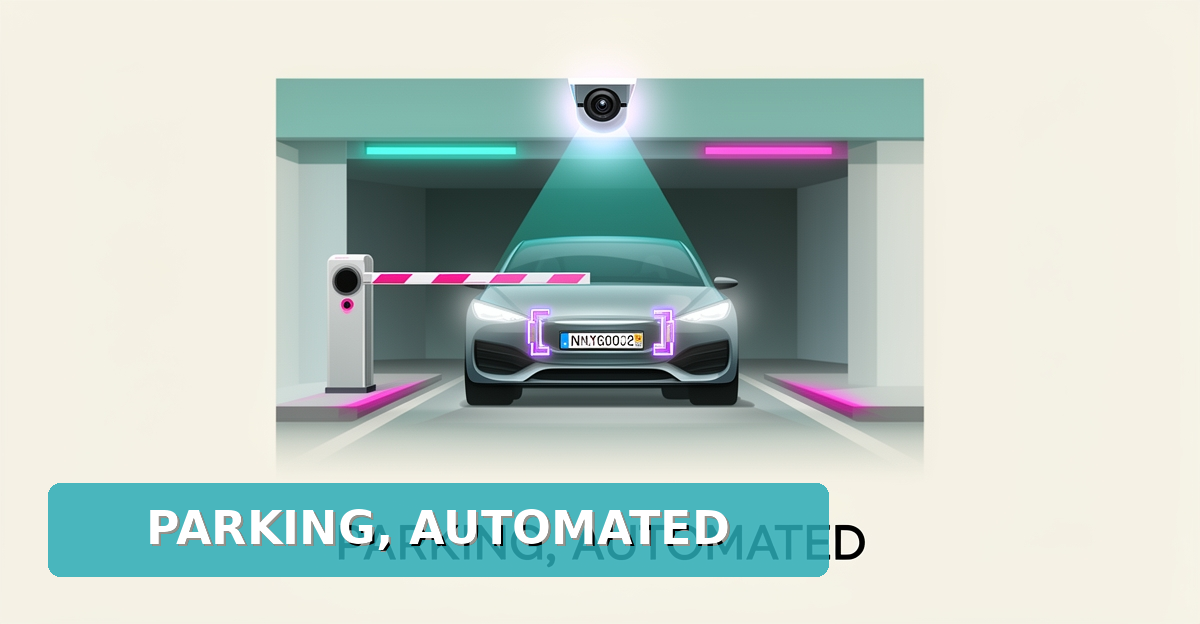
These pain points are why parking operators are rethinking access control. Automated License Plate Recognition (ALPR) allows cars to enter and leave without pulling tickets or stopping for checks, reducing bottlenecks and improving parking flow. The shift from reactive staffing to data-driven operations is exactly the kind of workflow rebuild AIQ Labs focuses on through its AI Workflow Builds.
AIQ Labs approaches this challenge by integrating AI with ticketing systems to automate access, validate payments, and log entries in real time. The goal is not to replace staff entirely, but to remove repetitive, error-prone checks so teams can focus on higher-value work.
When entry and exit are frictionless, garages gain more than speed. They gain better utilization, reduced cruising, dynamic pricing, and improved enforcement that together protect revenue and improve the driver experience.
AI Technologies Enabling Frictionless Parking Access
Parking garages are transforming their entry and exit processes by replacing manual checks with AI-powered automation that eliminates delays and human error. Modern license plate recognition systems allow vehicles to enter and exit without stopping for tickets or manual verification, directly addressing one of the most persistent bottlenecks in parking operations. ALPR technology is widely used to reduce congestion at access points by enabling seamless vehicle flow.
Computer vision platforms and IoT sensor networks work alongside ALPR to create a comprehensive identification system that operates with high reliability. These technologies detect vehicle presence, read license plates, and monitor space occupancy in real time, forming the foundation for automated access control. Modern sensor technologies commonly report accuracy rates above 99% in vehicle detection under favorable conditions, ensuring that only authorized vehicles gain entry while minimizing false reads that could disrupt operations.
- Automated license plate recognition for ticketless entry and exit
- Computer vision for occupancy monitoring and plate reading
- IoT sensors for per-space detection accuracy
- Real-time data processing for instant access decisions
- Integration with payment and ticketing systems
AIQ Labs builds custom AI workflows that integrate these technologies with existing parking management systems to automate not just access control but also payment validation and entry logging. This end-to-end approach transforms what was once a manual, error-prone process into a streamlined operation where vehicles move freely while the system handles identification, authorization, and record-keeping automatically. The result is a frictionless experience that improves both operational efficiency and user satisfaction.
Measurable Gains from AI-Driven Parking Automation
AI-driven parking automation delivers tangible operational and financial benefits that directly address core challenges in urban mobility. By eliminating manual entry and exit checks, facilities reduce bottlenecks and improve traffic flow, with ALPR systems allowing vehicles to enter and leave without stopping for tickets or checks. This streamlined access not only enhances security through better vehicle tracking but also cuts down the time drivers spend circling for a spot — a behavior that adds measurably to urban congestion.
These efficiency gains translate into cost and capacity improvements. AI-powered systems can meaningfully increase effective parking capacity through better space utilization and dynamic guidance, while reducing operational overhead by automating routine tasks like payment validation and access logging. For parking operators, this means lower overhead per space and improved asset performance without requiring physical expansion.
Revenue management also improves through AI integration. Dynamic pricing algorithms adjust rates based on real-time demand, encouraging turnover during peak hours and maximizing income per space. Contactless payment solutions further reduce queues and administrative overhead, ensuring a seamless experience that supports both user satisfaction and financial accuracy. Together, these capabilities transform parking from a reactive function into a data-driven operation that optimizes space, reduces congestion, and strengthens long-term profitability. To explore how these benefits can be tailored to your facility, take the 2-minute Fit Check to begin a free 30-minute strategy call with an AI engineer who can map your specific automation opportunities.
Implementing AI Automation: A Practical Roadmap for Parking Operators
Parking operators looking to modernize entry and exit processes can follow a structured, proven approach to AI automation. Starting with clear goals — such as reducing wait times, eliminating manual ticketing, or improving payment validation — ensures the solution aligns with operational needs. AIQ Labs' process begins with a discovery phase to map current workflows, assess infrastructure readiness, and identify the one workflow that costs the facility the most, then rebuild it in fixed-price, phased milestones.
Next, operators should assess existing infrastructure, including camera systems, network connectivity, and integration points with ticketing or payment platforms. This evaluation determines whether computer vision, IoT sensors, or license plate recognition (LPR) systems are best suited for the facility. Modern sensor technologies commonly report accuracy rates above 99% in vehicle detection under favorable conditions, and sensor hardware costs have fallen sharply since 2018, making AI upgrades more accessible than ever.
With infrastructure assessed, the next step is selecting the right technology mix. For broad coverage and lower per-space cost, computer vision platforms can leverage existing CCTV or smart cameras to detect occupancy and read license plates. For access control and enforcement, LPR systems enable frictionless entry and exit without tickets or stops. Operators can then run a multi-month pilot in a limited area to test effectiveness, measure key performance indicators like occupancy rate and average search time, and validate privacy compliance through data anonymization and secure transmission protocols.
- Define clear automation goals tied to pain points like congestion or revenue leakage
- Assess current infrastructure for compatibility with AI technologies
- Choose technology mix based on coverage, accuracy, and scalability needs
- Run a pilot program to test effectiveness and measure KPIs
- Ensure privacy compliance before scaling
After successful pilot testing, operators scale the solution with robust APIs and payment integrations, prioritizing vendors that support edge inference to reduce latency. Continuous monitoring and optimization ensure the system adapts to changing demand, delivering long-term efficiency gains. For operators who want to go beyond a single workflow and connect access control, payments, occupancy, and enforcement into one operating layer, AIQ Labs' AI Operating Systems offering builds that layer in phases, with the facility owning the system outright at the end. The result is a parking garage that functions as an intelligent, future-ready asset.
Still paying for 10+ subscriptions that don’t talk to each other?
We build custom AI systems you own outright. No vendor lock-in. Full control.
Not sure where to start? Ask our AI planner
Frequently Asked Questions
How much time do drivers actually waste looking for parking, and does AI really help?
What's the real accuracy of license plate recognition — does it actually work in rain or at night?
How much does it cost to automate a parking garage with AI, and what's the ROI?
Will AI parking systems replace my staff entirely?
How do I know if my garage's existing cameras and gates can work with AI, or do I need to rip everything out?
What about privacy and data security with license plate tracking?
From Bottlenecks to Breakthrough: Parking That Works Smarter
Automating entry and exit is no longer a convenience upgrade — it's how parking garages reclaim lost revenue, reduce congestion, and deliver a frictionless driver experience. By replacing manual tickets and checks with ALPR, computer vision, and IoT sensors, operators cut wait times, eliminate revenue leakage, and gain real-time occupancy data that drives better utilization and dynamic pricing. The shift from reactive staffing to data-driven access control also means lower labor costs, fewer emissions from idling queues, and capacity gains without building new space. AIQ Labs helps operators make this transition by building custom AI workflows that integrate with existing ticketing systems to automate access, validate payments, and log entries in real time — so teams can focus on higher-value work instead of repetitive checks. If you're ready to map where automation can have the fastest impact in your facility, take the 2-minute Fit Check at aiqlabs.ai/apply for a free 30-minute strategy call with an AI engineer. Drivers in major metros still spend significant time searching for parking, and the right workflow design can start turning that friction into flow.
Make AI your competitive advantage — not just another tool.
Strategy, implementation and ongoing optimization. One partner, end to end.
Not sure where to start? Ask our AI planner