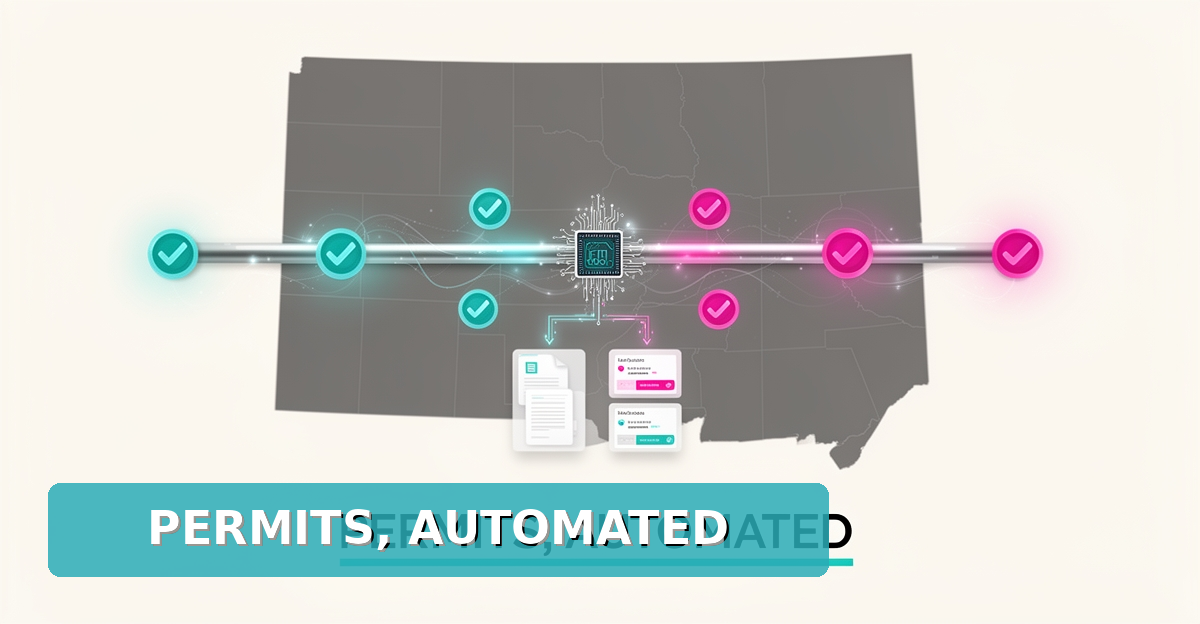
How Pipeline Companies Can Automate Permit Tracking with AI
Key Facts
- Manual permit tracking across federal, state, and local agencies creates blind spots where delays go unnoticed until they halt construction
- AI-powered permit tracking reduces manual oversight by automating status checks and reminders across jurisdictions
- Integrating AI with government databases creates a unified view of permit progress, eliminating constant manual checks
- AI systems can flag permit delays by analyzing historical approval patterns and jurisdiction-specific processing times
- A phased rollout starts with piloting one high-volume jurisdiction before expanding after validating accuracy
- AIQ Labs has deployed 200+ multi-agent systems and runs four live SaaS products daily — permit tracking builds on proven infrastructure
Hire a team member that works 24/7 — for less than a part-time wage.
AI receptionists, SDRs, dispatchers and 99+ roles. Trained on your business, fully managed.
Not sure where to start? Ask our AI planner
The Permit Tracking Bottleneck in Pipeline Construction
The permit tracking process in pipeline construction is often a manual, fragmented effort that consumes significant time and resources. Teams juggle spreadsheets, emails, and phone calls to monitor applications across federal, state, and local agencies, each with its own forms, deadlines, and communication protocols. This disjointed approach creates blind spots where delays go unnoticed until they halt construction, turning administrative work into a critical path risk. The lesson from automation across industries is consistent: tools bolted onto broken workflows deliver little. Value comes from systems designed around how your jurisdictions and teams actually operate.
Manual permit tracking not only delays timelines but also inflates costs through idle labor, extended equipment rentals, and penalty risks from missed deadlines. When a single permit stalls, entire crews may sit idle, burning budget while waiting for approvals that could have been anticipated with better oversight. The burden falls disproportionately on project engineers and coordinators who spend hours chasing status updates instead of focusing on construction execution. Automation's payoff depends on systemic design — not just deploying another tool, but rebuilding the workflow so status checks, reminders, and escalations happen without anyone babysitting them.
Without real-time visibility, teams react to delays rather than prevent them, creating a cycle of crisis management that erodes morale and delays downstream activities like trenching, welding, and backfilling. Each jurisdiction introduces unique variables — some require environmental reviews, others demand tribal consultations, and many have opaque status portals that demand frequent manual checks. This variability makes standardization nearly impossible without intelligent systems that can normalize data, predict bottlenecks, and trigger escalations before deadlines are missed. Modern AI models are well suited to parsing diverse permit documents, notices, and agency communications across regions, even when formats and terminology vary widely.
AIQ Labs addresses this challenge through AI Workflow Builds — rebuilding the one workflow that costs you the most, at a fixed price, in phases. For permit tracking, that means systems that integrate with government databases and internal project tools to automate status monitoring, reminder generation, and delay flagging. These systems reduce the need for constant manual oversight, freeing skilled personnel to focus on higher-value tasks like risk mitigation and stakeholder coordination. By transforming permit tracking from a reactive chore into a proactive, intelligence-driven process, pipeline companies can reclaim control over timelines and reduce the financial drag of preventable delays.
How AI Automates Permit Monitoring and Workflow Management
Pipeline companies face significant delays when tracking permits across multiple jurisdictions, with manual processes consuming valuable time and increasing the risk of missed deadlines. AI systems now automate this workflow by continuously monitoring application status, sending timely reminders, and flagging bottlenecks before they impact project timelines. By integrating directly with government databases and internal project management tools, these systems create a unified view of permit progress that eliminates the need for constant manual checks.
AI-driven permit tracking leverages machine learning to analyze historical approval patterns and predict potential delays based on jurisdiction-specific processing times. Organizations that embed AI into existing processes — rather than running it alongside them — see the most reliable improvements in throughput and task completion. This approach ensures that pipeline teams receive proactive alerts when applications stall, allowing them to intervene early with supplemental documentation or follow-up inquiries.
The system operates through a multi-agent architecture where specialized AI components handle distinct functions: one agent scrapes and normalizes data from municipal portals, another cross-references submissions against internal project schedules, and a third generates prioritized action items for project managers. This kind of orchestration reduces manual intervention by letting systems handle repetitive status checks and routine communications without human oversight. That frees staff for higher-value activities like stakeholder engagement and risk assessment, while ensuring consistent adherence to jurisdictional requirements. AIQ Labs has deployed 200+ multi-agent systems of exactly this type, and runs four live SaaS products on the same infrastructure every day.
Key capabilities include real-time status updates from connected government portals and APIs, automated escalation when permits exceed expected processing windows, and intelligent routing of delay notifications to the appropriate team member based on permit type and location. AIQ Labs builds these systems to integrate with existing tools like Primavera P6, Procore, or custom project tracking software, ensuring that permit data flows directly into critical path analyses. You can also staff the process itself with AI Employees — managed AI coordinators that handle the follow-ups and correspondence at a fraction of the cost of a human hire. By transforming permit tracking from a reactive chore into a proactive, intelligent workflow, pipeline companies maintain tighter control over schedules and reduce costly idle time caused by avoidable administrative delays.
Implementation Steps for AI-Powered Permit Tracking Systems
Permit tracking stalls pipeline construction when spreadsheets and manual calls replace real visibility across jurisdictions. AI changes that by monitoring application status, sending reminders, and flagging delays automatically. Here's how to get there without disrupting live projects.
Start with a focused discovery and data audit. Map current permit workflows, systems, and data sources, and document every aspect of the data including sources, preparation methods, and transformations. Maintaining detailed records of data used in AI systems is essential for ensuring accountability and transparency. This data trail facilitates audits and traceability of the AI's decision-making process.
Next, design integration with existing project tools and local government databases. AI can automate permit tracking by monitoring application status, sending reminders, and flagging delays across multiple jurisdictions. This is achieved by integrating AI with existing permit tracking systems and leveraging machine learning to analyze permit data. Integration reduces manual entry and creates a single source of truth for compliance.
Privacy and governance must be built in from the start. Pipeline companies must ensure that AI systems are designed and deployed in a way that respects data privacy and security, including robust data protection measures and transparency in data usage and sharing. Modern detection models can identify a wide range of sensitive entity types in unstructured documents, supporting privacy controls across diverse permit paperwork and agency communications.
A phased rollout limits risk while proving value. Teams that assess workflow fit, monitor productivity shifts, and build the skillsets to work alongside AI see the best outcomes. Jumping straight to a company-wide deployment before the system has proven its accuracy on real permit data is where most automation projects lose momentum.
A practical rollout sequence looks like this:
- Pilot on one corridor or jurisdiction with high permit volume and clear SLAs
- Connect AI to existing permit portals and internal project management for automated status checks
- Enable explainable alerts for delays, with model interpretability and feature attribution
- Expand to additional jurisdictions after validating accuracy, privacy controls, and user adoption
AIQ Labs supports this approach through fixed-price, milestone-based workflow builds that unify CRM, project management, and government systems with automated data synchronization. Explainable AI is crucial for ensuring transparency and accountability — techniques like model interpretability and feature attribution help explain AI decisions and provide insight into the underlying data and models. If permit tracking is one piece of a bigger operational picture, an AI Operating System connects it with the rest of your business in phases, and you own the system outright.
Governance and ethics complete the foundation. Establishing a strong ethical framework ensures AI is used responsibly and in alignment with organizational values. This includes clear guidelines on how AI should be used, considering the impact of AI decisions on customers and employees, and maintaining transparency in data usage and privacy policies.
With monitoring, feedback loops, and phased scaling, permit tracking shifts from reactive chasing to proactive control, improving project efficiency and reducing administrative burden.
Still paying for 10+ subscriptions that don’t talk to each other?
We build custom AI systems you own outright. No vendor lock-in. Full control.
Not sure where to start? Ask our AI planner
Frequently Asked Questions
How does AI actually automate permit tracking for pipeline companies?
What specific benefits do pipeline companies see from using AI for permit tracking?
Is it difficult to integrate AI permit tracking systems with our existing project management tools?
How do we ensure data privacy and compliance when using AI for permit tracking?
What's the best way to implement AI permit tracking without disrupting ongoing projects?
Can AI really prevent costly delays in pipeline construction, or is it just another tech trend?
From Bottleneck to Breakthrough: Reclaiming Control Over Pipeline Timelines
Permit tracking doesn't have to be the weak link in pipeline construction. By replacing fragmented spreadsheets and manual follow-ups with AI systems that monitor government databases, predict jurisdictional delays, and route alerts directly into project tools like Primavera P6 or Procore, companies turn a reactive scramble into a proactive advantage. The shift frees engineers and coordinators to focus on execution — not chasing approvals — while reducing idle crews, equipment costs, and compliance risks. A phased rollout starting with one high-volume corridor proves value fast, especially when built on explainable AI and privacy-first design. AIQ Labs builds these systems at a fixed price, in milestones, and you own the result outright — no vendor lock-in, no generic tools. Ready to see where automation fits your workflow? Start the two-minute Fit Check at aiqlabs.ai/apply, then book a free 30-minute strategy call with an AI engineer who'll map your biggest bottleneck and the fastest path to fix it.
Make AI your competitive advantage — not just another tool.
Strategy, implementation and ongoing optimization. One partner, end to end.
Not sure where to start? Ask our AI planner