How Pipeline Construction Companies Can Automate Site Inspection Reports with AI
Key Facts
- AI-powered document processing typically reduces manual review time substantially by automating capture, classification, and validation of inspection data
- Drone and sensor-based inspection generates large volumes of visual and sensor data that AI can organize far faster than manual processes
- AI-powered document processing creates a single source of truth by auto-tagging images, video, and sensor streams by location, asset ID, and timestamp
- Multi-agent workflows in AI inspection systems validate findings, enrich records, and push completed reports into existing systems with audit trails
- AI transforms inspection from a periodic paperwork exercise into a continuous digital process for pipeline construction firms
Hire a team member that works 24/7 — for less than a part-time wage.
AI receptionists, SDRs, dispatchers and 99+ roles. Trained on your business, fully managed.
Not sure where to start? Ask our AI planner
The Costly Bottleneck of Manual Site Inspection Reports in Pipeline Construction
The traditional approach to site inspection reporting in pipeline construction creates significant operational drag. Field crews spend excessive time completing paper-based or digital forms, transcribing notes, and compiling data into standardized reports—a process that consumes valuable hours that could be directed toward active construction or safety monitoring. This manual burden not only delays project timelines but also increases the likelihood of inconsistencies and omissions in critical documentation.
For pipeline projects where hundreds of inspection points are evaluated weekly, the time spent on report generation and validation translates directly into slower schedules and higher labor costs. The cumulative effect across large-scale infrastructure projects can result in measurable financial impacts due to extended equipment rentals, idle labor, and delayed milestone payments.
Beyond time loss, manual reporting introduces accuracy gaps that pose serious compliance and safety risks. Handwritten notes are prone to illegibility, data entry errors occur during transcription, and inspectors may overlook subtle defects when fatigued or working under tight deadlines. These inaccuracies can lead to undetected corrosion, coating flaws, or weld inconsistencies—issues that may not surface until after backfilling, requiring costly remediation. In regulated environments, such gaps can trigger non-compliance findings during audits, potentially resulting in fines, work stoppages, or reputational damage.
Common pain points in manual site inspection reporting include:
- Inconsistent formatting across inspectors and shifts
- Delayed submission of reports due to field-office handoffs
- Difficulty tracking defect progression over time
- Limited ability to cross-reference reports with geospatial data
- Increased administrative burden on supervisory staff
These challenges are compounded by the industry's growing reliance on advanced inspection technologies like drones and robotic crawlers, which generate vast volumes of visual and sensor data that manual processes struggle to synthesize effectively. Without intelligent systems to correlate field observations with instrumental readings, inspection reports often lack the depth needed for predictive maintenance planning or risk-based decision-making. As regulatory scrutiny intensifies and project timelines tighten, the inefficiencies of manual reporting are no longer merely inconvenient—they represent a systemic bottleneck that undermines both operational performance and compliance assurance in pipeline construction.
How AI-Powered Document Processing Eliminates Manual Reporting Burdens
Manual site inspection reporting is still a bottleneck for pipeline crews, with photos, sensor logs and field notes scattered across devices and spreadsheets. AI changes that by turning raw capture into structured, validated reports in real time.
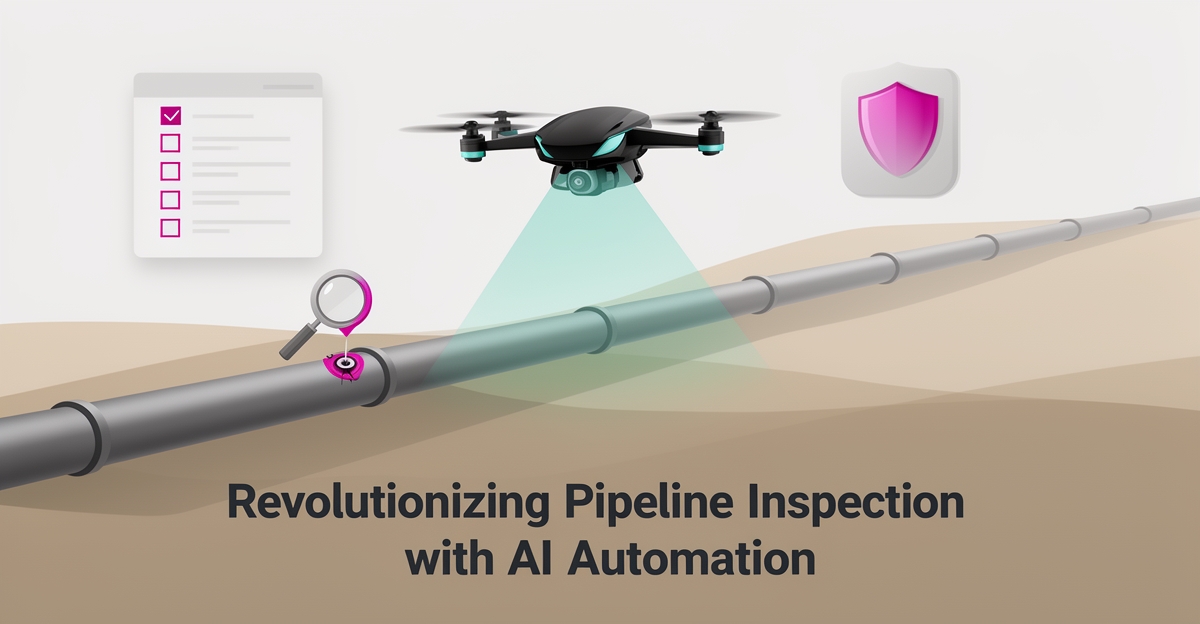
Computer vision ingests images and video from drones and ground sensors, flagging corrosion, coating damage and weld anomalies without human scrolling. Natural language processing parses field notes, voice logs and photos into standardized report fields, so data is consistent across sites and inspectors. Multi-agent workflows then route findings for validation, enrich records, and push completed reports into existing systems.
Pipeline teams gain faster close-outs and fewer rework cycles because defects are captured, classified and documented as they occur. Validation layers cross-check computer vision detections against sensor readings and historical baselines, reducing false positives and ensuring compliance evidence is complete. The result is audit-ready documentation that aligns with regulatory requirements without manual collation.
Automation also addresses the data fragmentation that slows reporting. Instead of end-of-day manual entry, AI organizes inspection data into a single source of truth:
- Capture: Images, video and sensor streams auto-tagged by location, asset ID and timestamp
- Organization: NLP extracts observations into structured fields for condition, severity and recommended action
- Validation: Multi-agent checks confirm completeness, flag missing evidence and enforce naming standards
- Delivery: Reports publish to operations systems with traceable audit trails for compliance
For pipeline construction firms, this means inspection becomes a continuous digital process rather than a periodic paperwork exercise. AIQ Labs builds custom AI document processing systems tailored to pipeline workflows, ensuring accuracy and regulatory alignment while reducing manual reporting burdens. Firms that want to start with a single high-cost workflow can explore AI Workflow Builds, while broader automation needs—like AI dispatchers or document-handling staff—are covered under AI Employees.
From Pilot to Production: Implementing AI Report Automation in Pipeline Operations
Starting with a clear workflow assessment is critical when introducing AI into pipeline inspection reporting. Pipeline construction firms should begin by mapping their current report generation process, identifying bottlenecks such as manual data entry, inconsistent formatting, or delays in regulatory validation. This foundational step ensures that any AI solution addresses real pain points rather than adding complexity, and targets the highest-impact areas first.
From there, firms can adopt a phased development approach using AIQ Labs' Build in Milestones model, which allows teams to validate each stage before moving forward. The first milestone might focus on automating data capture from field inputs—such as sensor readings, drone imagery, or inspector notes—into a structured format. Subsequent phases could include AI-driven defect detection, regulatory cross-checking, and automated report generation with audit trails. This incremental strategy reduces risk, enables early wins, and builds internal confidence in the system's reliability.
The final phase involves full deployment, team training, and ownership transfer, ensuring the pipeline company retains complete control over its AI system. Unlike point solutions that create dependency, AIQ Labs' True Ownership Model means clients receive full rights to the code, agents, and data upon completion. This empowers long-term scalability and continuous improvement without vendor lock-in. With SMB-friendly payment options—Start Monthly, Build in Milestones, or Own It Outright—pipeline firms can transition smoothly from pilot to production, turning inspection reporting from a manual burden into a streamlined, compliant, and intelligent operation.
Still paying for 10+ subscriptions that don’t talk to each other?
We build custom AI systems you own outright. No vendor lock-in. Full control.
Not sure where to start? Ask our AI planner
Frequently Asked Questions
How much time can AI actually save on manual site inspection reports in pipeline construction?
Does using AI for inspection reports improve accuracy?
Can AI inspection systems work with the drone and sensor data we're already collecting?
Will switching to AI report automation create compliance risks or audit issues?
Is AI inspection technology expensive to implement for mid-sized pipeline construction firms?
What happens if we want to own our AI inspection system outright instead of relying on a vendor?
Turning Inspection Data Into Operational Advantage
Pipeline construction teams no longer need to choose between thorough inspections and timely project delivery. By automating site inspection reports with AI, companies eliminate manual bottlenecks, reduce errors, and free field crews to focus on active construction rather than paperwork. This shift transforms inspection from a periodic compliance task into a continuous source of actionable intelligence—enabling faster close-outs, fewer rework cycles, and audit-ready documentation that aligns with regulatory demands. For firms ready to move beyond manual reporting, the path forward starts with understanding where AI delivers the highest impact in their specific workflows. Take the first step with a free, no-obligation strategy session to map your biggest inspection bottleneck and explore how custom AI document processing can streamline your operations—visit the Fit Check to begin.
Make AI your competitive advantage — not just another tool.
Strategy, implementation and ongoing optimization. One partner, end to end.
Not sure where to start? Ask our AI planner