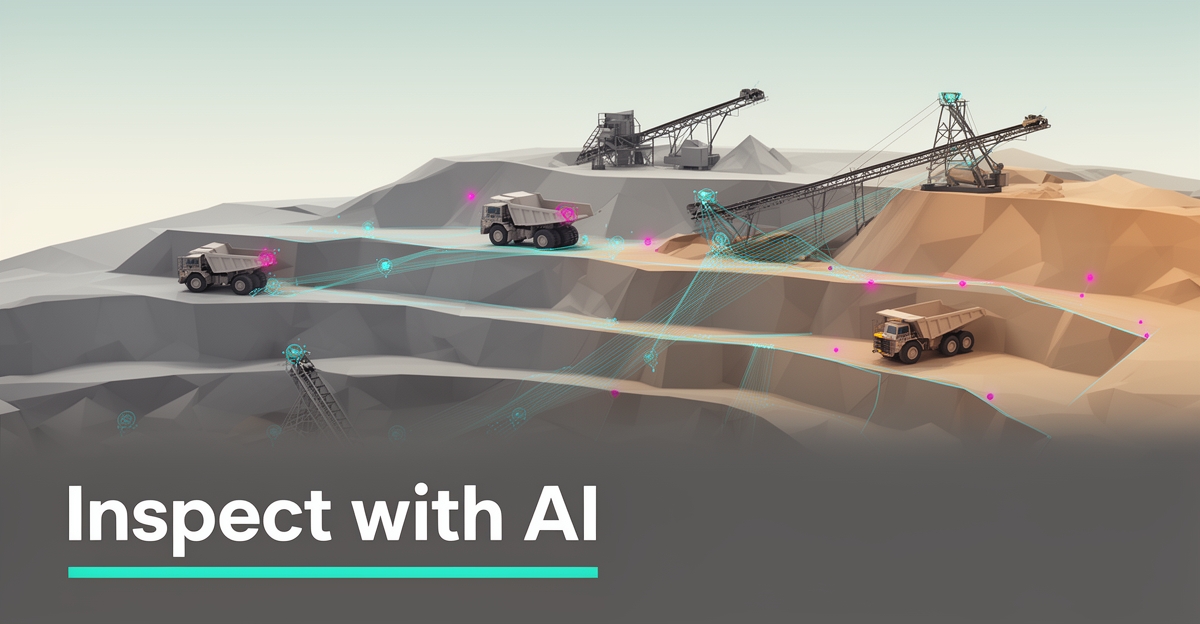
How Quarry Operators Can Automate Daily Site Inspections with AI
Key Facts
- Quarry operations are safety-regulated in many jurisdictions, which makes consistent, documented inspections a legal requirement, not just a best practice
- Workflow redesign—rebuilding the inspection process around AI rather than digitizing existing checklists—typically uncovers far more automation value than task-level speedups
- Open-source AI agent platforms have matured into production-ready frameworks with large, active communities as of late 2026
- Local files and CLI-based data access remain the fastest, most reliable context strategy for AI agents working with operational site data
- Continuous delivery practices (automated testing, staged rollouts) keep AI inspection systems updating safely without disrupting site operations
Hire a team member that works 24/7 — for less than a part-time wage.
AI receptionists, SDRs, dispatchers and 99+ roles. Trained on your business, fully managed.
Not sure where to start? Ask our AI planner
The Inspection Bottleneck Quarry Operators Face Daily
Quarry operators face a relentless daily burden of manual site inspections, where safety officers and supervisors must physically traverse vast, hazardous terrain to check equipment, monitor slope stability, and verify environmental controls. This process is not only time-intensive but inherently prone to human error, with fatigue, oversight, and inconsistent documentation increasing the risk of missed hazards or compliance gaps. Regulatory pressure to maintain safety standards adds urgency—quarry operations are safety-regulated in many jurisdictions—yet reactive oversight, addressing issues only after incidents occur, leads to costly downtime, equipment damage, and potential fines. Without continuous, real-time monitoring of critical site variables, operators remain trapped in a cycle of manual checks that drain labor resources while leaving room for preventable risks to escalate.
The pattern that shows up across industries is consistent: organizations that only digitize existing tasks see marginal gains, while those that redesign entire workflows around AI capabilities tend to uncover substantially more use cases and free up meaningfully more capacity. For quarries, this means shifting from periodic inspections to AI-driven systems that continuously track equipment health, detect subtle terrain shifts, and monitor dust or water runoff—providing instant alerts when thresholds are breached. Such proactive oversight transforms safety from a reactive checklist into a dynamic, always-on safeguard.
- Equipment status monitoring for wear, leaks, or operational anomalies
- Terrain change detection to identify slope instability or erosion risks
- Environmental risk tracking for air quality, water runoff, and noise levels
- Real-time alerting when safety thresholds approach critical levels
- Automated documentation for compliance reporting and audit trails
By embedding AI into the core inspection workflow—rather than layering it onto outdated processes—quarry operators can eliminate the bottlenecks of manual oversight. This is exactly the premise behind AIQ Labs' AI Workflow Builds: rebuild the one workflow that costs you the most, at a fixed price and in phases, so continuous monitoring arrives without adding headcount or disrupting existing teams. The result is not just time saved, but a fundamental shift toward predictive safety and operational resilience.
Redesign Inspections Around AI, Not Faster Checklists
What if the biggest mistake quarry operators make with AI isn't choosing the wrong tool, but asking the wrong question entirely? Most operations approach automation by trying to speed up existing inspection checklists, when the real breakthrough comes from completely reimagining how site monitoring works.
The difference between task optimization and workflow redesign isn't just semantic—it's operational. Field research on AI adoption consistently finds that organizations which redesign entire processes around AI capabilities discover more use cases, complete more work in the same timeframe, and outperform equally equipped peers that merely digitize existing tasks. The usability researcher Jakob Nielsen summarized the principle bluntly: profitable AI isn't about faster tasks, but about redesigning entire workflows.
For quarry operations, this means shifting the question from "How can AI fill out inspection forms faster?" to "How would we monitor this site if AI could watch everything continuously?"
The distinction matters because traditional inspections are inherently reactive. A supervisor walks the site, notes equipment status, photographs potential hazards, and files a report. By the time anyone reviews it, conditions have already changed. Workflow redesign flips this model entirely—AI systems monitor equipment sensors, track terrain changes through image analysis, and flag environmental risks in real time, escalating only genuine concerns to human operators.
This approach delivers four fundamental improvements:
- Continuous monitoring replaces periodic checks, catching issues between scheduled inspections
- Parallel processing allows simultaneous tracking of equipment, terrain, and environmental conditions
- Automated data collection eliminates manual documentation bottlenecks
- Exception-based alerts ensure humans focus on decisions, not data gathering
The technology infrastructure exists today. Open-source AI agent platforms have matured into production-ready frameworks with large, active communities as of late 2026, demonstrating how autonomous systems can maintain persistent monitoring, remember historical patterns, and act on schedules rather than waiting for prompts.
AIQ Labs approaches quarry inspections through this workflow redesign lens. Rather than digitizing paper checklists, the focus shifts to building custom AI systems that continuously track equipment performance, analyze terrain stability, and monitor environmental compliance—transforming inspections from scheduled events into ongoing operational intelligence.
The lesson is consistent: companies that treat AI as a faster pencil see marginal gains. Those that rebuild their processes around AI's unique capabilities—continuous monitoring, parallel analysis, pattern recognition across massive datasets—unlock fundamentally different operational models. For quarry operators, that difference translates directly into safer sites, fewer compliance gaps, and equipment failures caught before they become costly shutdowns.
How AI Agents Enable Continuous Site Oversight
Unlike traditional automation that waits for human triggers, modern AI agents operate continuously—checking task lists, remembering previous states, and acting on schedules without prompting. This fundamental shift enables quarry operators to maintain continuous operational oversight without adding headcount or manual checklists.
Today's agent platforms differ in approach: some emphasize rapid deployment with file-backed memory and container-based setup, while others focus on self-improvement, writing their own skills from experience to sharpen performance over time. What they share is the ability to run persistently, coordinate multiple monitoring tasks in parallel, and escalate only what needs a human decision.
For quarry environments, these agents excel at four critical oversight functions:
- Equipment tracking that monitors machinery status and location in real time
- Terrain change detection using sensor data to identify instability or unauthorized excavation
- Environmental risk alerts for dust, noise, or water quality thresholds
- Autonomous scheduling that coordinates inspections based on weather and operational tempo
Effective deployment requires careful context strategies. In practice, connecting agents to local files and CLI tools provides the fastest, most reliable data access, while browser-based agents remain the slowest and least reliable option for critical safety data.
Reliability also demands disciplined deployment practices. Automated testing, staged rollouts, and infrastructure-as-code keep AI agents updating safely without disrupting operations—the same continuous-delivery discipline that keeps production software stable, applied to safety-critical monitoring.
AIQ Labs implements these agent architectures with production-grade practices—200+ multi-agent systems deployed to date—ensuring quarry operators own their systems outright while maintaining the human-in-the-loop controls essential for safety-critical environments. The result is a site that monitors itself, flagging anomalies before they become incidents.
Implementation Roadmap for Quarry AI Inspections
Quarry inspections stall when teams wait for scheduled walks and manual checklists. Real-time oversight changes the game by redesigning the entire inspection workflow around continuous AI monitoring instead of faster forms.
Start by redesigning the inspection workflow around AI capabilities. Audit current site rounds and ask how the process would run if AI were native, not how AI can speed a checklist. Teams that remap entire production processes around AI consistently surface more automation opportunities across the value chain than those that digitize tasks one by one.
Build a controlled testing lab before site deployment. Create a sandbox environment with sample drone footage, sensor feeds, and equipment logs to validate detection models for terrain changes, equipment status, and environmental risks. This mirrors the practice of building a personal sandbox to safely experiment with workflows before production.
Select context strategies that match quarry data realities. Local files and CLI tools deliver the fastest and most reliable access for operational documents and logs, while structured connectors link agents to remote content. Browser agents remain the slowest and least reliable option for data access.
Establish AI-human collaboration with clear escalation rules. Define what the system autonomously logs, what it flags for review, and what requires immediate human intervention. Removing handoffs and moving humans to exceptions is where the real gains come from, with evaluation loops added for quality assurance.
Deploy with continuous-delivery principles for operational reliability. Frequent integration and automated testing keep inspection agents stable, and staged rollouts mean updates land without disrupting site operations.
Measure impact with operational metrics tied to safety and uptime. Track time saved per inspection round, quality improvements in risk detection, and new capabilities unlocked such as 24/7 monitoring of remote benches.
AIQ Labs supports this roadmap through AI Workflow Builds for the inspection workflow itself and managed AI Employees that track equipment, terrain changes, and environmental risks in real time—typically at a fraction of the cost of an additional human hire. The ownership model means quarry operators build production-ready inspection systems without vendor lock-in.
A practical rollout sequence includes:
- Workflow redesign workshop to map current inspection steps and AI leverage points
- Testing lab setup with historical site data and simulated alerts
- Pilot deployment on a single pit or haul route with human-in-the-loop validation
- Staged rollout process for model updates and integration with existing operations tools
- Scale across site with measurement of time saved, compliance improvements, and incident reduction
For larger operations, an AI Operating System can connect inspections with dispatch, maintenance, and compliance into one operating layer—built in phases and owned outright.
Still paying for 10+ subscriptions that don’t talk to each other?
We build custom AI systems you own outright. No vendor lock-in. Full control.
Not sure where to start? Ask our AI planner
Frequently Asked Questions
How does AI automate quarry site inspections?
What are the benefits of redesigning workflows around AI for quarry operations?
How do AI agents improve safety compliance in quarries?
What should quarry operators look for in an AI agent platform?
How can quarry operators start implementing AI-driven inspections?
What role does deployment discipline play in AI inspection systems?
From Checklists to Continuous Safety: Your Path Forward
Quarry operators no longer need to choose between safety and efficiency—AI-driven workflow redesign delivers both. By shifting from periodic manual inspections to continuous, intelligent monitoring of equipment, terrain, and environmental risks, sites gain real-time oversight that catches issues before they escalate. This approach eliminates documentation bottlenecks, reduces human error, and allows teams to focus on critical decisions rather than routine checks. To begin, audit your current inspection process and ask how it would function if AI were native to your workflow—not how it can speed up existing checklists. Start small with a controlled test lab using historical site data, then pilot on a single pit before scaling. AIQ Labs supports this journey through AI Workflow Builds, managed AI Employees, and full AI Operating Systems—built in phases, priced transparently, and owned outright, with no vendor lock-in. Take the first step with the two-minute Fit Check, then book a free 30-minute strategy call to map your highest-impact automation opportunity—no obligation, just clarity on how AI can work for your quarry.
Make AI your competitive advantage — not just another tool.
Strategy, implementation and ongoing optimization. One partner, end to end.
Not sure where to start? Ask our AI planner