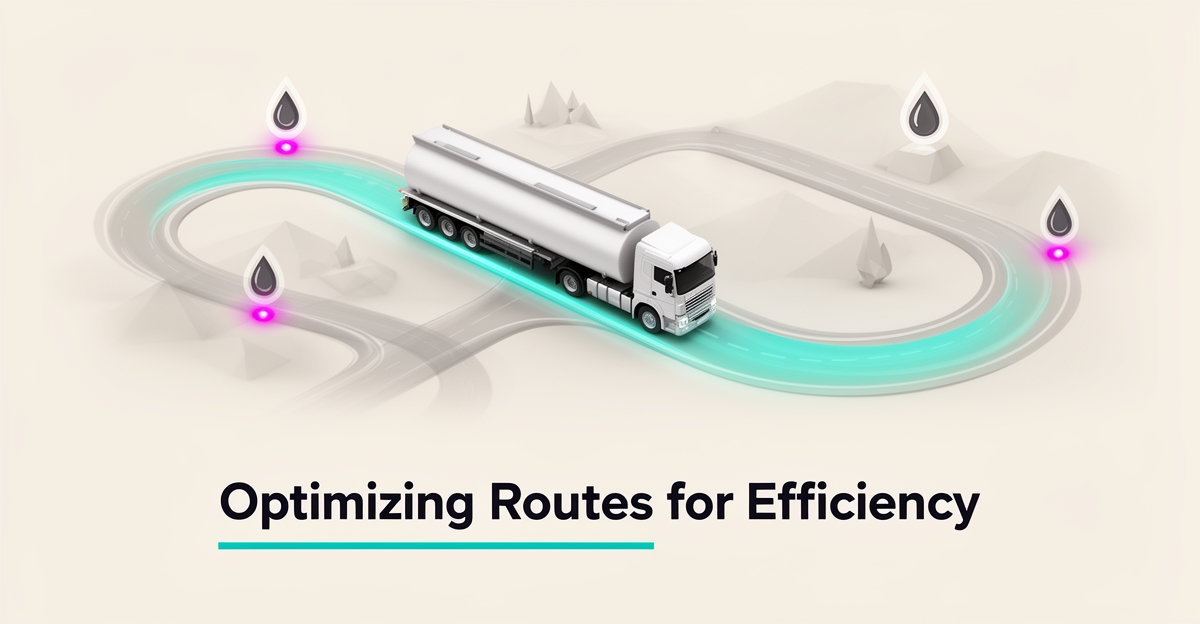
How Tanker Trucking Companies Can Cut Fuel Waste with AI-Powered Route Optimization
Key Facts
- Industry research reports AI route optimization can cut idling time by roughly 22% and save around 15% on fuel costs for long-haul fleets according to Gitnux
- AI load balancing algorithms have been reported to increase truck utilization by up to 28% and reduce empty miles by around 19% per Gitnux
- Predictive traffic AI has reduced average trip times by roughly 17% for cross-country hauls in North America based on Gitnux data
- AI-powered platooning has shown fuel savings of roughly 12–15% on highways for convoys of 3+ trucks as reported by Gitnux
- Real-time AI dispatch systems have been reported to boost fleet productivity by around 25% and handle up to 40% more loads per driver per Gitnux research
- AI demand forecasting has cut overstocking in trucking logistics by roughly 31% and improved inventory flow according to Gitnux
- Dynamic pricing AI for freight matching has been reported to reduce negotiation time by around 45% and improve turnaround efficiency per Gitnux data
Hire a team member that works 24/7 — for less than a part-time wage.
AI receptionists, SDRs, dispatchers and 99+ roles. Trained on your business, fully managed.
Not sure where to start? Ask our AI planner
The Hidden Cost of Inefficient Routing in Tanker Trucking
Static routes look safe on paper, but for tanker fleets they quietly drain margin every mile. Fuel burn, deadhead, and idle time compound when plans are built on yesterday's traffic and yesterday's loads.
Tanker operations face unique pressure points. Weight restrictions, hazardous material windows, and appointment-based deliveries leave little room for detours. When routing is fixed, trucks wait at loading racks, circle for backhauls, or roll empty between jobs. That waiting is expensive.
According to industry research, AI route optimization has been reported to cut idling time by roughly 22% and save around 15% on fuel costs for long-haul fleets. For tanker carriers where fuel is a top line item, idle reduction directly protects gross profit.
Empty miles are the second leak. Industry data suggests AI load balancing algorithms can increase truck utilization by up to 28% and reduce empty miles by around 19%. Poor load balancing forces tankers to reposition without product, burning fuel for zero revenue.
Static planning also amplifies congestion risk. Predictive traffic AI has been reported to reduce average trip times by roughly 17% for cross-country hauls in North America, per Gitnux data. Without real-time adjustments, drivers sit in queues that spike both idle hours and emissions.
The cost shows up in three compounding areas:
- Idle engine hours at terminals and customer sites that add fuel burn with no miles gained
- Empty backhauls and deadhead repositioning driven by mismatched supply and demand
- Missed delivery windows that trigger detention fees and erode customer trust
These inefficiencies are not driver error. They are system constraints. Manual dispatch cannot re-optimize continuously for traffic, weather, and load availability.
AI-driven route planning changes the equation by analyzing traffic, load patterns, and real-time weather to compress waste. This is where an AI Workflow Build applies to fleet operations: AIQ Labs rebuilds the one workflow that costs you the most—dispatch and routing—replacing rigid schedules with adaptive plans that integrate with your existing fleet management tools at a fixed price, in phases.
AIQ Labs builds systems that connect to the tools tanker teams already use, so optimization happens inside daily workflows rather than on a separate dashboard. The result is less fuel waste, fewer idle hours, and higher asset utilization without adding headcount.
How AI-Powered Route Optimization Reduces Fuel Waste and Idle Time
AI-powered route optimization transforms how tanker trucks move by continuously analyzing traffic patterns, weather conditions, and load data in real time. This dynamic approach minimizes unnecessary stops and detours, directly addressing two of the biggest sources of fuel waste: idling and inefficient routing. By adjusting routes on the fly based on live congestion reports and predictive analytics, fleets avoid bottlenecks before they form, keeping engines running efficiently and reducing the time trucks spend waiting in traffic or at delivery points. According to Gitnux research, this real-time intelligence has been reported to cut idling time by roughly 22% for long-haul fleets, translating directly into lower fuel consumption and reduced engine wear. The same data suggests AI route optimization can save around 15% on fuel costs by eliminating wasteful mileage and optimizing speed profiles for maximum efficiency.
Beyond immediate fuel savings, AI-driven routing enhances overall fleet productivity through smarter load management and reduced deadhead miles. When AI systems analyze historical load patterns alongside real-time demand signals, they can dynamically match available tanker capacity with nearby backhaul opportunities, ensuring trucks carry revenue-generating freight on both legs of a trip. This capability has been reported to increase truck utilization by up to 28% while reducing empty miles by around 19%. AI load balancing algorithms achieve this by continuously reevaluating route options not just for speed, but for payload efficiency—prioritizing paths that minimize empty return trips and maximize asset use. For tanker operators, where every gallon of fuel and every mile driven impacts profitability, this dual focus on route intelligence and load optimization creates compounding savings.
The cumulative effect of these improvements is a more agile, cost-effective operation that adapts to changing conditions without sacrificing reliability. AI platforms integrated with existing fleet management tools—like those AIQ Labs builds—enable seamless data flow between telematics, scheduling systems, and route engines. This interoperability ensures that optimization decisions are informed by real-time vehicle status, driver hours, and cargo requirements, preventing suboptimal routing that could lead to delays or compliance risks. Predictive traffic AI further refines this process by forecasting congestion in advance, and has been reported to reduce average trip times by roughly 17% for cross-country hauls, allowing drivers to maintain steady speeds that conserve fuel. These anticipatory adjustments not only cut fuel use but also improve on-time delivery performance, a critical factor in maintaining customer trust in time-sensitive liquid transport.
Ultimately, AI-powered route optimization doesn't just save fuel—it redefines operational efficiency by turning static routes into responsive, data-driven journeys. By continuously learning from traffic patterns, weather impacts, and load fluctuations, these systems uncover inefficiencies invisible to manual planning. The result is a fleet that runs leaner, cleaner, and more profitably, with measurable reductions in idle time, fuel consumption, and empty miles. For tanker trucking companies facing volatile fuel prices and tightening margins, this level of precision isn't just advantageous—it's becoming essential for sustainable operations in a competitive market where every percentage point of efficiency gain strengthens the bottom line.
Implementing AI Route Optimization with AIQ Labs: From Integration to ROI
Implementing AI route optimization with AIQ Labs starts with the workflow that costs you the most. Through AI Workflow Builds, the team rebuilds your dispatch-and-routing workflow at a fixed price, in phases—connecting dispatch software, telematics platforms, and maintenance logs through two-way API integrations so real-time inputs like traffic, weather, and load patterns feed directly into routing decisions. No full system overhaul required, and no data silos left behind.
For ongoing coverage, AI Employees can take on roles like automated dispatchers or logistics agents, continuously monitoring route performance and adjusting plans in real time based on changing conditions. These managed AI staff work 24/7 alongside your team at roughly 80% less cost than a human hire, reducing the burden on human planners while improving responsiveness to delays or last-minute load changes. And for carriers ready to go further, an AI Operating System connects routing, dispatch, billing, and compliance into one operating layer—built in phases and owned outright by you.
Payment is structured to fit your risk profile: Start Monthly to prove value, Build in Milestones as each phase delivers, or Own It Outright once the system is core to your operation. AIQ Labs has deployed 200+ multi-agent systems and runs four live SaaS products daily—so the work is grounded in systems that actually operate, not slideware. The result is measurable efficiency: less idling, lower fuel burn, fewer empty miles, and a routing capability you own rather than rent.
Still paying for 10+ subscriptions that don’t talk to each other?
We build custom AI systems you own outright. No vendor lock-in. Full control.
Not sure where to start? Ask our AI planner
Frequently Asked Questions
How much can AI route optimization reduce fuel costs for tanker trucking companies?
Will implementing AI route optimization require replacing my current fleet management software?
How does AI reduce idle time for tanker trucks at terminals and customer sites?
Can AI help reduce empty miles or deadhead trips for tanker fleets?
Is AI route optimization only beneficial for long-haul tanker operations?
What kind of ROI can I expect from implementing AI route optimization with AIQ Labs?
From Static Routes to Adaptive Profit
Tanker trucking margins are being eroded mile by mile by static planning — idle hours at racks, empty backhauls, and detours that burn fuel with no revenue. AI-powered route optimization changes that equation by continuously analyzing traffic, weather, load patterns and real-time demand to compress waste where it hurts most. The result is less idling, fewer empty miles, and more reliable deliveries without adding headcount. For carriers where fuel is a top line item, those gains compound into protected gross profit and higher asset utilization. This is where an AI Workflow Build applies directly to fleet operations, replacing rigid schedules with adaptive plans that live inside the tools your dispatch team already uses. AIQ Labs builds systems that connect to existing fleet management, telematics and scheduling platforms so optimization happens in daily workflows, not on a separate dashboard — and you own the system outright once it's built. If you want to see where the biggest fuel and idle leaks are in your operation, start with a focused assessment of your current KPIs and integration points. Take the two-minute Fit Check at aiqlabs.ai/apply, then book a free 30-minute strategy call at aiqlabs.ai/book to map your bottleneck and identify high-ROI automation opportunities — no pitch, just a working session with an AI engineer.
Make AI your competitive advantage — not just another tool.
Strategy, implementation and ongoing optimization. One partner, end to end.
Not sure where to start? Ask our AI planner