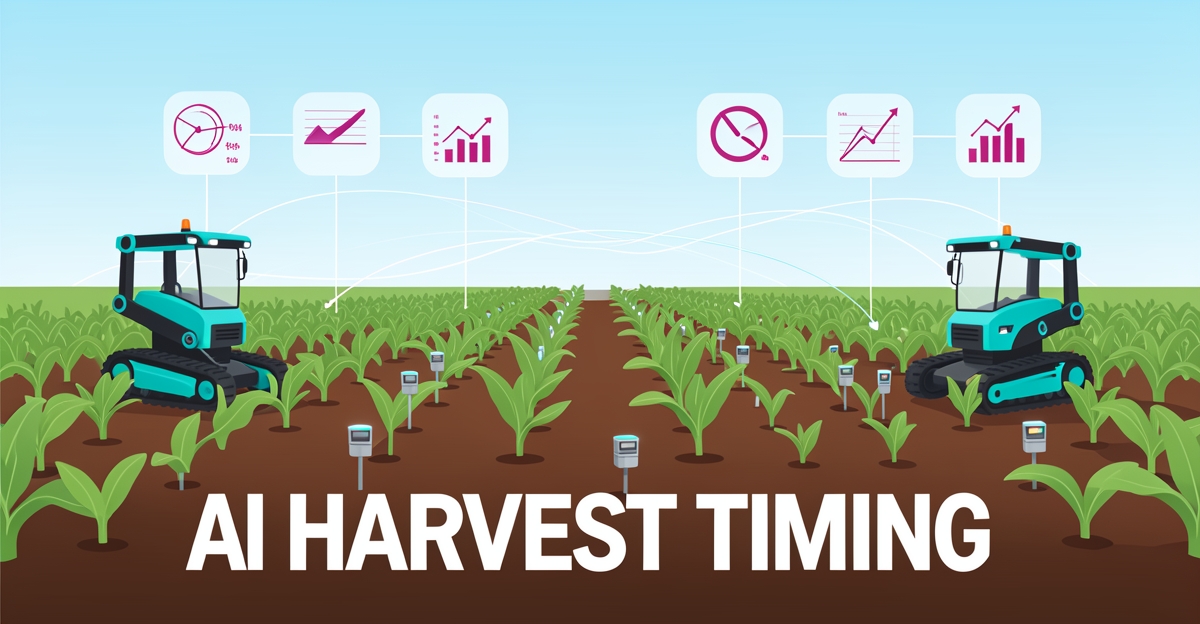
How to Automate Harvesting Operations with AI in AgriTech
Key Facts
- AI operating systems automate disease detection across every acre in real time by combining satellite imagery, soil sensors, and weather data according to agricultural AI comparison research
- Manufacturers using AI-driven demand forecasting have reported material waste reductions on the order of 18% and order fulfillment gains near 25% per manufacturing optimization data
- Predictive maintenance using sensor data and pattern recognition has been credited with reducing unplanned manufacturing downtime by roughly 30% according to industrial AI research
- AI vision adoption for quality inspection has crossed 40% in some manufacturing sectors per manufacturing technology adoption data
- Granular tracks input costs and field operations, filling a record-keeping gap that manual processes handle poorly at scale according to AgriTech platform analysis
- AI employees from AIQ Labs typically cost around 80% less than an equivalent human hire while working around the clock per AIQ Labs cost comparison data
- AIQ Labs has deployed 200+ multi-agent systems and runs 4 live SaaS products daily per company portfolio metrics
Hire a team member that works 24/7 — for less than a part-time wage.
AI receptionists, SDRs, dispatchers and 99+ roles. Trained on your business, fully managed.
Not sure where to start? Ask our AI planner
The Hidden Costs of Manual Harvesting: Why Timing and Labor Decisions Fail
Harvest timing decisions made on static schedules or sporadic field walks routinely miss the narrow physiological window where yield and quality peak. When operations rely on human judgment alone, coverage gaps widen with every additional acre, leaving critical blocks unmonitored during rapid maturation events. Research comparing agricultural AI operating systems against manual processes highlights a fundamental limitation: experienced scouts offer contextual depth but limited coverage, while AI platforms automate disease detection across every acre in real time by combining satellite imagery, soil sensors, and weather data.
- Missed optimal harvest windows that reduce marketable yield and quality premiums
- Labor crews deployed too early or too late, inflating overtime costs and idle time
- Inconsistent record-keeping that obscures input costs and field-level profitability
- Reactive decisions driven by weather surprises rather than predictive modeling
The cost of these failures compounds silently. A comparison of AI operating systems versus manual processes notes that platforms like Granular track input costs and field operations, filling a record-keeping gap that manual processes often handle poorly at scale. Without continuous data streams, managers allocate crews based on yesterday's observations, not today's reality. This disconnect mirrors challenges in industrial manufacturing, where AI-driven demand forecasting and shift scheduling have been credited with material waste reductions around 18% and order fulfillment gains near 25% by replacing static plans with dynamic optimization. In harvesting, the same principle applies: when labor allocation follows predictive models instead of rigid calendars, crews hit fields at peak readiness, not peak availability.
AIQ Labs helps agribusinesses close this gap through AI Workflow Builds that rebuild the one harvest workflow costing you the most—at a fixed price, in phases—or full AI Operating Systems that ingest real-time sensor feeds, weather models, and historical yield data to forecast harvest windows and automate field workflow decisions. The shift from reactive scouting to predictive operations doesn't just save labor—it captures the full genetic potential of every variety planted.
How AI Optimizes Harvest Timing and Workflow Using Real-Time Field Data
The difference between a profitable harvest and a costly one often comes down to a 48-hour window that most operations still determine by gut instinct and calendar habit. Artificial intelligence replaces that guesswork with continuous, data-driven precision.
Modern agricultural AI systems operate much like the predictive maintenance platforms transforming factory floors. Just as manufacturers have reported roughly 30% reductions in unplanned downtime using sensor data and pattern recognition, AgriTech platforms analyze real-time field conditions to trigger harvest decisions at the exact moment of peak crop value.
Effective harvest optimization requires synthesizing three distinct data streams. AI platforms combine satellite imagery, soil sensors, and weather data to create a unified operational picture, automating decisions that were previously manual and fragmented.
These systems process:
- Soil and microclimate sensors that track moisture levels and temperature fluctuations at the root zone
- Multispectral satellite imagery that detects crop stress and maturity variations invisible to the human eye
- Hyperlocal weather forecasting that predicts frost, precipitation, and heat events days in advance
- Historical yield data that identifies patterns across growing seasons and field zones
The result is a mathematical approach to harvest timing. Rather than relying solely on field walks and experience, these platforms optimize inputs mathematically, transforming decision-making from intuition-based to data-driven.
The true power emerges when prediction triggers workflow automation. Advanced systems do not simply alert farmers to optimal harvest windows; they automatically coordinate labor schedules, equipment deployment, and logistics based on forecasted readiness.
This mirrors the broader industrial shift where AI extends precision beyond machines to decisions and planning. In manufacturing, smart production planning has been credited with material waste reductions around 18% through machine learning models. Agriculture applies the same logic: by predicting exact harvest windows, operations minimize crop loss from over-ripening or weather damage while maximizing labor efficiency.
AIQ Labs builds custom systems that integrate these predictive capabilities directly into operational workflows, ensuring that when the data indicates a 36-hour optimal window, the entire operation—from crew scheduling to transport coordination—aligns automatically.
Unlike static calendar-based planning, AI systems improve with each season. They analyze the outcomes of previous harvest decisions against actual yield quality, refining their maturity models to account for specific varietals and microclimates.
This adaptive capability proves essential as climate patterns shift. Systems that once relied on historical averages now adjust in real time, ensuring that harvest timing remains optimal even as traditional growing seasons become less predictable.
Building Your Custom AI Harvesting System: From Data to Decision Automation
Most harvesting operations fail not from lack of data, but from drowning in disconnected spreadsheets and gut-feel decisions. Building a custom AI system transforms that chaos into a unified decision engine that predicts harvest windows and orchestrates field workflows automatically.
Start by integrating your data streams into a single source of truth. Modern AI systems in agriculture combine satellite imagery, soil sensors, and weather data to automate crop monitoring and irrigation scheduling, replacing manual scouting that offers limited coverage despite deep contextual knowledge. Your custom system should ingest real-time field sensor readings, historical yield data, and meteorological forecasts to establish baseline patterns. This integration phase typically reveals that manual record-keeping handles scale poorly, creating gaps that AI fills with mathematical precision.
Next, train predictive models on your specific crop cycles and local conditions. Machine learning algorithms excel at pattern recognition, delivering operational improvements similar to those seen in precision manufacturing, where predictive maintenance using sensor data has been credited with roughly 30% reductions in unplanned downtime. In agriculture, these same principles forecast optimal harvest windows by analyzing maturity indicators against weather predictions, while computer vision systems—already reaching 40% adoption for quality inspection in some industrial sectors—can grade produce and detect defects at machine speed.
Workflow orchestration represents the final automation layer. Your AI should trigger specific actions based on model outputs: alerting crews when fields hit target moisture levels, rerouting harvesters to priority blocks, or adjusting labor schedules dynamically. This mirrors agentic AI systems that execute complex workflows by coordinating maintenance schedules and monitoring supply chains, but applied to field operations.
Key implementation steps include:
- Establishing API connections between field sensors, weather services, and equipment telematics
- Training computer vision models on your specific crop varieties and quality standards
- Configuring decision rules for labor allocation based on predicted yield volumes
- Building failsafes for human override when conditions exceed model confidence thresholds
AIQ Labs approaches this through a phased methodology that moves from data integration to model training to full decision automation, built in milestones so you pay as value lands—and you own the resulting system outright. Rather than forcing generic software subscriptions, this builds a custom AI operating system tailored to your specific crops and terrain. If you'd rather start smaller, an AI employee—a dispatcher, scheduler, or record-keeper working around the clock for roughly 80% less than a human hire—can take over the administrative load while you plan the bigger build.
The transition from manual to AI-driven harvesting doesn't require replacing human judgment—it amplifies it. By automating the mathematical optimization of inputs and timing, your team focuses on strategic decisions while the system handles real-time field coordination.
Still paying for 10+ subscriptions that don’t talk to each other?
We build custom AI systems you own outright. No vendor lock-in. Full control.
Not sure where to start? Ask our AI planner
Frequently Asked Questions
How does AI improve harvest timing compared to traditional methods?
What specific data sources do AI harvesting systems use to make decisions?
Can AI really reduce labor costs in harvesting operations?
How does AI handle unexpected weather changes during harvest season?
Is it necessary to replace my current farm management software to use AI for harvesting?
What proof is there that AI improves profitability in agriculture?
From Harvest Guesswork to Predictive Operations
Harvesting profit is decided in a narrow window that static schedules and sporadic field walks routinely miss. The article shows how manual judgment creates coverage gaps, mistimed crews, and reactive decisions, while AI platforms combine satellite imagery, soil sensors, and hyperlocal weather to forecast readiness and automate labor and logistics in real time. The same shift seen in manufacturing — where predictive maintenance using sensor data has been credited with cutting unplanned downtime by roughly 30% using sensor data and pattern recognition — applies directly to the field: prediction triggers workflow, not just alerts. Building a custom system means unifying data streams, training models on your varietals and microclimates, and orchestrating actions from crew alerts to transport coordination with human override safeguards. If you want to move from reactive scouting to predictive operations, start with the 2-minute Fit Check at https://aiqlabs.ai/apply to book a free 30-minute strategy call with an AI engineer, or reach the team directly at [email protected].
Make AI your competitive advantage — not just another tool.
Strategy, implementation and ongoing optimization. One partner, end to end.
Not sure where to start? Ask our AI planner