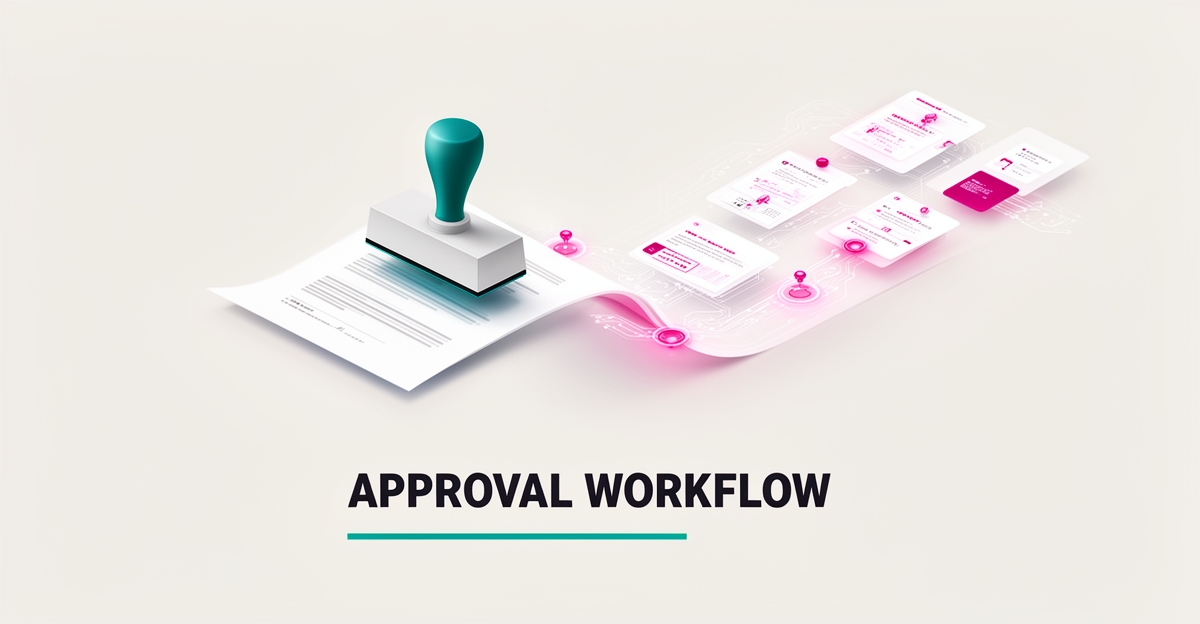
How to Automate the Stamp Approval Process with AI
Key Facts
- Modern workflow platforms like Microsoft Power Automate combine AI, digital, and robotic process automation to handle business processes across apps and systems.
- Structured AI workflows split into distinct stages—request, plan, change, preview, approve, monitor—run with minimal manual intervention.
- AI automation typically lets businesses handle larger volumes with the same or only slightly higher staffing levels.
- Interactive forms paired with AI can trigger instant automated analysis the moment a client submits a design.
- Manual data entry and review cycles commonly consume many hours weekly in approval-heavy workflows—time that API-integrated AI systems can largely eliminate.
- AIQ Labs has deployed 200+ multi-agent systems and runs 4 live SaaS products daily, so these workflows are proven in production, not theory.
Hire a team member that works 24/7 — for less than a part-time wage.
AI receptionists, SDRs, dispatchers and 99+ roles. Trained on your business, fully managed.
Not sure where to start? Ask our AI planner
The Hidden Cost of Manual Stamp Approval Workflows
The hidden cost of manual stamp approval workflows often goes unnoticed until bottlenecks become severe. Every design revision, feedback delay, and production trigger adds up, creating operational drag that scales with demand. Replacing repetitive manual tasks with intelligent systems frees up time for the work that actually requires human judgment—directly addressing the inefficiencies built into manual review cycles.
Manual design reviews consume disproportionate time, especially when stakeholders are spread across time zones or juggle competing priorities. Feedback collection becomes fragmented—emails get buried, comments are inconsistent, and version control breaks down. This fragmentation leads to errors, as approvers may work off outdated files or miss critical annotations. AI-driven classification and routing can sort incoming requests and assign them to the correct workflow automatically, while data extraction pulls structured details from submissions—eliminating the need to manually parse emails or forms for essential information.
Production triggers further compound the delay. Without automated handoffs, teams must manually confirm approvals before initiating fabrication, adding avoidable lag. Structuring workflows into distinct stages—request, plan, change, preview, approve, monitor—minimizes manual intervention while maintaining control. Yet in manual setups, the approval step itself frequently becomes the bottleneck, as teams wait for human sign-offs that could be streamlined with predefined rules and notifications.
These inefficiencies aren't just inconvenient; they directly impact throughput and error rates. Businesses relying on manual processes typically find they cannot scale without proportional increases in headcount—a limitation AI automation overcomes by handling larger volumes with the same or only slightly higher staffing levels. For stamp businesses facing growing custom order volumes, this operational drag translates to missed deadlines, frustrated clients, and lost revenue—costs that accumulate silently with every delayed approval.
How AI Transforms Stamp Approval into a Self-Service Workflow
AI transforms the stamp approval process into a self-service workflow by automating the entire cycle of design review, feedback collection, validation, and production triggering—without manual handoffs. The system classifies incoming requests, extracts structured data from client submissions, and routes them through predefined business rules, ensuring only compliant designs advance to the approval stage. This replaces repetitive manual tasks like email sorting and data entry with intelligent workflows that free up human time for higher-value work.
The workflow begins when a client submits a stamp design through an intelligent form—replacing static email threads with an interactive interface that captures all necessary details upfront. Upon submission, AI analyzes the design for key attributes such as dimensions, text content, and visual elements, extracting structured data that feeds directly into validation logic. Form submission activates AI analysis, which then calculates compliance or routes the design for review—the same pattern used across modern automation platforms like Microsoft Power Automate. By automating these initial steps, businesses eliminate bottlenecks caused by delayed human intervention and ensure consistent application of approval criteria.
Critical to maintaining quality, the system incorporates a human-in-the-loop checkpoint for final approval—preserving client oversight while automating everything leading up to it. AI handles classification, data extraction, and rule validation, but the final "approve" decision remains with the client, ensuring aesthetic and brand-aligned outcomes. This balanced approach reflects best practice in intelligent document processing, where AI handles the bulk of routine work but relies on human review for exception handling and quality assurance. The preview-approval loop acts as a safety net, allowing clients to visualize the stamp in context before giving final sign-off, reducing errors and rework.
Once approved, the system automatically triggers production workflows—sending validated designs to manufacturing, updating inventory systems, and notifying stakeholders—all without manual steps. This end-to-end automation creates a closed-loop process where client self-service drives efficiency: designs move from submission to production in a fraction of the traditional time. For stamp businesses, this means faster turnaround, fewer errors, and the ability to scale approval volume without proportional increases in staff. By combining AI's precision in repetitive tasks with human judgment for subjective decisions, the workflow delivers both speed and quality—turning a common pain point into a competitive advantage.
AI-powered stamp approval reduces manual effort while preserving client control, creating a self-service system that accelerates delivery without sacrificing quality. This is exactly the kind of end-to-end solution AIQ Labs delivers through its [AI Workflow Builds](/workflow-builds)—rebuilding the one workflow that costs you the most, at a fixed price, in phases you approve as they ship.
To explore how this automation can be tailored to your stamp business's unique workflow, [start the two-minute Fit Check](/apply) and book a free 30-minute strategy call with an AI engineer who'll map your biggest bottleneck and identify high-ROI opportunities. If there isn't a clear win, we'll say so—no pitch, just clarity.
Implementing Your AI Stamp Approval System with AIQ Labs
Deploying an AI-powered stamp approval system begins with mapping your current workflow to identify friction points where manual reviews slow down delivery. AIQ Labs' discovery phase analyzes how designs move from creation to client feedback, production triggers, and final sign-off—pinpointing automation opportunities that align with your business goals. This foundational step ensures the solution targets real bottlenecks, not just theoretical improvements, setting the stage for measurable efficiency gains.
During the build, AIQ Labs develops custom AI agents tailored to your stamp approval process, handling feedback collection and rule validation with precision. These agents use multi-agent orchestration to review design specifications against brand guidelines, extract feedback from client communications, and validate technical requirements—decomposing complex tasks into manageable, verifiable steps. Each agent is trained on your specific data, ensuring outputs reflect your quality standards while reducing manual effort in repetitive checks. And because AIQ Labs has deployed 200+ multi-agent systems and runs 4 live SaaS products daily, these patterns are battle-tested in production.
Integration connects these AI agents to your existing tools, creating a seamless flow from design software to CRM and production systems. Deep two-way API integrations automatically route approved stamps to fulfillment, update client records in real time, and maintain audit trails for compliance—eliminating the manual data entry that bogs down similar workflows. With AIQ Labs' Build in Milestones payment model, you approve and pay for each phase as it ships, and you own every component outright. For businesses that want ongoing capacity without hiring, managed [AI Employees](/ai-employees) can handle intake, follow-ups, and dispatch around your approval workflow. Start the Fit Check at [aiqlabs.ai/apply](/apply) to begin your free strategy call and map your highest-impact automation opportunity.
Still paying for 10+ subscriptions that don’t talk to each other?
We build custom AI systems you own outright. No vendor lock-in. Full control.
Not sure where to start? Ask our AI planner
Frequently Asked Questions
How does AI actually reduce manual effort in stamp approval workflows?
Will I lose control over the final approval if I use an AI system for stamp design reviews?
Can AI really scale with my growing custom order volume without needing more staff?
What happens after a stamp design is approved in an AI-powered workflow?
Is it difficult to integrate an AI stamp approval system with my existing design and CRM tools?
How do I know if automating my stamp approval process is worth the investment?
Turn Stamp Approval from a Bottleneck into Your Competitive Edge
Manual stamp approval workflows quietly erode efficiency—delayed feedback, version confusion, and production holdups add up to missed deadlines and frustrated clients. By automating classification, data extraction, and rule-based validation with AI, businesses reclaim time spent on repetitive tasks while preserving client control over final aesthetic decisions. The result is a self-service workflow where designs move from submission to production faster, with fewer errors and no need to scale headcount proportionally. AIQ Labs builds these end-to-end systems as owned assets—through fixed-price [AI Workflow Builds](/workflow-builds) or a fully connected [AI Operating System](/ai-operating-systems)—integrating seamlessly with your existing tools to eliminate operational friction. If you're ready to see where your stamp approval process is losing time and revenue, [start the Fit Check](/apply) and book a free, no-obligation strategy call—no pitch, just clarity.
Make AI your competitive advantage — not just another tool.
Strategy, implementation and ongoing optimization. One partner, end to end.
Not sure where to start? Ask our AI planner