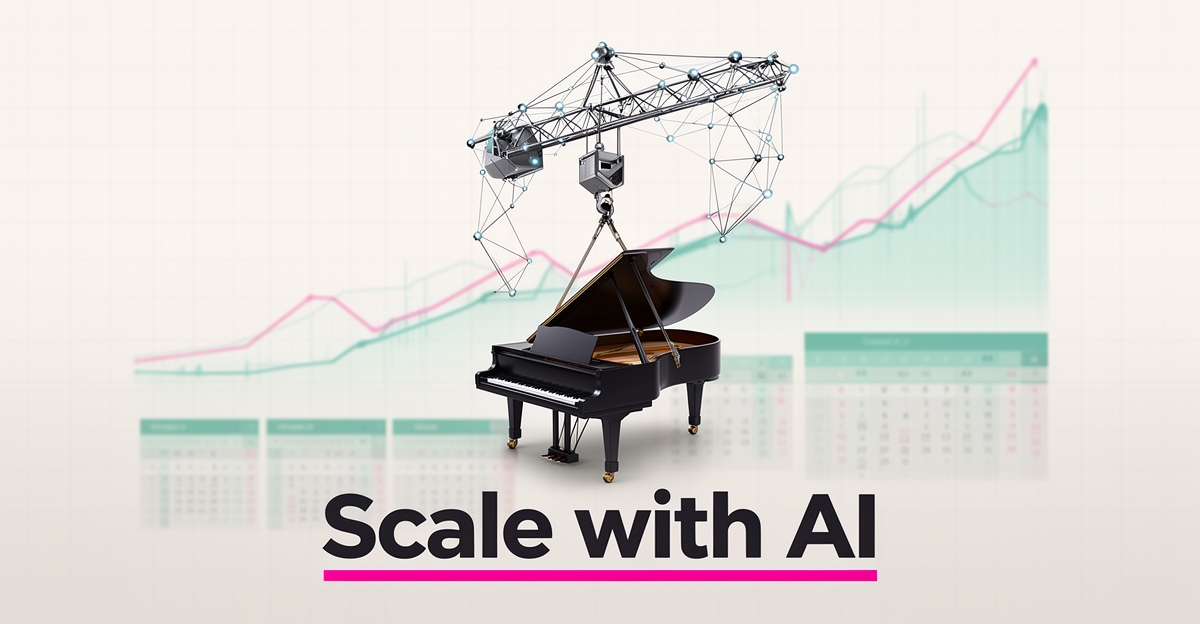
How to Build a Scalable Piano Moving Business with AI-Driven Workforce Planning
Key Facts
- AI agents could drive $190B–$385B in U.S. ecommerce spending by 2030 according to industry analysis
- LLM referral-driven online orders grew over 1,000% year over year by late 2025 per industry insights
- 30 to 45 percent of U.S. consumers already use generative AI for purchase decisions as noted in retail trends
- The global AI market has been projected to exceed $244 billion per market forecasts
- Automation is expected to grow considerably through 2027 per Statista data
- AI-driven forecasting can significantly reduce time spent on manual planning tasks per industry research
- Incremental recalculation enables unattended operations by updating only affected schedules when variables change as defined in technical frameworks
Hire a team member that works 24/7 — for less than a part-time wage.
AI receptionists, SDRs, dispatchers and 99+ roles. Trained on your business, fully managed.
Not sure where to start? Ask our AI planner
The Hidden Cost of Manual Scheduling in Piano Moving
The true cost of manual scheduling in piano moving isn't just in overtime pay or idle crews—it's in missed opportunities and eroded trust. When staffing decisions rely on gut feeling or spreadsheets, businesses routinely overstaff during slow periods, burning through payroll without generating revenue, while understaffing during peak seasons leads to rushed jobs, damaged instruments, and frustrated customers. This imbalance directly hits profitability and damages reputation in a service industry where precision and reliability are non-negotiable. As AI-driven booking agents become more prevalent—projected to influence $190 billion to $385 billion in U.S. ecommerce spending by 2030—legacy systems that can't distinguish between human and AI-initiated requests risk rejecting legitimate automated moves, treating them as suspicious bot traffic according to industry analysis. This creates a dual threat: lost revenue from blocked bookings and operational chaos from manual workarounds.
The competitive gap is widening fast, especially as automation continues to grow considerably through 2027 per market forecasts. Piano moving firms still dependent on manual scheduling will struggle to scale as demand fluctuates, unable to dynamically adjust crew sizes based on real-time data like weather, traffic, or last-minute cancellations. Unlike human planners who rebuild entire schedules from scratch after each change, AI systems apply incremental recalculation principles—updating only affected routes and staff when a single variable shifts, much like incremental software compilation as defined in technical frameworks. This enables unattended operations where schedules optimize continuously without constant oversight, turning workforce planning from a reactive burden into a strategic advantage. Firms that fail to modernize their scheduling infrastructure now risk being invisible to the growing wave of agent-led bookings, where authorization verification replaces outdated human behavior models as the new trust standard as experts warn. The result isn't just inefficiency—it's a gradual exclusion from the market as AI agents become primary initiators of service requests.
AI-Driven Workforce Planning: Forecasting Demand and Optimizing Staffing
AI-powered workforce planning transforms how piano moving companies anticipate demand and allocate crews by analyzing historical move data, seasonal trends, and external factors like weather and local events. Instead of relying on static schedules, AI models continuously recalibrate staffing needs in real time, ensuring the right number of skilled movers and trucks are available exactly when and where they're needed. This dynamic approach reduces idle labor during slow periods and prevents understaffing during peak demand, directly improving operational efficiency and customer satisfaction.
The system leverages incremental processing principles—where only the affected parts of a schedule are recalculated when changes occur, such as a cancellation or truck breakdown—rather than rebuilding the entire plan from scratch. This minimizes wasted labor and accelerates response agility, allowing dispatchers to adapt quickly without manual replanning. For example, if a sudden storm delays afternoon moves, the AI instantly recalculates only the impacted crews and time slots, preserving the integrity of the rest of the schedule while optimizing resource use.
By continuously integrating new data—like last-minute bookings, traffic updates, or crew availability—AI enables unattended operations that scale with business growth. As noted in industry research, automation is expected to grow considerably through 2027, creating a critical window for moving companies to adopt these systems before competitors gain an edge. Early adopters benefit from reduced scheduling errors, better utilization of skilled labor, and the ability to handle complex, interdependent move logistics—like navigating tight urban spaces or coordinating multi-piano lifts—with precision and consistency. Industry research highlights that AI-driven forecasting can significantly reduce time spent on manual planning tasks, freeing up managers to focus on service quality and client relationships. Incremental processing principles further support this by ensuring that workforce plans remain accurate and resilient, even as variables shift throughout the day. AIQ Labs supports this transformation through AI Workflow Builds that rebuild the one workflow costing you the most—like dispatch and crew scheduling—at a fixed price, in phases.
Building Trust in AI-Agent Interactions: Avoiding the Legitimate Booking Trap
Legitimate booking requests from a client's AI assistant are increasingly being mistaken for fraudulent bot traffic, putting revenue at risk for service businesses. As AI agents become a new class of customer in the commerce ecosystem, traditional trust models based on human behavior patterns are no longer sufficient. According to industry insights, the greatest risk facing businesses today is not fraud, but rejecting legitimate orders due to misclassification. For piano movers relying on AI-driven workforce planning, this means automated scheduling requests from authorized agents could be blocked if systems aren't modernized to verify agent identity and authorization.
This challenge is amplified by the rapid growth of agentic commerce, where AI-driven transactions are projected to account for $190 billion to $385 billion in U.S. ecommerce spending by 2030. With LLM referral-driven online orders already up over 1,000% year over year as of late 2025, moving firms must anticipate a surge in machine-led booking attempts. Without updated verification protocols, these legitimate interactions may be filtered out alongside malicious traffic, leading to missed jobs and inefficient staffing. The dual risk of fraud and false rejection requires a shift from asking "Is this user real?" to verifying "Is this agent authorized to act for this user right now?"
To avoid the legitimate booking trap, piano moving businesses should implement a layered authentication approach for AI agents. This includes auditing operational systems for machine-readable data access, verifying the platform initiating each request, and confirming explicit user permissions—such as budget limits or service scopes—before processing. Fraud detection models must be retrained on machine-led behavior patterns rather than relying solely on historical human data, which creates a trust gap for new AI actors. By extending trust controls beyond initial booking to handle autonomous rescheduling or cancellations, firms ensure continuity in workforce planning. AIQ Labs supports this shift by building AI systems that authenticate authorized agents while blocking malicious actors—systems you own outright, with no vendor lock-in—enabling scalable, secure operations in an agent-driven marketplace.
Implementation Roadmap: From Manual Dispatch to AI-Owned Workforce Planning
Many piano moving businesses still rely on spreadsheets and manual calls to schedule crews and trucks, a process that becomes unmanageable during peak seasons. Shifting to AI-driven workforce planning starts with auditing current systems to identify where automation can replace guesswork with data-driven precision. According to industry research, the global AI market has been projected to exceed $244 billion, signaling a mature ecosystem for tools that can transform field service operations. This audit should evaluate data quality, scheduling pain points, and integration readiness with tools like calendars and dispatch software.
Once gaps are identified, the next phase involves deploying AI agents for real-time scheduling and dispatch, leveraging incremental processing to ensure systems adapt without constant oversight. For example, incremental recalculation allows the AI to update only affected routes when a move is canceled, rather than rebuilding the entire week's plan—a method that improves efficiency and reduces errors. Dependency management ensures that truck availability, mover skills, and building access are continuously balanced, preventing cascading scheduling conflicts. These capabilities enable unattended execution, where AI assigns crews and vehicles based on real-time data, freeing dispatchers to focus on exceptions.
To maintain control and trust, businesses must establish human-in-the-loop controls for edge cases such as last-minute cancellations or special handling requests. This approach aligns with AIQ Labs' three entry points—AI Employees for managed dispatch and scheduling agents at roughly 80% less cost than a human hire, AI Workflow Builds for rebuilding your costliest workflow at a fixed price, and AI Operating Systems for one connected operating layer built in phases and owned outright. Payment models are straightforward: Start Monthly, Build in Milestones, or Own It Outright—no fake prices, no lock-in. By validating agent identity and authorizing automated actions, moving companies can avoid the dual risk of fraud and rejecting legitimate automated bookings, a critical insight highlighted in retail's shift to agentic commerce where 30 to 45 percent of U.S. consumers already use generative AI for purchase decisions. Continuous integration of new data—like weather updates or traffic changes—keeps plans current, supporting scalability as demand grows.
As automation is expected to grow considerably through 2027, early adopters gain a competitive edge by embedding AI into their operating model rather than treating it as a one-time project. This phased approach—audit, deploy, govern—creates a foundation for workforce planning that evolves with the business, turning seasonal volatility into predictable, optimized operations. For piano movers ready to begin, the first step is a free strategy call to assess readiness and map high-impact opportunities.
Start the 2-minute Fit Check, then book your free 30-minute strategy call to evaluate your current systems and identify where AI workforce planning can deliver measurable improvements in scheduling accuracy and crew utilization.
Still paying for 10+ subscriptions that don’t talk to each other?
We build custom AI systems you own outright. No vendor lock-in. Full control.
Not sure where to start? Ask our AI planner
Frequently Asked Questions
How does AI actually figure out my busiest seasons and crew needs for piano moving?
Won't switching to AI scheduling just be a huge upfront cost with no clear return?
If a client's AI assistant books a move, will my system mistake it for a bot and block the job?
What happens to my dispatchers if AI takes over the scheduling?
How does the system adjust when a move gets cancelled or weather delays a job?
How do I get started with AI workforce planning for my piano moving business?
Turn Your Next Peak Season Into Your Most Profitable Yet
Scaling a piano moving business no longer means adding more dispatchers or hoping your gut matches demand. As we've explored, AI-driven workforce planning replaces spreadsheet chaos with incremental recalculations that adjust only what changes, while modern verification protocols ensure you never mistake a legitimate AI booking agent for a malicious bot. With automation projected to grow considerably through 2027 according to industry research, the window to build this infrastructure before your competitors is narrowing. AIQ Labs builds these custom, owned systems specifically for field service operations—whether that's managed AI Employees, a fixed-price Workflow Build, or a full AI Operating System—helping you transition from reactive scheduling to proactive, unattended workforce optimization. Ready to map your specific path from manual dispatch to AI-owned planning? Start the Fit Check, then book your free 30-minute strategy call to identify exactly where automation can reclaim your margins.
Make AI your competitive advantage — not just another tool.
Strategy, implementation and ongoing optimization. One partner, end to end.
Not sure where to start? Ask our AI planner