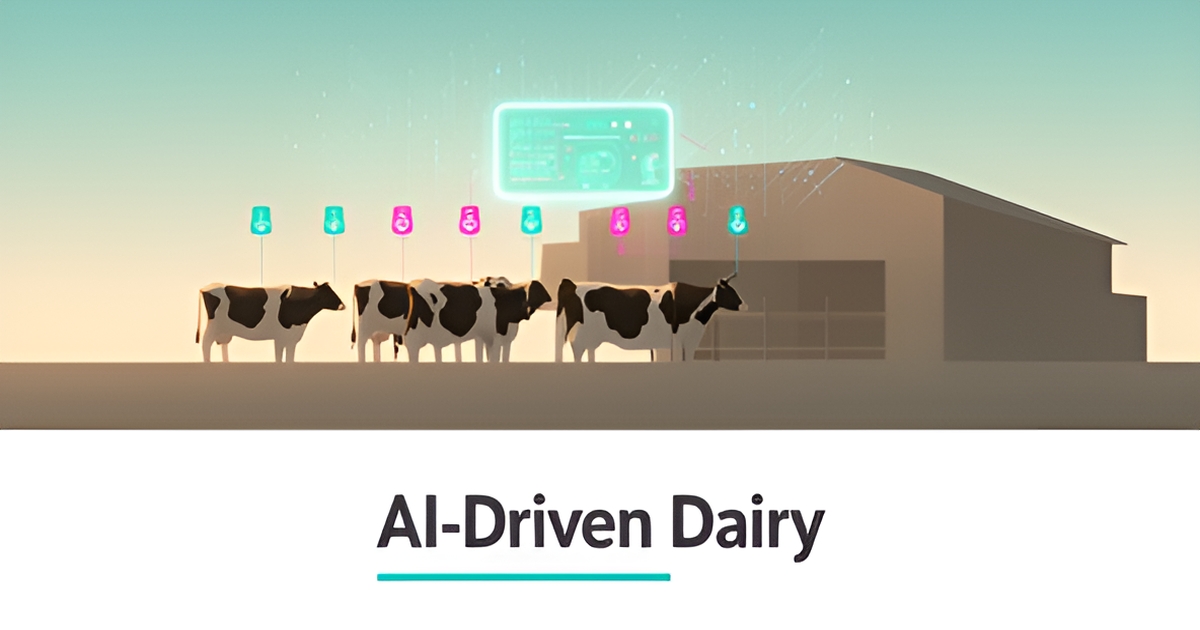
How to Build an AI-Driven Dairy Farm Success Plan (Step-by-Step)
Key Facts
- Industry analyses report farms using AI-driven platforms can generate several hundred dollars more per cow annually.
- AI genetic management has been linked to milk production gains of 10–20% and operating cost reductions of 15–25% in vendor-reported studies.
- Automated milking systems are associated with production increases of roughly 3–8% and reduced labor dependency.
- AI-driven feed control solutions have been credited with feed cost reductions of up to 30% in documented implementations.
- Non-invasive AI health monitoring can detect lameness, mastitis, and heat stress before visible symptoms appear.
- One documented AI routing implementation reported a 20% reduction in fuel consumption.
- Researchers stress that effective AI must be adaptable, updatable, and tailored to individual farm needs.
Hire a team member that works 24/7 — for less than a part-time wage.
AI receptionists, SDRs, dispatchers and 99+ roles. Trained on your business, fully managed.
Not sure where to start? Ask our AI planner
The Cost of Standing Still: Why Dairy Farms Need an AI Plan Now
The pressure on dairy operations has never been more acute. Labor costs are climbing, margins are compressing, and most farms still run critical workflows on spreadsheets and manual entry.
Industry observers like Mike North of EverAg put it bluntly: farms ignoring automation will face shrinking margins as labor becomes tighter and costs escalate. The market is responding — AI in dairy is projected to grow from roughly $3.8 billion in 2024 toward $9.1 billion by 2033 in some market estimates. Meanwhile, industry analyses report farms adopting AI-driven platforms can generate several hundred dollars more per cow annually, and early adopters have publicly reported multi-fold returns on investment.
The problem isn't a lack of tools. It's that most farms get stuck in pilot mode — testing a single sensor or chatbot without a roadmap to scale. Research from Texas A&M confirms that effective AI must be "adaptable, updatable and tailored to individual farm needs" — not a collection of disconnected point solutions.
- Rising labor costs outpacing milk price growth
- Manual data workflows creating decision lag
- Pilot projects that never reach production scale
- No structured framework to evaluate and prioritize AI investments
AIQ Labs works with dairy operators to move beyond the pilot trap. Our AI Workflow Builds rebuild the one workflow that costs you the most — at a fixed price, in phases — while our AI Operating Systems service connects those wins into one operating layer you own outright. The farms that treat AI as a strategic capability, not a gadget, are the ones capturing the per-cow advantage today.
What AI Actually Delivers on a Dairy Farm: The Reported ROI
The promise of AI in agriculture is no longer theoretical. Industry analyses report farms utilizing AI-driven platforms can generate several hundred additional dollars per cow annually — a meaningful financial advantage over traditional methods, though results vary by operation and implementation quality.
This return stems from targeted operational improvements rather than vague technological upgrades. Vendor-reported data links AI genetic management to milk production gains of 10–20% while simultaneously cutting operating costs by 15–25%.
Automated milking systems further contribute to these gains, adding roughly 3–8% to production totals by optimizing cow flow and reducing labor dependencies. These systems allow farmers to reallocate human resources to higher-value tasks while maintaining consistent milking schedules.
Feed represents another significant opportunity for cost recovery. Farms implementing AI-driven feed control solutions have reported feed cost reductions of as much as 30%, directly improving margin retention without compromising herd nutrition.
Non-invasive health monitoring protects these gains by catching issues before they impact production. Research from Texas A&M AgriLife demonstrates that computer vision systems can detect lameness, mastitis, and heat stress through behavioral analysis, eliminating the need for invasive blood or milk samples while enabling earlier intervention.
Efficiency extends beyond the barn to logistics and delivery. One documented implementation achieved a 20% reduction in fuel consumption through AI-powered route optimization, alongside improved on-time delivery performance to remote locations.
- Milk production increases of 10–20% reported with AI genetic management
- Feed cost reductions up to 30% via precision feeding systems
- Several hundred dollars in additional annual revenue per cow, per industry analyses
- Fuel savings of 20% through route optimization in one documented case
These signals point to AI as a capital investment with a measurable payback period — but treat vendor-reported figures as planning inputs, not guarantees. AIQ Labs helps dairy operations model ROI against their own baseline numbers before anything is built, ensuring sustainable implementation rather than piecemeal adoption.
Mapping Your Operation: Identify Pain Points Before Picking Tools
Before any tools are chosen, a clear picture of how the farm actually runs prevents wasted investment and failed pilots. Mapping operations first reveals where manual work bleeds time and margin, and where AI can create immediate, measurable lift.
Start with a structured self-assessment across core workflows. Document milking routines, feeding schedules, herd health checks, breeding decisions, and record-keeping practices. Note which steps rely on paper cards, spreadsheets, or memory, and where data lives in silos. This audit mirrors the discovery work AIQ Labs does at the start of every engagement, where readiness is evaluated before technology is selected.
Quantifying pain points turns observations into priorities. Industry research shows farms utilizing AI can generate several hundred additional dollars per cow annually, but gains depend on targeting the right bottlenecks. Where manual recording dominates, analyses of top platforms note DairyComp can save over 50% of the time typically spent recording daily information with manual cards.
Operational integration matters as much as the tool itself. Research on AI-driven solutions highlights that effectiveness improves when systems auto-sync with existing management software, enabling real-time updates to breeding lists and inbreeding guardrails. Farms that ignore automation face shrinking margins as labor tightens and costs escalate.
Prioritize by impact and feasibility. A focused audit should cover:
- Milking: labor hours, milk yield variability, and robot idle time
- Feeding: feed waste, cost per cow, and ration adjustment frequency
- Herd health: detection lag for mastitis, lameness, or heat stress
- Breeding and genetics: decision speed and data completeness
- Record-keeping: time spent on data entry and error rates
Use the findings to build a business case with ROI modeling before buying software. Studies of AI genetic management report milk production increases of 10–20% and operating cost reductions of 15–25% when personalized models update weekly. Automated milking systems are linked to 3–8% production increases while reallocating labor.
This mapping step creates a phased roadmap instead of a blanket tech rollout. AIQ Labs applies the same discipline in its Workflow Builds, evaluating readiness, modeling ROI, and designing implementation phases aligned to the long-term farm vision. With pain points quantified and prioritized, tool selection becomes targeted, measurable, and sustainable.
Know the workflow before you automate it, and the transformation plan follows naturally from the data you already have.
Choosing the Right AI Systems: From Point Solutions to Integrated Platforms
The dairy technology market is crowded with point solutions promising incremental gains, but research consistently shows that integration depth determines long-term value more than any single feature set. The reported per-cow returns only materialize when tools communicate seamlessly with existing herd management software like DairyComp. A study on AI-driven dairy solutions found that platforms auto-syncing breeding lists, Do-Not-Breed assignments, and inbreeding guardrails deliver compounding value by eliminating manual data reconciliation.
- Genetic optimization platforms that ingest genomics, health records, and economic indicators into regularly updated farm models
- Automated milking systems reducing labor reliance while improving animal welfare
- Precision feeding systems cutting feed costs through real-time intake monitoring
- Sensor-based health monitoring detecting lameness, mastitis, and heat stress non-invasively via computer vision
- Herd management software generating clear "sell lists" to maintain population targets and maximize profit
Texas A&M researchers emphasize that effective sensor-based systems must be adaptable, updatable, and tailored to individual farm needs rather than one-size-fits-all deployments. Their work on DairyBot — a virtual assistant pulling from farm-specific data and dairy literature — illustrates the next layer: AI that supports veterinarians and nutritionists rather than replacing them. Precision dairy care research demonstrates multiple disease detection capabilities already deployed in commercial settings, with machine learning models identifying robotic milking idle time and failures in real time.
The hierarchical agent architecture documented in systems like FarmersMilk shows how modular design allows farms to add specialized agents — route optimization, health monitoring, price alerts — without disrupting core operations. That modularity mirrors what AIQ Labs builds for SMBs across industries: custom AI workflows that integrate with the tools you already run rather than forcing rip-and-replace migrations. FarmersMilk's architecture achieved a 20% reduction in fuel consumption through AI-powered routing alone, proving that right-sized, integrated solutions can outperform feature-heavy platforms that don't talk to each other.
When evaluating vendors, prioritize those demonstrating two-way API integrations with your current stack, configurable guardrails for critical decisions, and a roadmap for cross-departmental expansion. The goal isn't the smartest standalone tool — it's an ecosystem where genetic decisions inform feeding strategies, health alerts trigger breeding adjustments, and every data point flows without manual intervention. That's the difference between a collection of apps and a true AI Operating System for your operation.
Building Your Implementation Roadmap: Phased Rollout to Full Transformation
Successful AI transformation rarely starts with a farm-wide overhaul — it starts with one workflow that pays for itself. The reported per-cow gains come from disciplined, phased execution rather than trying to automate everything at once.
Phase one: pick a single high-ROI workflow. Health monitoring and feed optimization are strong starting points because their impact is measurable and fast. Farms using AI-driven feed control have reported feed cost reductions of up to 30%, while sensor-based health systems can detect lameness, mastitis, and heat stress before visible symptoms appear, cutting treatment costs and production losses.
Define success metrics before you deploy: baseline your current feed costs, disease incidence rates, or labor hours, then measure the AI system's performance against those numbers over 60 to 90 days. Early adopters have publicly reported multi-fold returns on investment — evidence that a well-chosen first workflow can fund the next phase of expansion.
Phase two: build governance and team adoption in parallel. Technology fails without people and guardrails. Establish these foundations early:
- Data security protocols that define who owns and accesses herd, feed, and financial data
- Human-in-the-loop controls so AI recommends but your team approves critical decisions like culling or treatment
- Role-specific training so herdspeople, managers, and vets understand how to interpret and act on AI insights
- Feedback loops where staff report false alerts or missed detections to continuously retrain the system
As Texas A&M researcher Sushil Paudyal notes, AI tools "won't replace the vet or nutritionist, but will empower and support them" — a framing that helps teams see AI as an assistant, not a threat.
Phase three: scale what works, department by department. Once your first workflow proves ROI, extend into adjacent areas — breeding optimization, milking automation, or supply logistics. Modular, agent-based architectures make this easier: the FarmersMilk system, for example, uses specialized AI agents for route optimization, health monitoring, and price alerts that can be added or modified without disrupting the whole operation.
This is where a structured partner de-risks the journey. AIQ Labs' engagement model mirrors this phased approach: a discovery step to identify your highest-value workflow, milestone-based builds where you approve and pay per phase (keeping everything built so far), and the option to own the final system outright. With labor tightening and margins under pressure — farms ignoring automation face shrinking margins, warns EverAg's Mike North — a deliberate roadmap turns AI from an experiment into a compounding advantage.
Still paying for 10+ subscriptions that don’t talk to each other?
We build custom AI systems you own outright. No vendor lock-in. Full control.
Not sure where to start? Ask our AI planner
Frequently Asked Questions
How much does it actually cost to get started with AI on my dairy farm?
Will AI replace my veterinarian or nutritionist?
How do I know which AI tools will actually work with my current farm management software?
What's the first AI application I should implement to see quick ROI?
Can I implement AI gradually, or do I need to automate everything at once?
How much time can AI really save on daily record-keeping and data entry?
From Pilot to Profit: Your AI Roadmap Starts With One Workflow
Building an AI-driven dairy farm is less about buying the newest sensor and more about mapping pain points, choosing integrated systems, and rolling out in phases that pay for themselves. The farms capturing real advantage start with a clear audit of milking, feeding, health and record-keeping, model ROI before purchase, and then scale from a high-impact first workflow — like feed optimization or non-invasive health monitoring — into a connected ecosystem where breeding, milking and logistics inform each other. That disciplined approach is how operations move beyond the pilot trap. If you want a plan tailored to your bottlenecks, AIQ Labs can help: take the 2-minute Fit Check at aiqlabs.ai/apply, then book a free 30-minute strategy call to map your biggest bottleneck and identify high-ROI automation opportunities. You can start monthly, build in milestones, or own the system outright — whichever fits how you want to grow.
Make AI your competitive advantage — not just another tool.
Strategy, implementation and ongoing optimization. One partner, end to end.
Not sure where to start? Ask our AI planner