How to Build an AI-Driven Supply Chain for Your Agricultural Co-op
Key Facts
- Industry research suggests a majority of AI initiatives stall at the pilot stage due to poor data quality and unclear objectives according to supply chain planning research.
- Manual sourcing and procurement processes are slow for most organizations; only a small fraction report a cycle under one week per supply chain automation analysis.
- Industry analysts project a growing share of supply chain KPIs will be AI-driven by 2028 per industry forecasting.
- Smallholder farmers produce a substantial share of the world's food but remain highly vulnerable to climate disruption per agricultural cooperative research.
- AI agents can reduce inventory carrying costs while improving availability for perishable goods management per supply chain transformation data.
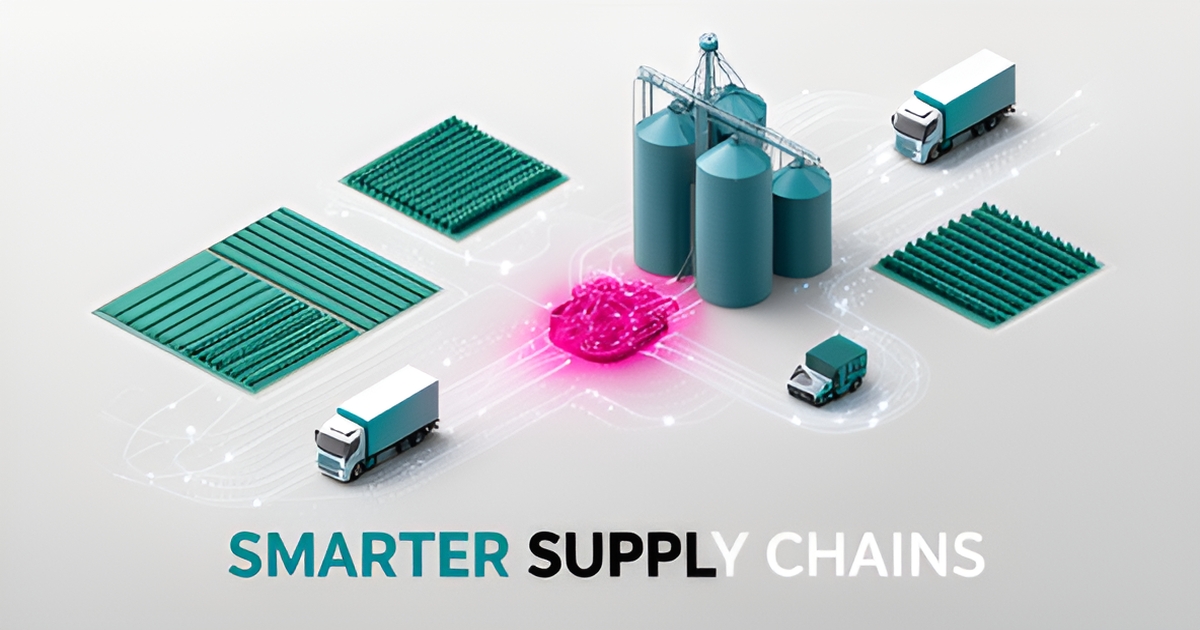
- Supply chains are shifting from linear reactive networks to intelligent connected ecosystems powered by AI according to industry experts.
Hire a team member that works 24/7 — for less than a part-time wage.
AI receptionists, SDRs, dispatchers and 99+ roles. Trained on your business, fully managed.
Not sure where to start? Ask our AI planner
Why Traditional Supply Chains Fail Agricultural Co-ops
Agricultural co-ops are built on trust and seasonality, but their supply chains are still running on spreadsheets, phone calls and gut feel. That mismatch creates a constant drag on margins, member satisfaction and food quality.
Demand volatility hits first. Co-ops rely on harvest forecasts and member orders that shift with weather, prices and local events. Manual planning means reactive ordering and last-minute distribution changes, which strains logistics and leaves members waiting.
Spoilage compounds the problem. Perishable produce moves through fragmented handoffs with limited real-time visibility. Without predictive tracking, excess inventory sits too long and shortfalls appear too late, driving waste and lost revenue.
Data lives in silos. Farm production records, member needs and logistics notes rarely connect in one system. As supply chain planning research notes, a successful AI initiative begins with reliable, well-structured data, yet most co-ops audit, integrate and enrich data manually if at all.
Response times slow everything down. Manual sourcing and procurement workflows create bottlenecks; research suggests only a small fraction of organizations report a sourcing and procurement cycle of less than a week. Delays reduce negotiating power and profitability while collaboration gaps in quoting and information gathering stall distribution.
The broader AI landscape mirrors these struggles. Studies suggest that a majority of AI initiatives stall at the pilot stage, often due to poor data quality, unclear objectives, or cultural resistance. Success requires organizational readiness and a clear roadmap linking technology to business value rather than chasing technology for its own sake.
Co-ops often try to digitize without first defining measurable outcomes. Pilots guided by “using AI” instead of solving a defined business problem fail to scale. A goal-oriented approach starts with one or two high-impact areas like demand forecasting and inventory optimization to demonstrate quick results, build credibility and refine processes.
Typical failure patterns in manual co-op supply chains include:
- Demand spikes and weather shocks met with static forecasts and delayed re-routing
- Spoilage from poor inventory placement and lack of end-to-end visibility
- Fragmented data across farms, members and logistics preventing real-time decisions
- Slow response cycles that miss market windows and increase emergency shipping costs
These constraints are why a strategic, goal-oriented approach matters. AI is becoming the control tower of the modern supply chain, enabling resilience, agility and future-readiness. For co-ops, that means linking farm production, member needs and logistics in one intelligent ecosystem that predicts demand, manages distribution and reduces spoilage.
AIQ Labs designs custom AI systems for this exact challenge, building a roadmap for a smart supply chain that starts with clean data and clear business outcomes. The shift is from reactive networks to intelligent, connected ecosystems powered by AI, not from spreadsheets to a new dashboard.
Organizational readiness beats algorithms when pilots are tied to measurable KPIs such as reducing order errors, improving on-time delivery and cutting inventory holding costs.
The AI-Driven Supply Chain Framework: From Data to Decision
The most resilient agricultural co-ops are no longer reacting to spoilage and shortages—they are predicting them weeks in advance. By transforming raw data into decisive action, artificial intelligence converts fragmented farm-to-market operations into intelligent, self-correcting ecosystems that protect margins and reduce waste.
Predictive Demand Forecasting forms the foundation of this architecture. Unlike traditional methods that rely solely on historical sales, AI-driven models synthesize real-time data, weather patterns, and market trends to anticipate member needs with precision. According to industry analysis, this shift enables supply chains to move from linear, reactive networks to intelligent ecosystems where machine learning algorithms forecast demand fluctuations before they disrupt inventory levels.
Real-time inventory optimization follows, replacing spreadsheet guesswork with dynamic stock management. AI agents continuously balance inventory levels, adjusting safety stock and automating reorder points to prevent both spoilage and stockouts. Research from supply chain experts indicates that these systems can reduce inventory carrying costs while improving availability—critical advantages when managing perishable agricultural goods across distributed member networks.
AI-Augmented Supplier Coordination extends this intelligence beyond the warehouse. Rather than relying on manual procurement cycles—which studies show leave only a small fraction of organizations with sourcing cycles under a week—AI agents can coordinate supplier communication and logistics in real-time. This creates a responsive distribution layer where transportation routes optimize dynamically based on delivery windows, fuel costs, and produce perishability.
However, technology alone does not guarantee success. Research indicates that a majority of AI initiatives stall at the pilot stage due to poor data quality or unclear objectives. Building this framework requires:
- Auditing and integrating data sources across farm production, member orders, and logistics
- Establishing clear governance for ethical AI use and data security
- Starting with high-impact pilots like demand forecasting before scaling
- Maintaining human oversight for critical supply chain decisions
As supply chain education experts emphasize, ethical implementation remains paramount when analyzing large datasets for decision-making. AIQ Labs specializes in designing these custom ecosystems specifically for agricultural cooperatives, linking farm production, member needs, and logistics into one owned, intelligent infrastructure. By grounding AI in clean data and clear governance, co-ops transform from reactive commodity handlers into predictive, resilient food networks.
How AIQ Labs Builds and Deploys Your Custom AI Supply Chain System
Building an AI-driven supply chain for an agricultural co-op starts with a process that mirrors how supply chains themselves are evolving — from reactive to intelligent. Pilots fail when objectives are vague, so implementation is anchored to measurable business outcomes and clear ownership.
AIQ Labs maps delivery to its three entry points — AI Employees, AI Workflow Builds, and AI Operating Systems — aligning each phase of work with real capabilities rather than generic consulting steps. Discovery begins with data readiness and business process analysis, because industry research shows a majority of AI initiatives stall at pilot stage due to poor data quality, unclear objectives, or cultural resistance. The team audits farm production records, member demand signals, and logistics feeds, then designs an architecture that links them in one intelligent ecosystem.
Development translates the roadmap into production systems. Custom AI workflows are built using LangGraph for stateful multi-agent coordination and ReAct loops for reasoning and adaptation. Tool integration via Model Context Protocol connects ERP, inventory, and scheduling systems so agents can act, not just advise. For co-ops, this means demand forecasting models that combine historical sales with real-time inputs like weather and market trends, and inventory agents that auto-adjust reorder points to reduce spoilage.
Integration and deployment use managed AI Employees for day-to-day operations. An AI Inventory Manager monitors live feeds and coordinates multi-party workflows to prevent missed deliveries or excess stock, while a Logistics Agent optimizes routes and shipment readiness. A Member Coordination Agent handles intake, scheduling, and communications 24/7/365, learning continuously from performance data. This agent-based approach moves beyond dashboards to systems that sense and respond as disruptions happen.
Optimization is continuous. Performance is monitored against pilot goals such as reducing order processing errors or improving on-time delivery, with governance, human-in-the-loop controls, and audit trails built in from the start. The engagement model matches risk appetite:
- Start Monthly for a single AI Employee with setup plus a flat monthly plan, typically less than the cost of a part-time hire, with build, training, integrations, monitoring and improvements included
- Build in Milestones for one workflow or department system, paid per phase with the ability to stop anytime and keep what is built
- Own It Outright for a full AI operating system with full ownership of code, agents and data when complete
Supply chains are shifting from linear reactive networks to intelligent connected ecosystems powered by AI, with industry analysts projecting a growing share of supply chain KPIs will be AI-driven by 2028 per industry forecasting. For co-ops, that shift means linking farm production, member needs and logistics in a system that predicts demand, manages distribution and reduces spoilage.
Ready to map your biggest bottleneck? Start the Fit Check at aiqlabs.ai/apply — a 2-minute application that leads to a free 30-minute strategy call to identify high-ROI automation opportunities. You can also reach the team directly at [email protected].
Still paying for 10+ subscriptions that don’t talk to each other?
We build custom AI systems you own outright. No vendor lock-in. Full control.
Not sure where to start? Ask our AI planner
Frequently Asked Questions
Why do most AI supply chain pilots fail before they scale?
Our co-op runs on spreadsheets and phone calls — what's the first real step toward AI-driven supply chain management?
How does AI-driven demand forecasting differ from the historical sales models we use today?
Can AI actually reduce spoilage and stockouts for perishable agricultural products?
Our procurement cycles take weeks — can AI really speed up supplier coordination?
What does implementation look like for a co-op with limited IT resources — do we need to hire data scientists?
From Spreadsheets to a Self-Correcting Food Network
Agricultural co-ops can’t afford to keep running on spreadsheets, phone calls and gut feel. The article shows how manual planning creates demand volatility, spoilage from poor visibility, siloed data, and slow response cycles that erode margins and member trust. An AI-driven supply chain changes that by linking farm production, member needs and logistics into one intelligent ecosystem that predicts demand, optimizes inventory in real time, and coordinates suppliers autonomously. Organizational readiness still matters more than algorithms — success starts with clean, connected data and one or two high-impact pilots tied to measurable KPIs like on-time delivery and reduced holding costs. AIQ Labs designs custom AI systems for this exact challenge, building a roadmap from data readiness to managed AI Employees that sense and respond as disruptions happen. Ready to map your biggest bottleneck? Start the Fit Check at aiqlabs.ai/apply for a free 30-minute strategy call to identify high-ROI automation opportunities. With industry analysts projecting a growing share of supply chain KPIs will be AI-driven by 2028 source, the shift from reactive networks to predictive, resilient food networks is already underway.
Make AI your competitive advantage — not just another tool.
Strategy, implementation and ongoing optimization. One partner, end to end.
Not sure where to start? Ask our AI planner