How to Choose the Right AI Employee for Your Nightclub
Key Facts
- AI employees typically cost around 80% less than an equivalent human hire while operating 24/7, making them viable for predictable, repeatable workflows
- AIQ Labs supports 99+ AI employee roles across categories including entry management, hosting, and social media coordination
- AIQ Labs has deployed 200+ multi-agent systems and runs 4 live SaaS products daily—this is proven infrastructure, not experimental tooling
- AI employees integrate with your existing tools (CRM, scheduling, messaging platforms) rather than replacing them
- Human judgment stays essential for safety-critical calls: dress code discretion, intoxication assessment, and conflict resolution
Hire a team member that works 24/7 — for less than a part-time wage.
AI receptionists, SDRs, dispatchers and 99+ roles. Trained on your business, fully managed.
Not sure where to start? Ask our AI planner
The Nightclub Staffing Pressure Point
Nightclubs operate in a high-pressure environment where staffing demands span from front-door security to late-night social media engagement, creating constant strain on human teams. As AI adoption spreads across industries—including hospitality—performance expectations are resetting. Venues that rely on speed and consistency feel this shift first, because guests now expect instant responses to inquiries, smooth entry, and a consistent brand voice across every channel.
The gap between manual workflows and the need for 24/7 coverage is especially acute in nightlife, where guest experience hinges on seamless entry management, real-time responsiveness, and consistent communication. Human staff face limitations in availability, fatigue during peak hours, and variability in performance—challenges AI employees can address by handling repetitive tasks like guest list checks, inquiry routing, or social media scheduling without breaks. Unlike traditional automation, AI Employees from AIQ Labs integrate directly into your existing tools such as CRM and scheduling platforms, enabling end-to-end workflow execution while maintaining natural communication with guests.
To close this operational gap, nightclubs must first identify where AI delivers genuine value—not just speed, but the ability to handle predictable work so your team can focus on judgment calls. The differentiator is shifting from output velocity to how well your staff can direct AI work, assess its outputs, and apply human judgment in context. This foundation ensures AI enhances rather than undermines the guest experience, particularly in environments where trust and personal touch remain critical despite increasing automation.
Matching AI Roles to Venue Workflows
Choosing the right AI employee starts with matching specific roles to your nightclub's actual workflow needs. Instead of deploying AI everywhere, focus on areas where automation reduces repetitive tasks while preserving the human judgment essential for guest experience and safety. AIQ Labs' role catalog covers 99+ roles, and functions like entry management, hosting, and social media coordination each address distinct operational pain points.
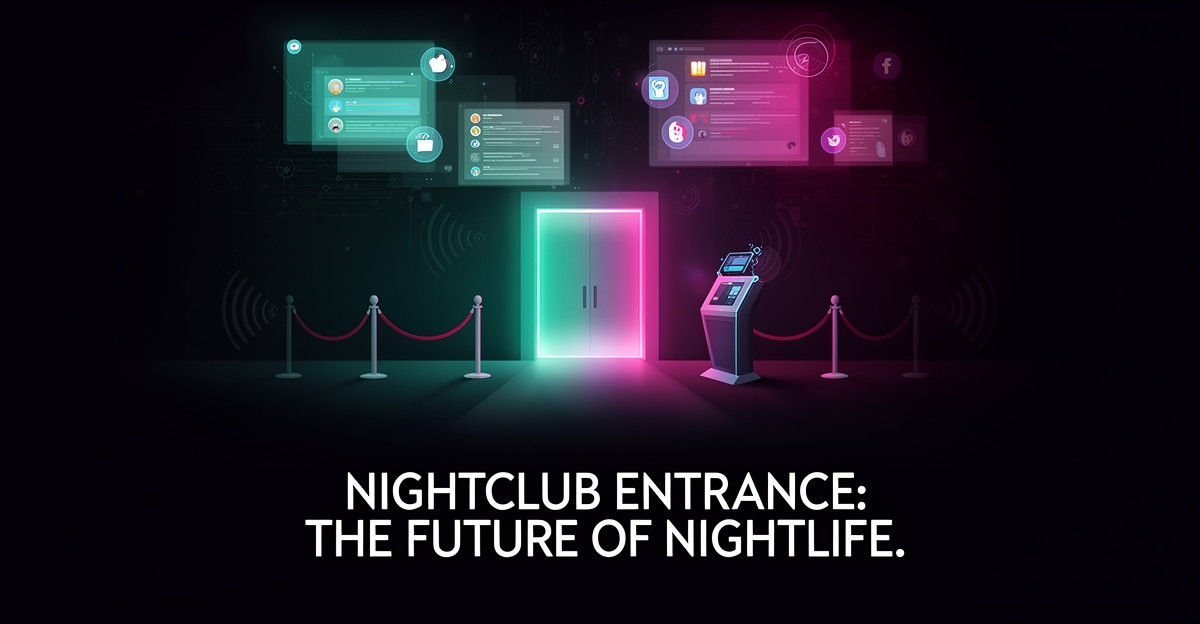
For high-volume entry points, an AI employee acting as an entry manager can handle guest list checks, cover charge inquiries, and basic questions—freeing human staff for nuanced decisions about dress code, intoxication levels, or conflict resolution. AI excels at accelerating routine work, but human oversight remains critical for validating outputs and maintaining standards. An AI host, meanwhile, can manage reservations, answer common questions about events or bottle service, and route special requests to the appropriate team member, ensuring consistency during peak hours.
When it comes to promotion, an AI social media coordinator can automate content scheduling, track engagement metrics, and generate basic promotional copy across platforms—tasks that consume significant time for marketing teams. However, creative strategy, audience sentiment, and crisis response still require human insight. The differentiator is shifting from speed to the ability to work alongside AI effectively, meaning staff must learn to assess AI outputs and apply them contextually.
Budget considerations also play a role. AI employees typically cost around 80% less than a human hire while operating 24/7, making them viable for roles with predictable, repeatable workflows. Yet investing in capability building—such as training staff to direct, audit, and refine AI outputs—ensures the technology enhances rather than undermines operational quality. Start by identifying one workflow where AI genuinely helps, measure the impact, and scale only after confidence and governance are in place. If the bottleneck is bigger than one role—a broken booking or staffing workflow that spans multiple tools—AI Workflow Builds rebuild that single workflow at a fixed price, in phases.
Building an AI-Enabled Nightclub Foundation
Nightclubs run on rhythm, timing, and trust. Adding AI without a foundation risks faster mistakes instead of smoother nights.
Building an AI-enabled foundation starts with governance, not gadgets. Without clear guardrails, adoption fragments—staff using different tools, handling data inconsistently, or relying on outputs that haven't been properly checked. Clear guidance on which AI tools are approved, when managed versions must be used, and what data can or cannot be entered keeps standards high while experimentation is encouraged.
Staff training is the real performance lever. The differentiator in an AI-enabled workplace is becoming less about speed and more about who can work alongside AI well. Employees need practical training on how to use AI well and how to check and interpret its outputs. Widespread workplace AI adoption has reset the performance baseline across every function—hospitality included.
Hands-on learning in the flow of work builds confidence over time. When employees can experiment, get feedback on what's working, and refine how they use AI in real situations, organizations create a stronger foundation for long-term progress. Human judgment must sit firmly at the center, with review mechanisms defining who owns what and ensuring AI augments decisions rather than replaces them.
Nightclub operations should also prepare for AI agents as customers. AI agents are becoming a new class of customer in the commerce ecosystem, and most booking and ticketing platforms were not built for machine-led activity. A guest's AI assistant may soon be the one asking about table availability or buying event tickets on their behalf.
An agent-ready foundation means auditing systems for machine interaction. Key readiness steps include:
- Audit the stack for agent readiness by reviewing event and menu data, API accessibility, and machine-readable content
- Verify the agent behind the transaction and prove the guest's permission with explicit authorization controls
- Modernize fraud models so legitimate agent-assisted bookings aren't treated like fraud, and extend trust controls beyond checkout
AIQ Labs maps these principles to nightclub workflows through role-specific evaluation, matching AI functions with your venue's operations and staff structure. The evaluation aligns guardrails, training, and system readiness to the specific AI employee role you choose, whether an AI host, entry manager, or social media coordinator. And when multiple AI roles and workflows need to work as one connected layer, AI Operating Systems build that layer in phases—owned outright by you, not rented. Capability and trust built in tandem turn AI from quicker output into stronger outcomes over time.
Implementation Roadmap for Venue Owners
Successfully integrating an AI employee into your nightclub operations starts with a clear, phased approach. Begin by identifying high-value workflows where automation delivers immediate impact—such as managing guest entry, handling reservation inquiries, or coordinating social media engagement. Focus on repeatable, time-intensive tasks that currently strain your team during peak hours, so you can measure efficiency gains quickly. Widespread AI adoption in the workplace signals a shift in expectations that venue owners can leverage to modernize operations without disruption.
Next, establish leadership priorities that align AI adoption with your venue's specific goals, whether reducing no-shows, improving guest flow, or freeing staff for higher-touch hospitality. Leadership must set clear boundaries on AI use, defining which tools are approved and how outputs are validated to prevent over-reliance on unchecked automation. Practical training is essential: your team needs hands-on learning to direct AI work effectively, assess AI-generated responses, and use insights to make better human decisions—not replace them. This builds confidence and competence over time, creating a foundation for long-term progress.
Finally, implement review mechanisms that embed human judgment at the center of AI interactions. Define ownership for monitoring performance, schedule regular optimization check-ins, and ensure data handling complies with privacy regulations. As AI adoption scales, these guardrails prevent fragmented use and maintain accountability. By following this roadmap—identifying workflows, setting priorities, training teams, and establishing reviews—you position your nightclub to pilot an AI employee confidently and scale with clarity. To map your venue's biggest bottleneck, start with the 2-minute Fit Check, then book a free 30-minute strategy call.
Still paying for 10+ subscriptions that don’t talk to each other?
We build custom AI systems you own outright. No vendor lock-in. Full control.
Not sure where to start? Ask our AI planner
Frequently Asked Questions
How much can an AI employee save compared to hiring a human for nightclub roles like entry management or social media coordination?
What specific tasks can an AI entry manager handle at a nightclub to support human staff?
Do I need to train my nightclub staff to work with AI employees, or will the AI work independently?
How do I ensure AI use in my nightclub doesn't lead to mistakes or inconsistent guest experiences?
Can AI employees interact with customers who are also using AI agents, like for bottle service inquiries or event bookings?
What's the first step to piloting an AI employee in my nightclub without disrupting operations?
Your Nightclub's Next Move: Smarter Staffing, Stronger Nights
Choosing the right AI employee for your nightclub isn't about chasing automation for its own sake—it's about strategically pairing technology with human judgment to solve real operational pain points. From streamlining entry management and reservation handling to maintaining consistent social media engagement, AI employees from AIQ Labs can take on repetitive tasks while freeing your team to focus on the nuanced, guest-facing decisions that define your venue's atmosphere. The real value emerges not just in cost savings or 24/7 availability, but in building a foundation where capability and trust grow together—ensuring AI enhances, rather than disrupts, the personal touch that keeps guests coming back. As workplace expectations shift, the differentiator is no longer speed alone, but how well your team learns to work alongside AI, validate its outputs, and apply them contextually. To start mapping where AI can genuinely improve your nightclub's workflow—whether it's reducing bottlenecks at the door, improving response times, or freeing up staff for higher-touch hospitality—begin with the 2-minute Fit Check, then book your free 30-minute strategy call. No pressure, just clarity on whether there's a clear win for your operation.
Make AI your competitive advantage — not just another tool.
Strategy, implementation and ongoing optimization. One partner, end to end.
Not sure where to start? Ask our AI planner