How to Choose the Right AI Employee for Your Portable Toilet Business
Key Facts
- Algorithmic routing can cut total miles driven by 10–25% and lower fuel spend 15–30%, per portable sanitation industry data.
- One company reported a 20% boost in operational efficiency and a 30% drop in customer complaints after digitizing scheduling and feedback systems.
- AIQ Labs AI Employees are managed AI staff covering 99+ roles—from receptionists to SDRs to dispatchers—deployed on a monthly model with no long-term lock-in.
- AI Employees typically run at roughly 80% less cost than an equivalent human hire, per AIQ Labs' current cost comparison.
- AIQ Labs has deployed 200+ multi-agent systems and runs four live SaaS products daily—real production experience, not slideware.
- Operators should measure KPIs across a full 12-month baseline to account for seasonal demand swings per industry guidance.
- AI employees work 24/7/365, capturing after-hours and peak-season calls a human front office can't.
Hire a team member that works 24/7 — for less than a part-time wage.
AI receptionists, SDRs, dispatchers and 99+ roles. Trained on your business, fully managed.
Not sure where to start? Ask our AI planner
The Front-Office Bottleneck Draining Your Rental Operations
Peak season doesn't just bring more rentals, it brings a front office that can't keep up. Calls stack up while crews are on the road, and the admin team becomes the bottleneck for everything that moves.
Missed calls during high demand are a structural cost. Portable toilet rental operations traditionally rely on manual processes for scheduling, logistical planning, inventory management, and customer service. The reliance on paper-based systems and manual data entry can result in miscommunication, missed service appointments, and increased administrative burdens. Industry research notes operators are using AI to handle daily tasks like routing, inventory, scheduling, and service quality.
Manual scheduling creates ripple errors across the day. Drivers get last-minute changes, dispatchers chase confirmations, and office staff re-enter the same request three times. That workload pulls people away from growth work and into firefighting.
The pain shows up daily in predictable ways:
- Missed or delayed calls during peak booking windows
- Manual scheduling errors and double bookings
- Dispatch confusion from outdated notes and voicemails
- Admin workload growing faster than revenue
Front-office friction also hurts customer experience. One company reported a 20% boost in operational efficiency and a 30% drop in customer complaints after implementing smart cleaning schedules and real-time feedback systems. From-manual-to-digital analysis shows the shift from manual to digital is crucial for remaining competitive and scaling effectively.
The problem is not staffing levels, it is design. When intake, call routing, and request capture depend on a single person or a busy phone line, the system breaks under volume. AIQ Labs approaches this as front-office automation with AI Employees—managed AI staff that handle call routing, request intake, and scheduling on a monthly model, without long-term contracts.
Automation frees staff for strategic growth. Increased efficiency through automation can free up your team for growth work instead of data entry. And because AI Employees are managed for you—setup, training, integrations, and ongoing optimization included—it's a near-term fix rather than a multi-year project.
This is why the bottleneck feels structural. It repeats every season, scales with the business, and resists hiring alone because the work is fragmented, time-sensitive, and repetitive. Solving it requires rethinking how the front office captures and moves work, not adding more hours to an overloaded process.
Meet the AI Employee Roles Built for Portable Sanitation
Portable toilet rental businesses often struggle with missed calls, scheduling chaos, and overwhelmed front-office staff—pain points that directly impact revenue and customer satisfaction. AI employees offer a targeted solution by handling specific, high-volume tasks that traditionally drain human resources. Three roles in particular deliver outsized impact for rental operations: the AI Receptionist for 24/7 call management, the AI Dispatcher for intelligent scheduling and routing, and the AI Field Coordinator for work order execution and customer updates. Each addresses a distinct operational bottleneck while integrating with existing tools like calendars, CRM systems, and dispatch software.
The AI Receptionist eliminates missed opportunities by answering every call instantly, day or night, with natural voice conversations that qualify leads, route inquiries, and book appointments directly into your scheduling system. This role is especially valuable during peak seasons or after-hours events when call volume spikes and human staff are unavailable. Instead of losing after-hours inquiries to voicemail, every call becomes a potential booking without adding payroll overhead. AIQ Labs' AI Employees deliver this capability on a monthly model with no contract lock-in—setup, training, tool integration, and ongoing optimization included, at roughly 80% less cost than a human hire.
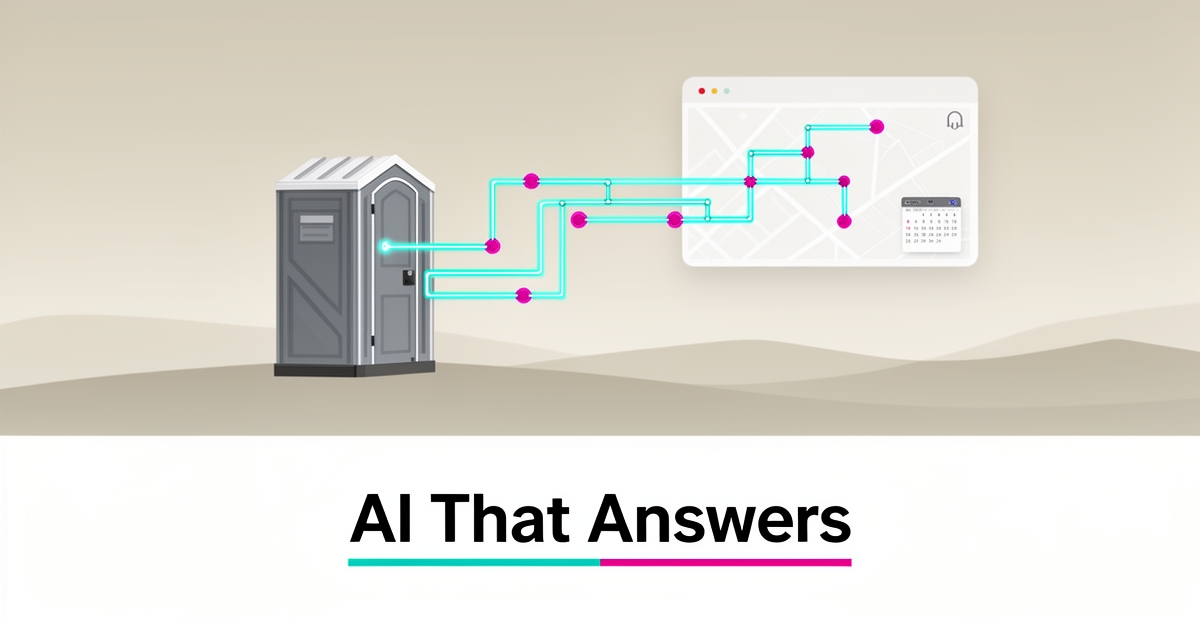
The AI Dispatcher transforms service logistics by analyzing real-time factors like traffic, service windows, vehicle location, and crew availability to generate optimized routes and schedules. This reduces deadhead miles, minimizes fuel waste, and ensures timely deliveries and pickups—even when last-minute changes occur. Algorithmic routing commonly drives a 10–25% reduction in total miles driven and can translate to 15–30% lower fuel spend, while also cutting overtime hours and preventing scheduling conflicts that lead to missed service windows. By automating this complex coordination, dispatchers free up managers to focus on fleet maintenance, crew training, and growth initiatives instead of constantly adjusting spreadsheets or fielding urgent calls.
The AI Field Coordinator bridges the gap between office and field teams by managing work order lifecycles—from job creation and technician assignment to real-time status updates and customer notifications. This role ensures that service teams receive clear instructions, customers get proactive communication about arrival times or delays, and completion records are automatically logged for billing and follow-up. When paired with smart cleaning schedules and real-time feedback, this kind of coordination supports the outcomes reported by companies that upgraded from manual to digital operations, including a 20% boost in operational efficiency and a 30% drop in customer complaints. Together, these three AI roles create a responsive, self-coordinating operation where calls are captured, routes are optimized, and customers stay informed—without increasing headcount or operational friction.
How to Match an AI Role to Your Biggest Operational Gap
Most portable toilet operators don't have a hiring problem—they have a leakage problem. Calls go to voicemail during peak delivery windows, intake forms sit incomplete on clipboards, and follow-up reminders fall through the cracks when crews are mid-route.
Start by auditing where the friction actually lives. Pull three months of call logs and service tickets, then tag every interaction that was dropped, delayed, or duplicated. According to industry analysis, companies that digitized scheduling reported a 20% boost in operational efficiency and a 30% drop in customer complaints within 12 months. The pattern usually clusters in three zones: after-hours inquiries, multi-unit event quotes, and recurring service changes.
Next, map which tasks are genuinely repeatable. Booking confirmations, intake questionnaires, payment reminders, and route-change notifications follow the same logic every time. These are the roles an AI voice receptionist can own end-to-end—answering calls, qualifying leads, locking in dates, and syncing to your calendar without human handoff.
- Audit dropped calls and delayed responses across a 90-day window
- Tag repeatable workflows: booking, intake, reminders, status updates
- Verify integration with QuickBooks, your scheduling platform, and CRM
- Define escalation rules for complex quotes or emergency service
- Write the job description as if hiring a human—then hand it to the AI team
A good AI job description reads like a human one: role title, core responsibilities, required integrations, escalation paths, and success metrics. Specify that the AI must route emergency service calls to the on-call dispatcher, push confirmed bookings into your scheduling software, and log every interaction in the customer record. AIQ Labs builds and trains the agent from that spec, connects it to your phone number and tools, and manages ongoing optimization as part of the monthly service. If your biggest pain is a single broken workflow rather than a missing staff member, AI Workflow Builds rebuild that one workflow at a fixed price, in phases.
Rolling Out Your First AI Employee Without Disruption
Starting with a single AI employee role lets you test the waters before making broader changes. This low-risk deployment path begins with piloting one function—such as a receptionist or dispatcher—using your actual service area and call-handling processes. AIQ Labs builds and trains the AI employee on your specific workflows, ensuring it understands local routing, peak demand patterns, and customer communication styles unique to portable toilet rentals.
Monitor performance from day one using clear metrics like missed-call rate and booking accuracy. These indicators show whether the AI is capturing every inquiry and scheduling services correctly, directly impacting revenue and customer satisfaction. Early data helps you refine the system quickly—adjusting scripts, integrations, or escalation rules—without disrupting ongoing operations. Many businesses see measurable improvements within the first few weeks, especially when AI handles after-hours calls or high-volume periods that strain human staff.
The Start Monthly model makes this approach both affordable and flexible. You pay a flat monthly cost—roughly 80% less than an equivalent human hire—with no long-term contract. Setup, training on your business, tool integrations, ongoing monitoring, and continuous improvements are all included. If needs change, you can pause or adjust the service anytime—ideal for seasonal fluctuations or testing additional roles later. This structure aligns with the industry trend of adopting AI solutions that deliver efficiency gains without financial risk, supporting steady growth as confidence in the system builds. AIQ Labs' AI Employees are built for operators looking to modernize front-office operations while keeping human teams focused on field service and growth. To begin, start the two-minute Fit Check to assess your readiness and identify the highest-impact role for your first AI employee pilot.
Measuring ROI and Knowing When to Scale Up
Before adding a second AI employee, you need to know whether the first one is paying for itself. The good news: the portable sanitation industry has useful benchmarks to measure against.
According to industry data on AI adoption in portable sanitation, operators using algorithmic routing commonly report a 10–25% reduction in total miles driven, alongside 15–30% lower fuel spend and fewer overtime hours. These aren't theoretical gains—they're the direct result of replacing guesswork routing with data-driven dispatch decisions.
The operational picture gets even clearer over time. One company that digitized its scheduling and feedback systems recorded a 20% boost in operational efficiency and a 30% drop in customer complaints. That's the kind of compounding return that justifies scaling up.
To capture results like these, track a consistent set of KPIs over a full 12-month baseline period. Industry guidance suggests measuring performance across a complete annual cycle before drawing conclusions, since seasonal demand swings in portable toilet rental can distort shorter windows.
The KPIs worth monitoring include:
- Miles driven per service route, week over week
- Fuel spend as a percentage of revenue
- Number of missed or rescheduled service calls
- Customer complaint volume and resolution time
- Staff hours spent on phone intake and scheduling
When your AI receptionist or dispatcher consistently hits these targets—and your team starts redirecting reclaimed hours toward growth work rather than firefighting—that's your signal to expand. Many operators find that a first AI role covering call intake and scheduling naturally surfaces the next bottleneck, whether that's dispatch coordination or follow-up communication. When multiple roles and workflows need to work as one connected layer, AI Operating Systems are built in phases and owned outright.
AIQ Labs structures its AI employee engagements on a monthly model with no contract lock-in, which means you can validate ROI on your own numbers before committing to a broader rollout. As one industry analysis puts it, AI isn't only about cutting costs—it's about building a more resilient and scalable business.
Start with one role, measure honestly for 12 months, and let the data tell you when it's time to grow your AI team.
Still paying for 10+ subscriptions that don’t talk to each other?
We build custom AI systems you own outright. No vendor lock-in. Full control.
Not sure where to start? Ask our AI planner
Frequently Asked Questions
What specific tasks can an AI Receptionist handle for a portable toilet rental business?
How much can AI-powered routing reduce fuel costs and miles driven for portable toilet service routes?
Is there a long-term contract required to deploy an AI Employee from AIQ Labs?
How long does it typically take to deploy an AI Employee solution in a portable toilet rental business?
What measurable improvements have businesses seen after implementing AI for scheduling and customer service?
How do I know if my portable toilet rental business is ready for an AI Employee?
Your Front Office Doesn't Have to Be the Bottleneck
The front-office bottleneck isn't a staffing problem—it's a design problem. As we've covered, portable toilet rental operations lose revenue every season to missed calls, scheduling errors, and dispatch chaos that scale with the business. AI employees solve this by handling the repetitive, time-sensitive work that overwhelms human teams: the AI Receptionist captures every inquiry 24/7, the AI Dispatcher cuts miles and fuel spend, and the AI Field Coordinator keeps crews and customers in sync without adding headcount. The operators reporting a 20% efficiency gain and 30% fewer complaints didn't overhaul everything at once—they started with one role, measured honestly, and let the data guide the next step. AIQ Labs builds and manages these roles at roughly 80% less cost than a human hire, on a monthly model with no contract lock-in. If you're ready to stop firefighting and start scaling, take the two-minute Fit Check to identify your highest-impact AI role and book a free 30-minute strategy call to map the win for your operation.
Make AI your competitive advantage — not just another tool.
Strategy, implementation and ongoing optimization. One partner, end to end.
Not sure where to start? Ask our AI planner