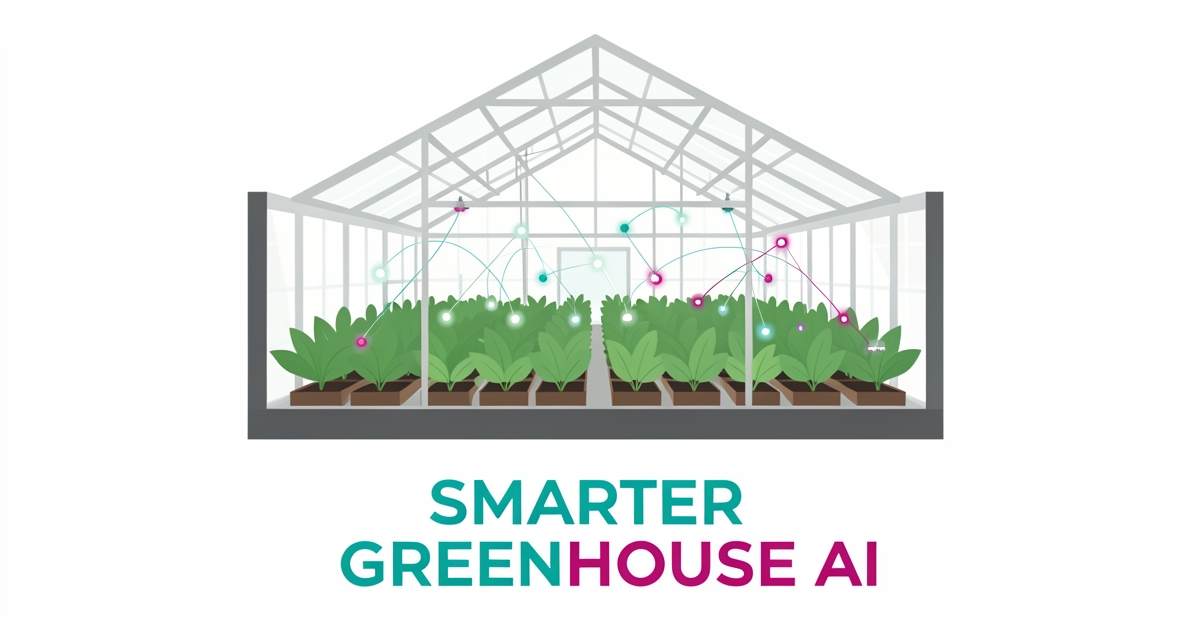
How to Choose the Right AI Partner for Your Greenhouse Farm
Key Facts
- Commercial greenhouse structures typically cost $6–60 per square foot depending on automation level, as of late 2026
- High tunnels generally run $2–4 per square foot while glass greenhouses can exceed $60 per square foot
- AI operating systems can automate crop monitoring, irrigation scheduling, and supply chain coordination using satellite imagery, soil sensors, and weather data
- AI systems can automatically detect crop stress and schedule irrigation based on soil moisture predictions
- AI innovation is outpacing regulation, leaving businesses vulnerable when sensitive operational data flows through systems without proper visibility or control
- AIQ Labs has deployed 200+ multi-agent systems and runs 4 live SaaS products daily
- AI Employees typically cost roughly 80% less than an equivalent human hire while working around the clock
Hire a team member that works 24/7 — for less than a part-time wage.
AI receptionists, SDRs, dispatchers and 99+ roles. Trained on your business, fully managed.
Not sure where to start? Ask our AI planner
The Greenhouse AI Gap: Manual Judgment vs Automated Coverage
Many greenhouse growers face a persistent tension between the depth of experienced scouting and the scalability of automated systems. Manual processes rely on human judgment and field experience, offering contextual nuance but limited coverage across large or complex operations. In contrast, AI operating systems in agriculture can automate crop monitoring, irrigation scheduling, and supply chain coordination by combining satellite imagery, soil sensors, and weather data, enabling consistent, data-driven decisions at scale. This gap leaves growers choosing between insight that doesn't scale and automation that may lack on-the-ground intuition.
Manual processes typically depend on experienced operators to identify pest issues, determine planting windows, and manage maintenance schedules through visual inspection and historical knowledge. While valuable, this approach struggles to keep pace with the demands of modern commercial greenhouses, where timing and precision directly impact yield and resource efficiency. AI systems, by contrast, can automatically detect crop stress, predict irrigation needs based on soil moisture trends, and align harvest logistics across multiple zones—reducing reliance on reactive, labor-intensive scouting.
For growers evaluating AI partners, the decision isn't just about technology—it's about transformation. AIQ Labs supports this shift through three entry points: AI Employees for managed roles like dispatchers and monitoring staff, Workflow Builds to rebuild the one workflow that costs you the most, and AI Operating Systems for one connected operating layer across the whole farm. The goal is not to replace the grower's judgment but to augment it with broader, real-time coverage—turning isolated observations into a unified, intelligent operating system.
What to Evaluate in an AI Partner Beyond the Tool List
Choosing an AI partner for your greenhouse means looking past the feature list and asking who will still be there when the growing season gets hard. The 2026 agriculture AI landscape is crowded with point solutions, but few vendors have architected production-proven multi-agent architecture that survives daily contact with climate controllers, ERP systems, and the realities of a working farm. AI operating systems that automate crop monitoring, irrigation scheduling, and supply chain coordination only deliver value when they integrate deeply with your existing infrastructure—not when they sit beside it as another dashboard.
Integration depth separates vendors who demo well from partners who deliver. Your AI system must speak the language of your climate computer, your irrigation valves, your inventory management, and your accounting platform without custom middleware projects that never finish. Commercial greenhouse structures typically range from $6 to $60 per square foot depending on automation level, as of late 2026, and the AI layer should enhance—not complicate—that investment. Look for partners who have built two-way API connections into major greenhouse control systems and ERP platforms, not just data export scripts.
- Multi-agent orchestration proven in production, not pilot environments
- Native integration with climate control systems and ERP platforms
- Training programs built for growers, not data scientists
- Ongoing support that includes model retraining as your crop cycles evolve
- Governance frameworks for sensitive operational data
Training and support models reveal whether a vendor views you as a license renewal or a long-term partner. Greenhouse teams need onboarding that respects horticultural expertise and translates AI outputs into actionable growing decisions. AIQ Labs structures engagements around role-based training, continuous optimization, and a governance layer that addresses the reality that AI innovation is outpacing regulation—leaving businesses vulnerable when sensitive operational data flows through systems without proper visibility or control. The right partner brings not just technology, but a framework for responsible adoption that scales with your operation.
From Greenhouse Structure to AI Structure: Matching Partner to Farm Investment
The capital tied up in your greenhouse structure often dictates how you approach technology adoption. Commercial greenhouse pricing typically ranges from roughly $6 to $60 per square foot as of late 2026, with high tunnels often at $2–4/ft² and glass structures approaching or exceeding $60/ft² when fully equipped. That same capital discipline should guide your AI partner decision.
- Start Monthly fits operations using high tunnels or freestanding houses where cash flow is seasonal and workflows are straightforward—one AI employee handling irrigation alerts or climate logs.
- Build in Milestones matches gutter-connected ranges (typically $20–50/ft²) running multi-zone climate, fertigation, and labor tracking—pay per phase as each workflow goes live.
- Own It Outright aligns with glasshouse investments ($60+/ft²) where a complete AI operating system—scouting, yield forecasting, energy optimization—becomes an owned asset on the balance sheet.
AIQ Labs structures engagements around these same three models because the right delivery shape changes with the scale and complexity of the operation. AI operating systems that automate crop monitoring, irrigation scheduling, and supply chain coordination only pay off when matched to the right investment tier. The partner you choose should map their delivery model to your greenhouse economics, not the other way around. You can see how each model is priced at AIQ Labs pricing—no fake numbers, no invented case studies.
Implementation Roadmap for a Safe, Owned AI Adoption
Moving beyond pilot projects requires a structured approach that prioritizes safety, ownership, and measurable outcomes. For greenhouse operations, this means aligning AI adoption with specific climate control and nutrient management workflows while ensuring team readiness and system integration. A phased roadmap minimizes disruption and builds confidence as capabilities scale.
Begin with a readiness assessment that evaluates current data infrastructure, sensor connectivity, and team familiarity with digital tools. This step identifies gaps in data quality or process standardization that could hinder AI effectiveness, particularly for precision irrigation or environmental monitoring use cases. AI operating systems in agriculture can automatically detect crop stress and schedule irrigation based on soil moisture predictions, offering efficiency gains over manual methods that rely solely on human judgment and field experience. Addressing foundational issues early prevents costly rework during implementation.
Next, design custom workflows tailored to greenhouse-specific challenges like temperature regulation, humidity control, and fertigation scheduling. Collaborate with your AI partner to map existing SOPs and define clear decision points where AI agents can augment grower expertise—such as adjusting ventilation based on real-time weather forecasts or optimizing nutrient dosing during peak growth stages. This co-design phase ensures the system reflects operational realities rather than imposing generic solutions. Enterprise integration follows, connecting AI agents to climate control systems, irrigation controllers, and farm management software via secure APIs to enable closed-loop automation without replacing core hardware.
Adoption hinges on comprehensive change management, including role-based training for growers, technicians, and managers. Focus on hands-on sessions that demonstrate how AI insights inform daily decisions—like interpreting pest risk alerts or validating harvest timing recommendations—while establishing human-in-the-loop controls for critical actions. Ongoing optimization relies on audit trails that log all AI-driven adjustments and operator overrides, creating transparency for compliance and continuous improvement. Regular review cycles refine models using seasonal performance data, ensuring the system evolves with your greenhouse's unique microclimate and crop cycles. This iterative approach transforms AI from a trial into a trusted, owned capability that drives sustainable resource use and yield consistency. To explore how this framework applies to your specific greenhouse operation, start with the 2-minute Fit Check—it quickly tells you whether AI Employees, a Workflow Build, or a full AI Operating System fits your operation, with no commitment required.
Still paying for 10+ subscriptions that don’t talk to each other?
We build custom AI systems you own outright. No vendor lock-in. Full control.
Not sure where to start? Ask our AI planner
Frequently Asked Questions
What's the real difference between using AI and just hiring more scouts for my greenhouse?
How do I know an AI vendor will actually integrate with my climate controller and ERP instead of just exporting CSVs?
My greenhouse is a gutter-connected range around $35/ft² — what AI investment model makes sense for that scale?
We're worried about sensitive operational data flowing through an AI system without proper controls — how is that handled?
What does implementation actually look like — will my growers need to become data scientists?
How do I avoid getting stuck in a pilot that never scales to the rest of my operation?
Your Next Harvest Depends on the Partner You Choose Today
Selecting an AI partner for your greenhouse operation extends far beyond comparing feature lists or pricing tiers. The right partner brings production-proven multi-agent architecture that integrates deeply with your climate controllers and ERP systems, offers training that respects horticultural expertise, and provides governance frameworks that protect your operational data as AI innovation continues to outpace regulation. Whether you operate high tunnels or glass structures, the goal remains the same: augmenting your growers' judgment with automated coverage that scales, not replacing the expertise that drives your business. AIQ Labs approaches greenhouse AI adoption through three entry points—AI Employees, Workflow Builds, and AI Operating Systems—with payment models that match your economics: Start Monthly, Build in Milestones, or Own It Outright. If you're ready to explore how AI can enhance your specific operation, the first step is clarity, not commitment. Start with the 2-minute Fit Check, then book a free 30-minute strategy call to identify high-impact automation opportunities that align with your greenhouse economics—or reach the team at [email protected].
Make AI your competitive advantage — not just another tool.
Strategy, implementation and ongoing optimization. One partner, end to end.
Not sure where to start? Ask our AI planner