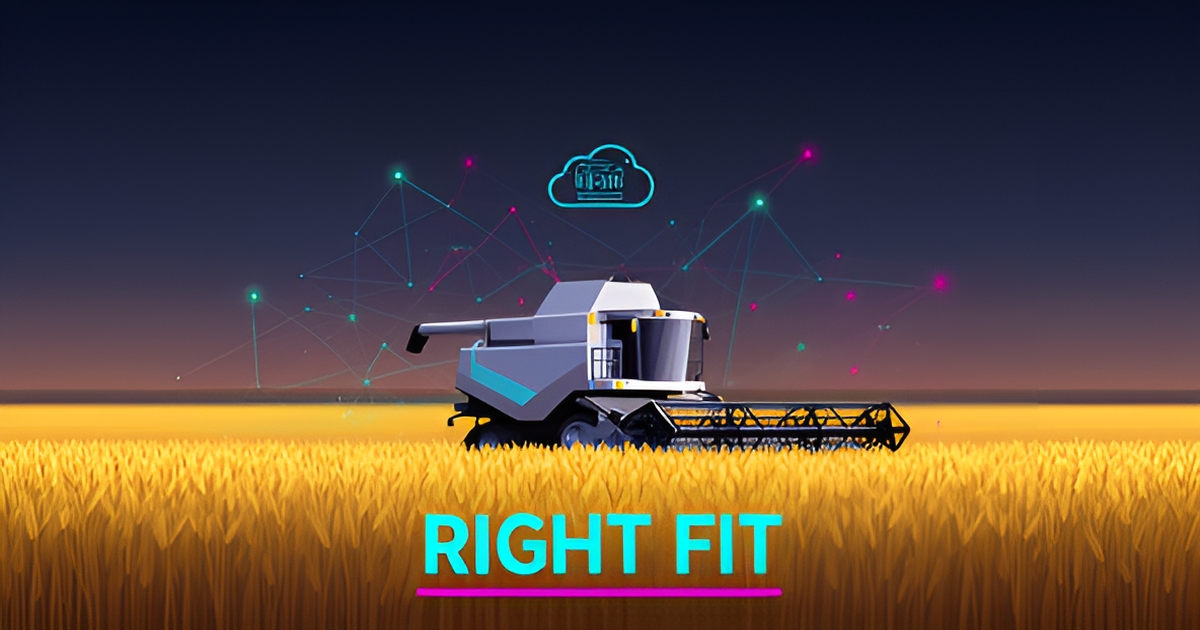
How to Choose the Right AI Partner for Your Harvesting Operation
Key Facts
- 80% of agribusinesses recognize AI's potential, but only 20% have fully adopted it, according to industry research.
- AI adoption delivers 150% ROI and 25% higher yields, according to a strategic guide.
- Harvest delays of just a few hours can reduce crop quality and increase spoilage, according to harvest operations intelligence.
- Automated harvesting equipment costs range from $50,000 to millions, according to industry analysis.
- Automated harvesting achieves ROI in 2-5 years through labor reduction, according to industry reports.
- Manual processes are slower and prone to human error, while AI enables real-time data processing, according to supply chain analysis.
- The global AI market in agriculture is projected to reach $4.7 billion by 2028, according to market research.
Hire a team member that works 24/7 — for less than a part-time wage.
AI receptionists, SDRs, dispatchers and 99+ roles. Trained on your business, fully managed.
Not sure where to start? Ask our AI planner
The Harvesting Bottleneck: Why Manual Operations Are Failing Modern Farms
Every hour a harvest crew sits idle or moves too slowly, crop value evaporates. Modern farms face a convergence of pressures—compressed picking windows, chronic labor shortages, and static schedules that cannot adapt to shifting field conditions—that manual operations simply cannot resolve.
According to harvest operations intelligence, harvesting is one of the most time-sensitive and resource-intensive phases in agriculture, and delays of even a few hours can reduce crop quality, increase spoilage, and impact overall yield value. Traditional planning relies on fixed calendars and human estimation, leaving no mechanism to respond when weather shifts or equipment fails. Industry research shows that 80% of agribusinesses recognize the potential benefits of implementing AI solutions, yet only 20% have fully adopted these technologies—leaving the majority exposed to preventable losses.
The operational gaps are structural and compounding:
- Time-sensitivity: Fixed schedules cannot compress or expand with real-time ripeness data
- Labor dependency: Skilled picker availability dictates pace, not crop readiness
- Static scheduling: No dynamic coordination between equipment, crews, and logistics
- Reactive decision-making: Problems are addressed after yield loss occurs, not prevented
Supply chain analysis confirms that manual processes are slower, prone to human error, and limited in scalability—requiring proportional labor increases for volume growth. In contrast, AI-driven coordination enables rapid, real-time data processing and adaptive re-optimization when conditions change. For harvesting operations, this distinction determines whether a crop reaches market at peak value or becomes a write-off.
AIQ Labs works with agricultural operators to replace these brittle manual workflows with custom-built AI systems that synchronize equipment, labor, and timing through live field data. The shift from reactive scheduling to predictive coordination is no longer a technology experiment—it is the operational baseline for farms that intend to remain competitive.
What AI-Native Harvesting Looks Like: Capabilities That Move the Needle
Imagine harvest season where every machine, crew member, and truck operates in perfect sync, guided by live data rather than guesswork. This shift from reactive scrambling to predictive coordination defines AI-native harvesting, where delays measured in hours no longer erode crop quality or inflate spoilage costs.
At the core sits real-time IoT data collection. Sensors track field conditions, equipment status, and workforce activity continuously, feeding AI models that predict optimal harvest windows. According to industry research, adopters see 150% ROI and 25% higher yields, gains driven by moving beyond static schedules to dynamic, data-informed decisions.
Dynamic scheduling replaces rigid calendars with intelligent resource allocation. AI systems align labor and equipment to actual field readiness, accounting for weather shifts and crop maturity. As noted in recent analysis, manual planning cannot adapt to changing conditions, leading to overripe losses and inefficient resource use. In contrast, AI-driven coordination ensures every asset operates at maximum efficiency when it matters most.
Logistics integration extends this intelligence beyond the field. By connecting harvest data with post-harvest handling and transportation, operations eliminate bottlenecks before they form. This end-to-end visibility transforms fragmented activities into a unified workflow, reducing spoilage and accelerating time-to-market.
Key capabilities that separate AI-native operations from traditional approaches include:
- Real-time monitoring of equipment and crew positioning
- Predictive scheduling that adapts to weather and crop conditions
- Seamless integration with logistics and supply chain systems
- Continuous optimization based on live performance data
The economic case proves compelling. Industry reports indicate automated harvesting systems typically achieve ROI within two to five years through labor reduction and minimized crop loss. Meanwhile, comparative studies show that AI operating systems automate routine monitoring while freeing human experts for strategic decision-making.
Yet technology alone does not guarantee results. The distinction between mediocre and transformative outcomes often lies in implementation depth and data ownership. Organizations that treat AI as a core operational asset rather than a rented tool maintain control over their intelligence and adaptability.
This ownership model matters when scaling across seasons. Partners like AIQ Labs emphasize custom-built systems where clients retain full control of code and data, ensuring that predictive intelligence remains a permanent competitive advantage rather than a temporary subscription.
As agriculture moves toward autonomous operations, the question shifts from whether to adopt AI to how deeply to integrate it. Operations that embrace coordinated, IoT-driven intelligence position themselves to capture the documented gains in yield and efficiency, while those relying on manual coordination risk falling behind in an increasingly data-driven industry.
The Three Non-Negotiables for Evaluating an AI Harvesting Partner
Choosing an AI partner for your harvesting operation requires more than evaluating flashy features—it demands a framework focused on long-term operational resilience. The right partner must seamlessly integrate with your existing equipment and software stack while ensuring you retain full control over your data and intellectual property. Most critically, they must demonstrate deep, proven experience in the high-stakes, regulated environment of physical agricultural operations where downtime or errors directly impact yield and compliance.
True integration capability begins with compatibility with established agricultural standards like ISOBUS and your current farm management systems. As noted in industry analyses, leading AI platforms succeed by building upon existing investments in systems like John Deere Operations Center or Climate FieldView rather than requiring costly rip-and-replace implementations. This approach minimizes disruption and leverages your current technology investments, allowing AI to enhance rather than override your established workflows. Partners lacking this depth of integration often create siloed solutions that fail to deliver end-to-end value across planting, monitoring, and harvest execution.
Equally critical is true data and IP ownership—ensuring you, not the vendor, control the insights generated from your fields. Vendors that retain ownership of your data or lock you into proprietary platforms create long-term dependency and risk, especially as AI models evolve. AIQ Labs, for example, emphasizes a true ownership model where clients receive full title to custom-built systems, including code, agents, and data, eliminating vendor lock-in and enabling unrestricted future development or migration. This principle is foundational for harvesting operations where yield data, timing insights, and equipment performance metrics constitute core competitive assets.
Finally, proven industry-specific experience in regulated, high-stakes physical operations separates theoretical vendors from trusted partners. Harvesting operates in a zero-margin-for-error environment where delays of even a few hours can spoil crops and erase profitability, as highlighted in research on harvest timing sensitivity. Partners must demonstrate success in similar contexts—such as regulated voice AI in collections or compliance-first architectures in healthcare—showing they understand the consequences of failure and build systems with guardrails, human-in-the-loop controls, and audit trails. Without this track record, even technically sound AI solutions may falter when faced with real-world variables like weather shifts, equipment variability, or regulatory scrutiny.
De-Risking the Partnership: Engagement Models That Protect Your Operation
Harvesting is one of the most time-sensitive and resource-intensive phases in agriculture, and delays of even a few hours can reduce crop quality, increase spoilage, and impact overall yield value. That pressure makes partnership risk a real operational concern.
A low-risk path starts with a single workflow and scales only after ROI is proven. Industry reporting notes automated harvesting using AI is no longer sci-fi; it’s practical and increasingly affordable, with equipment costs ranging from $50,000 to millions of dollars depending on scale and complexity. Return on investment for automated harvesting can be achieved in 2-5 years depending on labor reductions and reduced crop loss.
Adoption data shows the gap between interest and execution. A 2025 strategic guide finds 80% of agribusinesses recognize the potential benefits of implementing AI solutions, but only 20% have fully adopted these technologies. AI adoption is evolving across farm sizes with significant economic gains, including 150% ROI and 25% higher yields.
De-risking begins with engagement models that match maturity and cash flow. Most successful implementations start with one or two core workflows before expanding to full farm management automation. Integration capability, implementation complexity, and real-world performance are critical factors to consider when choosing an AI agriculture automation platform.
Practical procurement paths for harvesting operations include:
- Single-workflow pilot with milestone-based funding to validate ROI on a defined harvest task before broader rollout
- Start Monthly AI employees for managed coverage, with build, training, integrations, monitoring and improvements included and the ability to pause or adjust anytime (Learn more)
- Build in Milestones for a department system, approving and paying per phase and keeping everything built so far (Learn more)
- Own It Outright for a full AI operating system with full ownership of code, agents and data when complete (Learn more)
Milestone funding aligns payment with delivered value and protects operations from overcommitment. It also preserves data ownership and integration control, which are essential when harvesting systems must connect to equipment, labor tracking and post-harvest logistics.
AIQ Labs aligns with this approach through vendor selection and evaluation focused on integration capability, data ownership and industry-specific experience. Clients receive full ownership of custom-built AI systems and managed AI employees, ensuring long-term control and flexibility. That ownership model supports the move from reactive to predictive execution that coordinated harvesting intelligence requires.
Validation should be continuous. HarvestSync AI’s approach illustrates the shift from reactive to predictive and coordinated execution by continuously tracking field conditions, equipment status and workforce activity. Real-time visibility and dynamic coordination reduce inefficiencies that directly affect yield quality and profitability.
Choose a partner who lets you prove value on one harvest window, integrate with existing systems, and own the assets you build.
Your Next Step: Run a Fit Check on Your Harvest Workflow
Before you evaluate any AI vendor, you need to know exactly where your own operation stands. A rapid fit check takes less than an hour and reveals whether your biggest opportunity lies in labor automation, harvest timing, or data integration.
Start by mapping your harvest bottlenecks. According to HarvestSync AI research, delays of even a few hours can reduce crop quality and increase spoilage, yet manual planning methods cannot adapt to changing field conditions. Identify where your current workflow breaks down: Is it crew scheduling, equipment coordination, or yield data collection?
Next, audit your tech stack readiness. Research from StartUs Insights shows that while 80% of agribusinesses recognize AI's potential benefits, only 20% have fully adopted these technologies. If you already use farm-management software or precision agriculture tools, you have a foundation to build on. If you are starting from spreadsheets and paper logs, your entry point will look different.
Then assess your labor gaps honestly. Industry analysis indicates that automated harvesting ROI typically materializes within 2-5 years through labor reduction and decreased crop loss. Calculate your current labor costs against the 150% ROI and 25% yield increases that strategic AI adoption can deliver.
Finally, score yourself on these three readiness factors:
- Data maturity: Do you have digital records of past harvests, or is critical knowledge trapped in notebooks and memory?
- Integration capacity: Can your existing equipment and software connect via API, or will you need custom middleware?
- Change bandwidth: Does your team have capacity to adopt new workflows this season, or do you need a phased approach?
Once you complete this self-assessment, you will know whether to start with a targeted workflow fix, an AI employee for dispatch and coordination, or a comprehensive operational overhaul. The highest-ROI entry point becomes obvious when you see where your data, labor, and timing constraints intersect.
Ready to validate your findings? Start the two-minute Fit Check with AIQ Labs, then book a free 30-minute strategy call with an AI engineer. We will review your assessment, identify your clearest path to ROI, and tell you honestly if we do not see a fit. No sales pitch—just a working session to map your automation opportunity.
Still paying for 10+ subscriptions that don’t talk to each other?
We build custom AI systems you own outright. No vendor lock-in. Full control.
Not sure where to start? Ask our AI planner
Frequently Asked Questions
What should I look for when choosing an AI partner for my harvesting operation?
How much does AI harvesting automation actually cost, and when will I see ROI?
What's the difference between owning my AI system versus subscribing to a platform?
Can AI harvesting systems integrate with my existing John Deere or Climate FieldView setup?
How do I know if my operation is ready for AI harvesting automation?
What results can I realistically expect from AI-powered harvest coordination?
Own Your Harvest Intelligence
Choosing the right AI partner for your harvesting operation comes down to three non-negotiables: seamless integration with your existing equipment and software, true ownership of your data and code, and proven experience in high-stakes, regulated environments. The right partner will let you start small—with a single workflow pilot—and scale only after proving ROI, ensuring you never risk your harvest on unvalidated technology. With industry research showing 150% ROI and 25% higher yields for AI adopters, the cost of waiting often exceeds the cost of starting. AIQ Labs builds custom AI systems that you own outright, integrating with your current stack to transform reactive harvesting into predictive coordination. Ready to see where your operation stands? Start the two-minute Fit Check and book a free 30-minute strategy call with an AI engineer. We'll review your workflow, identify your clearest path to ROI, and tell you honestly if we don't see a fit—no sales pitch, just a working session to map your automation opportunity.
Make AI your competitive advantage — not just another tool.
Strategy, implementation and ongoing optimization. One partner, end to end.
Not sure where to start? Ask our AI planner