How to Choose the Right AI Partner for Your Hydroponic Farm
Key Facts
- AI systems can initiate HVAC balancing protocols 30 minutes before extreme heat hits to maintain VPD curves.
- Facilities managing tens of thousands of plants require AI because human observation is too slow to catch micro-fluctuations.
- Sensor-based monitoring tracks pH, EC, temperature, humidity, and nutrient levels with automated alerts and dashboards.
- AI vision monitoring detects plant deficiencies and tracks growth automatically, preventing yield loss through early intervention.
- AI operating systems automate crop monitoring and irrigation by combining satellite imagery, soil sensors, and weather data.
- High initial automation costs remain a significant barrier for small and medium-sized hydroponic farms.
- Auditing AI systems is essential to ensure they meet production standards and handle real-world scenarios without breaking.
Hire a team member that works 24/7 — for less than a part-time wage.
AI receptionists, SDRs, dispatchers and 99+ roles. Trained on your business, fully managed.
Not sure where to start? Ask our AI planner
Why Hydroponic Farms Struggle to Find the Right AI Partner
Hydroponic farms often struggle to find AI partners who truly understand their unique operational demands. Generic vendors offer off-the-shelf tools that fail to address the precision required for sensor integration, climate control, and crop-specific data accuracy, creating a mismatch between technology and agricultural needs. This gap leaves growers with systems that monitor but don't predict, automate without adapting, and ultimately underdeliver on ROI.
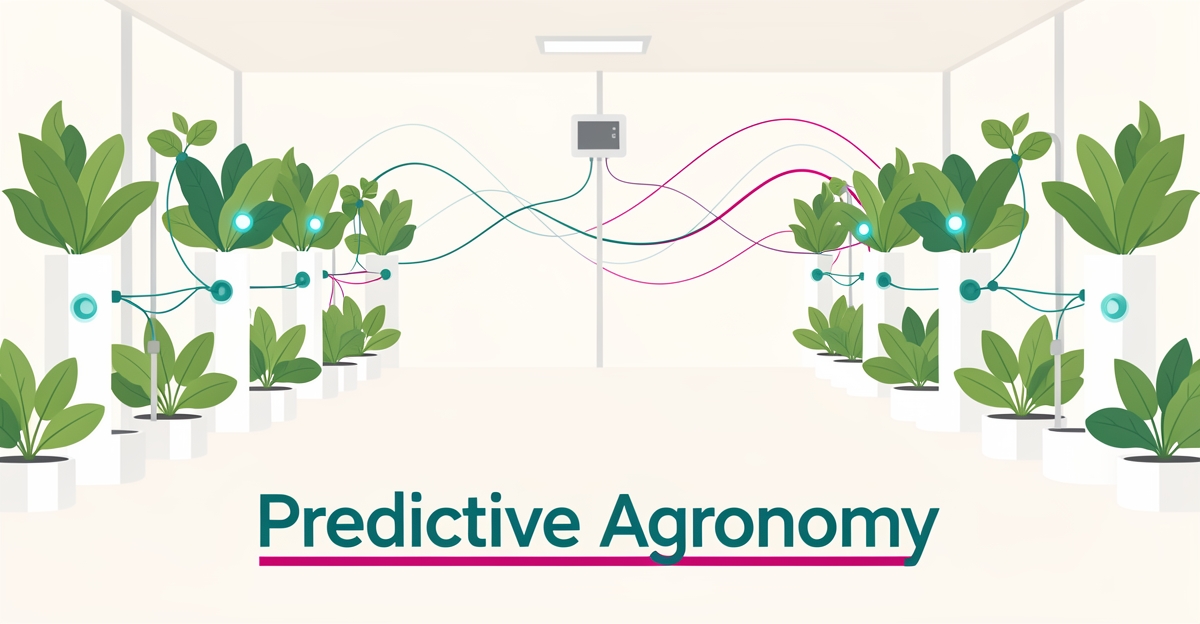
A key challenge lies in the shift from reactive to predictive agronomy, where AI must anticipate plant stress before it occurs—something traditional automation cannot achieve. As noted in industry research, facilities managing tens of thousands of plants require AI-driven models that analyze external forecasts, internal sensor data, and historical thermal loads to preemptively adjust HVAC systems, maintaining precise Vapor Pressure Deficit (VPD) curves up to 30 minutes before extreme heat hits. Without this predictive capability, farms remain vulnerable to crop loss from micro-fluctuations undetectable by human observation.
Integration complexity further complicates vendor selection, as hydroponic systems demand seamless connectivity between pH, EC, temperature, humidity, and nutrient sensors—data streams that must feed into AI models with high accuracy to enable real-time adjustments. Many AI providers lack experience in agricultural data pipelines, leading to siloed information, delayed responses, and flawed decision-making. Additionally, the high initial cost of automation remains a barrier for small and medium-sized farms, especially when vendors offer point solutions without long-term support or ownership options.
- Sensor-based monitoring tracks pH, EC, temperature, humidity, and nutrient levels with automated alerts and dashboards
- AI-based vision monitoring detects plant deficiencies and tracks growth to prevent yield loss
- Farm management software collects data from all systems to generate real-time analytics and forecasts
AIQ Labs addresses these challenges through three entry points: AI Employees that handle the operational workload around your grow operation—scheduling, vendor coordination, customer communication—at a fraction of a human hire's cost; AI Workflow Builds that rebuild the single workflow costing you the most, at a fixed price and in phases; and AI Operating Systems that connect climate, sensor, and farm management data into one owned operating layer. With 200+ multi-agent systems deployed and four live SaaS products we run daily, we build production systems, not demos—and you own what we build. This approach turns AI from a cost center into a core advantage, rooted in the specific rhythms and risks of hydroponic cultivation.
What to Look for in an AI Partner: Agriculture Expertise, Data Accuracy & Long-Term Support
Choosing an AI partner for your hydroponic farm isn't just about technology—it's about finding a provider who understands the nuances of controlled-environment agriculture. The most effective vendors combine deep agriculture expertise with precision data systems and a commitment to long-term ownership and support. This ensures your AI investment delivers consistent results, adapts to changing conditions, and remains under your control.
Look for partners with proven experience in agriculture-specific AI applications, such as vapor pressure deficit (VPD) control, which requires anticipating environmental shifts before plant stress occurs. As noted in industry research, AI-driven models can initiate HVAC balancing protocols 30 minutes before extreme heat impacts a facility, maintaining VPD curves and maximizing carbon assimilation in facilities managing tens of thousands of plants. This predictive capability prevents crop damage like tip burn and protects profitability across geographic extremes, something reactive systems simply cannot achieve.
Data accuracy is equally critical. Sensor-level precision in monitoring pH, EC, temperature, humidity, and nutrient levels enables automated alerts and real-time dashboards that keep growing conditions optimal. Without this foundation, even the most advanced AI will make flawed decisions—turning potential consistency into costly errors. Partners should demonstrate how their systems reduce human error in fertigation and nutrient dosing, directly linking data quality to better plant health and faster growth cycles.
Finally, insist on true system ownership and ongoing support. Avoid vendors who lock you into proprietary platforms or disappear after installation. Instead, choose partners who build and manage AI systems in-house, providing full control over customization, updates, and future development. AIQ Labs structures engagements three ways—Start Monthly, Build in Milestones, or Own It Outright—so you can match the payment model to your risk tolerance and keep everything built along the way. This long-term partnership model ensures your AI evolves with your farm, scales with your ambitions, and delivers sustainable ROI without dependency on third-party roadmaps or subscription traps.
- Proven agriculture expertise in AI-driven environmental control
- Sensor-level data accuracy for nutrient and climate monitoring
- Long-term support with full system ownership and in-house management
Evaluating AI Partners: A Practical Framework for Hydroponic Farm Owners
Choosing the wrong AI partner can lock a hydroponic operation into fragile tools that fail when conditions shift. A practical evaluation framework protects your growing environment and your investment by focusing on architecture, deployment, and support.
Start with technical architecture and real-time integration. Hydroponic farming is evolving with AI and automation technologies, leading to real-time monitoring, climate control, and predictive crop management. Industry research notes sensor-based monitoring tracks critical parameters such as pH, EC, temperature, humidity, and nutrient levels with automated alerts and data dashboards. Look for multi-agent systems that can orchestrate research, monitoring, and control in parallel rather than single-threaded chatbots.
Deployment model determines ownership and long-term cost. AI operating systems in agriculture automate crop monitoring, irrigation scheduling, and supply chain coordination by combining satellite imagery, soil sensors, and weather data. A full comparison shows AI systems automate routine tasks while manual processes rely on experienced scouts and local knowledge, offering contextual depth but limited coverage. Confirm whether you will own the code, agents, and data, or remain dependent on a vendor subscription.
Support structure and production maturity matter more than demos. Auditing AI systems is essential to ensure they meet production standards and can handle real-world scenarios without breaking. Ask for evidence of live deployment, version control, and real environments, not just AI generation.
For hydroponic-specific capability, prioritize partners with predictive agronomy experience. By integrating Artificial Intelligence into daily operations, farm managers are shifting from a reactive approach—fixing problems after the plants show stress—to predictive agronomy, where the system adjusts parameters before the stress ever occurs. A 2026 predictive farming analysis documents a system that initiated HVAC balancing protocols 30 minutes before extreme external heat impacted the facility. The same analysis applies to facilities managing tens of thousands of plants, where human observation is simply too slow to catch micro-fluctuations in the root zone environment.
Evaluate vendors against a checklist you can score:
- Industry-specific knowledge: proven hydroponic or controlled-environment agriculture deployments, not generic ag software
- Data accuracy and integration: real-time sensor ingestion for pH, EC, temperature, humidity, nutrient levels with automated alerts
- Multi-agent architecture: stateful workflows for research, vision monitoring, and climate control working together
- Deployment model: owned system with full IP transfer versus leased platform with vendor lock-in
- Long-term support: monitoring, retraining, and optimization included, with clear pause or adjust terms
Automation in hydroponic farming offers significant benefits, including time savings, consistency, labor efficiency, cost-effectiveness, scalability, and precise control over growing conditions. A perspective on small-scale farms warns that automated hydroponic systems necessitate technical expertise and are vulnerable to system errors or power outages. AIQ Labs builds production-ready systems with engineering discipline and true ownership, aligning with the need for industry-specific knowledge, data accuracy, and long-term support farm owners prioritize.
Implementation Roadmap: From Pilot to Predictive Farming Without Vendor Lock-In
Hydroponic farms can't scale on intuition alone. Moving from reactive fixes to predictive control requires a staged build that proves value early and avoids costly vendor lock-in.
Start with one high-impact workflow instead of a full farm overhaul. Climate control or nutrient dosing are ideal pilots because they generate immediate, measurable data. Sensor-based monitoring tracks critical parameters like pH, EC, temperature, humidity and nutrient levels with automated alerts and dashboards, ensuring optimal growing conditions from day one.
A pilot should validate ROI before expansion. AI-driven models analyze external weather forecasts, internal sensor data and historical thermal loads to preemptively initiate HVAC balancing protocols—in one documented deployment, 30 minutes before extreme external heat impacted the facility. That shift from reactive to predictive agronomy protects Vapor Pressure Deficit curves and continuous stomatal opening at scale.
Manual processes rely on experienced scouts and local knowledge, offering contextual depth but limited coverage. AI operating systems automate crop monitoring, irrigation scheduling and supply chain coordination by combining satellite imagery, soil sensors and weather data, which is essential when managing facilities with tens of thousands of plants where human observation is too slow.
Phase the build to keep ownership and flexibility. A milestone-based approach lets you approve and pay per phase, stop anytime, and keep everything built so far. This ownership-first philosophy aligns with how AIQ Labs structures hydroponic AI adoption—production-ready systems clients own outright rather than subscription widgets. See our pricing models for how Start Monthly, Build in Milestones, and Own It Outright work in practice.
A practical roadmap looks like this:
- Pilot: single workflow such as automated nutrient dosing controllers that reduce human error, save time and ensure nutrient consistency
- Validate: measure yield stability, labor reduction and energy use against baseline data
- Integrate: connect climate, vision and farm management software into a unified data layer for real-time analytics and forecasts
- Scale: expand to a full AI operating system with predictive farming, multi-agent orchestration and governance
AI-based vision monitoring adds early detection by automatically tracking plant health, deficiencies and growth, preventing yield loss through early intervention. Hydroponic farming is evolving with AI and automation technologies leading to real-time monitoring, climate control and predictive crop management.
Small and medium farms face high initial costs and technical expertise needs, but targeted automation delivers long-term cost savings through improved productivity and reduced waste. Automation in hydroponic farming offers significant benefits including time savings, consistency, labor efficiency, cost-effectiveness, scalability and precise control over growing conditions.
Auditing and version control matter when moving from prototype to production. Auditing AI systems is essential to ensure they meet production standards and can handle real-world scenarios without breaking, which protects stability as the system scales.
The result is a farm that moves up the maturity curve from pilots to predictive operations, with owned infrastructure, clear ROI, and no vendor lock-in.
Still paying for 10+ subscriptions that don’t talk to each other?
We build custom AI systems you own outright. No vendor lock-in. Full control.
Not sure where to start? Ask our AI planner
Frequently Asked Questions
Why do generic AI vendors fail hydroponic farms?
How does predictive AI prevent crop loss better than traditional automation?
What should I look for in an AI partner's data accuracy capabilities?
How do I avoid vendor lock-in when implementing AI on my farm?
What's a realistic implementation roadmap for a hydroponic farm starting with AI?
How do I know an AI system is production-ready and not just a demo?
Ready to Grow Smarter, Not Harder?
Choosing the right AI partner for your hydroponic farm is a decision that shapes your operation's future. Generic vendors offer tools that monitor but don't predict, leaving you reactive instead of proactive. The right partner brings agriculture expertise, sensor-level data accuracy, and long-term support—ensuring your systems anticipate plant stress before it happens, not after. At AIQ Labs, we build custom AI systems that you own outright, integrating climate control, nutrient dosing, and vision monitoring into a unified platform that evolves with your farm. Whether you're managing a small setup or a facility with tens of thousands of plants, the shift from reactive to predictive agronomy is no longer optional—it's essential. If you're ready to move beyond disconnected tools and build an AI infrastructure that delivers real ROI, start with our two-minute Fit Check at aiqlabs.ai/apply, then book a free 30-minute strategy call to map your biggest automation opportunity. No pressure, just clarity on your next step.
Make AI your competitive advantage — not just another tool.
Strategy, implementation and ongoing optimization. One partner, end to end.
Not sure where to start? Ask our AI planner