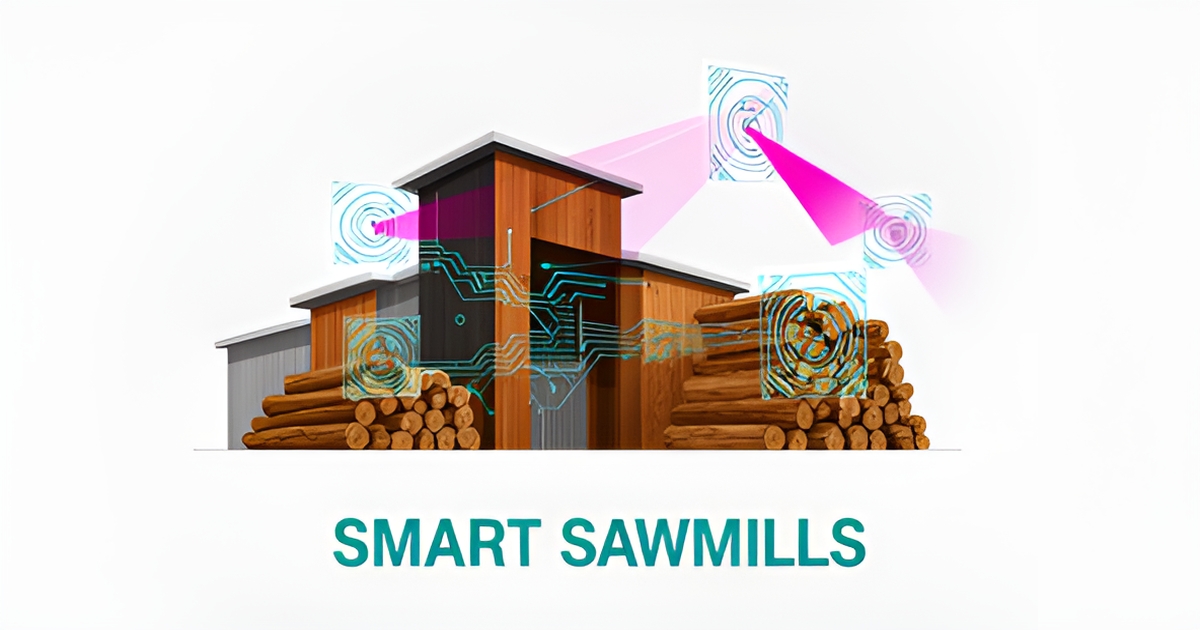
How to Choose the Right AI Partner for Your Sawmill
Key Facts
- Computer vision grading typically delivers a meaningful accuracy boost over manual inspection, with gains varying by species mix and data quality
- Predictive maintenance typically reduces unplanned downtime and extends blade life when trained on actual mill data
- Log optimization scanning can increase lumber yield, with payback periods that vary by facility size
- Most manufacturing AI pilots stall before scaling due to poor integration and lack of ongoing support
- AIQ Labs has deployed 200+ multi-agent systems and runs 4 live SaaS products daily, proving multi-agent expertise through real-world operation
- AI employees across 99+ roles typically cost around 80% less than a human hire while operating 24/7/365
Hire a team member that works 24/7 — for less than a part-time wage.
AI receptionists, SDRs, dispatchers and 99+ roles. Trained on your business, fully managed.
Not sure where to start? Ask our AI planner
Understanding the AI Opportunity in Sawmills
The sawmill industry stands at a pivotal moment where intelligent automation can reshape operations, yet most facilities still rely on manual processes and decades-old equipment. This gap between proven technology and current practice creates a real opening for operators willing to move first.
Four high-impact applications drive the strongest returns. Computer vision grading improves grading accuracy over manual inspection while reducing labor costs. Predictive maintenance cuts unplanned downtime and extends blade life. Log optimization scanning boosts lumber yield, and demand forecasting trims inventory carrying costs while optimizing kiln energy use. The size of these gains varies by mill—species mix, log dimensions, and data quality all matter—but the direction is consistent across implementations.
- Computer vision grading for accuracy and labor savings
- Predictive maintenance to reduce unplanned downtime
- Log optimization scanning for yield improvement
- Demand forecasting to reduce inventory and energy costs
Payback periods vary, but larger facilities often see returns within a couple of years, making the business case compelling even before accounting for compounding advantages. Early adopters secure operational benefits that become progressively difficult for slower competitors to overcome, particularly as AI agents begin autonomously monitoring market prices to adjust production schedules and tracking moisture content to trigger kiln adjustments in real time.
The primary barriers remain upfront investment and the complexity of integrating modern AI with legacy equipment. Success depends on selecting a partner who understands both the technology and the specific realities of lumber processing — from sawing patterns to kiln dynamics — and who can deliver integration without subscription lock-in or hidden costs. AIQ Labs approaches these engagements as a full-service AI transformation partner, combining custom development, managed AI employees, and strategic consulting to ensure the technology actually works in your mill, not just in a demo.
Critical Evaluation Criteria for AI Vendors
Selecting an AI partner for a sawmill means navigating a landscape where legacy equipment compatibility often determines whether a project delivers ROI or stalls at pilot stage. Most facilities still rely on manual processes and decades-old machinery, creating a structural barrier that generic vendors cannot overcome. The right partner demonstrates proven integration with existing SCADA systems, PLCs, and historian databases — not just API connectivity to modern SaaS platforms.
- Verified case studies showing integration with specific sawmill control systems
- Domain expertise in lumber grading standards, kiln schedules, and log optimization math
- Architecture that scales from single-head rig to multi-site operations without re-platforming
- Transparent post-deployment support with measurable SLAs, not ticket queues
These gains only materialize when models are trained on actual mill data — species mix, log dimensions, seasonal moisture variation — not generic manufacturing datasets. A specialized partner brings pre-built understanding of NHLA grading rules, optimizer curve logic, and the physics of drying schedules.
Scalability matters because sawmill AI typically starts at one bottleneck — the grader station, the optimizer, the kiln — then expands upstream to log yard inventory and downstream to planer optimization. Partners selling point solutions force expensive rip-and-replace cycles. AIQ Labs architects systems that grow with the operation, using multi-agent frameworks that coordinate across grading, maintenance, and production planning without creating new data silos. The Start Monthly model lets mills validate value on a single workflow before committing to department-wide automation.
Post-deployment support separates vendors who disappear after go-live from partners who optimize continuously. Look for managed AI employees that include monitoring, retraining, and process adaptation in a flat monthly cost — not per-seat SaaS fees that penalize adoption. The most effective engagements treat AI as a capability the mill owns, with full code and model transfer, ensuring long-term independence from vendor roadmaps.
Why Full-Service Partners Outperform Point Solutions
Fragmented AI vendors often leave sawmills with disconnected tools that fail to scale, while full-service partners deliver integrated solutions that evolve with the business. Industry experience consistently shows that a large share of manufacturing pilot projects stall before scaling due to poor integration and lack of ongoing support. This "pilot purgatory" is especially costly in sawmills where legacy equipment and seasonal demand cycles require AI systems that can adapt without constant rework.
End-to-end partners eliminate this risk by combining custom development, managed AI employees, and transformation consulting under one accountable team. Unlike point solutions that lock businesses into proprietary platforms, full-service partners like AIQ Labs ensure true ownership of AI systems—clients retain full control over code, data, and future development. This approach prevents vendor lock-in while enabling sawmills to scale AI across departments as needs change, from predictive maintenance to automated grading.
The production portfolio of a full-service partner proves capability beyond theory. AIQ Labs has deployed 200+ multi-agent systems and runs 4 live SaaS products daily, demonstrating real-world expertise in multi-agent orchestration, voice AI in regulated contexts, and large-scale automation. This hands-on experience means every recommendation is tested in their own systems before being applied to client workflows—reducing the guesswork in complex sawmill operations like log optimization scanning and kiln scheduling.
For sawmills, this lifecycle partnership drives sustainable ROI by aligning AI evolution with business growth. Instead of piecemeal fixes that create technical debt, full-service partners build systems that integrate with legacy equipment, scale with production volume, and continuously optimize through managed AI employees and strategic consulting. The result is not just automated workflows, but a competitive advantage that compounds over time—turning AI from a cost center into a core operational asset.
Action Framework: From Assessment to Owned AI Systems
Choosing an AI partner for a sawmill means moving from vendor shopping to risk-managed validation.
Sawmills face low current AI adoption but high ROI potential, with computer vision for grading and predictive maintenance typically the first high-impact wins. The biggest barriers are not the models themselves but integration with legacy equipment and upfront investment costs.
A practical framework starts with assessment and ends with owned systems, not subscriptions.
Discovery begins with an honest capability audit. Map existing control systems, data capture points, and manual workflows like grading, kiln drying, and dispatch. Prioritize use cases where automation delivers measurable operational gain. Grading accuracy and downtime reduction are usually the clearest early targets.
From assessment, move into phased development with clear ownership. AIQ Labs structures this as discovery, phased build, deployment, and optimization, with three payment options that match risk tolerance. Start Monthly provides one AI employee with build, training, integrations, monitoring and improvements included. Build in Milestones splits a workflow or department system into approved phases you can pause anytime. Own It Outright delivers a full AI operating system with full code, agents, and data ownership at completion.
Validation happens before scale through low-risk entry points:
- Free strategy call to map bottlenecks and ROI
- AI Employee pilot in a defined role such as dispatch or intake
- AI Workflow Build targeting one critical broken process
These pilots prove value with minimal disruption and create integration patterns for legacy lines.
Deployment requires enterprise-grade integration, not point tools. Successful AI implementation coordinates multiple system components and creates data flow between operations modules, so grading, maintenance, and planning systems share a common picture of the mill.
Optimization locks in long-term value. Continuous monitoring, retraining, and governance ensure the system adapts as production changes, species mix shifts, and equipment ages.
The goal is owned AI systems that integrate, scale, and remain under your control without subscription lock-in.
Still paying for 10+ subscriptions that don’t talk to each other?
We build custom AI systems you own outright. No vendor lock-in. Full control.
Not sure where to start? Ask our AI planner
Frequently Asked Questions
How do I know if my sawmill is ready for AI integration?
What ROI can I realistically expect from AI in my sawmill?
Should I choose a specialized point solution or a full-service AI partner?
How do I avoid vendor lock-in with an AI partner?
What's the difference between AI tools and AI employees for sawmill operations?
How can I test an AI partner without committing to a full-scale implementation?
From Evaluation to Owned Advantage
Choosing an AI partner for your sawmill isn't about finding the flashiest demo — it's about securing a capability that integrates with your legacy equipment, scales across departments, and remains under your control. The mills gaining ground today are those moving beyond pilot projects to owned AI systems that coordinate grading, maintenance, optimization, and forecasting without subscription lock-in. The upside is real: better grading accuracy, less unplanned downtime, and higher lumber yield, with payback timelines that shorten as facilities scale. The difference between a stalled pilot and a compounding advantage comes down to partner structure — full-service teams that combine custom development, managed AI employees, and strategic consulting under one accountable roof. AIQ Labs operates this way because we've seen point solutions create technical debt while lifecycle partnerships build operational assets. Start with a free strategy call to map your biggest bottleneck, validate a single AI employee in a defined role, or target one broken workflow. The goal isn't automation for its own sake — it's an AI operating system you own, that grows with your mill, and that turns today's competitive gap into tomorrow's standard.
Make AI your competitive advantage — not just another tool.
Strategy, implementation and ongoing optimization. One partner, end to end.
Not sure where to start? Ask our AI planner