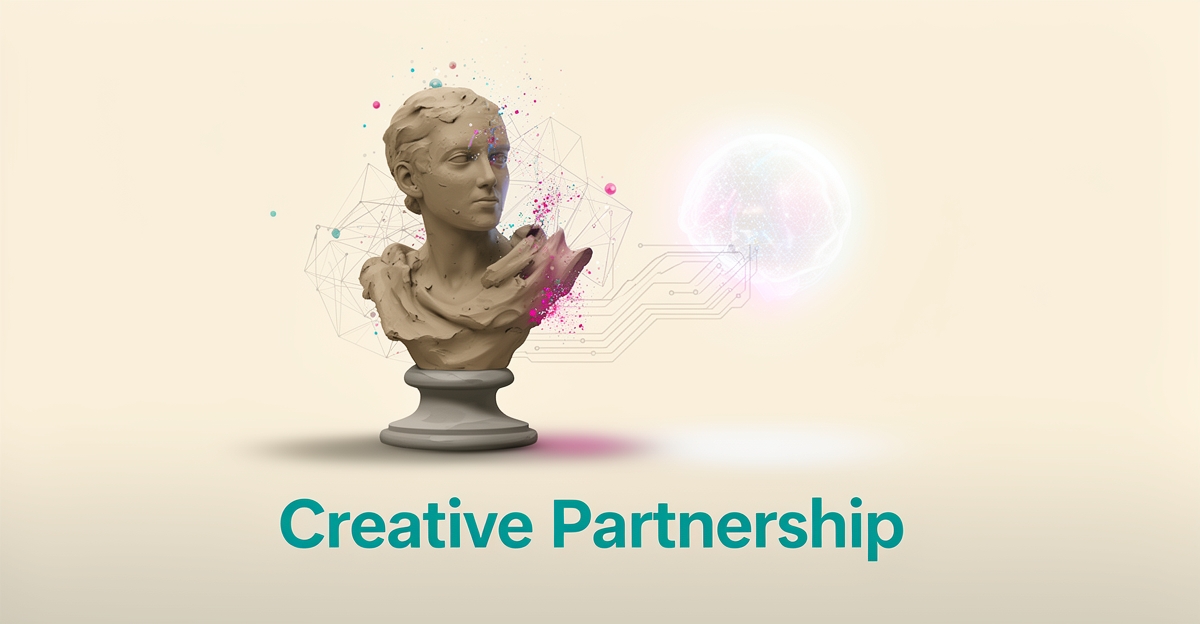
How to Choose the Right AI Partner for Your Sculpture Studio
Key Facts
- Treating AI as a tool delivers efficiency but limits creativity, while treating it as a thought partner unlocks innovation and nuance according to research on AI in creative industries.
- Sculptor Javier Murcia found that AI requires artistic direction and clear vision to turn randomness into meaning when testing AI in his sculptural process.
- AIQ Labs has deployed 200+ multi-agent systems and runs 4 live SaaS products daily, proving multi-agent systems work at scale.
- AIQ Labs' AI Employees cost roughly 80% less than a human hire in equivalent roles and work around the clock without missed days.
- Over-reliance on AI leads to lack of creativity and nuance, confirming the problem isn't AI's intelligence but how we use it according to industry guidance on creative AI collaboration.
- AIQ Labs builds custom AI systems with full client ownership and zero vendor lock-in, offering Start Monthly, Build in Milestones, and Own It Outright payment models.
- Effective AI collaboration requires four steps: define clear goals, provide rich context, ask probing questions, and iterate together to refine ideas.
Hire a team member that works 24/7 — for less than a part-time wage.
AI receptionists, SDRs, dispatchers and 99+ roles. Trained on your business, fully managed.
Not sure where to start? Ask our AI planner
Why Sculpture Studios Struggle With Generic AI Vendors
Sculpture studios are discovering AI can expand artistic possibility, but the results often disappoint when the partner treats creativity as a workflow to automate. The friction isn’t technical; it’s creative misalignment.
Generic vendors approach AI as a tool to automate tasks and processes. That framing delivers efficiency and speed, but it produces limited creativity and a lack of nuance. Research on AI in creative industries shows treating AI as a tool constrains artistic expression, while treating it as a creative thought partner unlocks innovation, creativity, and nuance.
The first breakdown is limited understanding. AI providers should demonstrate a clear understanding of the creative process and the specific needs of sculpture studios. This includes the ability to analyze and interpret artistic styles, techniques, and intentions. Without that grounding, outputs feel generic and disconnected from studio intent.
A second breakdown is lack of context. Effective integration of AI into a sculpture studio requires seamless communication and collaboration between the artist and the AI system. Failure to provide relevant context can lead to misinterpretation and misapplication of AI’s output. As studio testing of AI in sculptural process highlights, AI is far from magic; it still requires artistic direction and a clear vision to turn randomness into meaning.
Dependence risk compounds the problem. Over-reliance on AI can lead to a lack of creativity and nuance in artistic expression. The problem isn’t that AI isn’t smart enough. The problem is how we’re using it. Guidance on using AI as a creative thought partner emphasizes stopping the chatbot mindset and starting to think with it as a thinking partner.
Studios feel this as integration friction every day:
- Prompts return generic forms because the vendor has no model of sculptural intent or material behavior
- Feedback loops are shallow, with no ability to iterate together to refine and expand ideas
- Systems cannot scale to handle complex and nuanced artistic concepts as the practice evolves
- Ownership and lock-in create dependence on templates that cannot be adapted to a studio’s process
Creative understanding, integration capabilities, and scalability are the evaluation criteria that matter for vendor selection. AI as a creative thought partner requires clear communication goals, provided context, probing questions, and joint iteration. That is the difference between a vendor that delivers a widget and a partner that respects artistic process.
AIQ Labs evaluates providers on those exact dimensions through its three entry points—AI Employees for managed AI staff, AI Workflow Builds for rebuilding the one workflow that costs the most, and AI Operating Systems for a fully connected operating layer—with a focus on tailored, production-ready systems that respect artistic processes and provide full ownership.
What to Evaluate: Creative Understanding, Integration, and Scalability
Most AI vendors can generate an image. Far fewer can understand why a sculptor chose bronze over resin, or how a particular texture serves the emotional core of a piece. That gap between generating output and grasping artistic intent is exactly where your evaluation should begin—and it's the difference between buying a tool and finding a genuine creative partner.
The first pillar of evaluation is whether a provider demonstrates real fluency in the artistic process. This goes beyond surface-level pattern recognition. You want a system that can analyze and interpret artistic styles, techniques, and intentions—the nuanced decisions that define your studio's work. When sculptor Javier Murcia tested AI in his own practice, he found that AI is far from magic—it still requires artistic direction and a clear vision to turn randomness into meaning. Any provider worth considering should acknowledge this reality rather than oversell automation.
Ask prospective partners how their systems handle style interpretation. Can the AI distinguish between a deliberate rough finish and an unintended artifact? Can it adapt when your creative direction shifts mid-project? These questions reveal whether you're dealing with a generic content generator or something built for real creative work.
The second pillar is integration—specifically, how seamlessly the AI fits into your existing creative workflow. Effective integration means the artist can provide clear prompts, receive output, give feedback, and iterate without friction. Research on using AI as a creative thought partner emphasizes that the best outcomes come from treating the interaction as a dialogue: provide context, ask probing questions, and refine together.
This is where many off-the-shelf tools fall short. They accept a prompt and return a result, but they don't maintain the thread of an evolving creative conversation. Look for systems that support this iterative loop:
- Persistent context across sessions, so the AI remembers your project's direction
- Feedback mechanisms that actually influence subsequent output
- Compatibility with your existing tools and file formats
- Clear escalation paths when the AI reaches its limits
AIQ Labs builds custom systems with exactly this kind of two-way integration in mind—deep API connections that let AI operate inside your workflow rather than alongside it, with no vendor lock-in on what gets built.
The third pillar is scalability—not just in volume, but in conceptual depth. A system that handles simple requests well may collapse when you introduce layered, nuanced artistic concepts. Your evaluation should test whether the AI can hold complexity: multiple themes, evolving briefs, and the kind of ambiguity that defines serious creative work.
This is where the tool versus thought partner distinction becomes sharpest. Tools optimize for speed and efficiency. Thought partners help you explore new ideas, refine techniques, and push boundaries. As one conference paper on AI in creative practice illustrates, the studios getting the most from AI are the ones investing in this collaborative model—not just automating tasks, but expanding what's creatively possible.
Before committing to any provider, run a real project through their system. Give it something genuinely hard. See whether it rises to the challenge or defaults to generic output. That single test will tell you more than any sales deck.
How to Collaborate With AI as a Creative Thought Partner
The most successful sculpture studios don't treat AI as a magic wand—they treat it as a creative thought partner. As sculptor Javier Murcia notes in his exploration of AI in the sculptural process, "AI is far from magic. It's fascinating, yes, but it still requires artistic direction and a clear vision to turn randomness into meaning."
To collaborate effectively, start by defining clear communication goals. Specify the target audience, desired outcomes, and the boundaries of the exploration before you generate a single prompt. This clarity prevents the AI from drifting into generic outputs and keeps the collaboration anchored to your studio's vision.
Next, provide rich context. Share existing materials, interview transcripts, sketches, or data sets that define your artistic language. According to research on human-AI collaboration, this contextual grounding allows the AI to interpret your intentions accurately rather than defaulting to clichés.
Then, ask probing questions about the concept's themes, styles, and underlying intentions. Treat the interaction as a dialogue, not a transaction. Industry experts emphasize that you should "stop thinking of advanced AI as a chatbot, and start thinking with it as a thinking partner."
Iterate together to refine and expand ideas. Provide specific feedback on each output, highlighting what resonates and what misses the mark. This cyclical process transforms raw AI output into nuanced artistic direction.
- Define communication goals and artistic boundaries upfront
- Feed the AI your studio's specific materials and transcripts
- Interrogate the concept with probing, open-ended questions
- Iterate through feedback loops to refine the output
This collaborative approach separates meaningful innovation from random generation. As Preet Ruparelia observes in the same discussion, "The problem isn't that AI isn't smart enough. The problem is how we're using it."
When evaluating partners, look for teams that understand this iterative dance. AIQ Labs, for instance, builds custom AI systems designed to respect artistic processes, ensuring you retain full ownership and control while the technology adapts to your creative direction—not the other way around.
Choosing a Partner That Respects Artistic Process and Ownership
For sculpture studios exploring AI integration, selecting a partner that honors the artistic journey is as critical as evaluating technical capability. The most effective collaborations treat AI not as a replacement for human creativity, but as a thoughtful collaborator that enhances the sculptor’s vision through nuanced understanding and iterative refinement. This requires a provider who invests time in learning the studio’s specific processes, materials, and aesthetic goals before proposing solutions—ensuring the technology serves the art, not the other way around. Artists who have experimented with AI in their sculptural practice emphasize that success hinges on the AI’s ability to interpret artistic intent, not just execute generic prompts, making creative fluency a non-negotiable criterion in vendor evaluation.
Equally important is the partner’s approach to integration and ownership. Studios need systems that slot seamlessly into existing workflows—whether that means connecting to digital design tools, fabrication equipment, or project management platforms—without disrupting the tactile, hands-on nature of sculptural work. AIQ Labs addresses this by building production-ready systems designed for deep two-way API integrations, creating unified operational workflows that feel native to the studio’s rhythm. More fundamentally, their model prioritizes true ownership: clients receive full control over custom-built AI systems, with no vendor lock-in or platform dependencies, ensuring the intellectual property and creative assets remain firmly in the artist’s hands. This alignment is reflected in their flexible engagement models—Start Monthly, Build in Milestones, and Own It Outright—each structured to respect the studio’s pace and financial comfort while maintaining creative autonomy. Industry insights confirm that treating AI as a creative thought partner, rather than a mere tool, leads to more innovative outcomes when supported by clear communication, contextual understanding, and iterative collaboration—principles embedded in AIQ Labs’ partnership approach. Studios benefit most when they retain the ability to guide, question, and evolve the AI’s role over time, turning technology into a true extension of their artistic voice. Research underscores that scalable, adaptable AI solutions are essential for studios aiming to grow their practice without compromising artistic integrity, reinforcing the need for partners who evolve alongside the creator’s vision. Ultimately, the right AI partner doesn’t just deliver code—they become a steward of the studio’s creative process, enabling exploration without sacrificing ownership or authenticity.
Still paying for 10+ subscriptions that don’t talk to each other?
We build custom AI systems you own outright. No vendor lock-in. Full control.
Not sure where to start? Ask our AI planner
Frequently Asked Questions
How do I know if an AI vendor actually understands sculpture, not just images?
What’s the difference between an AI tool and a creative thought partner for my studio?
Why do prompts keep coming back generic with AI vendors?
What should I test before committing to an AI partner?
How can I collaborate with AI without losing creative control?
Will I own the AI system and data I build with a partner?
Your Studio Deserves a Partner, Not a Plugin
Choosing an AI partner isn't about finding the flashiest generator—it's about finding a collaborator that understands the weight of your material choices, the intent behind your textures, and the evolution of your practice. The studios getting real value from AI aren't automating creativity; they're extending it through systems that hold context, iterate with nuance, and scale with conceptual depth. That shift—from tool to thought partner—changes everything: generic outputs become informed explorations, shallow feedback loops become creative dialogue, and vendor lock-in becomes full ownership of systems built for your workflow. AIQ Labs builds custom AI systems on exactly those terms: production-ready, deeply integrated, and yours to control. If you're ready to stop testing toys and start building a creative infrastructure that respects your process, start with the two-minute Fit Check at aiqlabs.ai/apply and book a free 30-minute strategy call to map your highest-impact opportunity.
Make AI your competitive advantage — not just another tool.
Strategy, implementation and ongoing optimization. One partner, end to end.
Not sure where to start? Ask our AI planner