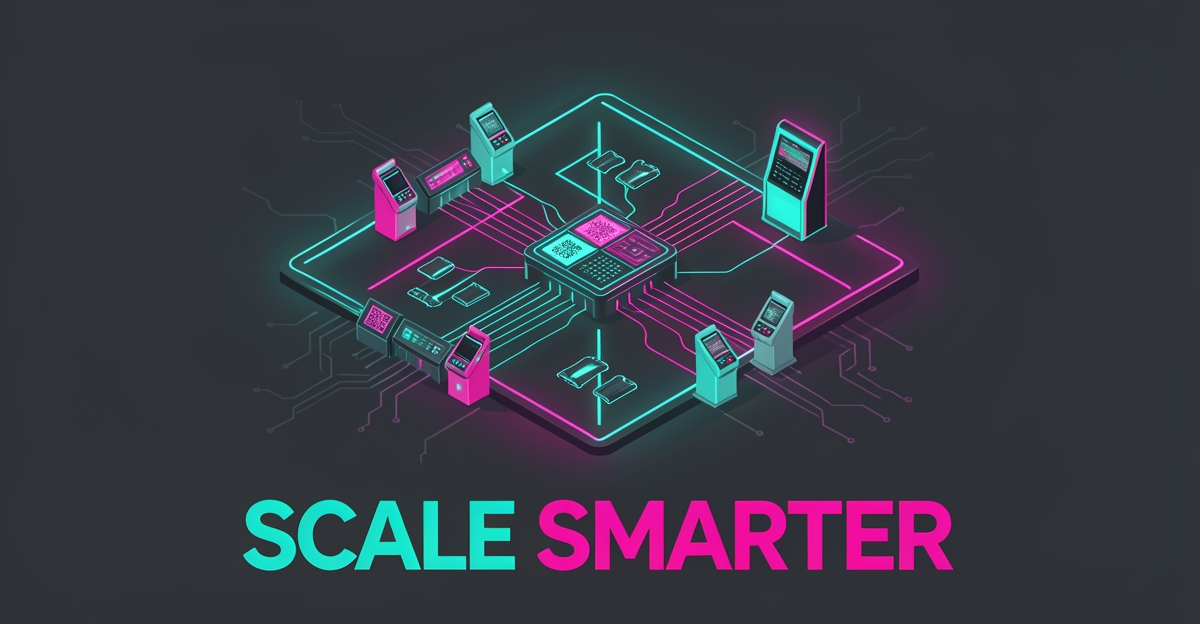
How to Scale Your Laser Tag Arena Without Hiring More Staff
Key Facts
- Industry surveys report roughly a third of laser tag venues name labor as their single largest operating expense, making automation the key scaling lever per industry statistics.
- QR-code and online ticketing delivers roughly 2.0x faster check-in processing than manual front-desk methods, research shows.
- One operator reported eliminating four separate software vendors and cutting software costs by over $35,000 annually with an integrated platform like Center Manager Pro.
- Around 74% of customers prefer booking entertainment activities online, yet manual processes cut throughput in half according to survey data.
- 66% of consumers want real-time information during activities, and 40% say live updates directly influence their satisfaction per consumer research.
- AI projector targets display 8-foot animated opponents—dinosaurs, zombies, tanks—that tag players autonomously with no staff needed via LaserBlast.
- The global laser tag market was estimated at $1.35 billion in 2024 and is projected to reach roughly $3.01 billion by 2033, growing at about 9.2% CAGR.
Hire a team member that works 24/7 — for less than a part-time wage.
AI receptionists, SDRs, dispatchers and 99+ roles. Trained on your business, fully managed.
Not sure where to start? Ask our AI planner
The Labor Cost Challenge in Laser Tag Operations
Labor is typically the single largest operating expense for laser tag venues, with industry surveys reporting roughly 34% of venues naming labor as their biggest cost driver. This financial pressure intensifies during peak periods when customer demand surges, yet expectations for seamless check-ins, real-time scoring, and personalized experiences remain high. Venues face a critical bottleneck: they cannot scale service quality without either inflating payroll or risking long wait times and inconsistent gameplay.
Peak demand periods expose the fragility of manual operations. Group bookings typically last 30–45 minutes, creating rapid session turnover that strains front-desk staff managing check-ins, waivers, and equipment distribution. When customers book online—preferred by 74% of respondents—manual processes create friction, slowing throughput by half compared to QR-code or digital ticketing systems. Without automation, staff become overwhelmed juggling simultaneous tasks, leading to delays that directly impact satisfaction, especially when 66% of consumers want real-time information during matches and 40% say live updates influence their overall experience.
AIQ Labs helps laser tag operators overcome these challenges with AI Employees—managed AI staff that handle repetitive, high-volume tasks like check-ins, scheduling, and customer inquiries—freeing human staff to focus on safety, engagement, and arena maintenance. Because AI Employees cost a fraction of a human hire, venues maintain consistent service during peak hours without adding headcount, turning labor constraints into opportunities for scalable, efficient growth.
Integrated Automation: Replacing Manual Processes with Unified Systems
Laser tag operators face a critical bottleneck: manual processes that consume staff time and limit scalability. By replacing fragmented systems with unified automation, venues can streamline operations while maintaining high service quality during peak demand. Comprehensive management platforms like Center Manager Pro consolidate POS, scheduling, party management, and customer communications into a single interface, eliminating the need for multiple vendors—one operator reported reducing software costs by over $35,000 annually.
This integration directly addresses the industry's labor challenge, where roughly 34% of venues cite labor as their largest operating expense. Automated check-in via QR-code ticketing delivers about 2.0x faster processing compared to manual methods, freeing staff to focus on guest experience rather than administrative tasks. Mobile-enabled controls allow a single operator to configure matches, adjust equipment, and send pre-game notifications from a smartphone, effectively multiplying their capacity without adding headcount.
- Centralized POS tracks all payments and inventory in real time
- Digital scheduling books directly into attraction resources
- Automated customer communications reduce manual follow-ups
- Unified reporting provides actionable insights for continuous improvement
- Staff scheduling and performance tracking run automatically
AIQ Labs supports this transformation through AI Workflow Builds—we rebuild the one workflow that costs you the most, at a fixed price and in phases, integrating with platforms like Center Manager Pro so venues can automate check-in, scheduling, and customer support at scale. The result is a seamless operational flow where technology handles routine tasks, allowing existing staff to manage higher volumes that would traditionally require additional hires. This approach turns software from a cost center into a scalable engine for growth.
AI-Enhanced Arena Control and Customer Experience
AI-powered interactive targets transform laser tag gameplay by introducing animated opponents that respond to player actions without staff intervention. These systems project 8-foot animated figures—such as dinosaurs, zombies, or tanks—onto arena walls that can "tag" players and shut them down, requiring players to destroy them for point boosts. This technology enhances immersion and competitiveness while operating autonomously, allowing venues to deliver dynamic experiences even during low-attendance sessions. LaserBlast's AI Projector Targets exemplify this approach, offering over a dozen opponent animations with adjustable difficulty levels that can be loaded with custom videos to match arena themes—creating a unique, low-cost upgrade that impresses guests and differentiates the venue from competitors.
Automated lighting and music synchronization further elevates the experience by connecting arena ambiance directly to gameplay events. Systems like the Zone Laser Scoreboard enable drag-and-drop DMX lighting control, scene management for custom lighting and music sequences, and real-time triggering of effects based on game actions such as scores, power-ups, or match start/end. Integrated with a built-in Visual Rendering System (VRS), these platforms eliminate the need for external software or specialized technical staff, offering a web-based UI accessible from any device. As noted, the system is "designed for busy staff—no technical expertise required," ensuring consistent atmosphere and engagement without manual oversight. Zone Laser Scoreboard demonstrates how centralized control reduces reliance on dedicated technicians while maintaining high-production-value environments.
Real-time score displays and mobile operator apps complete the automation loop by enabling single-person management of multiple simultaneous sessions. Large screens showing live scores, team standings, and player rankings keep players and spectators engaged—addressing the fact that 66% of consumers want real-time information during activities and 40% report that such updates influence their satisfaction. Meanwhile, mobile applications allow operators to set up matches, configure equipment, and send pre-game notifications from a phone, streamlining game flow and reducing delays between sessions. This capability supports efficient turnover of the 30–45 minute average group booking duration for parties, maximizing arena utilization without adding staff. For venues seeking to scale operations through intelligent automation, AIQ Labs builds AI Operating Systems—one connected operating layer, built in phases and owned outright—that integrate these technologies for long-term growth and operational efficiency.
Data-Driven Scaling: Using Analytics and Cloud Platforms for Remote Management
Cloud-based deployment transforms laser tag arena management by enabling remote oversight, automated staff scheduling, and continuous performance analytics—reducing the need for on-site managerial presence while supporting data-driven optimization. Platforms like Center Manager Pro integrate point-of-sale, scheduling, and customer relationship management into a single system, allowing operators to monitor game flow, staff performance, and equipment status from any device with internet access. This capability is particularly valuable given that roughly a third of venues identify labor as their largest operating expense, making remote management a strategic lever for scaling without hiring.
Automated staff scheduling features within these platforms further reduce administrative burden by generating shift templates, processing time-off requests, and calculating performance ratings based on demerits and guest survey scores—all without manual intervention. When combined with mobile apps that let operators configure matches and send pre-game notifications from a phone, a single team member can oversee multiple sessions efficiently. Cloud-based systems also deliver regular software updates and remote troubleshooting, minimizing downtime and eliminating the need for dedicated on-site IT staff.
Performance analytics from cloud platforms enable continuous refinement of game formats and resource allocation by analyzing real-time data on player engagement, popular scenarios, and return visitation rates. Operators can adjust lighting scenes, music triggers, and game difficulty based on actual usage patterns, ensuring experiences remain fresh and engaging without requiring staff to manually intervene. This data-driven approach supports the majority of entertainment firms planning to invest in improving customer experience, as it allows for personalized, responsive operations that scale with demand. By leveraging these capabilities, laser tag arenas can maintain high service quality during peak periods while keeping labor costs stable. To explore how AI-powered automation can further streamline your venue's operations, start with the 2-minute Fit Check and book a free 30-minute strategy call to identify high-ROI opportunities tailored to your business.
Still paying for 10+ subscriptions that don’t talk to each other?
We build custom AI systems you own outright. No vendor lock-in. Full control.
Not sure where to start? Ask our AI planner
Frequently Asked Questions
How much can laser tag venues save by switching to automated check-in systems?
What percentage of laser tag customers prefer to book online, and why does this matter for operations?
Can automation really improve customer satisfaction in laser tag arenas without adding staff?
How do AI-powered interactive targets enhance gameplay without needing staff to manage them?
Is it true that laser tag software can replace multiple vendors and reduce costs?
What role does cloud-based management play in scaling laser tag operations without hiring more staff?
Turn Labor Constraints Into Scalable Growth
Scaling a laser tag arena without adding staff comes down to replacing manual friction with unified automation. Integrated management platforms streamline POS, scheduling and party flow, while QR check-in, mobile operator apps and real-time score displays cut turnaround time and let one person run multiple sessions during peak 30–45 minute bookings. AI-enhanced arena control and interactive targets add dynamic, staff-free experiences, and cloud analytics enable remote oversight and continuous optimization without on-site managers. With roughly a third of venues reporting labor as their largest operating expense, these efficiencies protect margins while improving the experience guests expect. AIQ Labs builds AI Employees, Workflow Builds and AI Operating Systems that automate check-ins, scheduling and customer support so your existing team can focus on safety and engagement. Start the 2-minute Fit Check at https://aiqlabs.ai/apply, then book a free 30-minute strategy call at https://aiqlabs.ai/book to map your highest-ROI automation opportunities. Prefer email? Reach the team at [email protected].
Make AI your competitive advantage — not just another tool.
Strategy, implementation and ongoing optimization. One partner, end to end.
Not sure where to start? Ask our AI planner