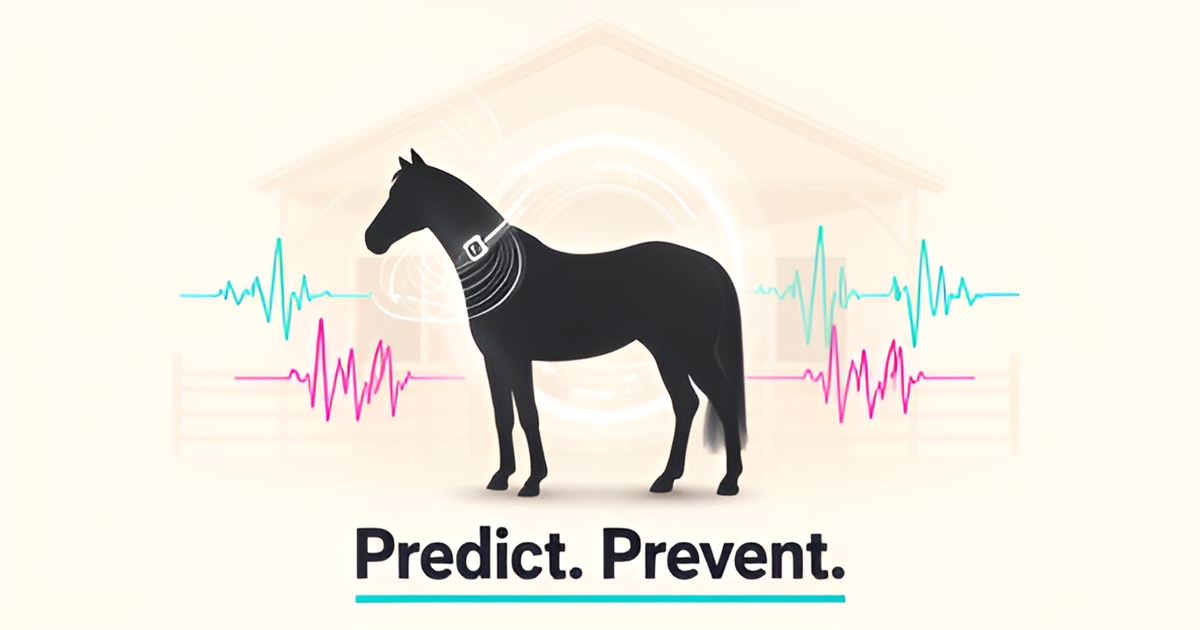
How to Use AI to Predict Horse Health Issues Before They Happen
Key Facts
- Equine colic remains a leading cause of death in horses, with AI increasingly supporting timely diagnosis and prognostic assessment, according to recent veterinary research.
- A Delphi survey of 41 equine stakeholders produced 106 agreed-upon statements on AI priorities for equid health, reaching a 75% consensus threshold, published in the journal Animals.
- Industry consensus identifies poor management practices and unmet ethological needs as primary drivers of equine welfare failures per stakeholder survey.
- AI systems monitor feeding patterns, activity logs, and temperature data in real time to flag health risks before visible symptoms appear per equine care analysis.
- Advanced algorithms can detect anomalies in individual baseline data that periodic human checks typically miss per equine AI research.
- Wearable sensors track movement, rest intervals, and gait symmetry continuously for automated lameness detection per AI-powered monitoring analysis.
- Custom AI systems give stables full ownership of historical health data, turning predictive monitoring into a compounding operational asset.
Hire a team member that works 24/7 — for less than a part-time wage.
AI receptionists, SDRs, dispatchers and 99+ roles. Trained on your business, fully managed.
Not sure where to start? Ask our AI planner
The Silent Crisis: Why Traditional Horse Health Monitoring Fails
Every year, stable managers face the same nightmare: a horse that seemed fine at evening check is found down and thrashing at 2 a.m. By the time symptoms become visible, the window for easy intervention has often closed.
Equine colic remains the starkest example of this reactive trap. According to recent veterinary research, colic continues to be a leading cause of death in horses, with outcomes heavily dependent on how quickly diagnosis and prognostic assessment occur. Yet most stables still rely on twice-daily visual checks and gut instinct to catch a condition that can turn fatal in hours.
The problem runs deeper than any single disease. A Delphi survey of 41 equine stakeholders produced 106 agreed-upon statements on AI priorities for equid health, reaching a 75% consensus threshold on a sobering conclusion: poor management practices and unmet ethological needs are primary drivers of welfare failures. In other words, the industry itself acknowledges that how we monitor and manage horses day-to-day is falling short.
The core issue is a data problem disguised as a staffing problem. Early signs of illness rarely announce themselves dramatically — they hide in subtle shifts across feeding patterns, activity logs, and temperature fluctuations. As equine care analysis notes, advanced algorithms can identify warning signs before visible symptoms appear, but only if the underlying data is being captured continuously in the first place.
No human team, however dedicated, can sustain that level of vigilance. The monitoring gaps that quietly erode horse health include:
- Feeding behavior — a horse leaving 10% of its ration for two consecutive days is easy to miss but often signals trouble
- Activity and movement patterns that shift gradually over weeks, invisible to casual observation
- Temperature trends that fluctuate within "normal" ranges but reveal stress when analyzed over time
- Overnight and unattended hours, when many emergencies first develop
This is precisely the gap that continuous AI-driven monitoring is built to close. AIQ Labs builds custom systems — from targeted workflow builds to full AI operating systems — that analyze feeding patterns, activity logs, and temperature data in real time, flagging the subtle deviations that precede illness long before a human observer could spot them. The goal is not to replace skilled horsemanship, but to give it the round-the-clock sensory reach it has always lacked.
The stakes are no longer theoretical. With reactive, observation-based care, the best-case scenario is early luck. The worst case is a loss that better data could have prevented.
How AI Detects What Humans Miss: The Data Signals That Predict Illness
Horses rarely show illness until it is advanced, which is why early detection still depends on human observation. AI changes that equation by reading continuous multi-modal signals and finding patterns that precede visible symptoms.
Machine learning algorithms, computer vision, and data analytics are now applied to improve various aspects of horse care and management. According to equine research, these technologies analyze large datasets derived from equine health records, behavioral observations, and performance metrics to offer insights into health monitoring, disease prediction, and training optimization.
The first real-time stream is feeding patterns. Custom AI systems monitor intake timing, volume, and refusals across the day. Deviations from an individual baseline often precede colic or metabolic stress, and industry research notes equine colic remains a major cause of death in horses, with AI aiding in timely diagnosis and prognostic assessment.
Activity logs provide the second stream. Wearable sensors track movement, rest intervals, and gait symmetry continuously. AI-powered monitoring coverage explains that advanced algorithms can identify warning signs before visible symptoms appear, enabling early intervention and potentially improving treatment outcomes. Automated lameness detection and gait analysis are core applications highlighted in equine AI research.
Temperature data completes the triad. Subtle, sustained shifts in core or surface temperature, combined with activity and feeding changes, create a multi-modal risk profile. AI models identify non-linear anomalies that human checks miss during periodic vet visits.
Models succeed because they learn individual baselines rather than population averages. The system flags:
- Gradual decline in feed intake paired with reduced nighttime movement
- Asymmetric stride length and increased resting time after exercise
- Low-grade temperature elevation with altered feeding and activity patterns
- Changes in lying-to-standing transitions that suggest musculoskeletal discomfort
This continuous monitoring beats periodic checks. A Delphi survey with 41 stakeholders generated 106 agreed-upon statements on AI priorities for equid health, with a 75% acceptance threshold, underscoring professional consensus on the value of data-driven welfare.
Stakeholder consensus also identifies ethological needs and poor management practices as key welfare concerns where AI can improve outcomes. Non-linear ECG analysis is an emerging area for AI-based diagnostic tools in equine cardiology, showing how signal processing extends beyond behavior into physiology.
AIQ Labs builds custom systems that monitor feeding patterns, activity logs, and temperature data in real time to predict health risks and alert staff to early signs of illness or stress — aligning with the stakeholder-validated priority areas for equid health.
From Alert to Action: Implementing AI Health Monitoring in Your Stable
Moving from alerts to a reliable workflow is where most stables either gain confidence or create noise. An AI monitoring system only delivers value when sensors, data, and people are aligned around clear escalation paths.
Sensor selection starts with the signals that matter for early risk. Wearable technology such as smart sensors attached to horses monitors vital signs and activity levels, providing continuous health information. Equine care analysis notes that advanced algorithms can identify warning signs before visible symptoms appear, enabling early intervention. Feeding patterns, activity logs, and temperature data are core inputs that AIQ Labs builds custom systems to monitor in real time to predict health risks and alert staff to early signs of illness or stress.
Integration is the difference between another app and an owned system. Rather than adding disconnected tools, custom development can integrate with existing stable management tools for feeding, turnout, and veterinary records. Equine research describes AI in the horse industry as the application of machine learning algorithms, computer vision, and data analytics to improve horse care and management. That integration creates a single source of truth and reduces manual logging.
Alert threshold calibration requires a human-in-the-loop from day one. Early deployments benefit from conservative thresholds and daily review so staff learn what normal variation looks like for each horse. Calibration should account for age, workload, season, and recent health events.
Practical deployment steps include:
- Map current workflows for feeding, turnout, and health checks before selecting sensors
- Choose sensors that integrate via API with stable management software you already use
- Define alert tiers: informational, watch, and urgent with assigned responders
- Run a 30-day baseline period to train thresholds per horse, not herd-wide averages
Staff workflow integration keeps alerts actionable. Modern monitoring systems provide real-time updates on a horse's condition so owners and veterinarians can access health information through mobile applications and digital platforms, enabling immediate action when health concerns arise. Human-in-the-loop escalation remains essential for critical decisions, especially given that equine colic remains a major cause of death in horses with AI aiding in timely diagnosis and prognostic assessment.
Stakeholder guidance reinforces this balance. A Delphi survey with 41 stakeholders generated 106 agreed-upon statements on AI priorities for equid health with a 75% acceptance threshold. Industry consensus highlights ethological needs and poor management practices as key welfare concerns where AI can improve outcomes.
A low-risk entry point is the Start Monthly model: setup plus a flat monthly plan that costs less than a part-time hire, with build, training, integrations, monitoring, and improvements included, and the ability to pause or adjust anytime. This approach lets a stable validate signal quality and staff adoption before expanding coverage. When you're ready to scale monitoring into a connected layer across the whole operation, an AI operating system builds on that foundation in phases — and you own it outright.
Measuring What Matters: ROI of Predictive Equine Health Systems
For stable managers, the promise of AI isn't novelty—it's measurable return. The strongest business case for predictive equine health systems rests on four levers: fewer emergency interventions, lower mortality risk, tighter control of feed and labor costs, and longer competitive careers for valuable horses.
The clearest financial driver is early intervention. Research on AI in equine health shows that machine learning and data analytics can identify patterns tied to illness and injury before they escalate, which directly supports fewer crisis calls and better outcomes. That matters because equine colic remains a major cause of death in horses, and AI is increasingly used to support timely diagnosis and prognostic assessment.
The broader industry is also aligning around this shift. A Delphi survey of 41 stakeholders produced 106 agreed-upon statements on AI priorities for equid health, with a 75% acceptance threshold—evidence that predictive monitoring is moving from experimental to operationally relevant. In practical terms, that consensus helps justify investment beyond a pilot and into a stable-wide capability.
That's where ROI becomes tangible. Predictive systems built around feeding patterns, activity logs, and temperature data can help managers:
- Catch early warning signs before they become emergency vet visits
- Reduce losses tied to late detection of serious conditions
- Optimize feeding and labor decisions using real-time operational data
- Protect performance longevity by intervening before small issues shorten careers
This is also where the AI maturity curve matters. Many operations start with a limited trial, but the real gains come when predictive monitoring becomes part of daily decision-making rather than a side experiment. AIQ Labs frames this progression as moving from pilot to embedded capability—where alerts, workflows, and historical data work together to improve outcomes over time. With 200+ multi-agent systems deployed, that progression is a well-worn path, not a science experiment.
Just as important is ownership. A custom system gives stables full control of their historical health data, which is essential for longitudinal insight and future model improvement. Unlike vendor-locked tools, an owned platform preserves the value of every data point collected, making each season of health records more useful than the last. For decision-makers, that turns predictive health monitoring from a cost center into a compounding operational asset.
Still paying for 10+ subscriptions that don’t talk to each other?
We build custom AI systems you own outright. No vendor lock-in. Full control.
Not sure where to start? Ask our AI planner
Frequently Asked Questions
How does AI detect health issues in horses before symptoms appear?
What specific data does AI analyze to predict equine health problems?
Is AI monitoring meant to replace human observation in horse care?
What evidence supports the effectiveness of AI in predicting horse health issues like colic?
How do stables implement AI health monitoring without disrupting existing workflows?
What is the return on investment for using AI to monitor horse health?
The Stable That Never Sleeps
The shift from reactive checks to continuous, data-driven monitoring changes what's possible for every horse in your care. Feeding patterns, activity logs, and temperature trends — captured around the clock and analyzed against individual baselines — surface the subtle deviations that precede colic, metabolic stress, and musculoskeletal issues long before visible symptoms appear. A Delphi survey of 41 equine stakeholders produced 106 agreed statements on AI priorities for equid health with a 75% consensus threshold, confirming that predictive monitoring addresses the welfare gaps the industry itself has identified. For stable managers, this translates to fewer emergency vet calls, lower mortality risk, optimized feed and labor decisions, and longer competitive careers for valuable horses — all while building a proprietary health dataset that grows more valuable each season. AIQ Labs builds custom systems that own this workflow end to end, integrating with your existing tools and keeping full data ownership in your hands. Ready to see where the highest-impact automation lives in your operation? Start the two-minute Fit Check at aiqlabs.ai/apply and book a free 30-minute strategy session to map your first win.
Make AI your competitive advantage — not just another tool.
Strategy, implementation and ongoing optimization. One partner, end to end.
Not sure where to start? Ask our AI planner